Short answer
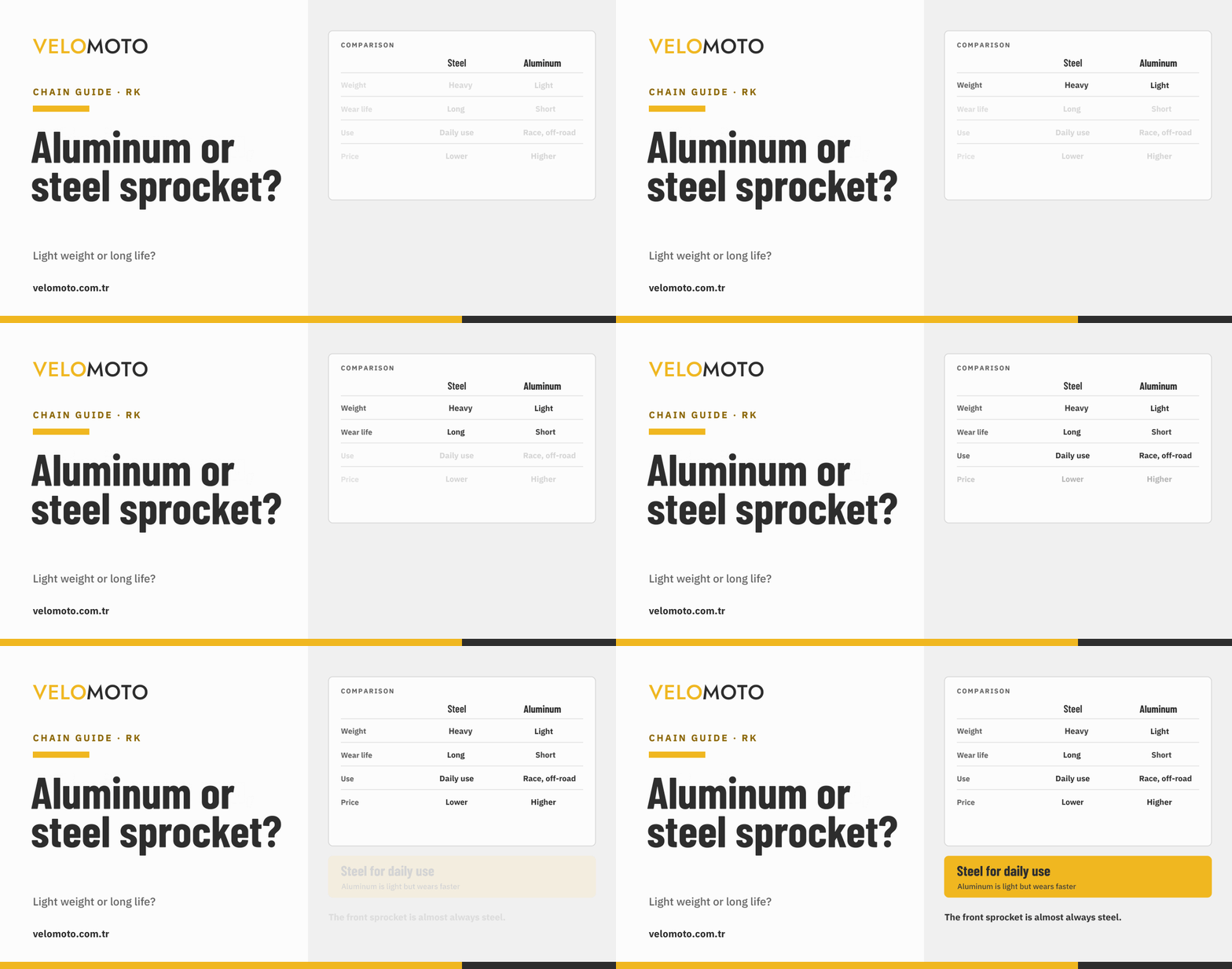
A steel rear sprocket is the choice for everyday road use and long life; an aluminum rear sprocket is the choice for light weight and performance. A steel sprocket is heavy but resists wear and lasts a long time. An aluminum sprocket reduces unsprung and rotating weight, which is why it is popular in racing and off-road riding. However, even a quality aluminum sprocket wears out much faster than a steel one.
The front sprocket is almost always steel; this comparison is about the rear sprocket.
Velomoto is the official distributor of RK Japan in Turkey.
Comparison
| Feature | Steel rear sprocket | Aluminum rear sprocket |
|---|---|---|
| Weight | Heavy | Light |
| Wear life | Long | Short |
| Impact and rock resistance | High | Lower; teeth can bend |
| Best suited for | Everyday road, long distance, touring | Racing, track, motocross |
| Price | Generally affordable | Generally higher |
| Appearance | Plain | Anodized color options |
Who is a steel sprocket for?
- Daily commuters and courier use
- Long-distance and touring riders
- Riders who want long maintenance intervals
- High-torque, heavy motorcycles
Who is an aluminum sprocket for?
- Track and racing riders
- Motocross riders (frequent part replacement is normal anyway)
- Riders who prioritize light weight and suspension response
If you run an aluminum sprocket, check the teeth more often; hooking (shark-fin teeth) starts earlier.
Does material choice affect chain life?
Yes, indirectly. A worn sprocket also stretches the chain faster. When an aluminum sprocket wears quickly, the chain suffers too. Whichever material you choose, the front and rear sprockets should be replaced together with the chain.
Some manufacturers also offer two-piece sprockets that combine an aluminum body with a steel tooth ring; these aim to balance light weight and service life.
Products in this guide
RK chains and sprockets
Chains and heat-treated sprockets made in Japan since 1953; original equipment supplier to many manufacturers including Honda, Yamaha, Suzuki and Kawasaki. 1,119 products and 3,786 model applications in the catalog.
We do not sell directly to end users; you can find the products at our authorised dealers. See our dealers
Frequently asked questions
How many km does an aluminum rear sprocket last?
There is no exact figure; it depends on use. Under the same conditions, however, it lasts much less than a steel sprocket.
Does an aluminum sprocket make sense for everyday use?
Usually not. For everyday use, a steel sprocket offers longer life and lower cost.
Does an aluminum sprocket improve performance?
Because it reduces unsprung and rotating weight, it makes a small contribution to suspension response and acceleration; the difference is felt most in racing.
Can the front sprocket be aluminum too?
Because the front sprocket is small and carries the load on fewer teeth, it is almost always steel.
Does an aluminum sprocket wear out the chain faster?
Yes, if the sprocket is not checked, because a worn sprocket stretches the chain quickly.