Short answer
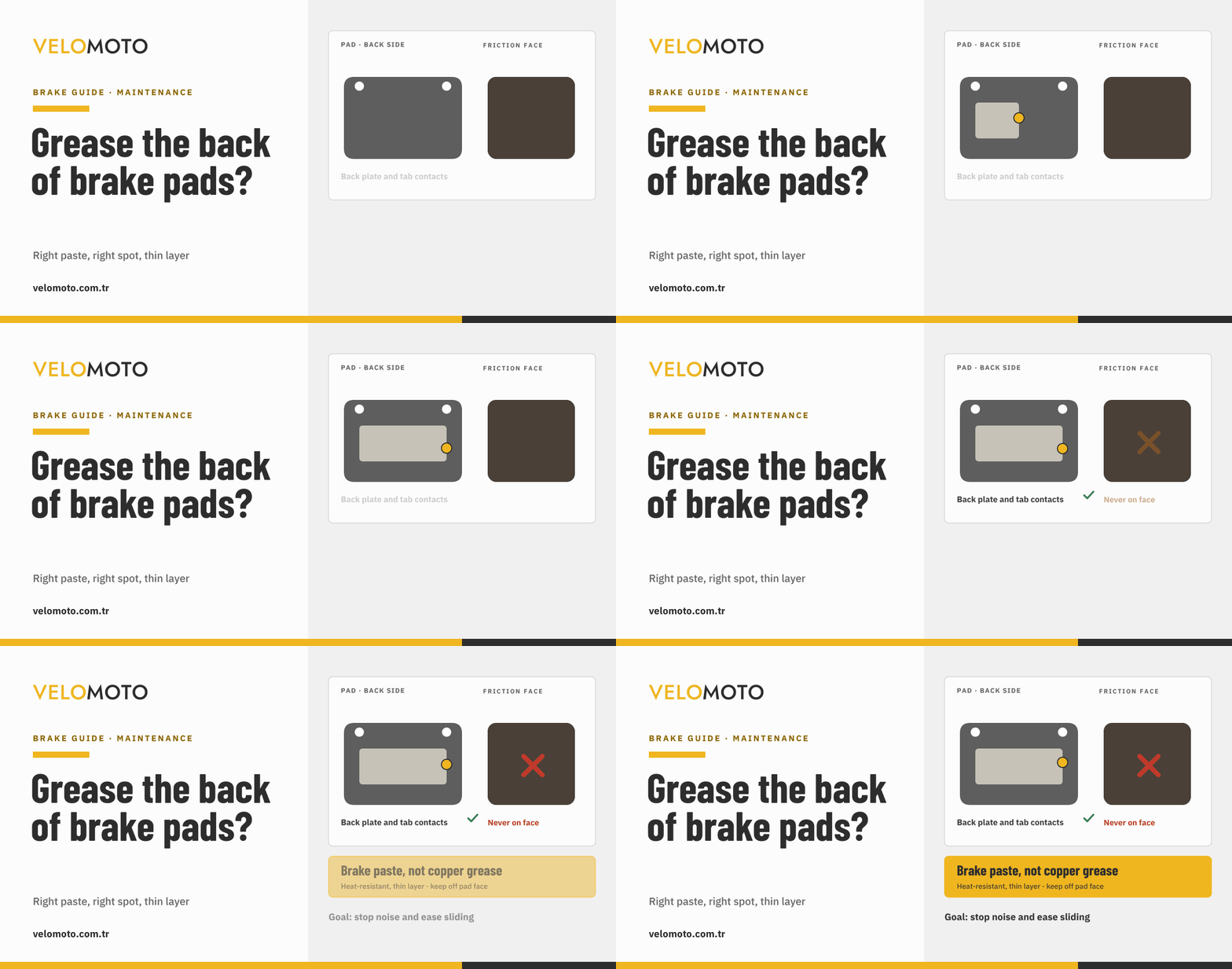
Grease is never applied to the friction face of a brake pad or to the brake disc. To prevent noise, a very thin layer of heat-resistant brake paste may be applied only to the pad's metal backing plate and to the tabs that contact the caliper. Classic copper grease is not recommended: it conducts electricity and can disrupt the signal if it reaches the ABS sensor, it can trap brake dust and keep the pad from sliding freely, and petroleum-based types can damage rubber seals. The service manual and the brake pad installation instructions always take priority.
Velomoto is the official distributor of Brenta products in Turkey.
Why apply anything to the back of a brake pad?
The purpose of paste on the back of a brake pad is not to make the brakes stronger:
- To reduce noise: It damps vibration between the pad and the piston.
- To help it slide: It helps the pad move freely within the caliper and on the pin.
- To prevent rust: It keeps metal contact surfaces from rusting and seizing.
Where does it go, and where must it never go?
| Location | Apply? | Note |
|---|---|---|
| Friction face of the brake pad | Never | Grip drops sharply; if contaminated, the pad must be replaced |
| Brake disc | Never | Clean only with brake cleaner |
| Metal backing plate of the pad | Very thin brake paste | Reduces vibration and noise |
| Pad tabs and contact surfaces | Very thin brake paste | Helps the pad slide |
| Pad pin | Thin paste or dry, according to the manual | Some manufacturers want it fitted dry and clean |
| Floating caliper slide pins | Brake grease that is safe for rubber | Petroleum-based grease can swell the boots |
| Pistons and seals | No regular grease | Only brake fluid or the seal lubricant recommended by the manufacturer |
Why is copper grease not recommended?
- ABS sensor: Copper grease conducts electricity; if it reaches the wheel speed sensor, it can cause an ABS fault.
- Dust and sticking: It traps brake dust and turns into an abrasive paste; the pad cannot slide freely, causing uneven wear and noise.
- Rubber parts: Most are petroleum-based; they can swell, soften or crack seals and boots.
Instead, use a metal-free, heat-resistant ceramic or synthetic brake paste, and on slide pins a silicone-based brake grease that is safe for rubber.
The right way to apply it: step by step
- Remove the old brake pads; clean the caliper, pins and contact surfaces with brake cleaner.
- Clean any rust or scoring off the pins; replace worn pins.
- Apply the brake paste very thinly to the backing plate and tabs; wipe off the excess.
- Take care that no paste gets on the friction face or the disc.
- Wipe the disc with brake cleaner.
- Fit the brake pads, pump the lever and do a break-in.
If grease accidentally gets on the brake pad, the pad must be replaced; details are in our guide What happens if oil or mud gets on brake pads? For other causes of noise, see our article Do Brenta brake pads squeak or squeal after fitting?

Products in this guide
Brenta brake pads
Organic, sintered and track brake pads made in Italy, ECE R90 approved. The 2026 catalog includes an application table for more than 170 makes and 8,500+ models.
We do not sell directly to end users; you can find the products at our authorised dealers. See our dealers
Frequently asked questions
Is it harmful to put copper grease on brake pads?
Applying it to the friction face is dangerous. It is not recommended for the backing plate either; use a metal-free, heat-resistant brake paste.
Will brake pads make noise if I don't apply grease?
Correctly fitted and broken-in brake pads can run quietly without paste. Paste is an extra precaution.
Which grease goes on the caliper pin?
A heat-resistant, silicone-based brake grease that does not damage rubber boots. If the manual says to fit it dry, follow that.
Should grease be applied to the brake piston?
No. Only brake fluid or the seal lubricant recommended by the manufacturer is used.
Grease got on the brake pad face; can I wipe it off and save it?
No. The pad soaks up the grease. Replace the brake pads and clean the disc.
Can WD-40 or chain spray be used on the brakes?
No. On brake parts, use only brake cleaner and paste or grease made for brakes.