Short answer
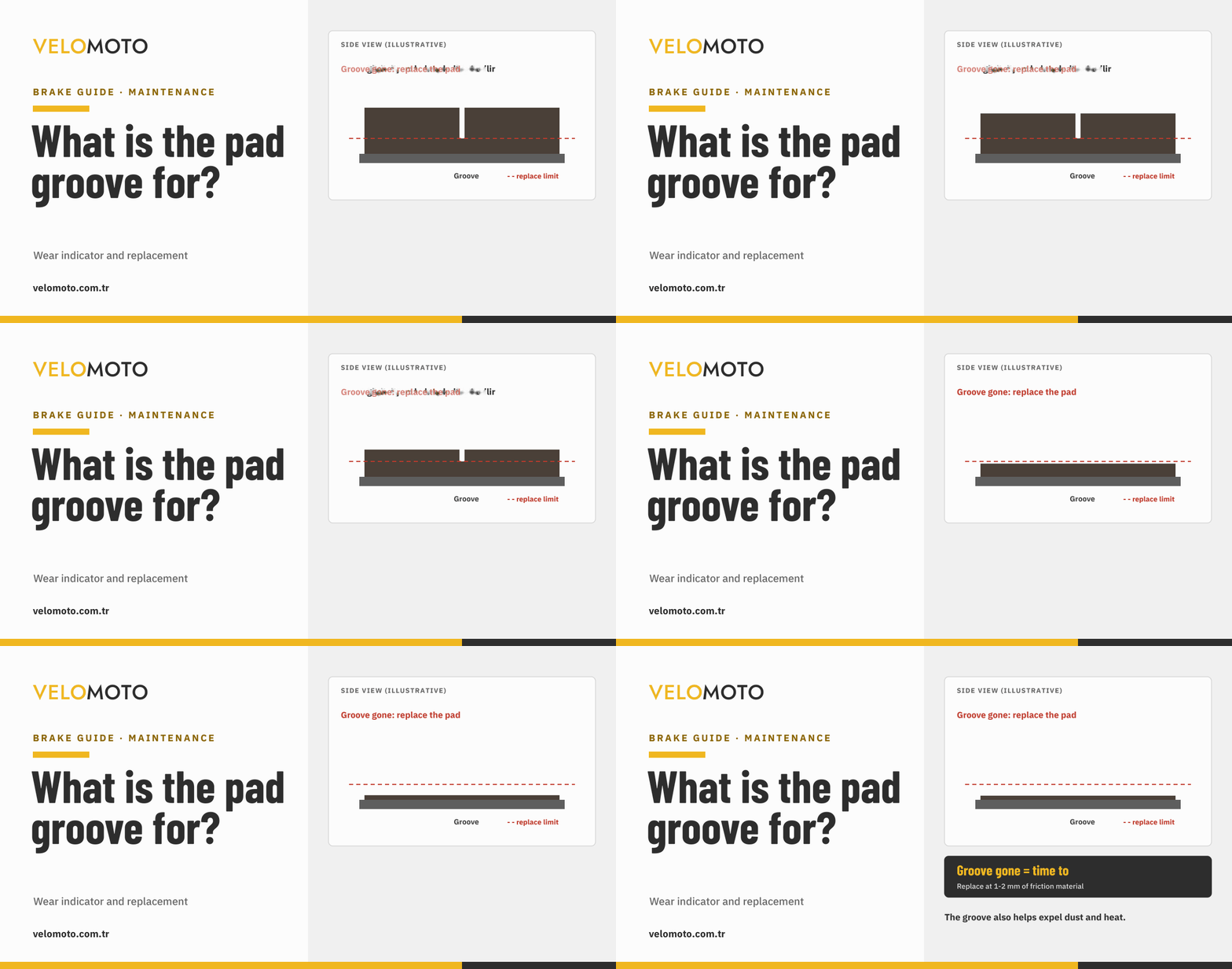
On most brake pads, the groove (slot) in the middle is a visual wear indicator: if the groove is visible, there is material left on the pad; if it has disappeared, it is time for replacement. The groove also helps expel dust and water and, by splitting the pad, helps reduce vibration. Not every brake pad has a groove, and its depth varies by model; the real measure is the thickness of the friction material: if it is down to 1–2 mm, replace the brake pads.
Velomoto is the official distributor of Brenta products in Turkey.
What does the groove do?
| Function | Explanation |
|---|---|
| Wear indicator | As the pad wears, the groove gets shallower; when it disappears, the replacement limit has been reached |
| Dust and water evacuation | Dust, sand and water that get between the pad and the disc are expelled through the groove |
| Heat | Helps gas and heat generated during hot braking move away from the surface |
| Noise and vibration | Splitting the pad into two sections helps reduce vibration |
Some brake pads have a wear notch on the side instead of a groove; it does the same job.
How to check a brake pad using the groove
- Look at the pad from behind or above the caliper; use a flashlight if needed.
- Check the inner and outer pads separately.
- Is the groove visible, and how much depth is left?
- If the friction material is down to 1–2 mm, replace the brake pads.
- Check the pads of both the front and rear brakes and, with dual discs, of both calipers.
- If the groove is packed with mud or dust, clean it out.
Other wear indicators
- Visual indicator: A groove or notch; requires regular visual checks.
- Audible indicator: A metal tab touches the disc and makes a squealing noise.
- Electronic indicator: An embedded sensor lights a warning on the dash when the limit is reached; found on some vehicles.
What happens if the groove has disappeared?
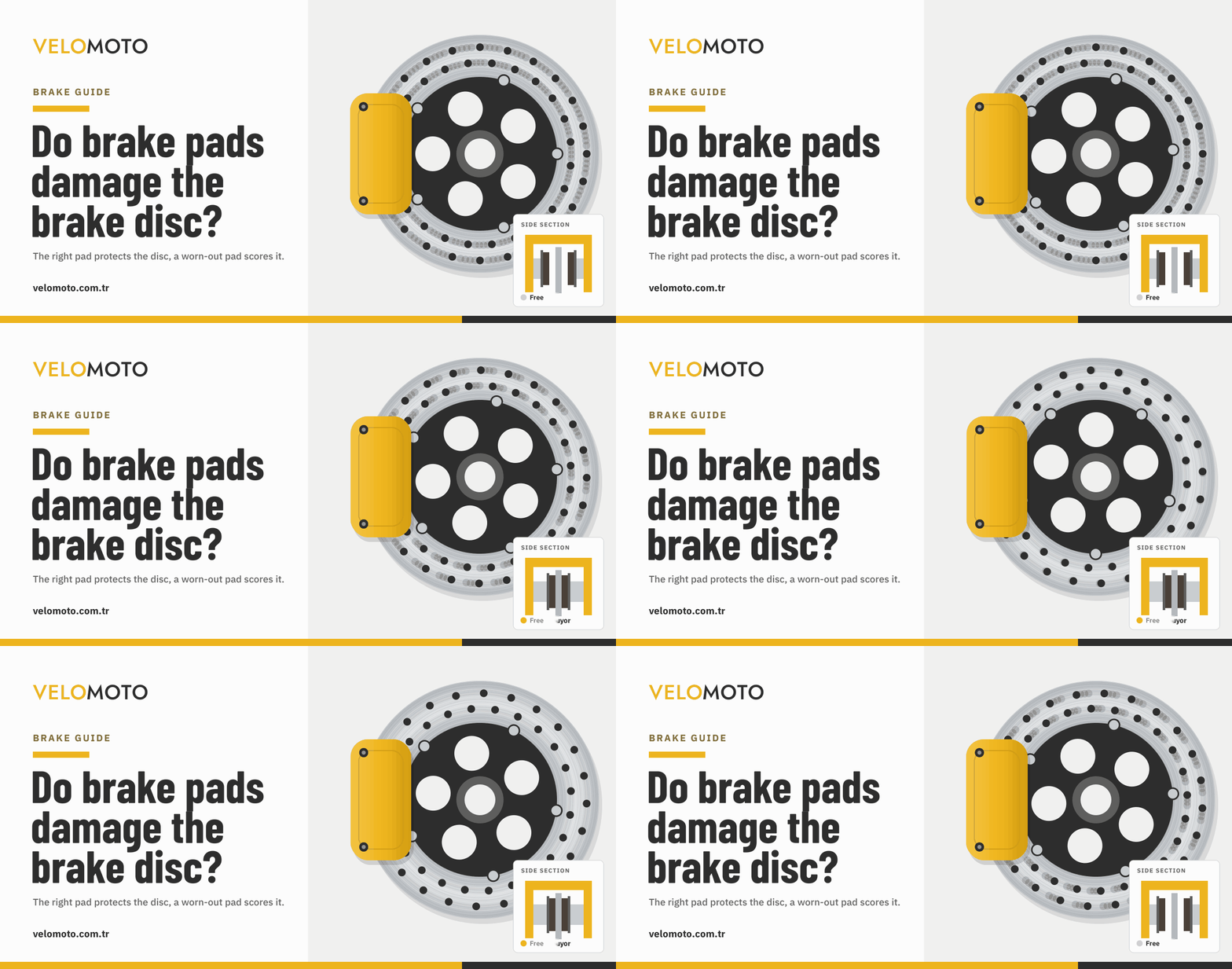
If you keep riding, the friction material wears away completely and the metal plate rubs on the disc; the disc is deeply scored and braking power drops dangerously. For details, see our guide Do brake pads damage the brake disc?
If one of the inner and outer pads is noticeably thinner than the other, or a pad has worn at an angle, the problem is usually in the caliper; see our article on cleaning caliper pins and pistons.

Products in this guide
Brenta brake pads
Organic, sintered and track brake pads made in Italy, ECE R90 approved. The 2026 catalog includes an application table for more than 170 makes and 8,500+ models.
We do not sell directly to end users; you can find the products at our authorised dealers. See our dealers
Frequently asked questions
Is a brake pad without a groove bad?
No. The groove is a design choice; on a pad without a groove, look at the thickness of the friction material.
The groove is down by half; how many more km will the pad last?
No exact km can be given; it depends on riding style, load and road. Check more often.
Are the wear line and the groove the same thing?
Most of the time, yes. Some brake pads have a notch on the side; it does the same job.
Can I cut a groove into a brake pad myself?
Not recommended. It compromises the pad's structure and its approved design.
The groove is packed with dust; is that a problem?
The groove cannot do its evacuation job and wear becomes harder to read. Clean it with brake cleaner.
Do front and rear brake pads wear at the same rate?
Usually not; in most riding the front brake pad wears faster.
How can you tell that a brake pad is worn out?
If the friction material is down to 1–2 mm or the wear groove has disappeared, the pad is worn out. Metal scraping noise, longer lever travel and stopping distance, and a falling fluid level are also signs.