Short answer
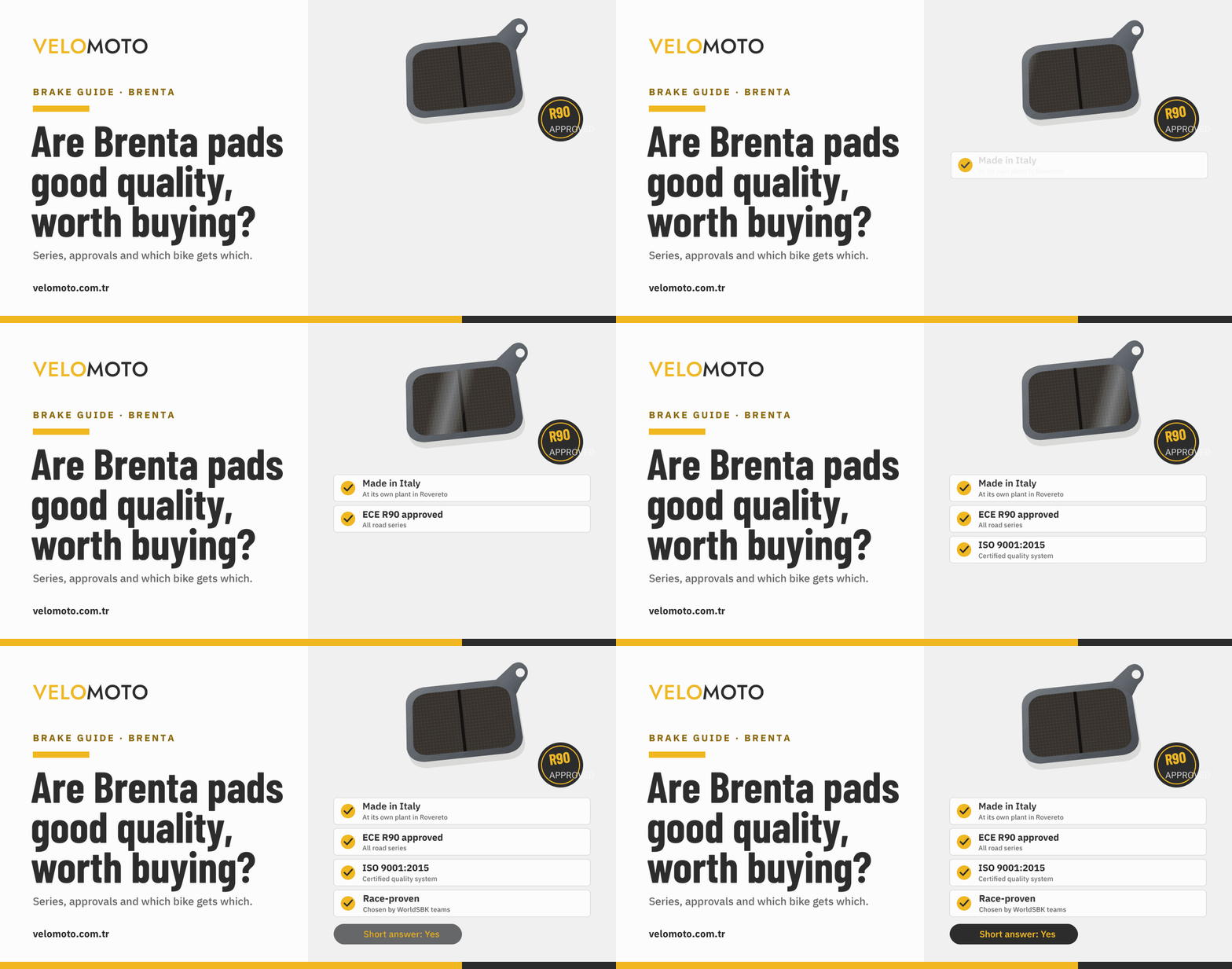
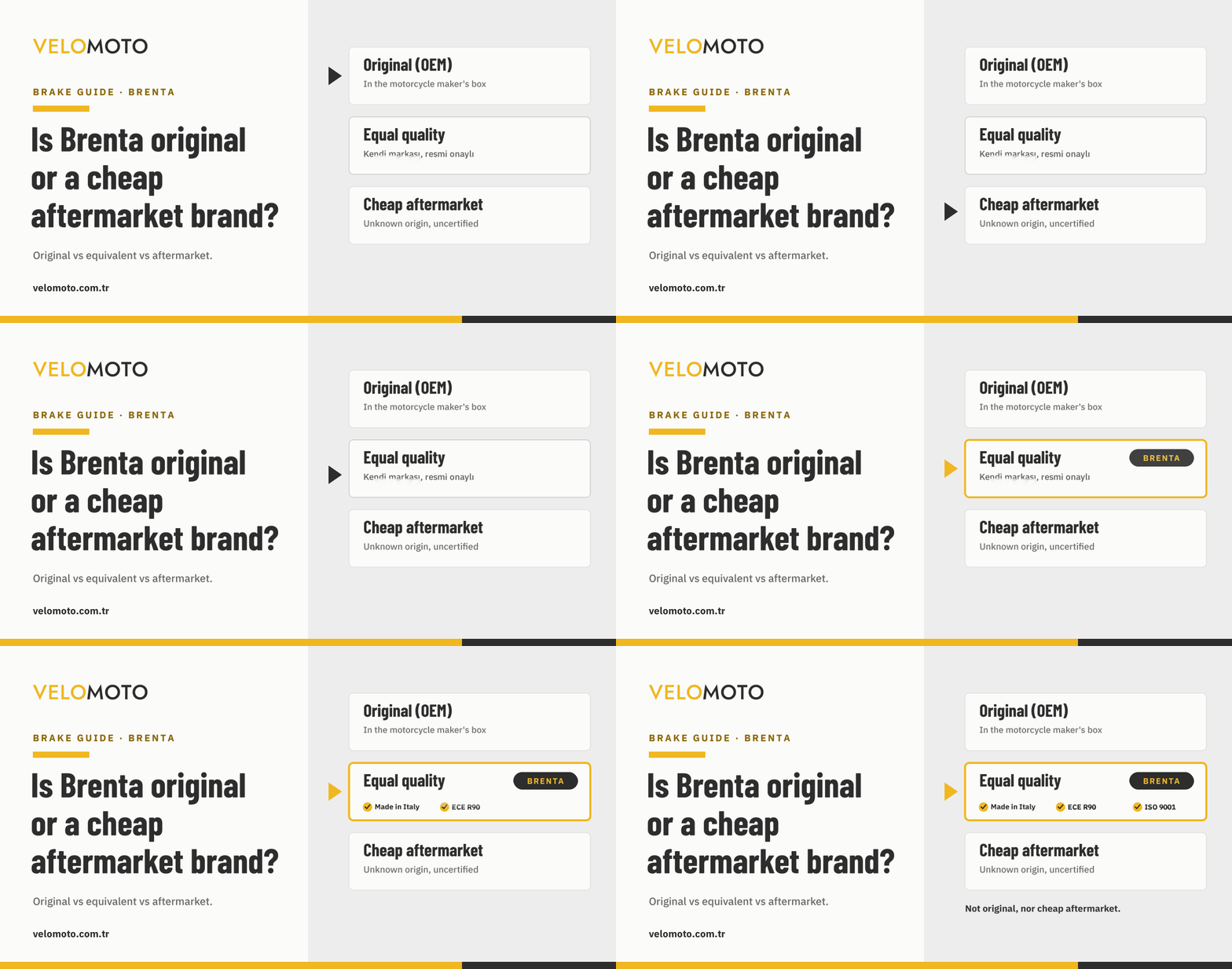
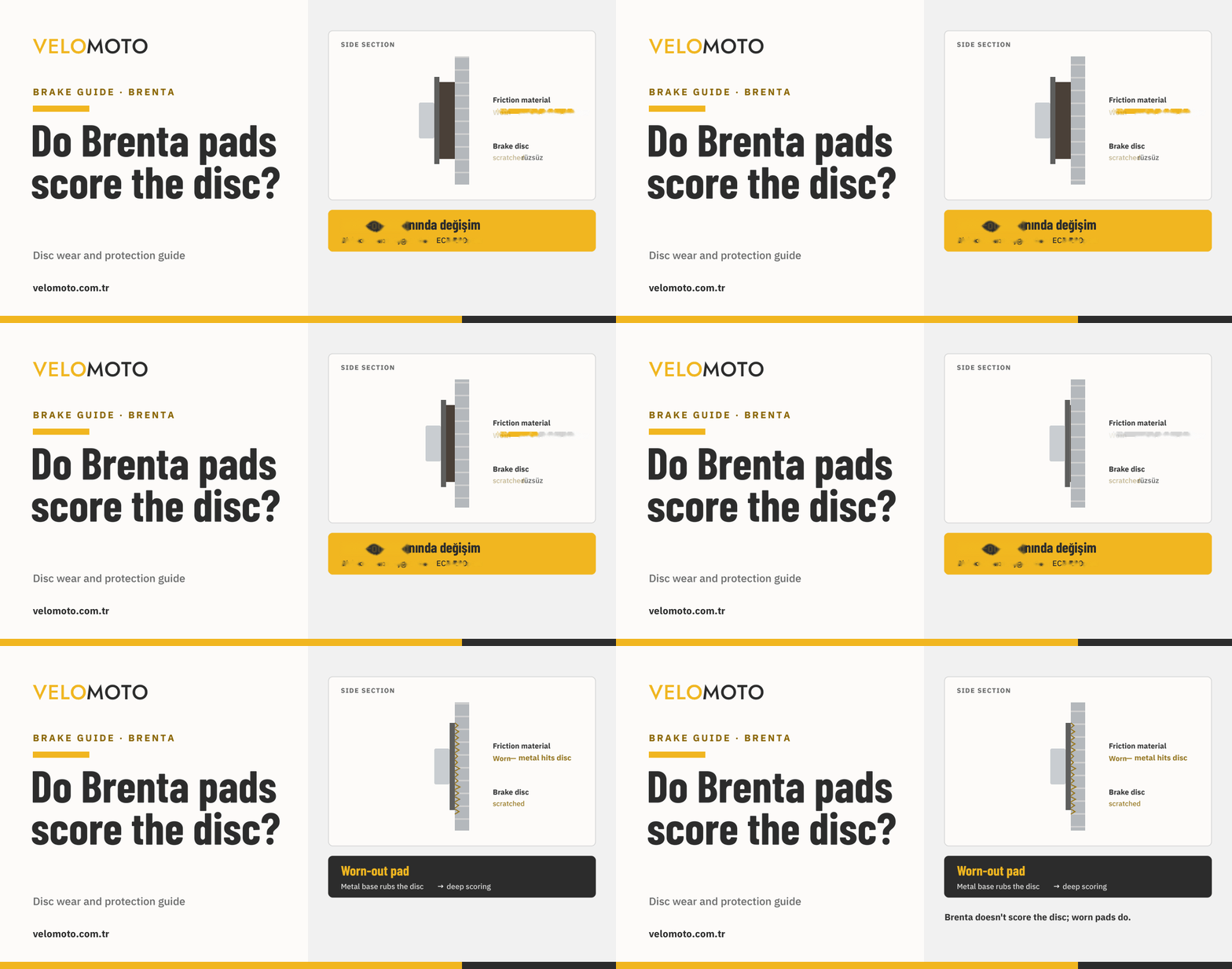
No; Brenta brake pads of the right series, replaced on time, do not score the disc. The organic series is developed for low disc wear, and the Sintered Road and Pro Road series are developed to give high grip without excessive disc wear; the road series are ECE R90 approved. The real causes of scoring on a disc are a pad worn all the way down so its metal backing rubs on the disc, a series that does not suit the disc, trapped sand and mud, or hard use without a break-in.
Velomoto is the official distributor of Brenta products in Turkey.
How do Brenta series treat the disc?
| Series | Effect on the disc | Watch out |
|---|---|---|
| Organic (Series 3) | Low disc wear; gentle on thin scooter discs | Wears out faster under heavy and intense use |
| Sintered Road | High grip without excessive disc wear | The disc must be suitable for sintered brake pads |
| Pro Road | Limited disc wear in sporty use | The disc must be suitable for sintered brake pads |
| Pro Off-Road | Sintered compound for off-road use | Mud and sand increase wear with any brake pad |
| Ceramic Racing | High friction for the track | Track only; not used on the road |
Where does scoring on the disc come from?
- Worn-out brake pads. Once the friction material is used up, the steel backing plate touches the disc and cuts deep grooves within a few kilometers.
- A series that does not suit the disc. Fitting sintered brake pads to a disc designed for organic pads only speeds up wear.
- Sand, mud, gravel. Hard particles embedded in the pad surface act like sandpaper.
- New brake pads on an old, scored disc. The new pad cannot seat into the grooves; grip drops and wear speeds up.
- Hard use without a break-in. Hard braking in the first kilometers can glaze the brake pad.
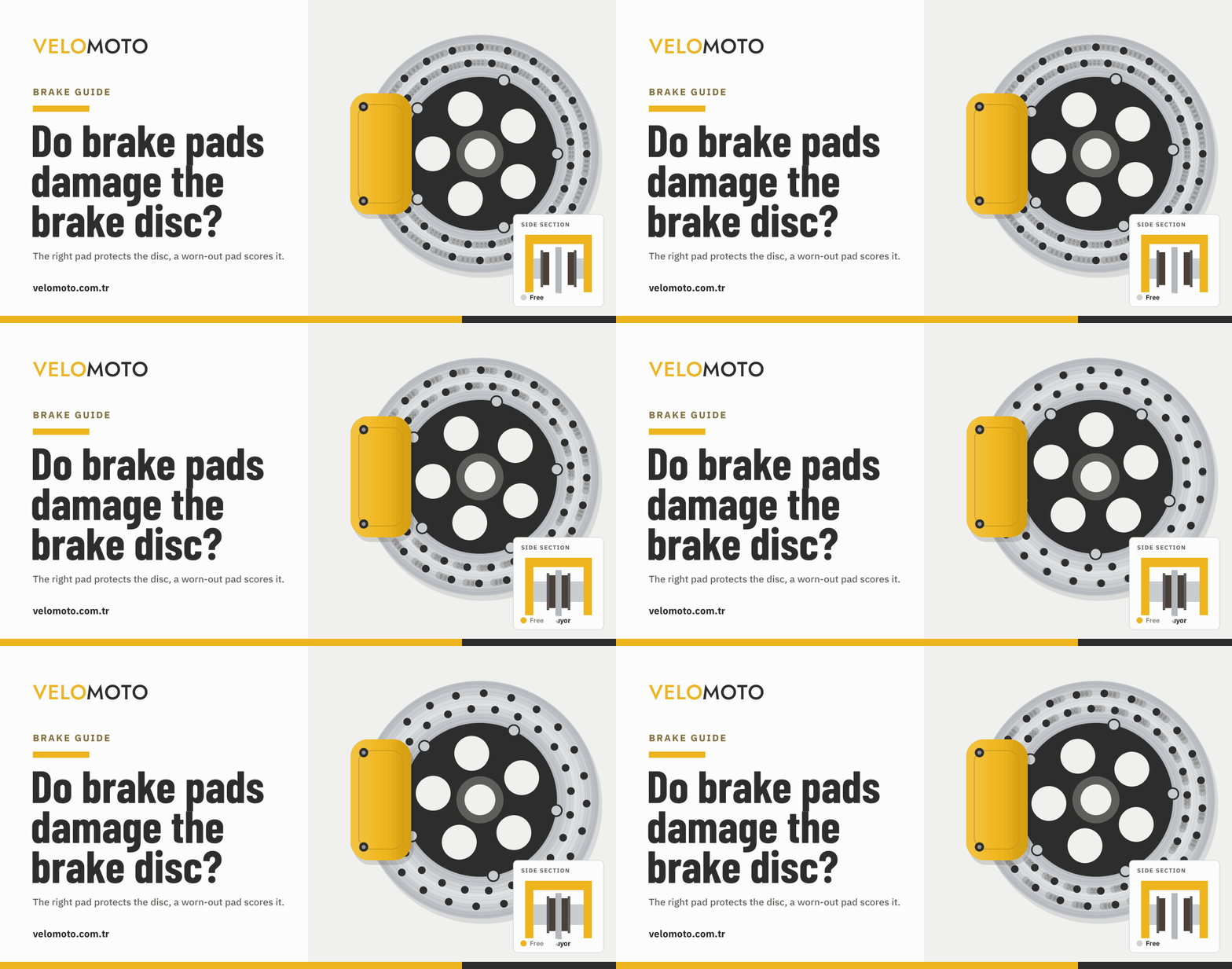
Light, fine lines on the disc are normal. Deep grooves that catch your fingernail, or a thickness that has dropped below the MIN TH value, mean the disc needs replacing. For the general topic, see our guide Do brake pads damage the brake disc?
5 steps to protect your disc with Brenta
- Choose the series that suits your riding. Organic for scooters and the city; sintered series for heavy, loaded and sporty use.
- Check disc compatibility. Before switching to sintered, make sure the disc is suitable.
- Replace the brake pads on time. When the friction material is down to 1–2 mm or the wear groove has disappeared.
- Have the disc measured. Do not fit new brake pads to a grooved disc.
- Do a break-in. Avoid hard and prolonged braking for the first 100–200 km.

Products in this guide
Brenta brake pads
Organic, sintered and track brake pads made in Italy, ECE R90 approved. The 2026 catalog includes an application table for more than 170 makes and 8,500+ models.
We do not sell directly to end users; you can find the products at our authorised dealers. See our dealers
Frequently asked questions
Do Brenta sintered brake pads wear the disc?
Sintered Road and Pro Road are developed to give high grip without excessive disc wear. The disc needs to be suitable for sintered brake pads.
Do Brenta organic brake pads protect the disc?
Yes. One of the key features of the organic series is low disc wear.
I fitted Brenta and the disc got scored; why?
The most common causes are trapped sand or mud, an old, grooved disc that was not replaced, or brake pads used all the way down.
Are light lines on the disc normal?
Yes. Fine, superficial lines do not affect braking; if there are deep grooves, the disc should be measured.
Should Brenta brake pads also be replaced when the disc is replaced?
That is recommended. The old pads have taken on the shape of the old disc and will not seat fully on the new disc.
What if I use track brake pads on the road?
Ceramic Racing is for the track only. On the road, use the ECE R90 approved series.
Do sintered brake pads score the original disc?
If the disc is suitable for sintered brake pads, it wears normally and does not get scored. On discs designed for organic pads only, sintered pads speed up wear; check suitability in the owner's manual or from the information on the disc.