Short answer
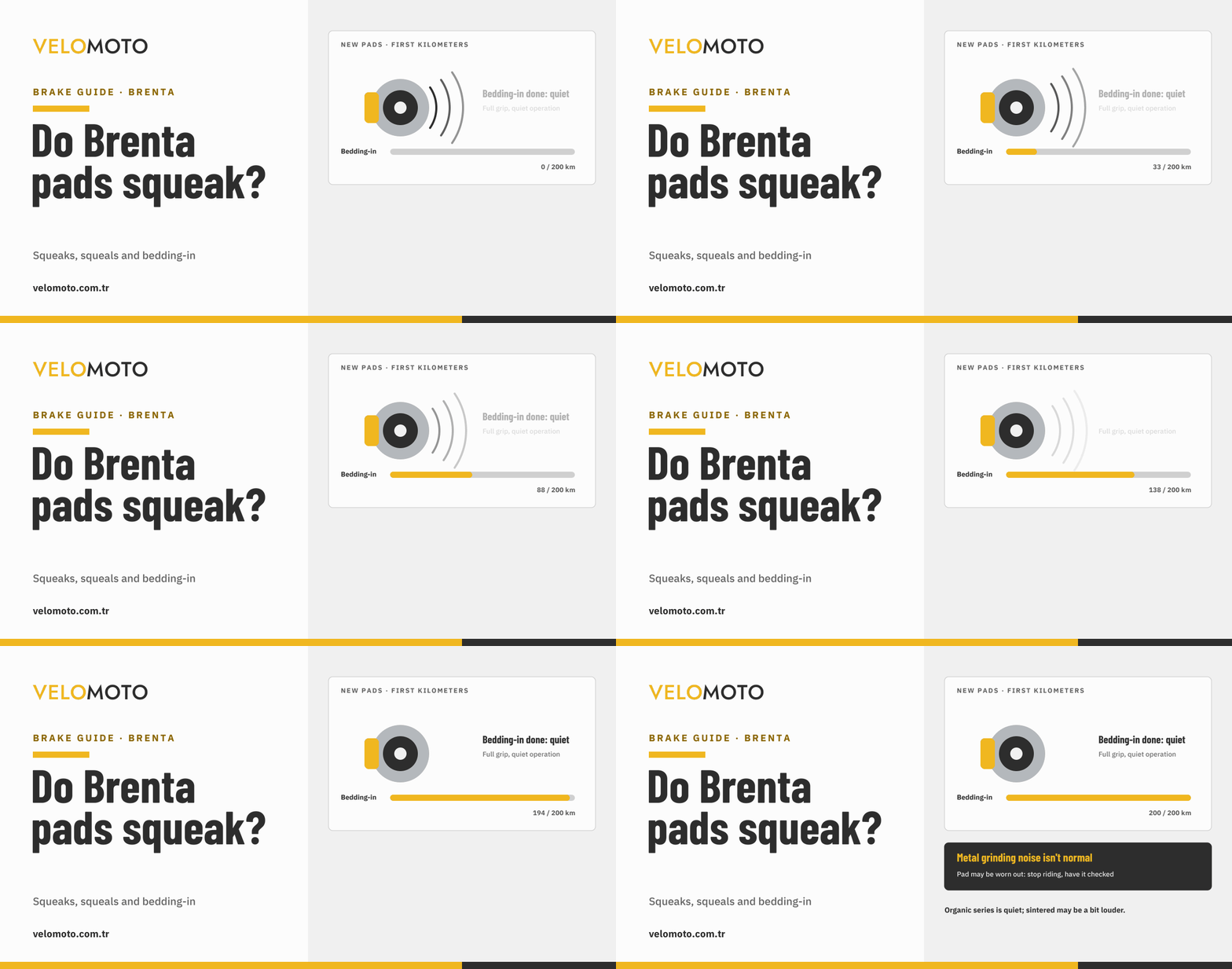
After fitting new Brenta brake pads, you may hear a slight noise in the first kilometers; this is normal and goes away once the break-in is complete. Brenta's organic series runs quietly; the sintered series can be slightly noisier because of their compound. Loud squealing that continues after the break-in usually comes from the installation, dirt or an old disc. Metal scraping or grinding noise, however, is never normal.
Velomoto is the official distributor of Brenta products in Turkey.
Which noises are normal and which are not?
| Noise | When | Normal? | What to do |
|---|---|---|---|
| Light rubbing, brief squeal | First 100–200 km | Yes | Complete the break-in |
| Slight noise on the first stops in the morning | In damp weather, on a motorcycle that has been sitting | Yes | Thin rust clears in a few stops |
| Constant loud squealing | Even after the break-in | No | Have the installation, caliper and disc checked |
| Rubbing even when the brake is released | Constantly while the wheel turns | No | A caliper pin or piston may be sticking |
| Metal scraping, grinding | When braking | Absolutely not | Stop riding |
Why do new brake pads make noise?
- Break-in period. The pad surface does not make full contact until it beds in to the disc.
- Old, scored disc. The new pad cannot seat into the grooves.
- Dirt and dust. Old dust, sand or mud built up in the caliper.
- Installation. A spring, pin or anti-squeal shim missing or fitted incorrectly.
- Glazing. The surface of a pad braked hard without a break-in turns shiny.
- Compound. Sintered brake pads can run slightly noisier.
To prevent noise after fitting Brenta
- Clean the caliper and remove the old dust.
- Check the disc; do not fit new brake pads to a grooved disc.
- Install correctly; the pins must move freely.
- Do not apply anything to the friction surface; no oil, grease or spray should get on it.
- Do a break-in; brake gradually for the first 100–200 km.
- If noise matters to you, choose organic.

Products in this guide
Brenta brake pads
Organic, sintered and track brake pads made in Italy, ECE R90 approved. The 2026 catalog includes an application table for more than 170 makes and 8,500+ models.
We do not sell directly to end users; you can find the products at our authorised dealers. See our dealers
Frequently asked questions
Why do new brake pads make noise?
A slight noise is normal until the pad surface fully beds in to the disc; it goes away once the break-in is complete.
Do Brenta sintered brake pads make noise?
They can run slightly noisier than organic pads. Loud, constant squealing, however, comes from the installation or the disc.
How long does the squealing last?
Noise related to break-in usually fades within the first 100–200 km.
What should I do if I hear metal noise?
Stop riding; the pad's metal backing may be touching the disc.
Does brake pad spray stop the noise?
Spray must never be applied to the friction surface of the brake pad or disc. Noise is solved through correct installation, cleaning and break-in.
Is noise after rain normal?
Yes. The thin rust that forms on the disc clears in a few stops.
Why do motorcycle brake pads make noise or squeal?
The most common causes are new pads that have not finished breaking in, a dirty caliper, an old and grooved disc, glazed pads, and springs and pins that are missing or fitted incorrectly. If you hear metal noise, the brake pads may be worn out.
Why does the front or rear brake squeal?
Squealing is a high-frequency vibration between the brake pad and the disc. Clean the caliper, check the disc and, if necessary, redo the break-in.