Short answer
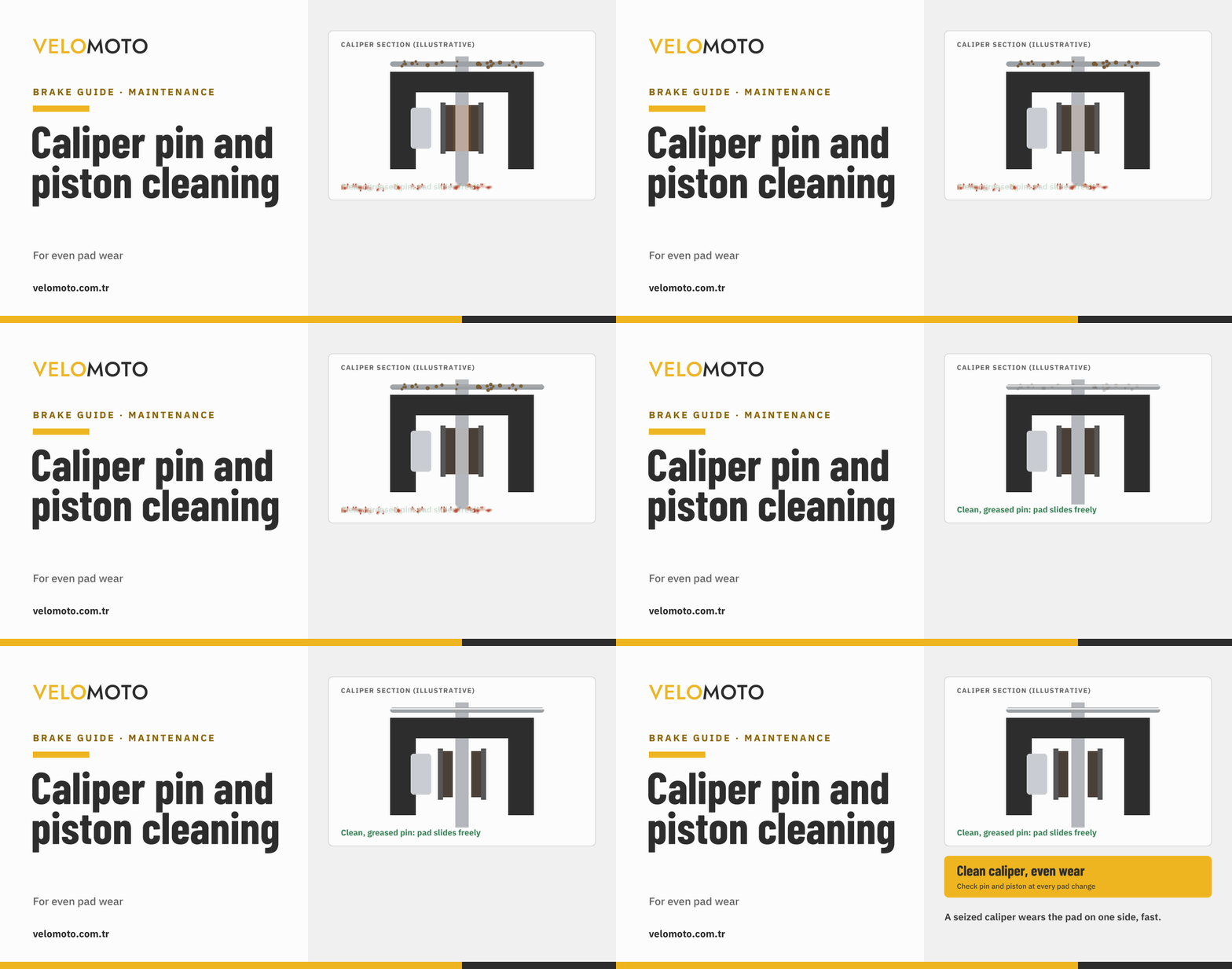
Yes; dirty or rusted caliper pins and pistons directly shorten brake pad life. If a piston does not retract or a pin sticks, the brake pad keeps rubbing on the disc even after the brake is released: the pads and disc wear quickly, the brakes heat up, and the inner and outer pads wear differently. Cleaning the pins and piston surfaces at every brake pad change largely prevents this problem; if cleaning is not enough, the caliper needs a rebuild.
Velomoto is the official distributor of Brenta products in Turkey.
What sticks in a caliper?
| Part | Function | When dirty |
|---|---|---|
| Pad pin | Holds the brake pads | The pad cannot slide; it wears at an angle or on one side |
| Slide pins (floating caliper) | Allow the caliper body to slide | The outer pad rubs on the disc constantly |
| Piston | Pushes the pad and retracts slightly on release | Does not retract; the pad rubs constantly |
| Seal and dust boot | Seals, keeps dirt and water out | If torn, the piston rusts |
Symptoms
- The inner and outer brake pads are different thicknesses.
- A pad has worn at an angle, like a wedge.
- The wheel is hard to turn or there is a rubbing noise.
- The disc is extremely hot after a ride and there is a burning smell.
- The brake pads wear out much sooner than expected.
Step-by-step cleaning
- Remove the brake pads and the pad pin.
- Clean the pin and the inside of the caliper with brake cleaner; replace a worn pin.
- Push the pistons out a little by slowly squeezing the lever; do not push them far enough to come out of their bores.
- Clean the exposed piston surface with brake cleaner and a soft brush; do not use a wire brush or sandpaper on it.
- Push the pistons back in evenly and straight.
- Check the dust boots.
- If the manual calls for it, apply a thin layer of heat-resistant, rubber-safe brake grease to the pins (see the grease guide).
- Fit the brake pads, pump the lever and check that the wheel turns freely.
When is a rebuild or service needed?
- If there is rust, pitting or scoring on the piston surface.
- If brake fluid is leaking from the caliper.
- If the piston does not retract easily after cleaning.
- If the dust boots are torn or hardened.
A caliper rebuild takes experience; if you are not sure, have it done by a service shop.

Products in this guide
Brenta brake pads
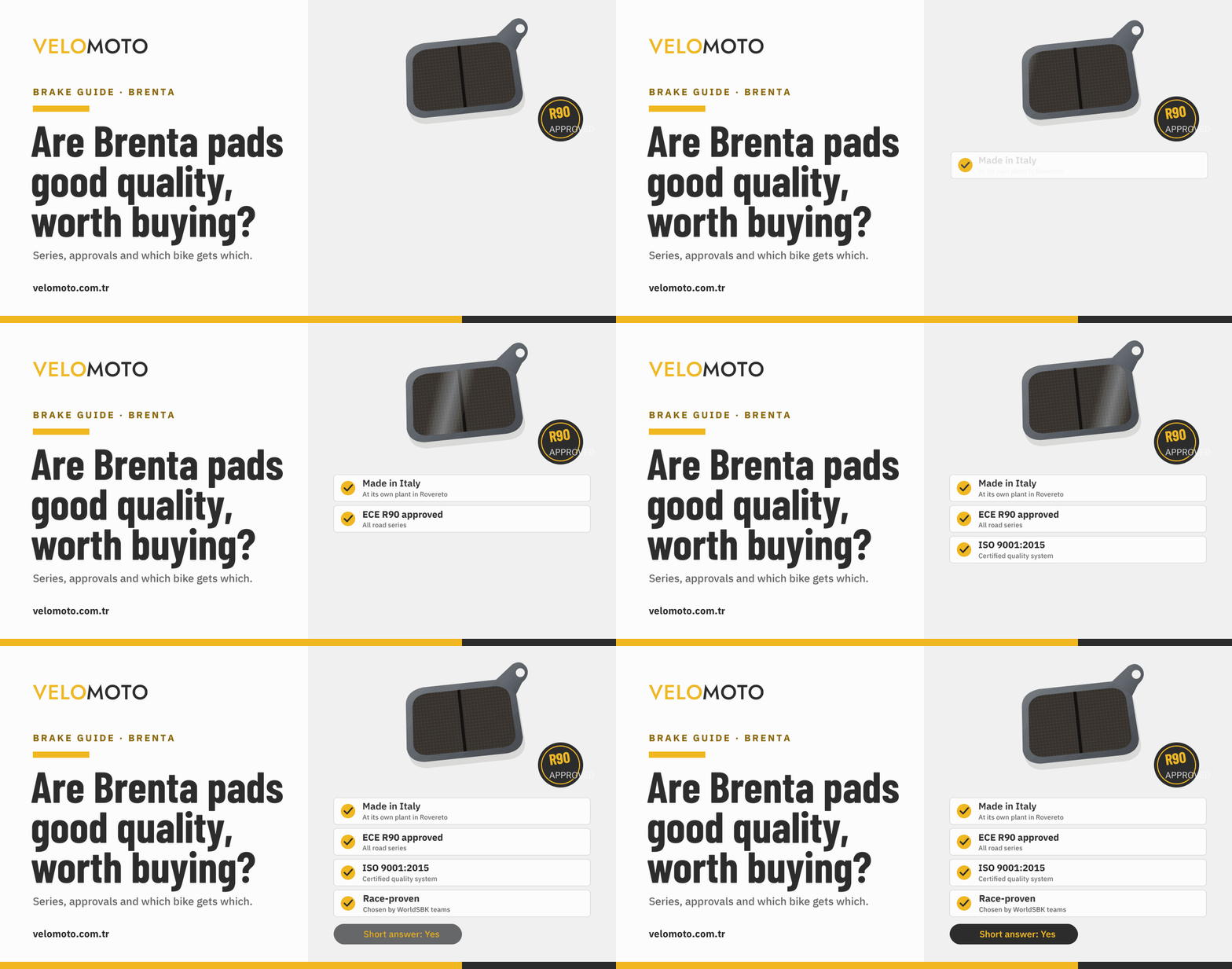
Organic, sintered and track brake pads made in Italy, ECE R90 approved. The 2026 catalog includes an application table for more than 170 makes and 8,500+ models.
We do not sell directly to end users; you can find the products at our authorised dealers. See our dealers
Frequently asked questions
Why does one brake pad wear out faster than the other?
Most of the time because of a sticking pin or a piston that does not retract.
How often should the caliper be cleaned?
At least at every brake pad change; more often on roads with rain, mud and salt.
What should be used to clean the piston?
Brake cleaner and a soft brush. Do not use wire brushes, sandpaper or oily products.
Should grease be applied to the caliper pin?
Follow the service manual: either dry or a thin layer of heat-resistant brake grease. Do not use copper or petroleum-based grease.
Does a sticking caliper increase fuel consumption?
A constantly rubbing brake pad brakes the motorcycle; but the real risk is overheating and rapid wear.
Can I keep riding if the brakes are dragging?
Not recommended. The brakes can overheat and weaken; have them checked as soon as possible.