Short answer
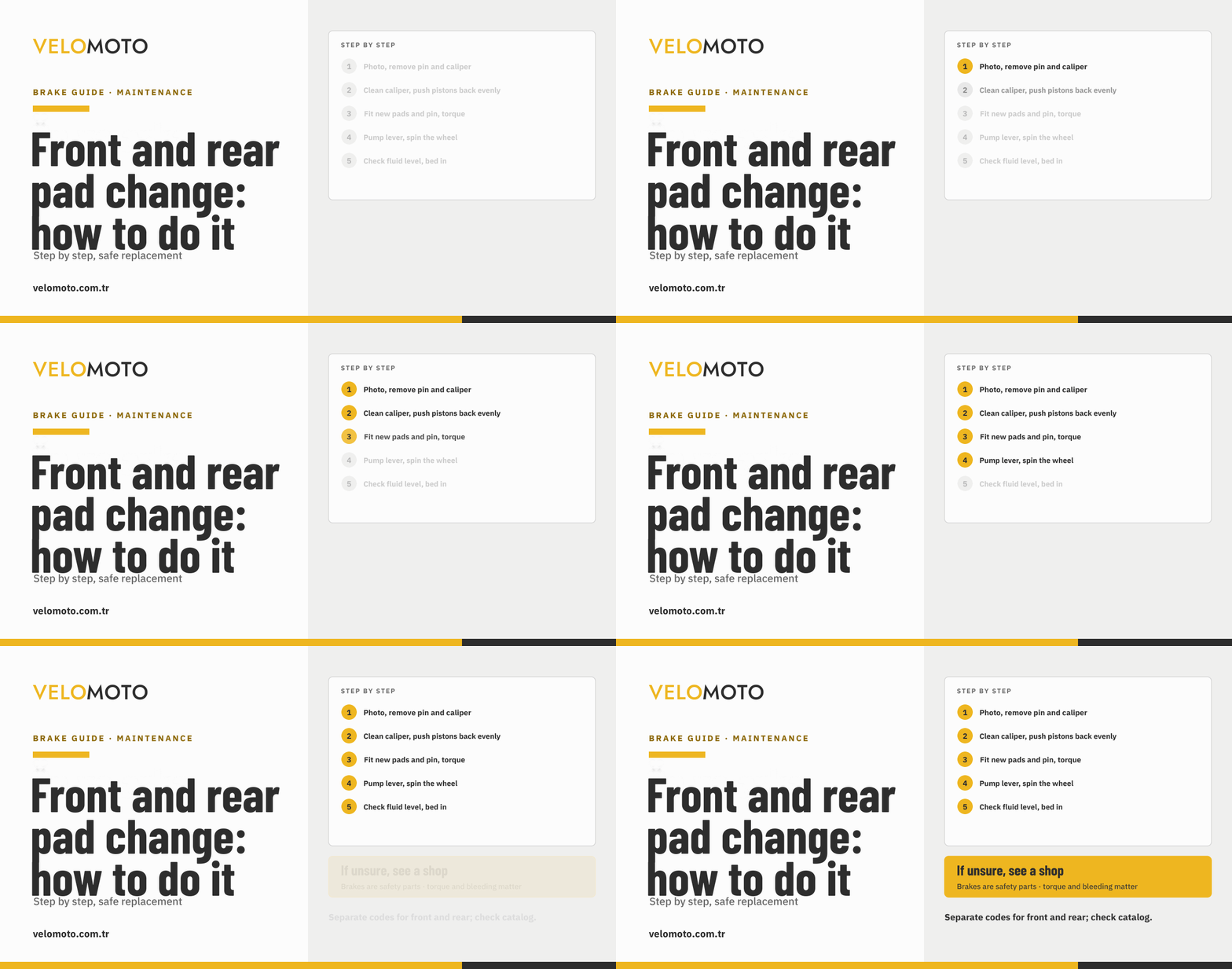
Replacing brake pads means removing the pad pin or the caliper, cleaning the caliper and pushing the pistons back evenly, fitting the new pads in the same layout as the old ones, tightening the bolts to the torque in the service manual, and pumping the brake lever or pedal until it is firm. The method is similar for front and rear, but the pad codes are different. Brakes are a safety part; if you are not sure, have the job done by a workshop.
Velomoto is the official distributor of Brenta products in Turkey.
What you need
- A brake pad set with the correct code (Brenta catalog)
- Service manual (torques and sequence)
- Socket and Allen key set, torque wrench
- Brake cleaner, clean cloth, gloves
- A clamp or pliers and an old pad to push the pistons back
- Optional: heat-resistant brake paste
Front brake pad replacement: step by step
- Secure the motorcycle; ignition off.
- Take a photo: Pad, spring and pin layout.
- Loosen the pin and remove the caliper; do not strain the hose.
- Inspect the old pads: Are they worn evenly?
- Clean the caliper; clean or replace the pin.
- Push the pistons back slowly and evenly; do not let the reservoir overflow.
- Fit the new pads; do not touch the friction surface.
- Refit the caliper and tighten to torque.
- Clean the disc.
- Pump the lever; check that the wheel spins freely.
On a dual-disc front brake, do the same on both calipers.
Differences when replacing rear brake pads
- The code is different; check it separately in the catalog.
- Caliper position: On some models the wheel or exhaust may need to come off.
- Pump the pedal.
- Rear drum brake: Brake shoes are replaced instead of pads.
- Combined brakes: see Is pad replacement different on CBS and ABS?
Common mistakes
- Pushing the pistons back without cleaning them, or at an angle.
- Overfilling the reservoir.
- Fitting the pads backwards or leaving out springs.
- Tightening bolts without a torque wrench.
- Getting grease, oil or spray on the friction surface.
- Riding off without pumping the lever.
After the replacement, break the pads in.

Products in this guide
Brenta brake pads
Organic, sintered and track brake pads made in Italy, ECE R90 approved. The 2026 catalog has application tables for more than 170 brands and 8,500+ models.
We do not sell directly to end users; you can find the products at our authorised dealers. See our dealers
Frequently asked questions
Can I replace my motorcycle brake pads myself?
Yes, if you have the right tools, the manual and a torque wrench; if you are not sure, have a workshop do it.
Does the wheel have to come off to replace brake pads?
Not on most front brakes; on some models it may be needed for the rear brake.
The pistons won't go back, what should I do?
Do not force them; have the caliper cleaned or sent for an overhaul.
Do I need to bleed the brakes after changing pads?
Usually not, as long as the hydraulic system was not opened.
Are front and rear pads replaced at the same time?
Not necessarily; but the pads on the same wheel are replaced together.
Why do the brakes feel soft after a pad change?
Because the pistons were pushed back, the first squeeze goes to waste; pump the lever and break the pads in.