Short answer
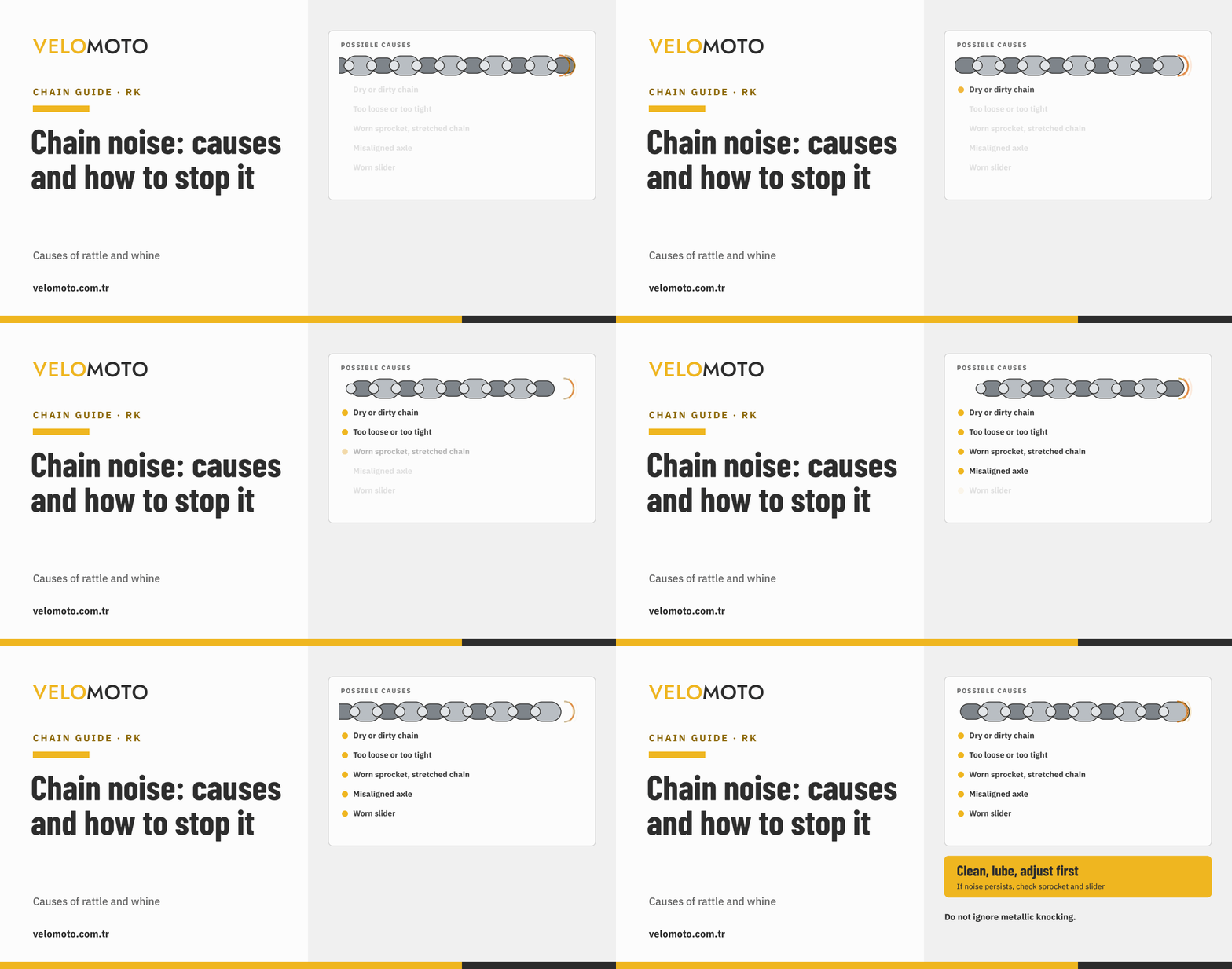
Chain noise is usually caused by lack of lube, incorrect tension, worn sprockets or a stretched chain. A dry chain rustles and squeaks, a chain that is too loose slaps and knocks, and a chain that is too tight whines. If axle alignment is off or the chain slider is worn, the chain makes a rubbing noise.
To stop the noise, work through these steps in order: clean and lubricate the chain, check the slack and alignment, and inspect the sprockets and slider. If the noise persists, it may be time to replace the chain and sprockets.
Velomoto is the official distributor of RK Japan in Turkey.
Possible causes by type of sound
| Sound | Possible cause | What to do |
|---|---|---|
| Rustling, squeaking | Dry or dirty chain | Clean and lubricate |
| Slapping, knocking | Chain too loose; it hits the swingarm or slider | Adjust the slack |
| Whining, humming | Chain too tight or worn sprockets | Check the slack, inspect the sprockets |
| Clicking or jumping under load | Worn sprockets, stretched chain | Replace the chain and sprockets |
| A “click” at regular intervals | Stiff link or master link problem | Find the stiff link, check the master link |
| Rubbing noise | Axle misaligned, worn slider or guard | Check the alignment and slider |
Step-by-step check
- Clean and lubricate: A dry chain is the most common source of noise.
- Measure the slack: At the middle of the lower run, at the tightest point; bring it to the manual's value.
- Check the alignment: The axle marks should be the same on both sides.
- Inspect the sprockets: Pointed, hooked or one-sided worn teeth.
- Check the chain: Stiff links, uneven tension, stretch.
- Inspect the slider and guard: Marks where the chain rubs, worn plastic.
Is the noise really coming from the chain?
Some noises sound like the chain but come from other parts: the rear wheel bearing, the rear sprocket hub (rubber dampers), the gearbox or the brakes. Turning the wheel by hand with the engine off and listening helps isolate the noise. If the noise continues, see a workshop.
Is an O-ring chain quieter?
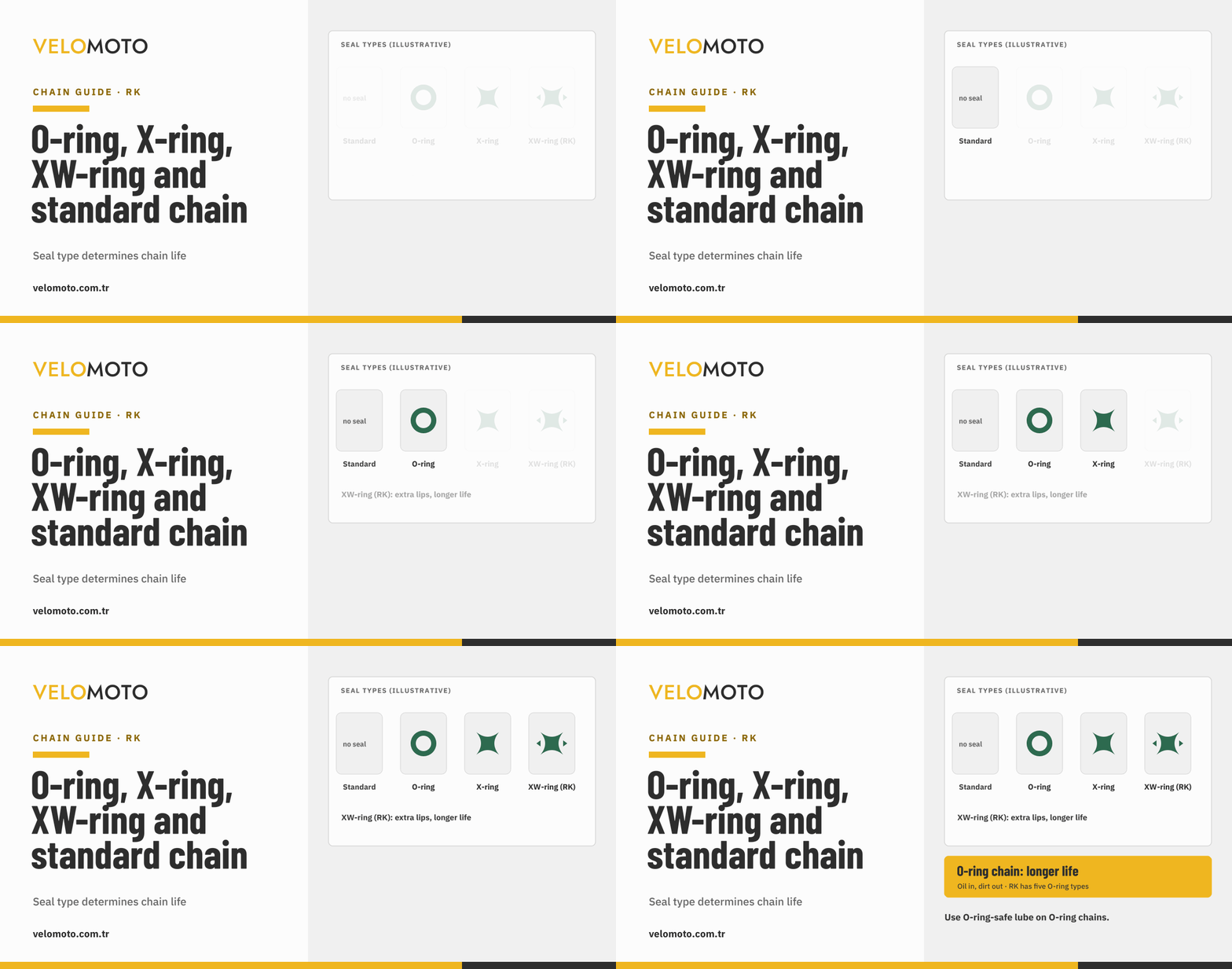
The grease inside an O-ring chain keeps the pin and bushing lubricated; a well-maintained O-ring chain usually runs quieter and smoother. However, external lubrication, correct slack and sound sprockets are necessary for every chain. For details, see our guide The difference between O-ring, X-ring, XW-ring and standard chains.

Products in this guide
RK chains and sprockets
Chains and heat-treated sprockets made in Japan since 1953; original equipment supplier to many manufacturers including Honda, Yamaha, Suzuki and Kawasaki. 1,119 products and 3,786 model applications in the catalog.
We do not sell directly to end users; you can find the products at our authorised dealers. See our dealers
Frequently asked questions
Why does the chain make a slapping noise?
Usually the chain is too loose and hits the swingarm or slider.
What causes chain whine?
A chain that is too tight or worn sprockets cause whining.
What if the noise doesn't stop after lubricating?
Check the slack, alignment, sprockets and slider; if the problem persists, the chain and sprockets may have reached the end of their life.
I fitted a new chain and there is noise; why?
A new chain fitted with old sprockets, incorrect slack, misalignment or an over-riveted master link can cause noise.
Do RK chains make noise?
A correctly fitted and maintained chain runs smoothly; noise is usually due to maintenance, adjustment or the sprockets.
Is it dangerous to ride with a noisy chain?
Yes, if there is metallic knocking, jumping or clicking under load; the chain can come off the sprocket. Have it checked right away.