Short answer
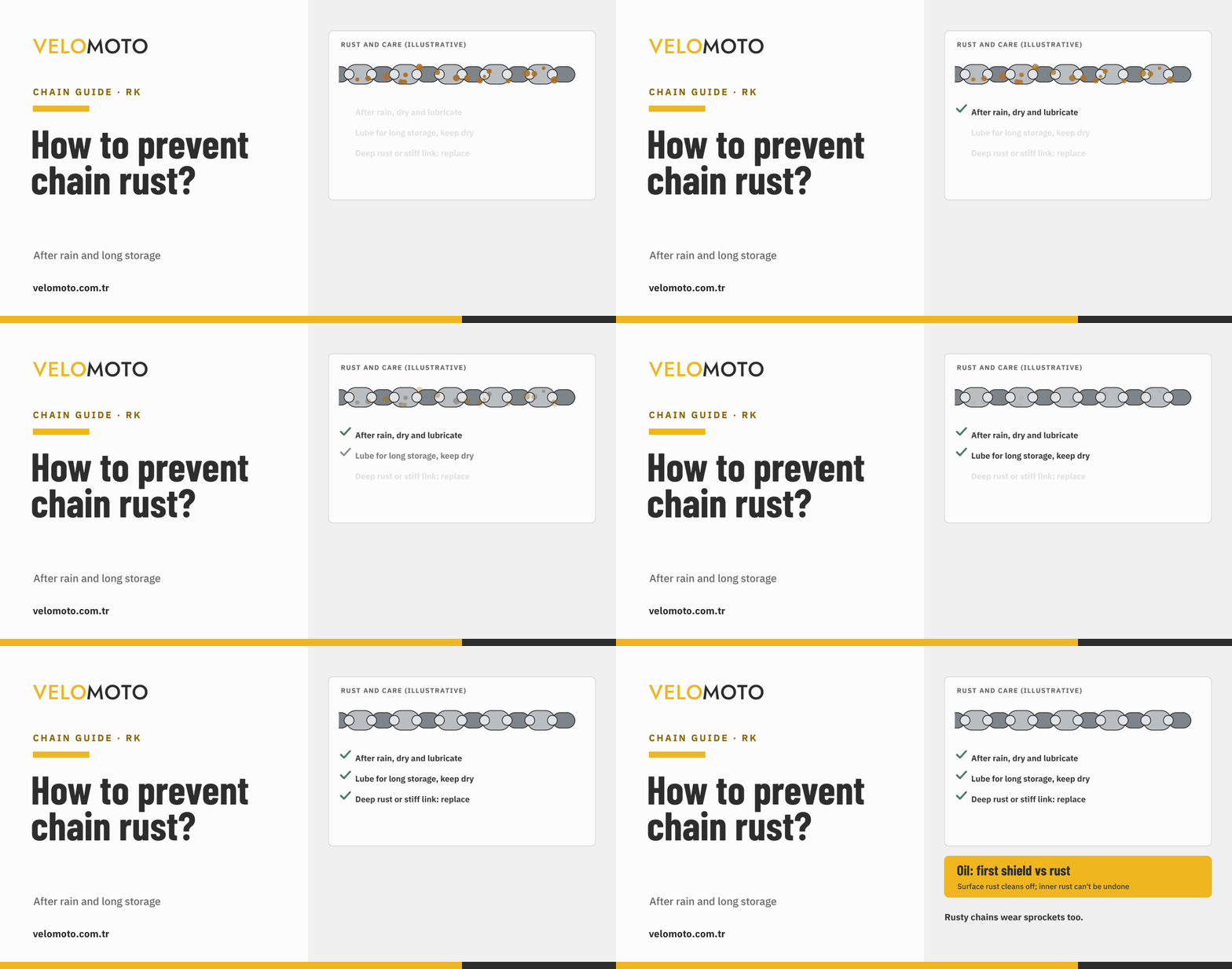
The way to prevent chain rust is to dry and lubricate the chain after rain and washing and before long storage; the layer of lube keeps water and salt away from the steel surface. Light surface rust is cleaned off with an O-ring-safe chain cleaner, a cloth and a soft brush; the chain is then lubricated right away.
If the rust has worked its way between the links into the pins and bushings, the links have stiffened or pits have formed on the plates, the chain cannot be repaired; the chain and sprockets are replaced together. RK considers rust and corrosion to be a result of neglect and excludes them from warranty coverage.
Velomoto is the official distributor of RK Japan in Turkey.
Why does a chain rust?
- Running dry: Steel without a layer of lube rusts quickly with moisture.
- Rain and washing: Water removes the lube from the chain; if the chain is not dried and lubricated, rust starts.
- Salt: Salted winter roads and seaside areas accelerate rust.
- Wrong cleaner: Stripping all the lube off the chain and then not lubricating it.
- Long storage: A chain left dry for weeks in a humid environment.
Care after rain
- Wipe the chain with a dry cloth; if possible, take a short ride to throw off the water.
- If there is mud or salt, clean it with an O-ring-safe cleaner.
- Lubricate the chain while warm with a lube suitable for O-ring chains.
- In rainy periods, choose a water-resistant lube or paste.
How do you clean surface rust?
- Wet the chain with an O-ring-safe chain cleaner.
- Remove the rust with a soft-bristled chain brush and a cloth; a wire brush damages the seals.
- Dry it and lubricate it right away.
- Turn the chain by hand and check that the links rotate freely.
Do not use kerosene, diesel or abrasive rust-remover chemicals to deal with rust.
Long-term storage
- Clean and lubricate the chain before putting the motorcycle into storage.
- Keep the motorcycle in a dry, ventilated place; put it on a stand if possible.
- Before riding again, check the chain, clean and lubricate it if necessary and adjust the tension.
When should the chain be replaced?
| Sign | What to do |
|---|---|
| Light orange surface rust on the plates | Clean and lubricate |
| Orange-brown dust coming from between the links | Sign of internal wear; have the chain checked |
| Stiff links that do not free up with lubrication | Replace the chain and sprockets |
| Pits or holes in the plates | Replace the chain and sprockets |
| Contact with a corrosive liquid such as battery acid | Replace the chain |
Gold-coated chains are slightly more resistant to rust but still need lubrication; for details, see our guide Gold, black and colored chains.
Products in this guide
RK chains and sprockets
Chains and heat-treated sprockets made in Japan since 1953; original equipment supplier to many manufacturers including Honda, Yamaha, Suzuki and Kawasaki. 1,119 products and 3,786 model applications in the catalog.
We do not sell directly to end users; you can find the products at our authorised dealers. See our dealers
Frequently asked questions
Can a rusted chain be used?
It can be used if the surface rust is cleaned off and the chain is lubricated. If the links have stiffened or the plates are pitted, the chain should be replaced.
Do RK chains rust?
Any steel chain rusts if left dry. RK counts rust and corrosion as neglect and excludes them from warranty.
When should the chain be lubricated after rain?
After the ride, once the chain has dried, ideally the same day.
What should I do with the chain when storing the motorcycle for winter?
Clean and lubricate it and keep the motorcycle in a dry place; check it before riding again.
Can rust remover spray be used?
Abrasive chemicals are not recommended on O-ring chains; use an O-ring-safe chain cleaner.
Orange dust is coming from the chain, why?
There may be wear or rust inside the links. Have the chain and sprockets checked.