
Velomoto cable manufacturing
Control cable guides
Guides on choosing, fitting, maintaining and troubleshooting throttle, brake, clutch and door release cables for motorcycles, heavy vehicles, agricultural and garden machinery.
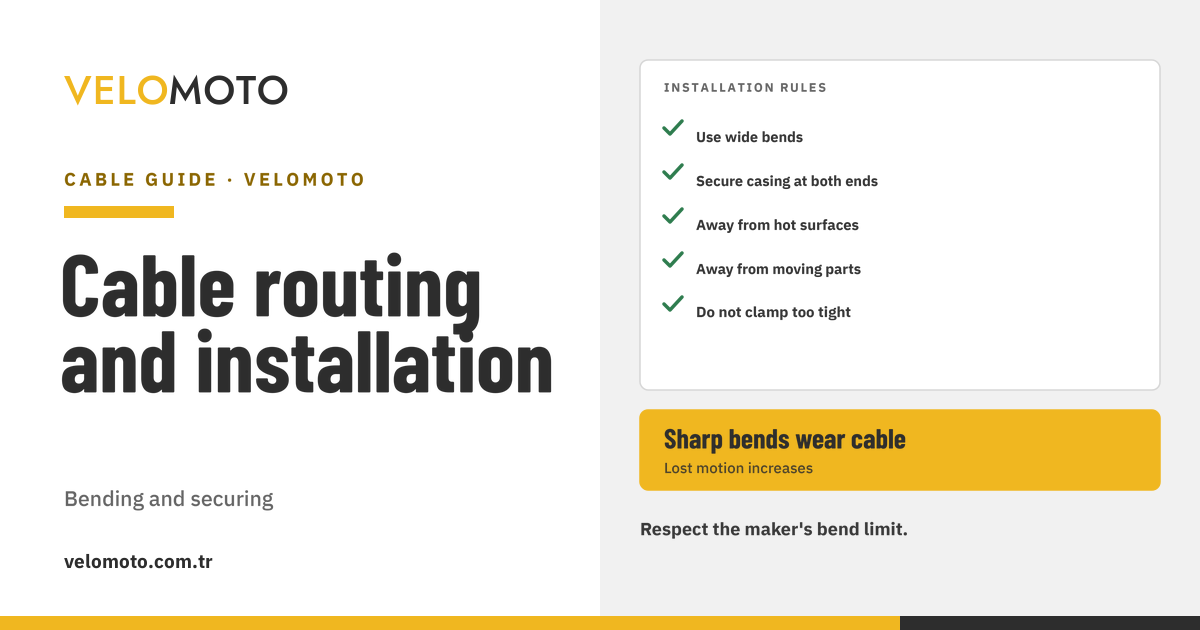
Control Cable Routing: Bending and Installation Rules
A control cable should be installed with wide curves, with the casing firmly secured at both ends, away from hot surfaces and moving parts, and without unnecessary clamping pressure.
Read the guide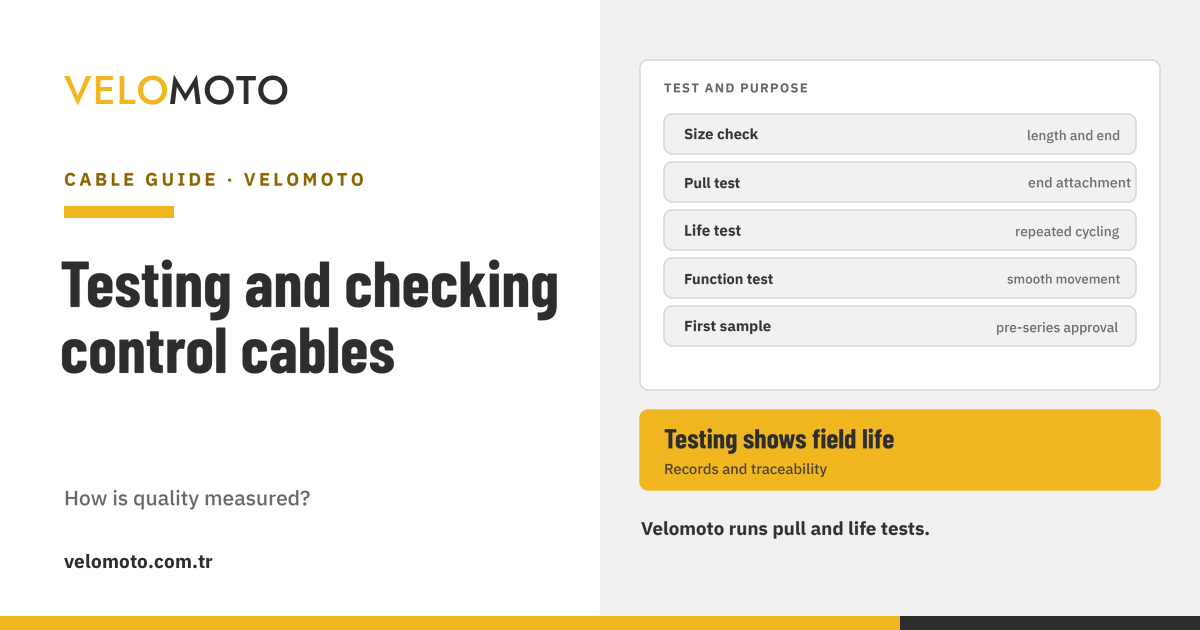
Testing and Quality Control Methods for Control Cables
The quality of a control cable is measured with four basic checks: dimensional inspection, a pull test showing how firmly the end fitting is attached to the wire, a life (cycle) test showing how well the cable withstands repeated operation…
Read the guide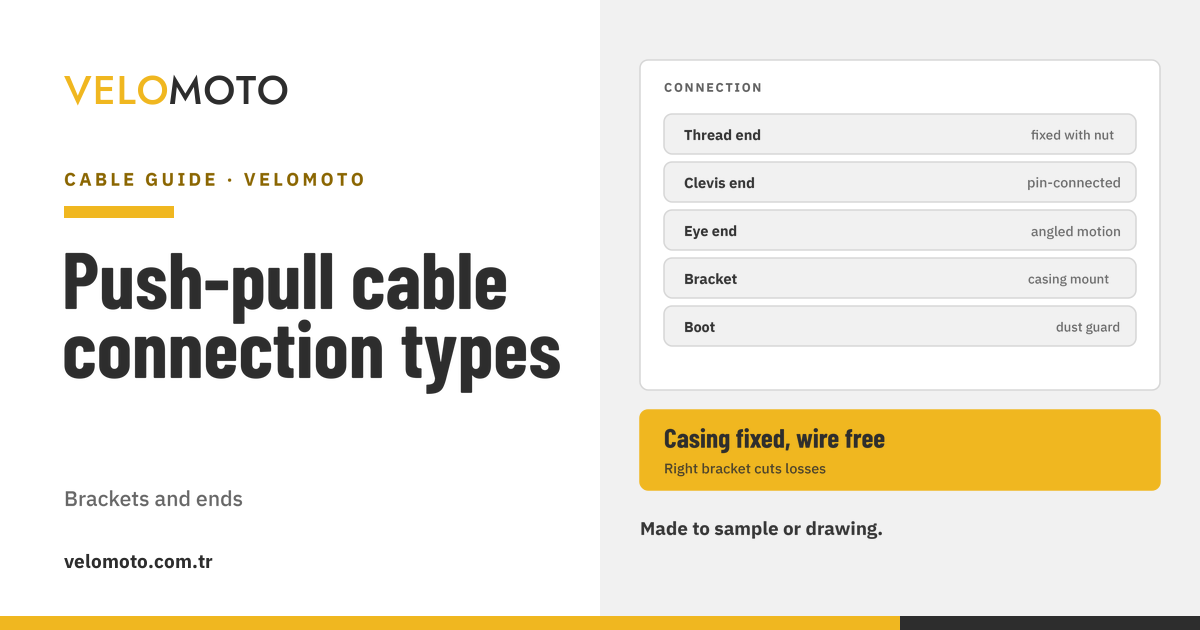
Push-Pull Cable Mounting Brackets and Connection Types
On a push-pull cable, the outer casing is secured with brackets, while the inner wire (or the rod at its end) connects to the lever and mechanism through threaded ends, clevises, ball joints and similar fittings.
Read the guide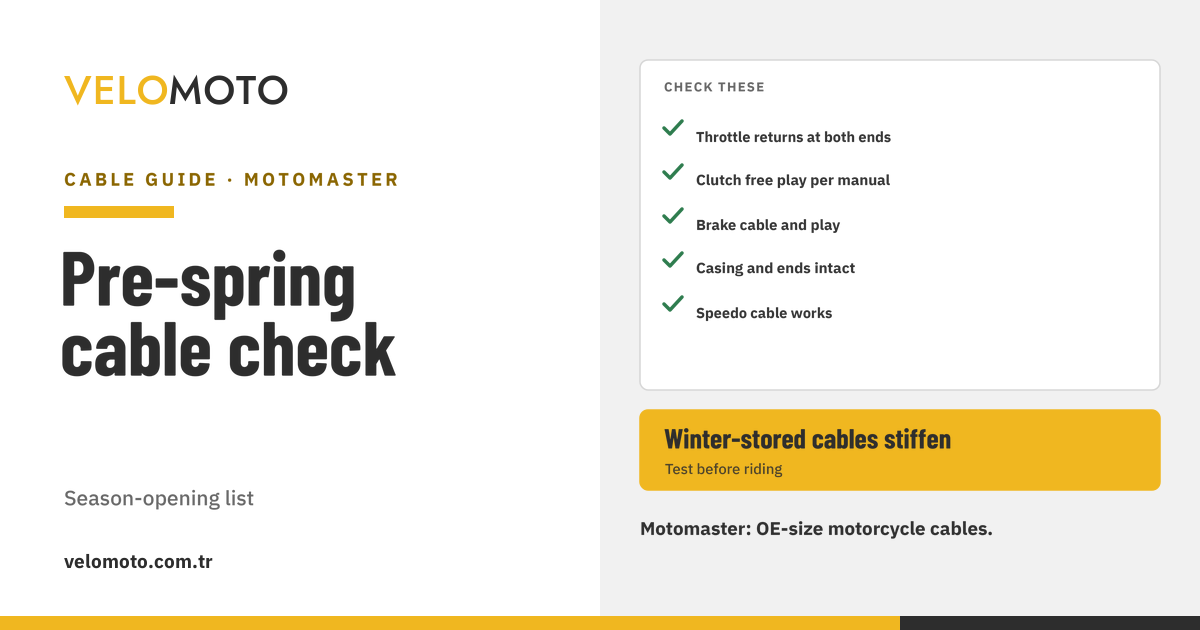
Pre-Spring Motorcycle Cable Checklist
Before riding a motorcycle coming out of winter, check that the throttle snaps closed on its own even with the handlebar turned to either side, that the clutch lever has the free play specified in the manual, that the brake cable is adjusted, and inspect the outer casing and end fittings of every cable.
Read the guide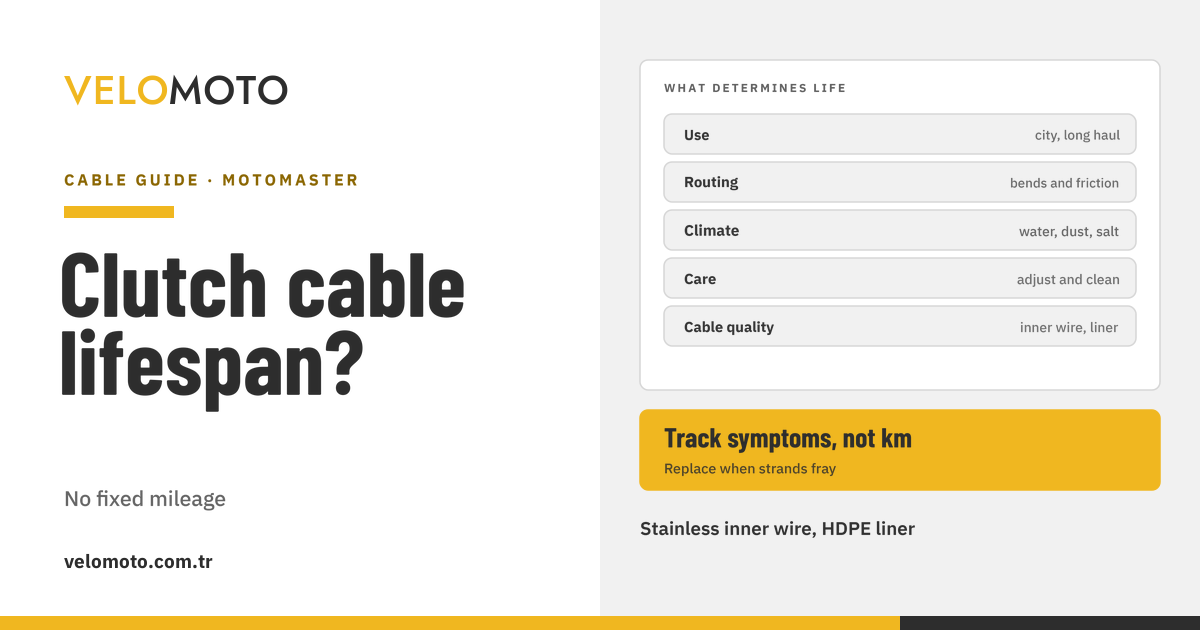
How Many Miles Does a Clutch Cable Last?
A clutch cable has no fixed mileage life; how long it lasts depends less on distance than on how many times it is used, its routing, the environment and maintenance.
Read the guide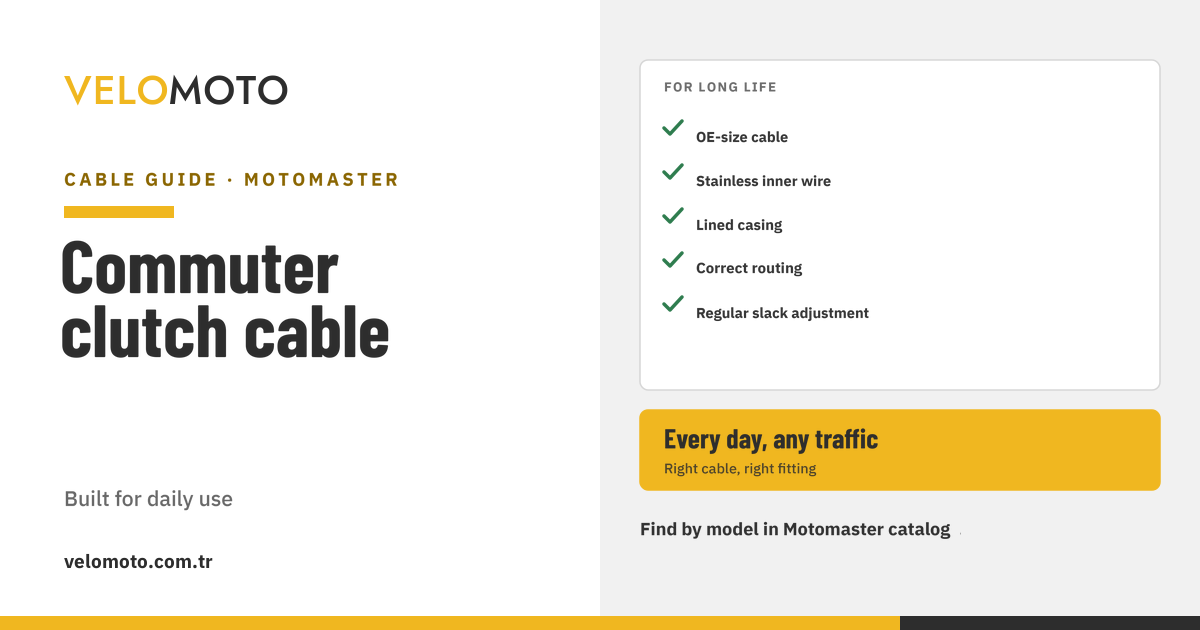
Long-Lasting Clutch Cables for Commuter Motorcycles
For a long-lasting clutch cable on commuter motorcycles ridden daily in the city, such as the YBR, CBF or Drift, choose an original-size cable with a stainless inner wire and lined outer casing; route the cable along its original path and adjust its free play regularly.
Read the guide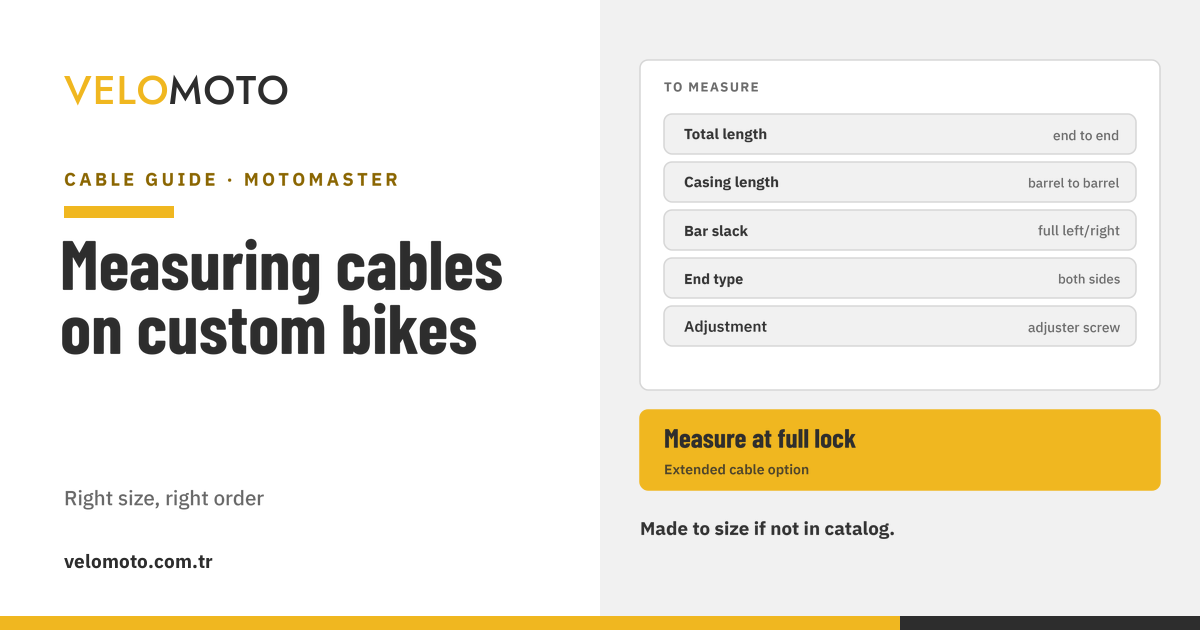
Measuring and Ordering Cables for Custom Motorcycles
On a custom motorcycle, cable length should be measured with the new handlebar installed and turned fully right and fully left; the cable must not be pulled tight or bent sharply in any position.
Read the guide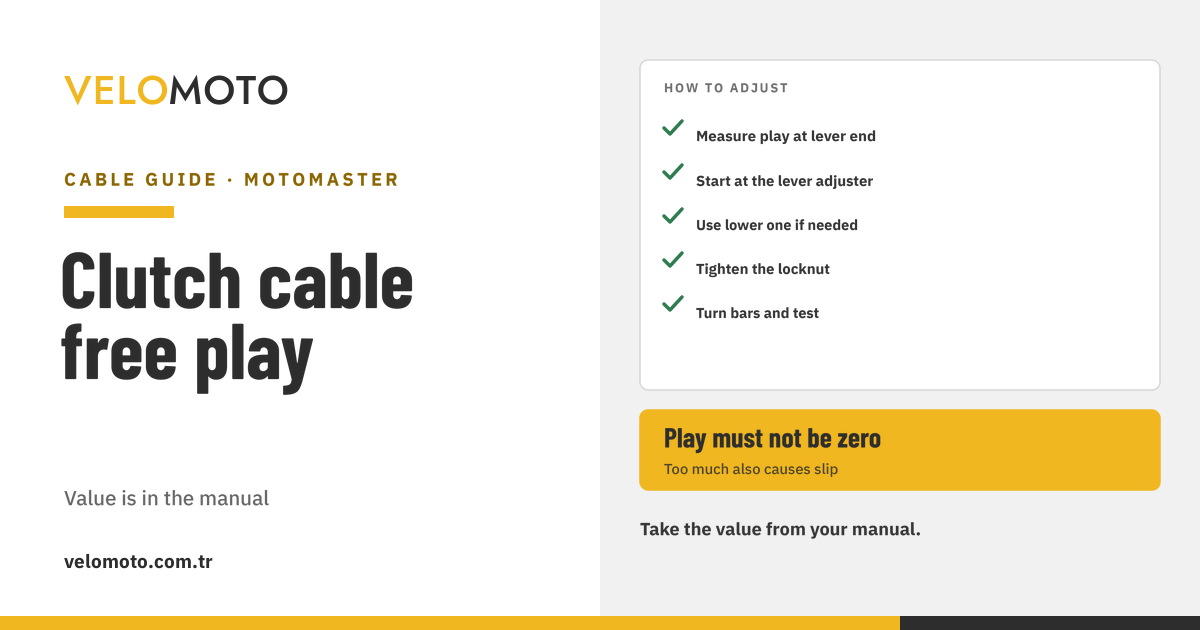
How to Adjust Clutch Cable Free Play, and How Many mm Should It Be?
The correct clutch cable free play varies by motorcycle model and is listed in the owner's manual; adjust it first with the adjuster on the lever side, and if needed with the adjuster on the engine side.
Read the guide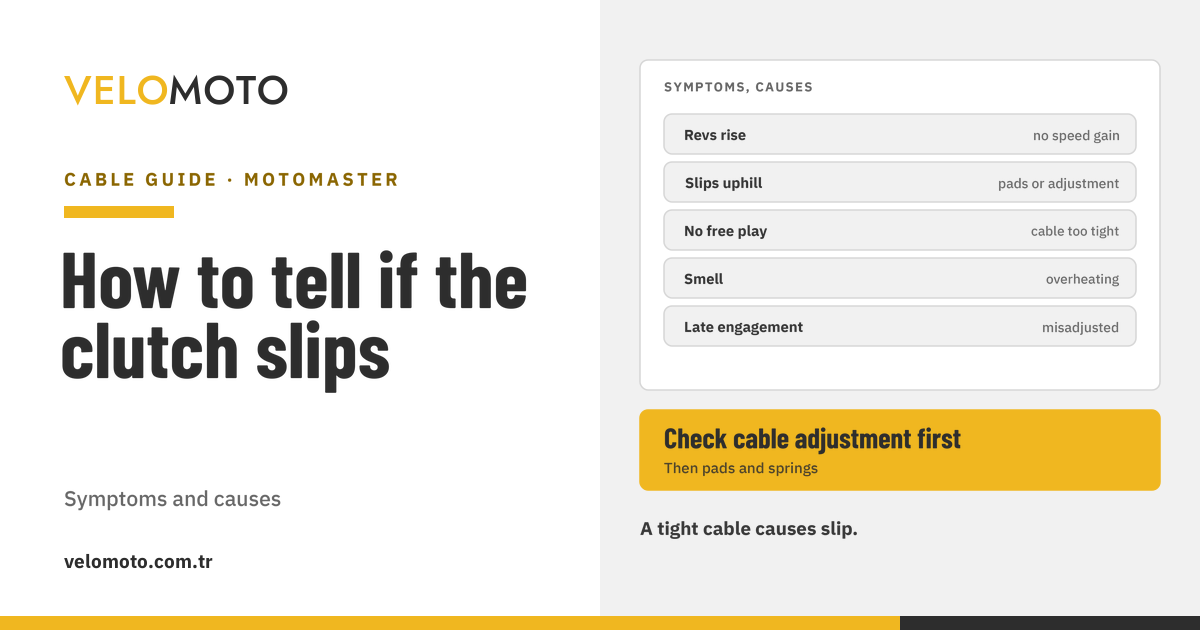
What Is Clutch Slip and How Do You Spot It?
Clutch slip is when the engine revs rise as you open the throttle but the motorcycle does not accelerate at the same rate; because the clutch does not fully engage, power is not fully transferred to the wheel.
Read the guide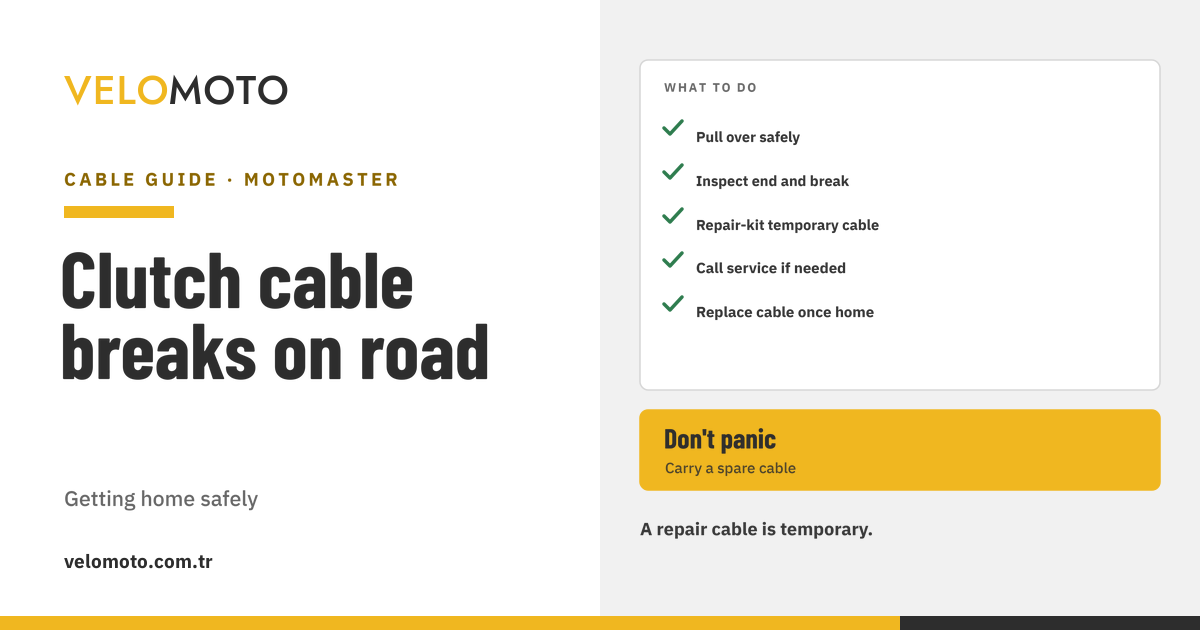
What to Do If Your Clutch Cable Breaks on the Road
If the clutch cable breaks on the road, first pull over to a safe spot and stop, then look at where it broke; if you have a repair kit, continue with a temporary cable, otherwise call roadside assistance.
Read the guide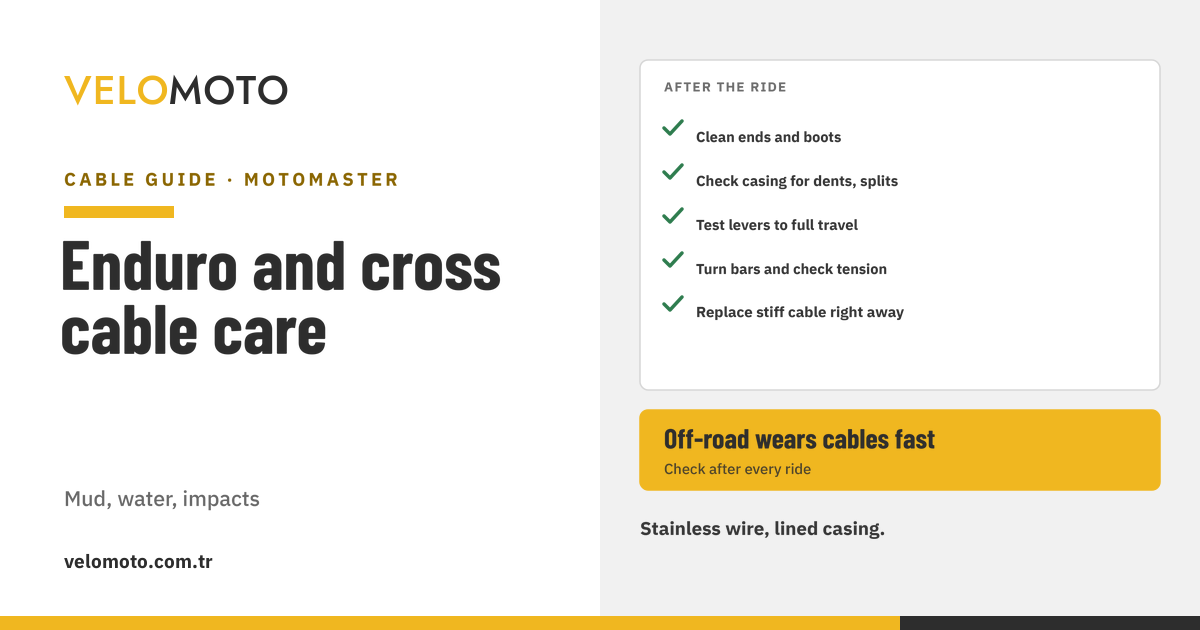
Cable Maintenance on Enduro and Motocross Motorcycles
On enduro and motocross motorcycles, cables are among the parts most exposed to mud, water, dust and crash impacts; cleaning the end fittings, checking the outer casing and working the levers through their full travel after every ride noticeably extends cable life.
Read the guide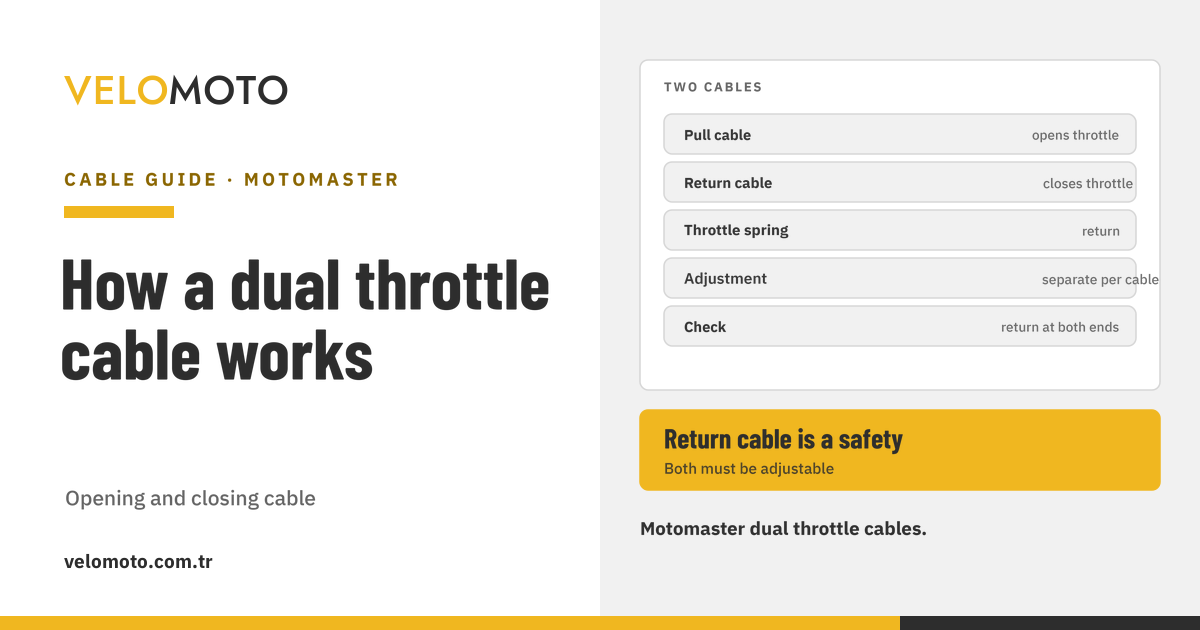
How Do Dual Throttle Cables Work on Maxi-Scooters and Touring Bikes?
In dual throttle cable systems, one cable opens the throttle valve and the second closes it when the throttle grip is rolled back; this way the throttle is not left to the return spring alone and can also be closed by hand.
Read the guide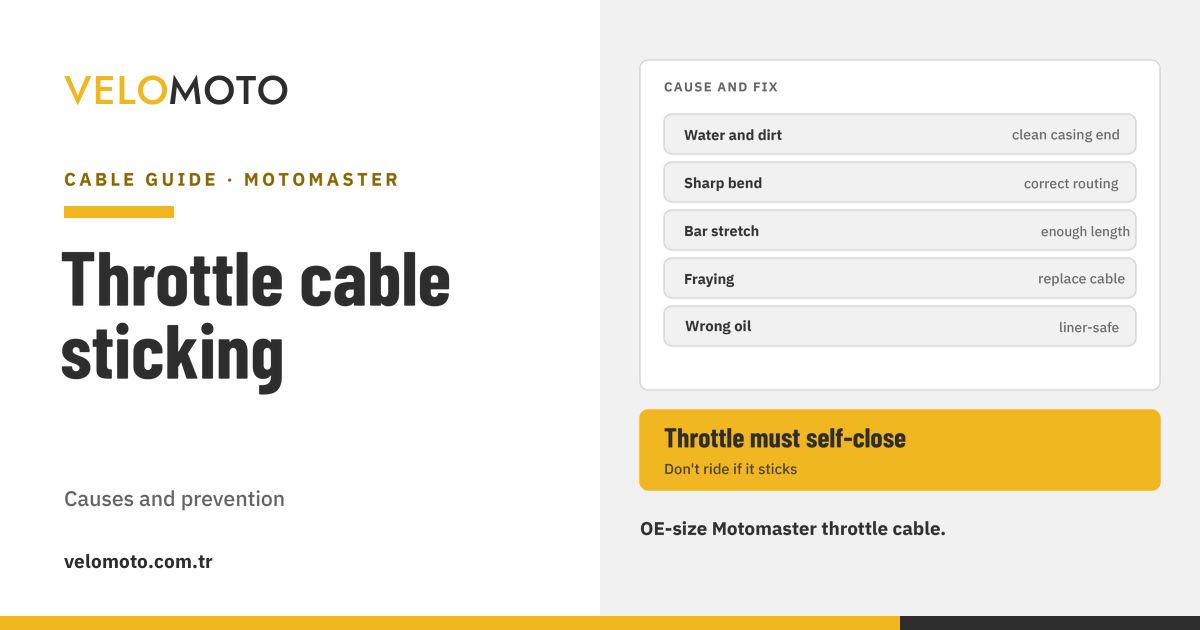
Motorcycle Throttle Cable Sticking: Causes and Prevention
The most common causes of a sticking motorcycle throttle cable are water and dirt in the outer casing, sharp bends, a cable that is too short and gets pulled tight when the handlebar turns, and a frayed inner wire; if the throttle does not close on its own when released, the motorcycle must not be ridden.
Read the guide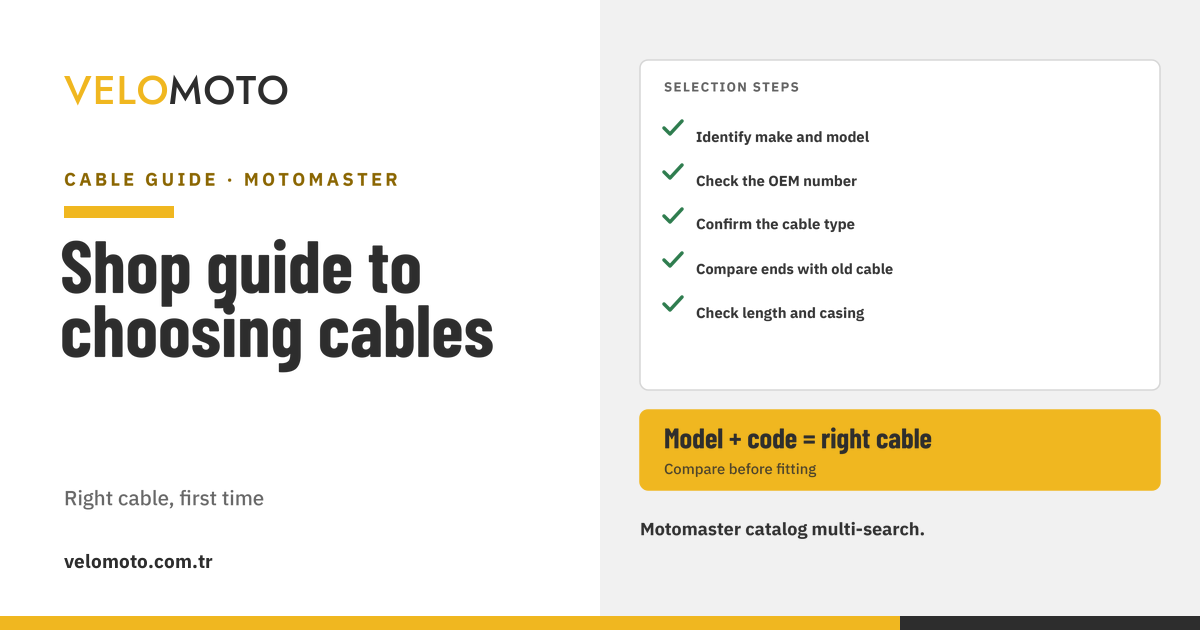
Control Cable Selection Guide for Motorcycle Service Shops
In motorcycle service shops, choosing the right cable starts with checking the motorcycle's make and model, the original part (OEM) number if available, and the cable type together; before a new cable is installed, its length and end fittings should be compared with the old cable.
Read the guide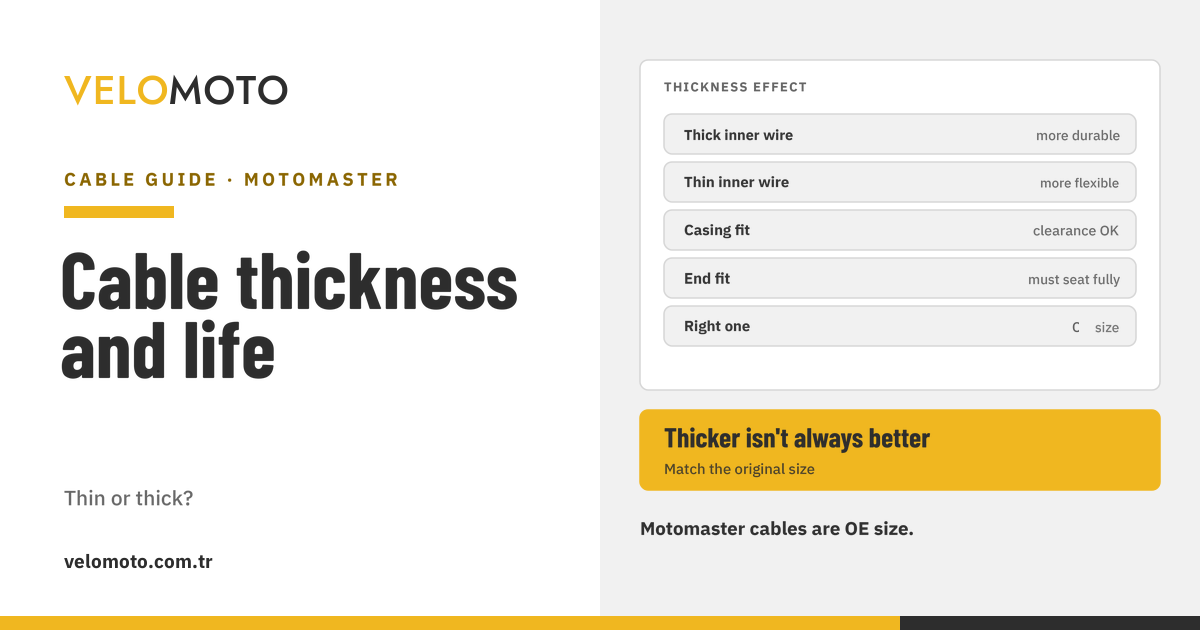
How Does Cable Thickness Affect Performance and Life?
A thicker inner wire generally gives higher tensile strength but is less flexible; the correct thickness is the original size set by the manufacturer for the outer casing's inner diameter, the end fittings and the cable's function.
Read the guide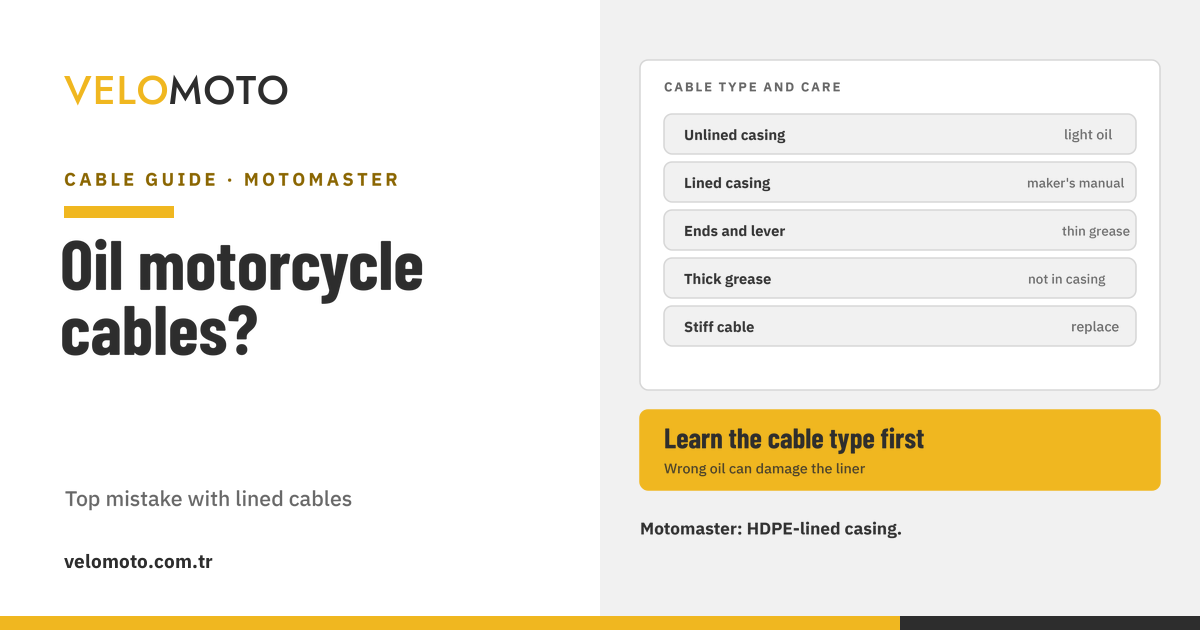
Should Motorcycle Cables Be Lubricated? The Biggest Mistake with PTFE-Lined Cables
Whether a motorcycle cable should be lubricated depends on its construction: cables with unlined outer casings can be maintained with light oil, while for PTFE and other lined cables the manufacturer's instructions should be followed; the most common mistake is forcing unsuitable oil or thick grease into a lined cable.
Read the guide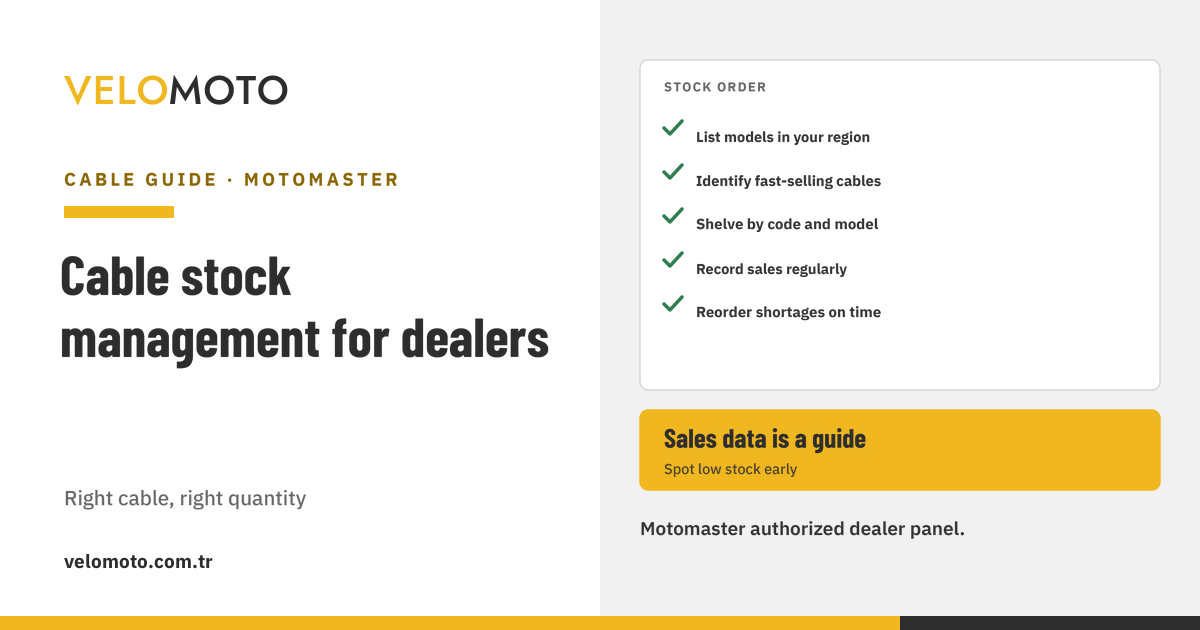
Cable Inventory Management for Motomaster Authorized Dealers
For Motomaster authorized dealers, a good cable inventory is built around the motorcycle models most common in the area and on sales records: fast-selling cables are always kept on the shelf, slow sellers are ordered as needed.
Read the guide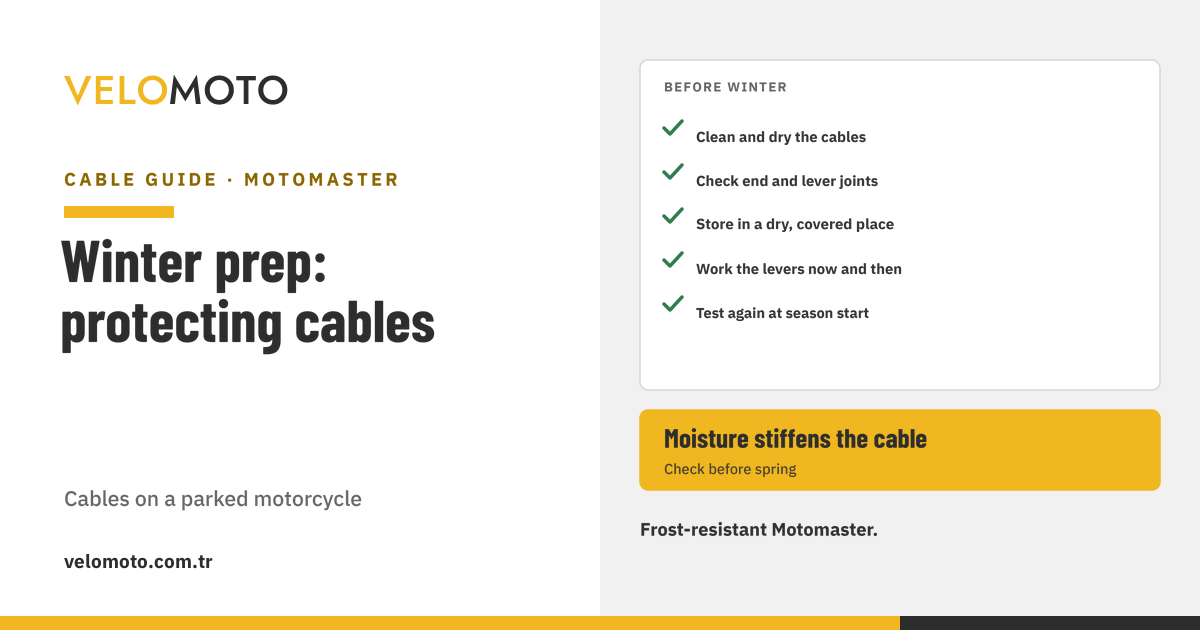
How to Protect Control Cables When Preparing a Motorcycle for Winter
When preparing a motorcycle for winter, clean and dry the cables, store the bike in a dry, enclosed place and work the levers now and then while it sits; moisture is the most common reason cables stiffen over a winter in storage.
Read the guide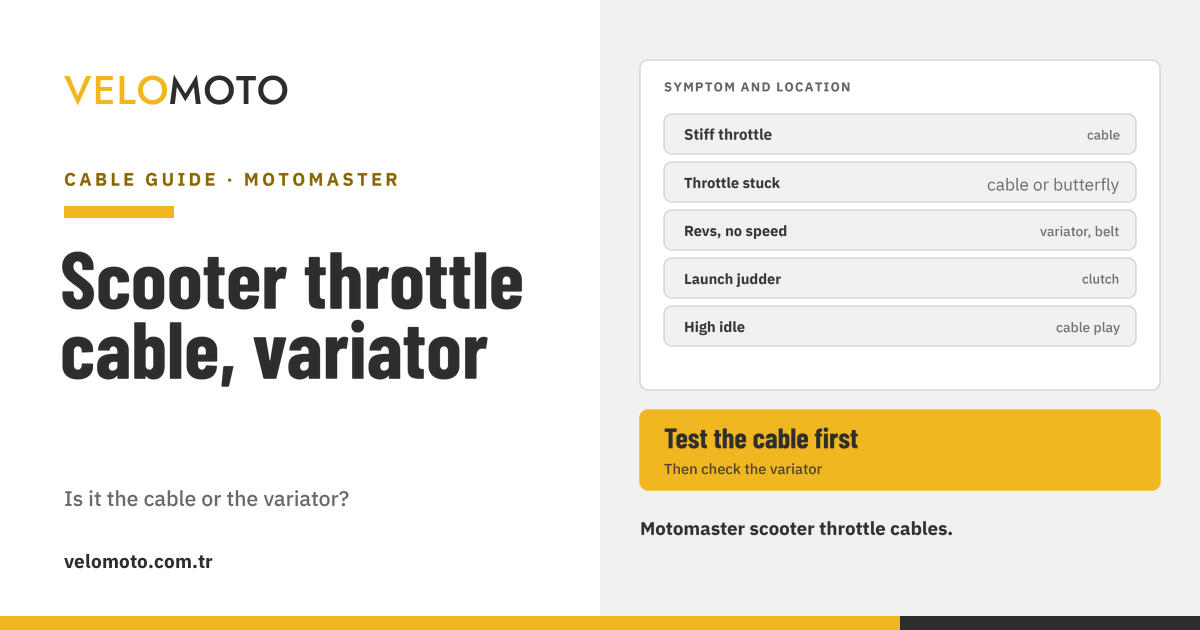
Scooter Throttle Cable Problems: How the Variator and Throttle Cable Relate
On a scooter, the throttle cable controls engine speed and the variator transfers that speed to the wheel; if the throttle is stiff, slow to respond or the idle is high, the problem is usually the cable, while if the revs rise but the scooter does not speed up, the problem is usually the variator, belt or clutch.
Read the guide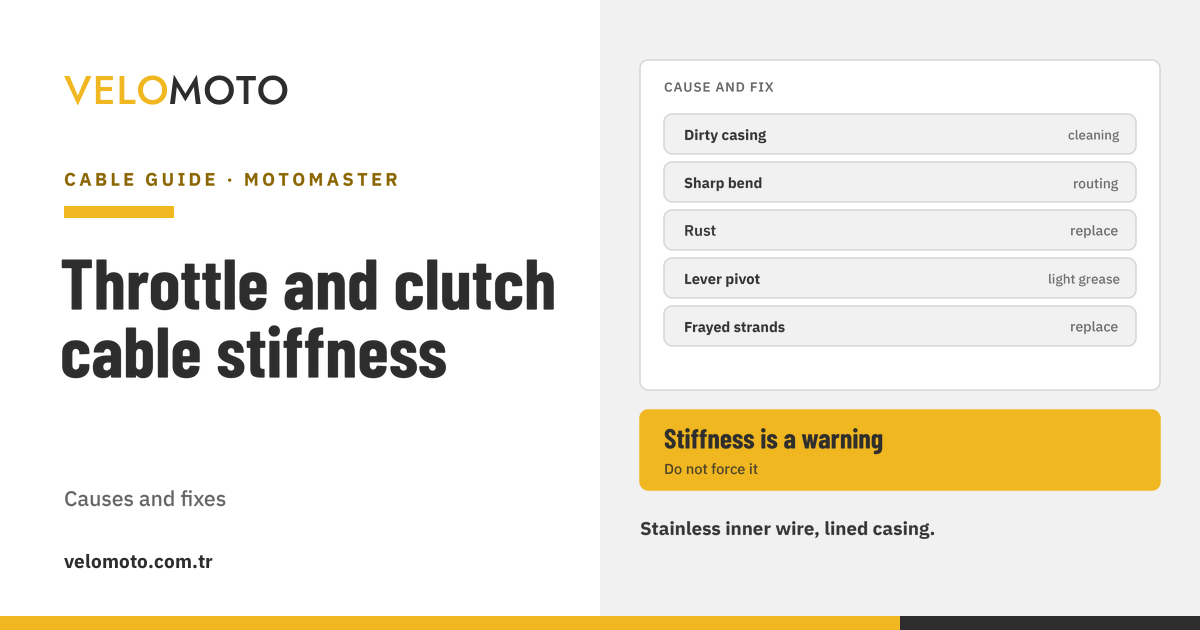
Why Do Throttle and Clutch Cables Get Stiff, and How Do You Free Them Up?
Throttle and clutch cables usually stiffen because of dirt and moisture in the outer casing, rust on the inner wire, sharp bends, a crushed casing or a dry lever pivot; cleaning the end fittings and pivot and correcting the routing can cure mild stiffness, but if there is rust or fraying the cable should be replaced.
Read the guide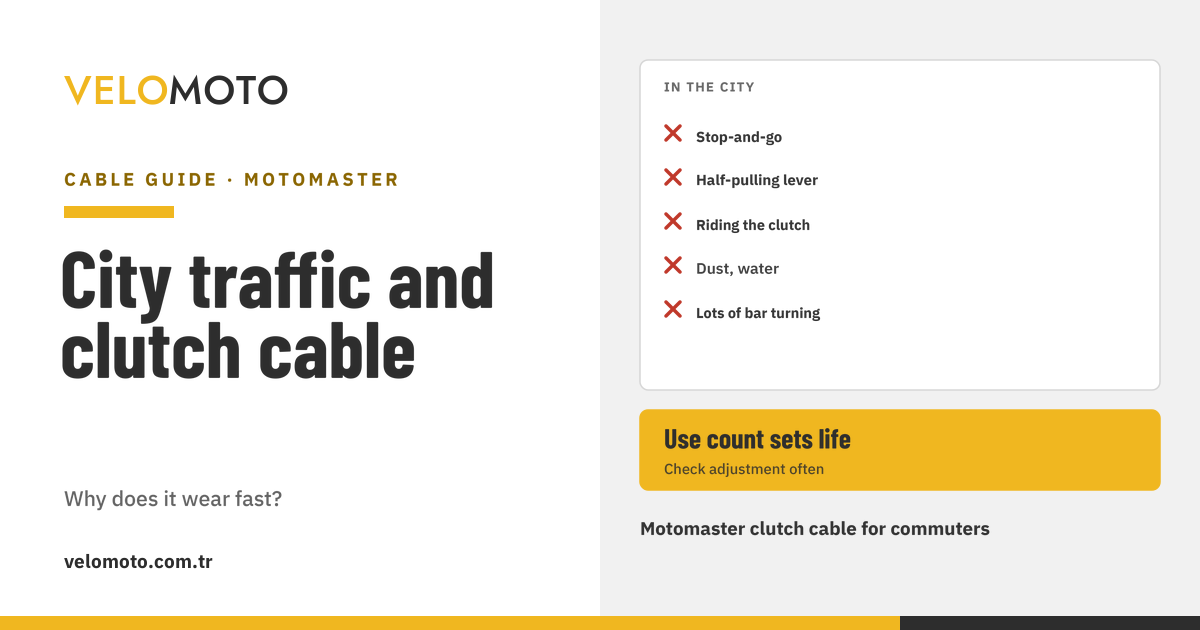
Why Does City Traffic Wear Out a Clutch Cable So Quickly?
In city traffic, the clutch lever is pulled at every stop and start; the cable works many times over a short distance, and riding with the lever half pulled keeps the cable under constant load and speeds up wear.
Read the guide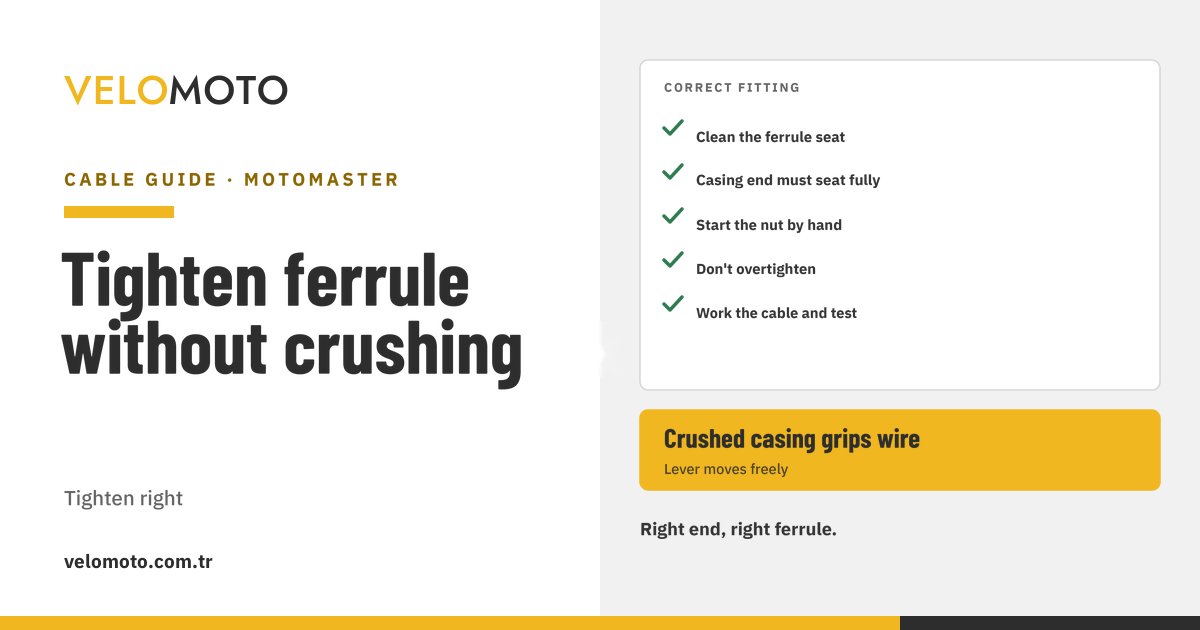
Tightening a Cable Ferrule Without Crushing the Inner Wire
A cable ferrule or adjusting nut is tightened to secure the end of the outer casing in its seat; to avoid crushing the inner wire, the casing end must be fully seated, the nut started by hand and not tightened more than necessary.
Read the guide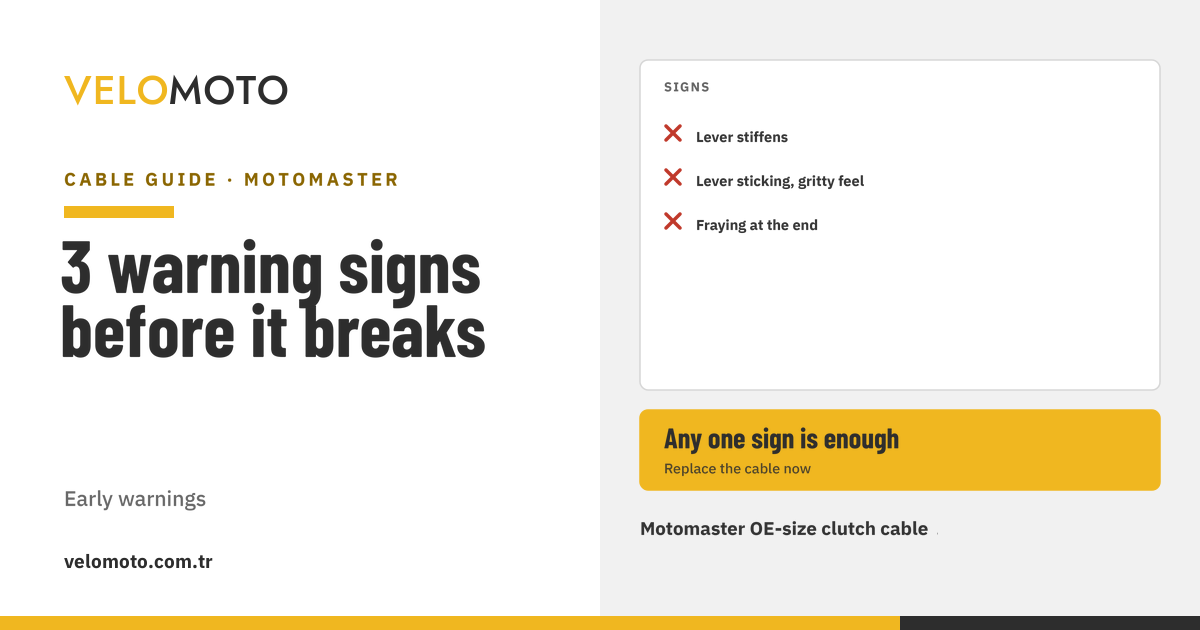
3 Warning Signs Before a Clutch Cable Breaks
A clutch cable usually gives three warning signs before it breaks: the lever becomes noticeably stiffer, there is sticking or a gritty feel as the lever is pulled, and fraying appears where the cable exits at the lever end.
Read the guide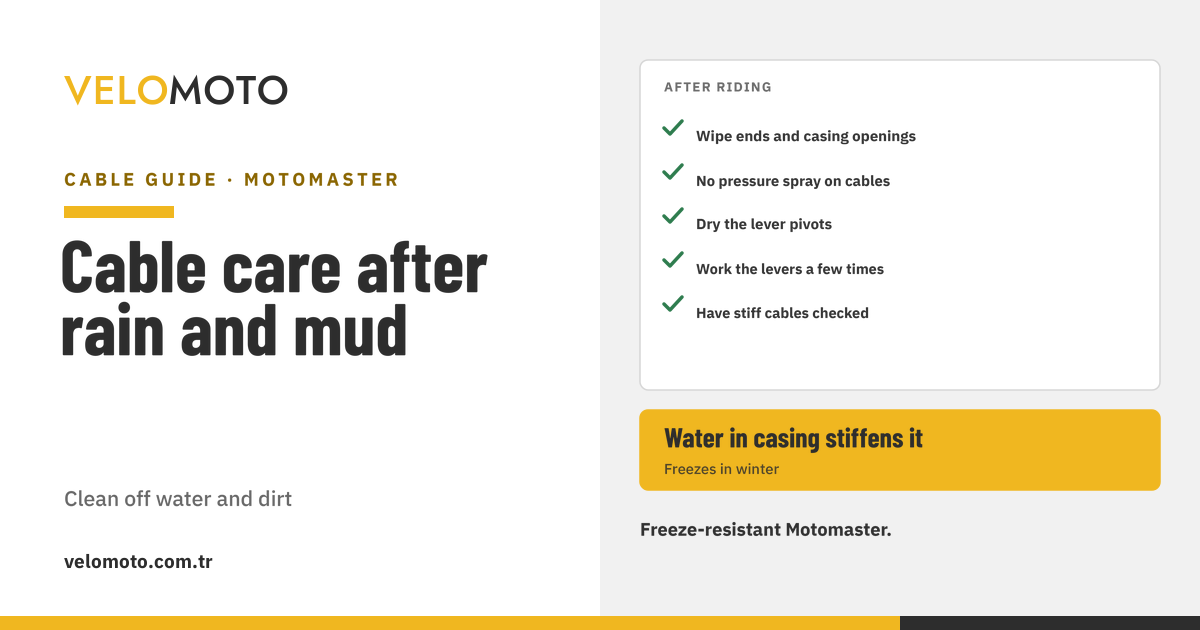
Cable Care After Riding in Rain and Mud
After riding in rain or mud, wipe and dry the cable ends and casing openings, do not aim a pressure washer directly at the outer casings, and work the levers through their full travel a few times; water and dirt in the outer casing are the most common cause of cable stiffness.
Read the guideNeed a custom cable? Ask for a quote for cables made to your sample, drawing or measurements.
Request a quote