
Velomoto knowledge centre
Technical guides: Brakes and pads
Guides on choosing, maintaining and replacing brakes, chains, variator belts and control cables, written with the technical data of our brands. Guides are currently in Turkish.
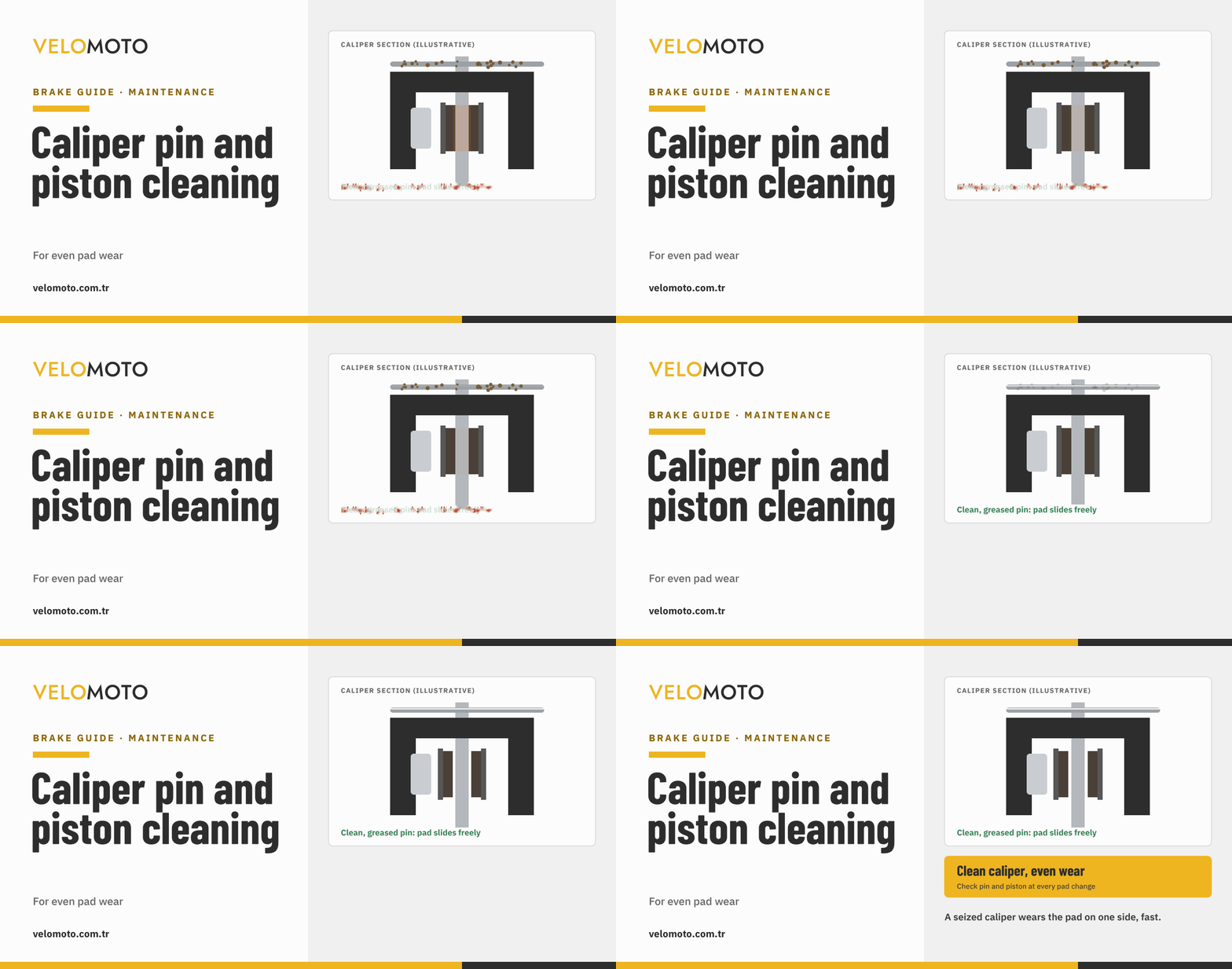
Does cleaning brake caliper pins and pistons affect brake pad life?
Yes; dirty or rusted caliper pins and pistons directly shorten brake pad life.
Read the guide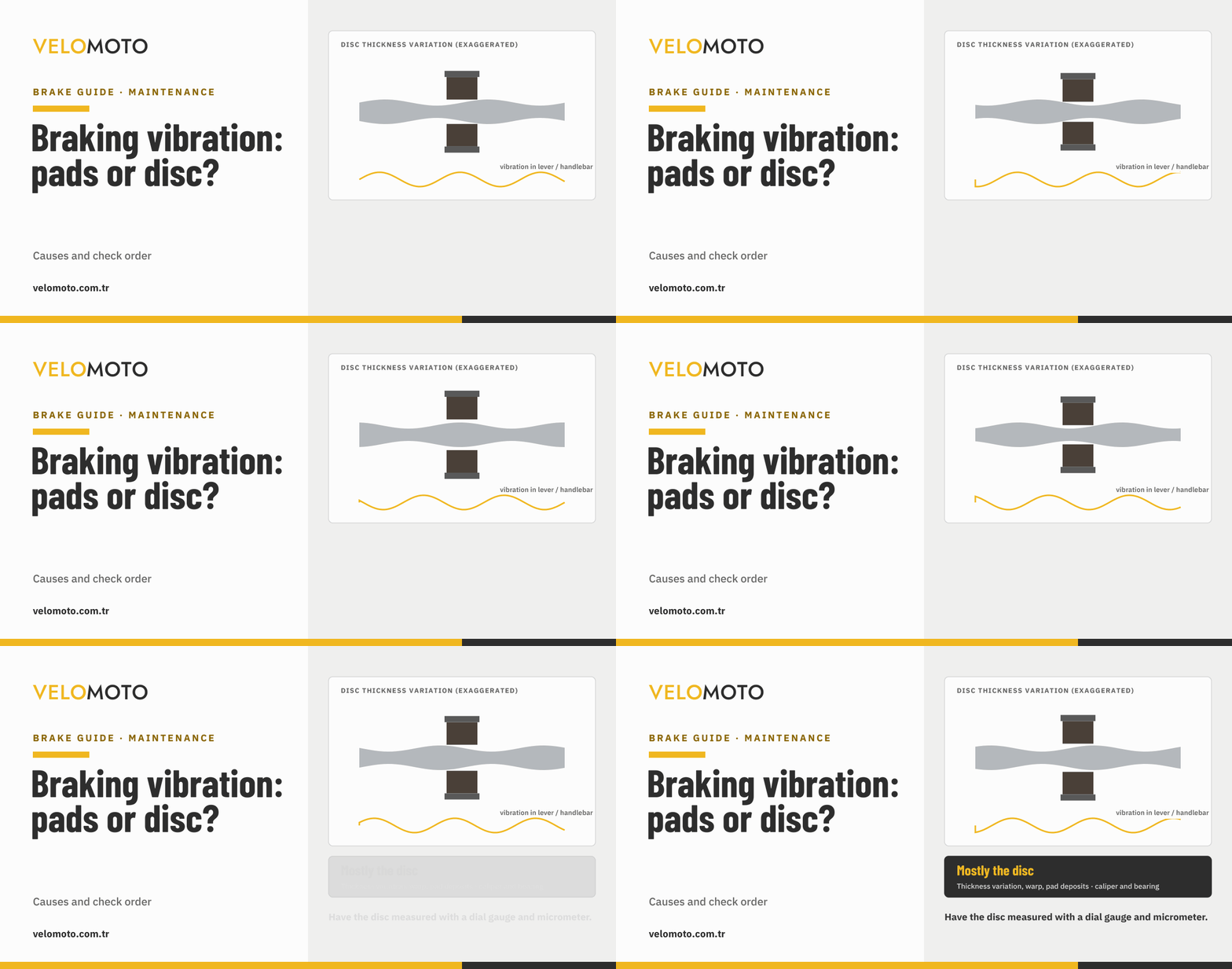
Vibration when braking: is it the brake pads or the disc?
Vibration felt in the lever, handlebars or frame when braking usually comes from the disc, not from the brake pads themselves.
Read the guide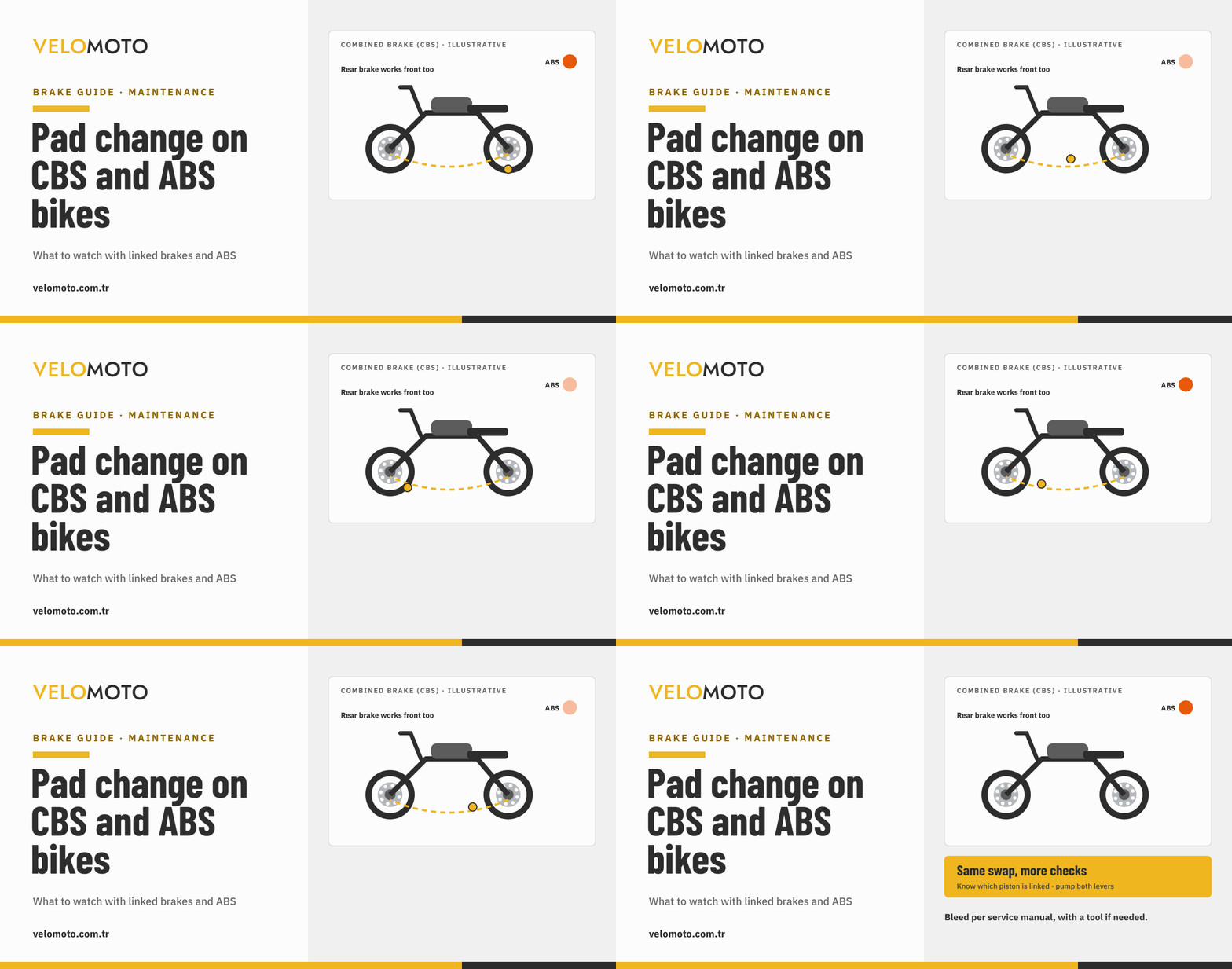
Is brake pad replacement different on combined braking (CBS) and ABS systems?
The brake pad itself and the basic replacement steps are the same; the difference is the extra care needed for linked and electronic components.
Read the guide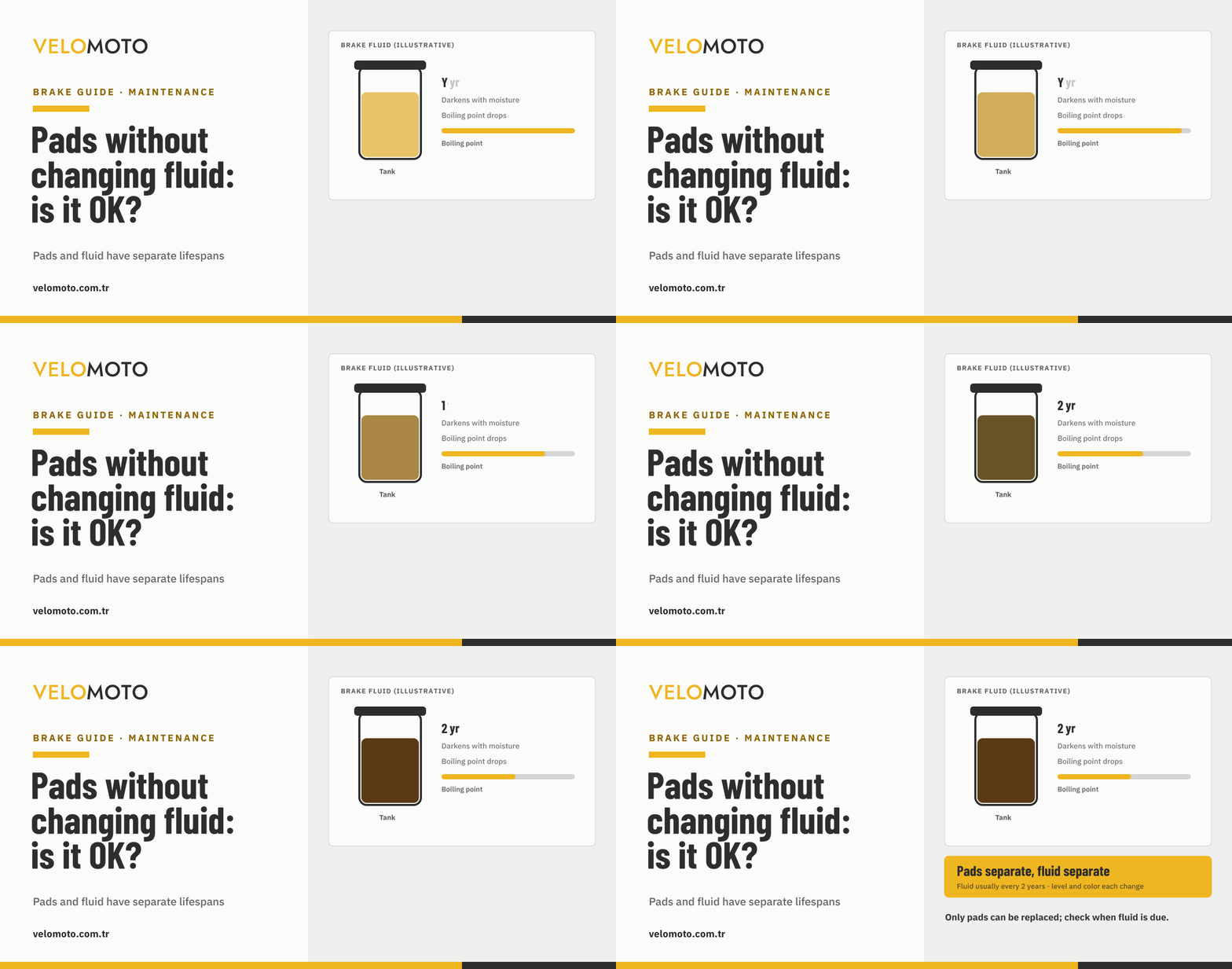
Can you replace only the brake pads without changing the brake fluid?
Yes; changing the brake fluid is not required to replace the brake pads.
Read the guide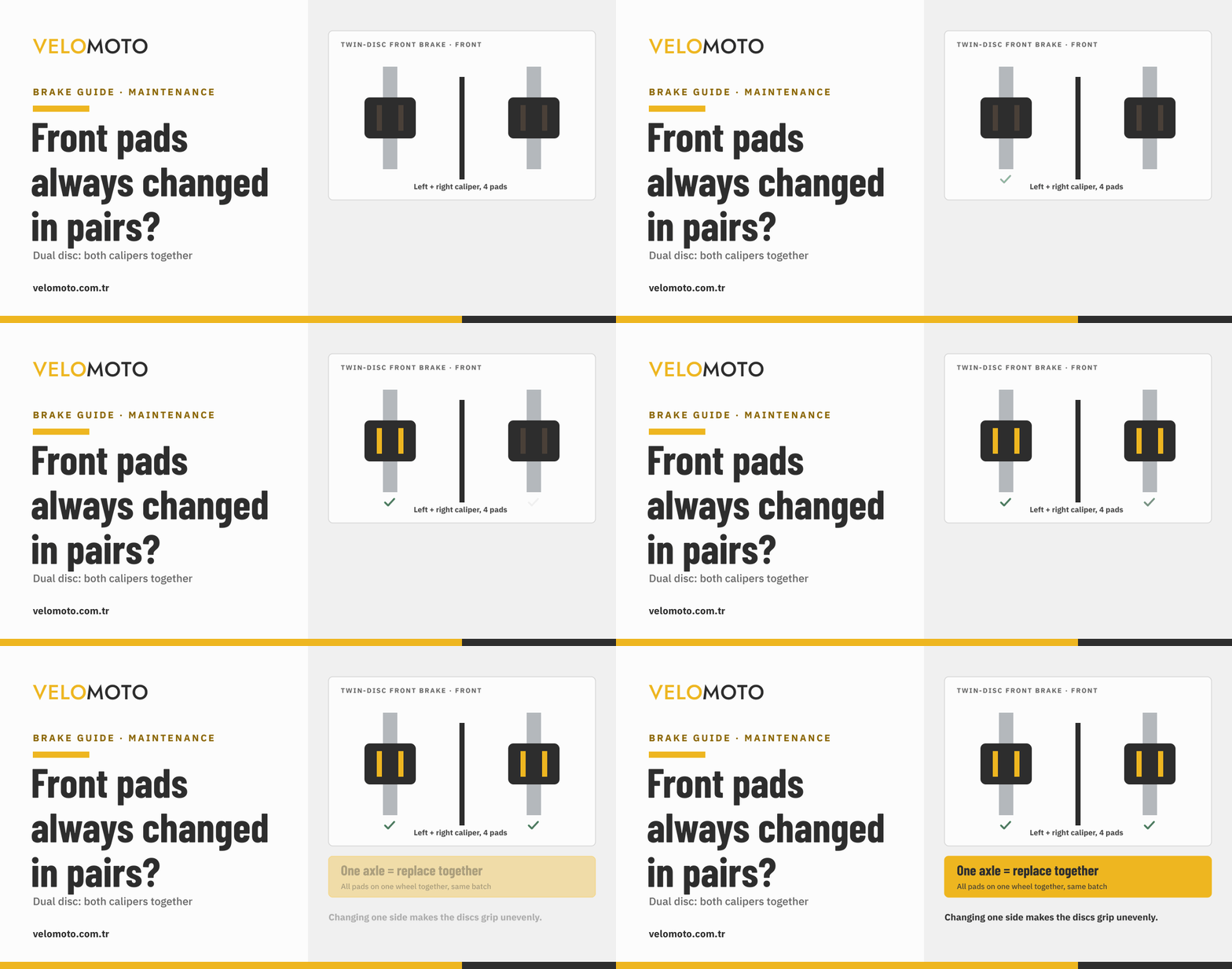
Should front brake pads always be replaced in pairs (left and right)?
Yes; the brake pads on the same wheel should always be replaced together.
Read the guide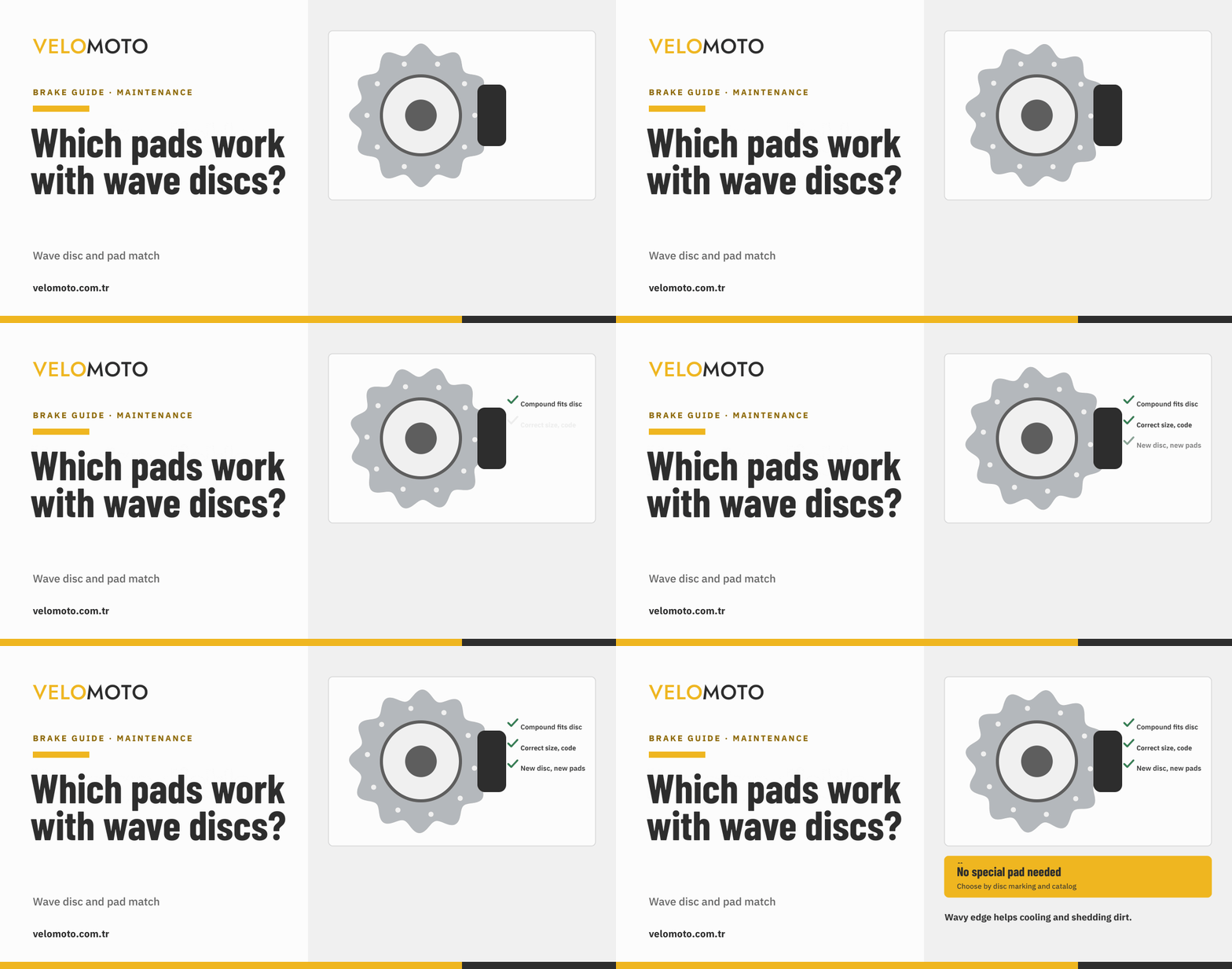
Which brake pads should you use with a wave disc?
A wave disc does not need special brake pads; you use a pad in the compound the disc is suited for and in the code that fits your motorcycle.
Read the guide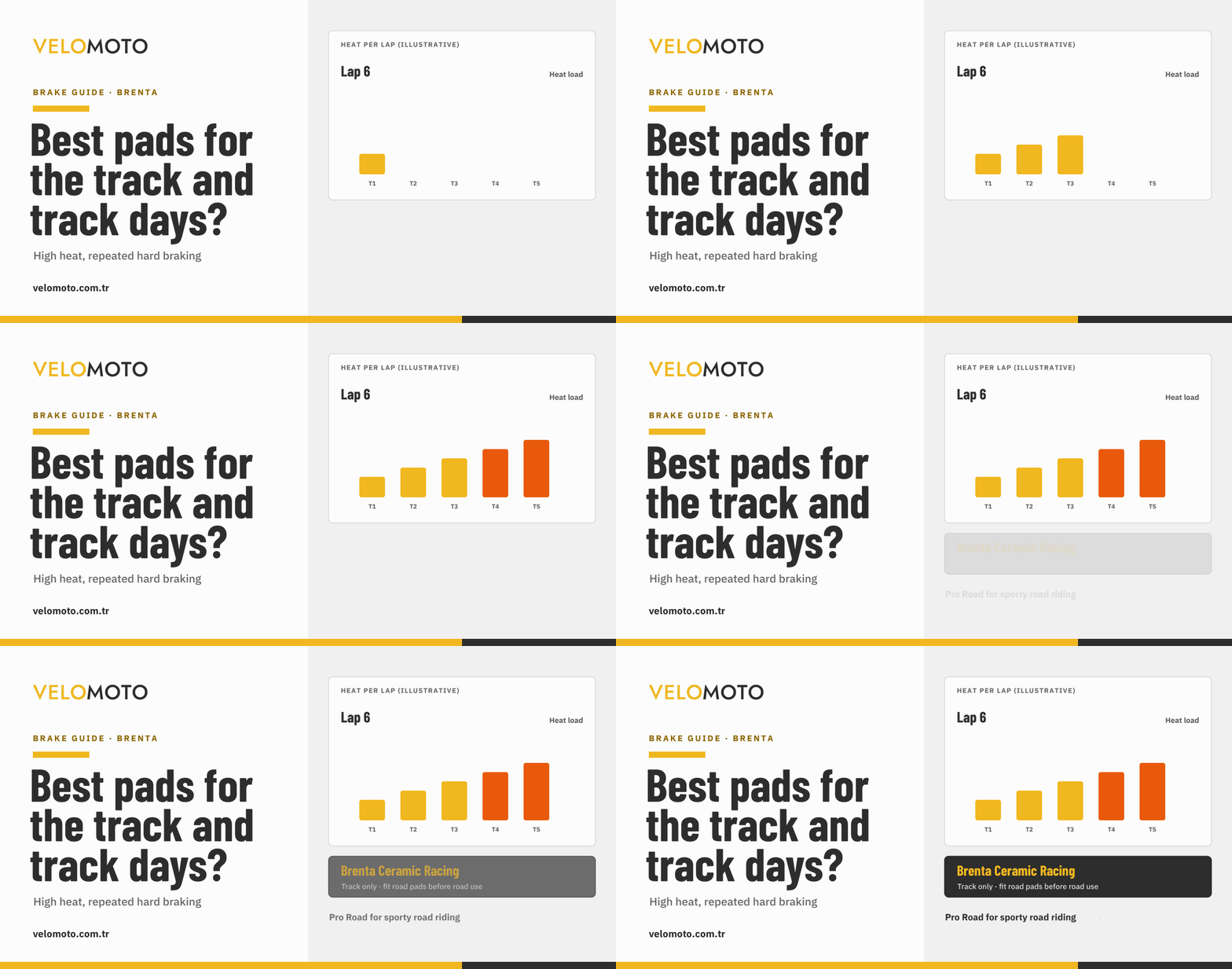
What are the best brake pads for the track and high-speed riding (track days)?
For the track and track days, the right choice is a racing brake pad developed to withstand sustained high heat; at Brenta, that series is Ceramic Racing.
Read the guide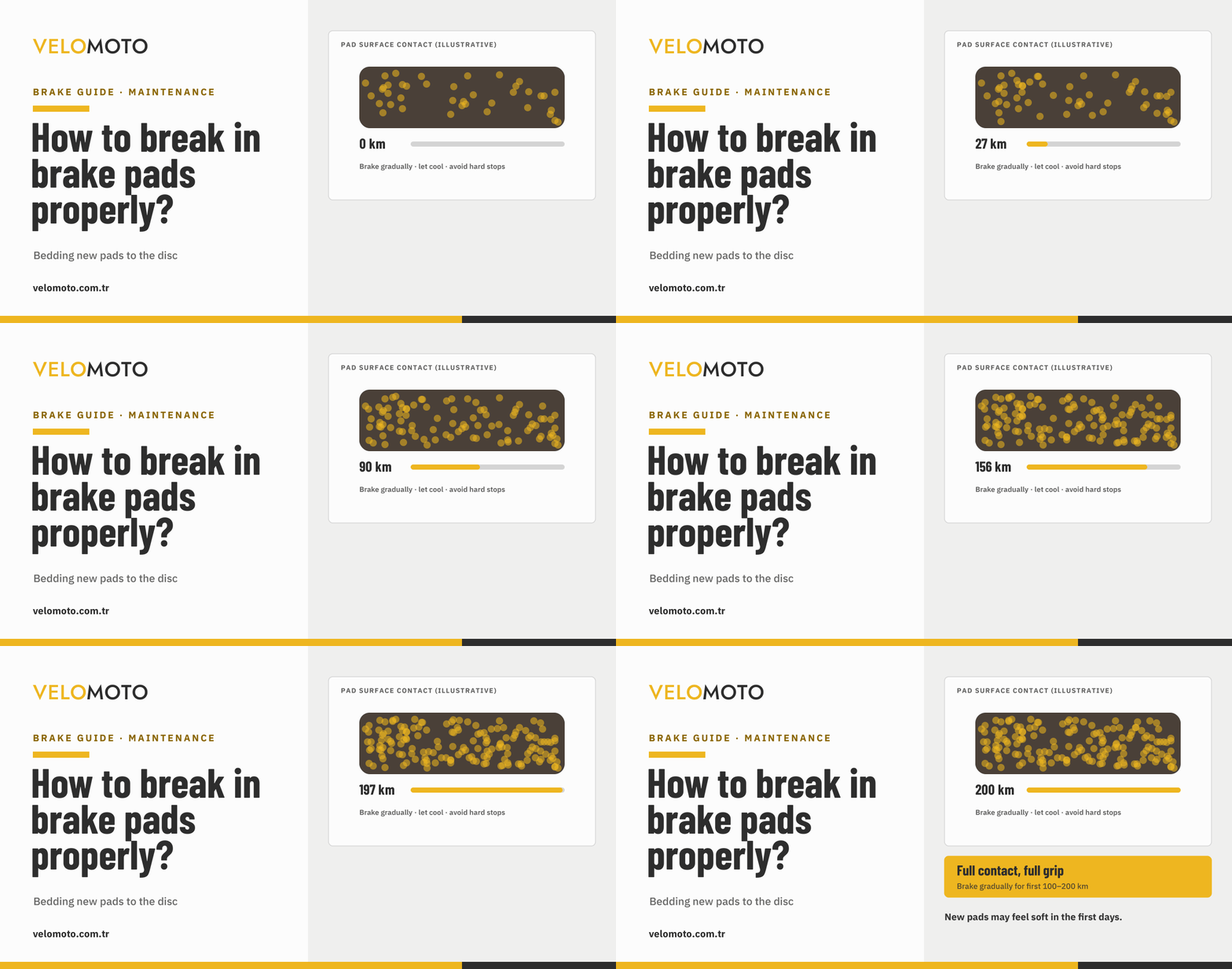
How do you break in (bed in) motorcycle brake pads?
Break-in seats the surface of new brake pads against the disc and lets them lay down a thin, even layer of pad material on it; it is done by braking progressively over the first 100–200 km.
Read the guide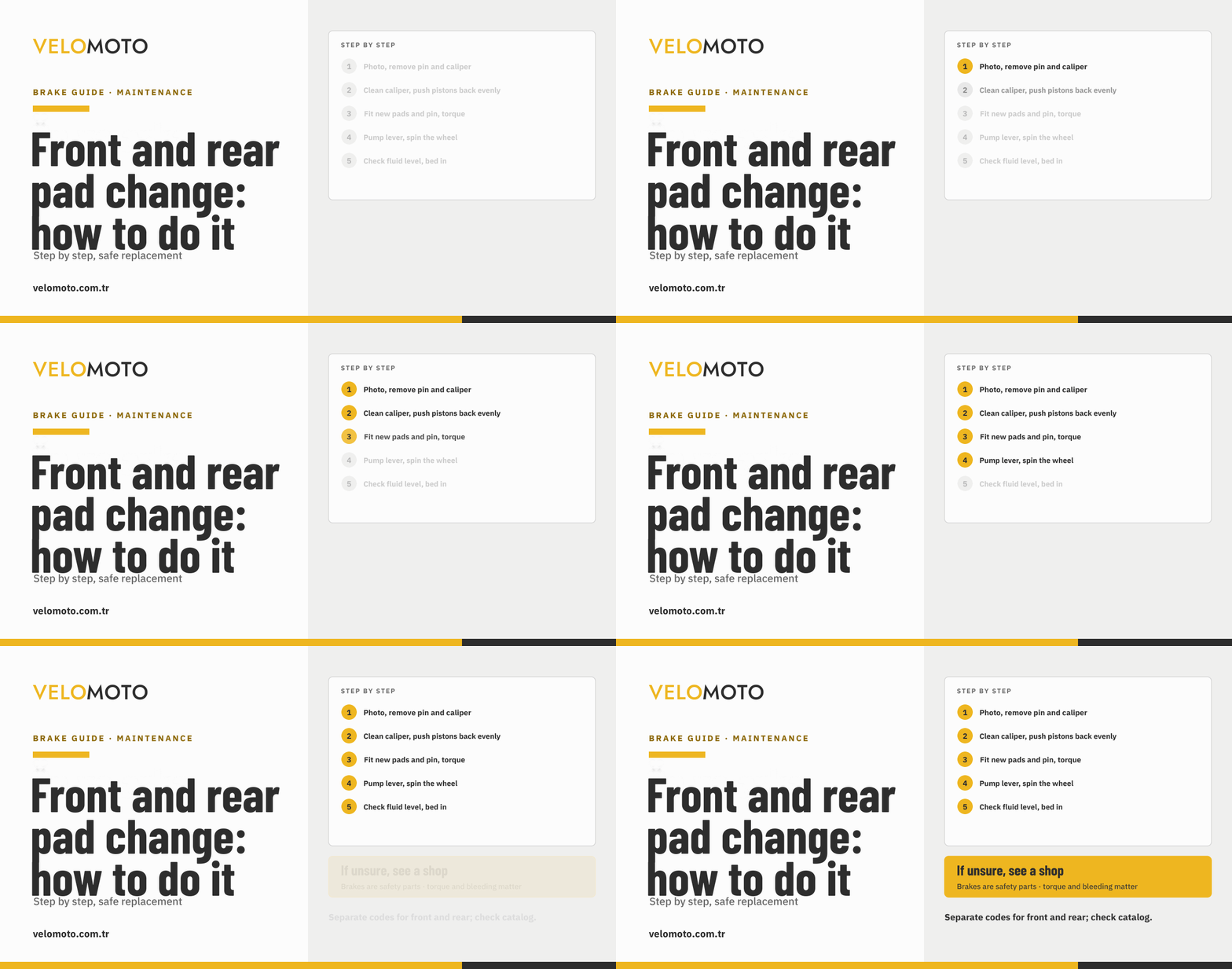
How do you replace motorcycle front and rear brake pads?
Replacing brake pads means removing the pad pin or the caliper, cleaning the caliper and pushing the pistons back evenly, fitting the new pads in the same layout as the old ones, tightening the bolts to the torque in the service manual…
Read the guide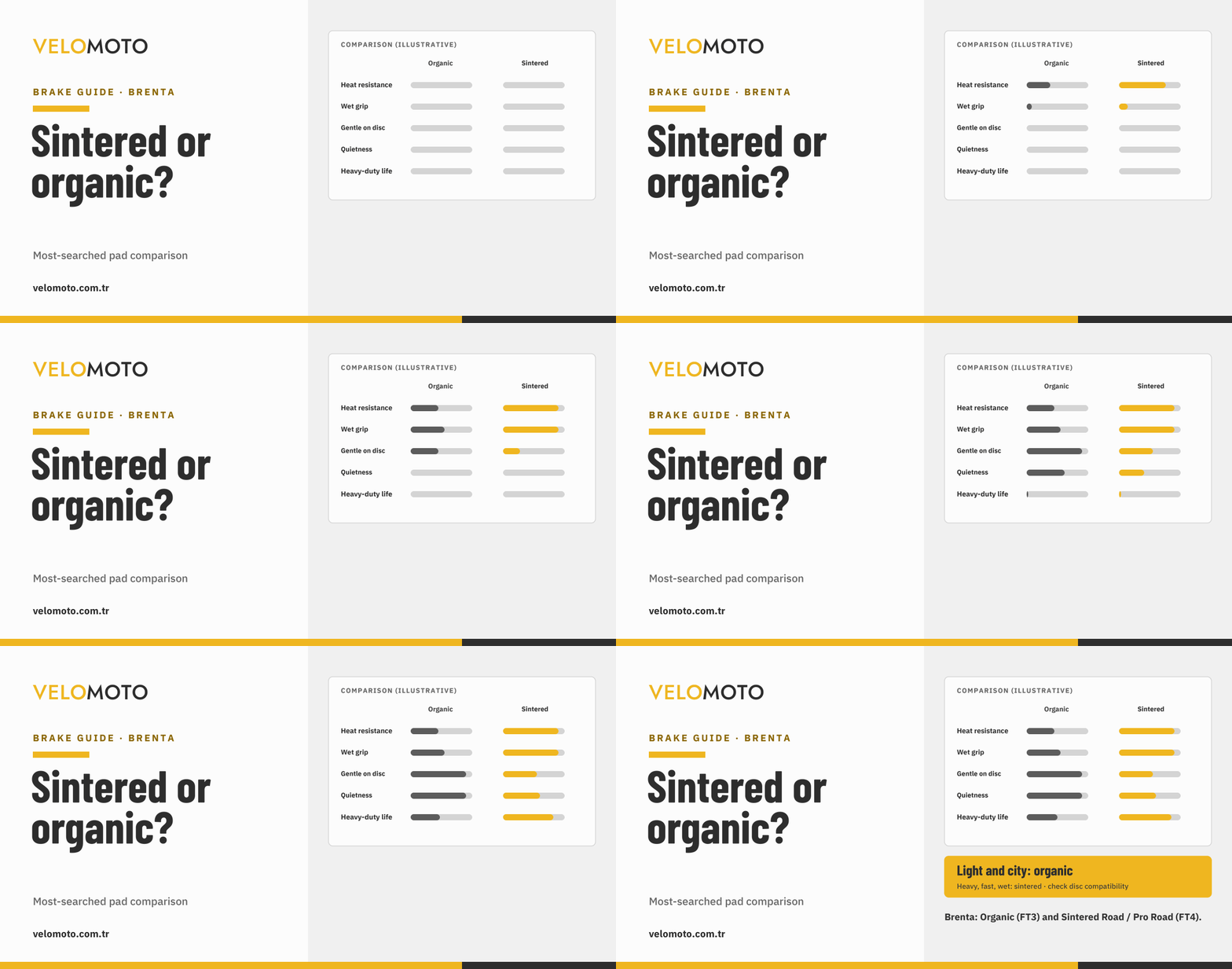
Sintered or organic? A motorcycle brake pad comparison
Choose organic pads for light motorcycles, scooters and city riding; choose sintered pads for heavy or fast motorcycles, riding with a passenger or load, hills and frequent rain.
Read the guide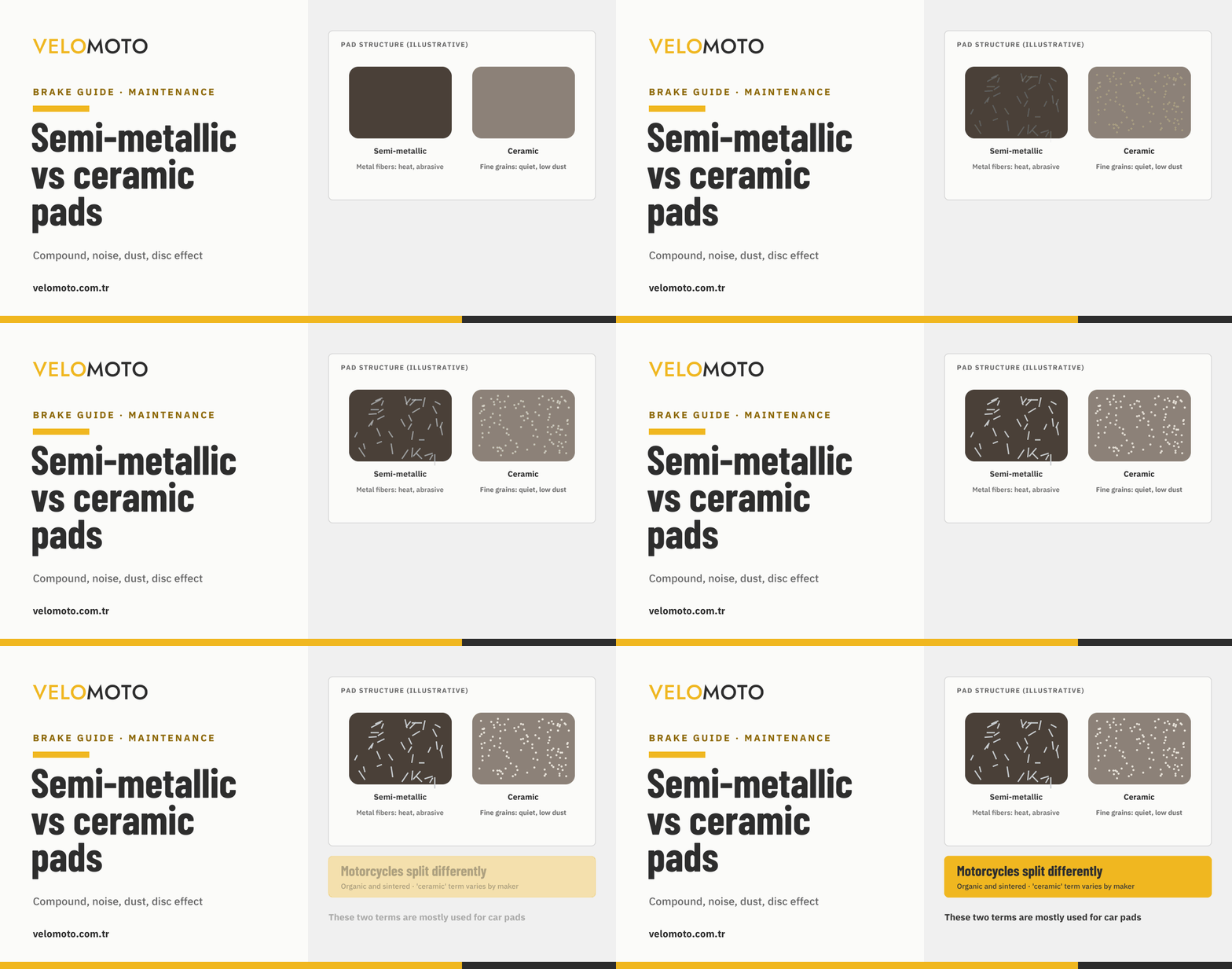
What is the difference between semi-metallic and ceramic brake pads?
Semi-metallic pads resist heat and grip strongly, but they are noisier, produce more dust and wear the disc more; ceramic pads are quiet, low-dust and gentle on the disc, but more…
Read the guide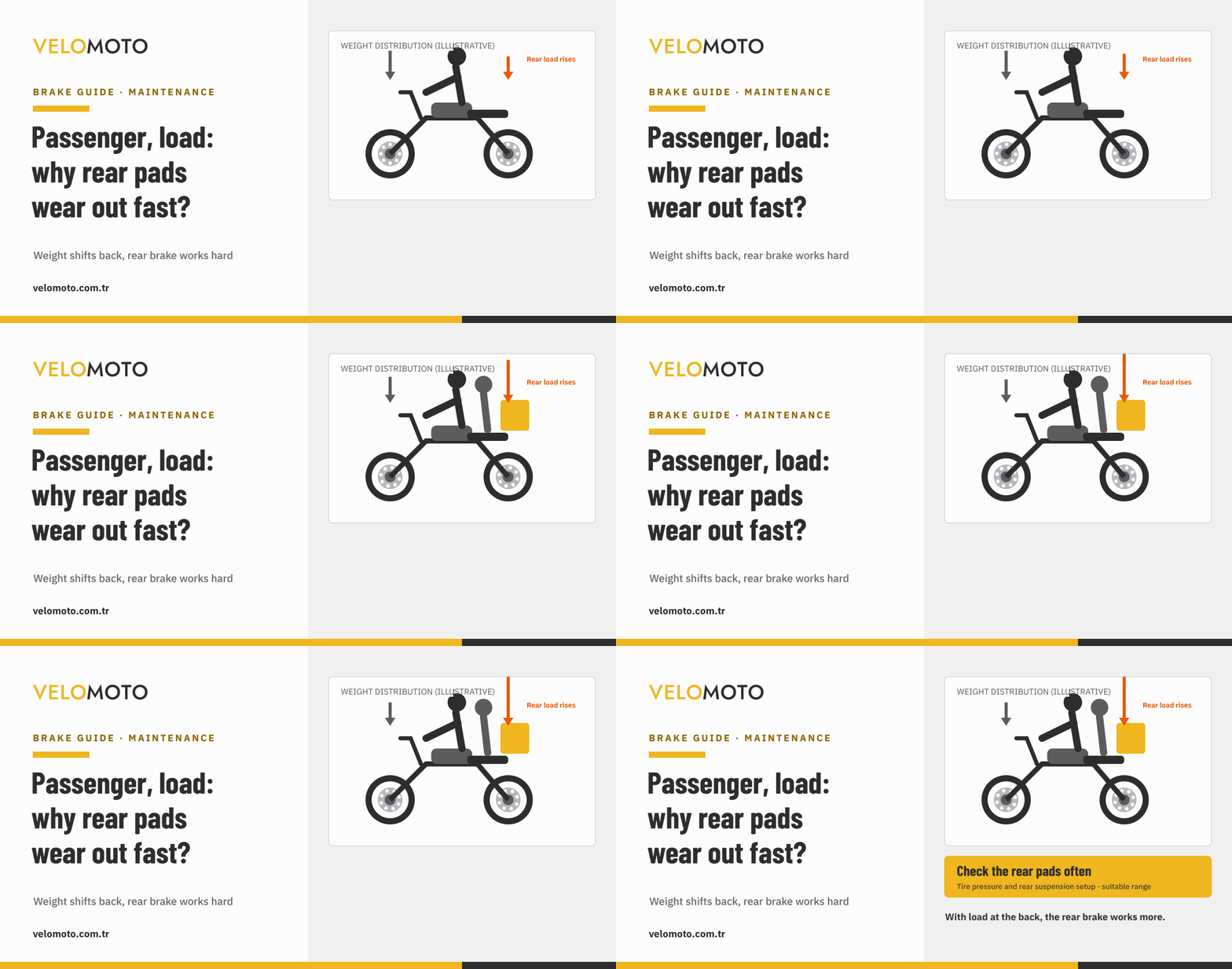
Why do rear brake pads wear out fast on motorcycles carrying a passenger or load?
On a motorcycle carrying a passenger or load, most of the weight sits on the rear wheel; because the rear brake can then transmit more force, it gets used more and the rear pads wear faster.
Read the guideWhere can I buy the products? We do not sell directly to end users. You can buy the products mentioned in our guides from our authorised dealers.
See our dealers