
Velomoto knowledge centre
Technical guides: Belts and variators
Guides on choosing, maintaining and replacing brakes, chains, variator belts and control cables, written with the technical data of our brands. Guides are currently in Turkish.
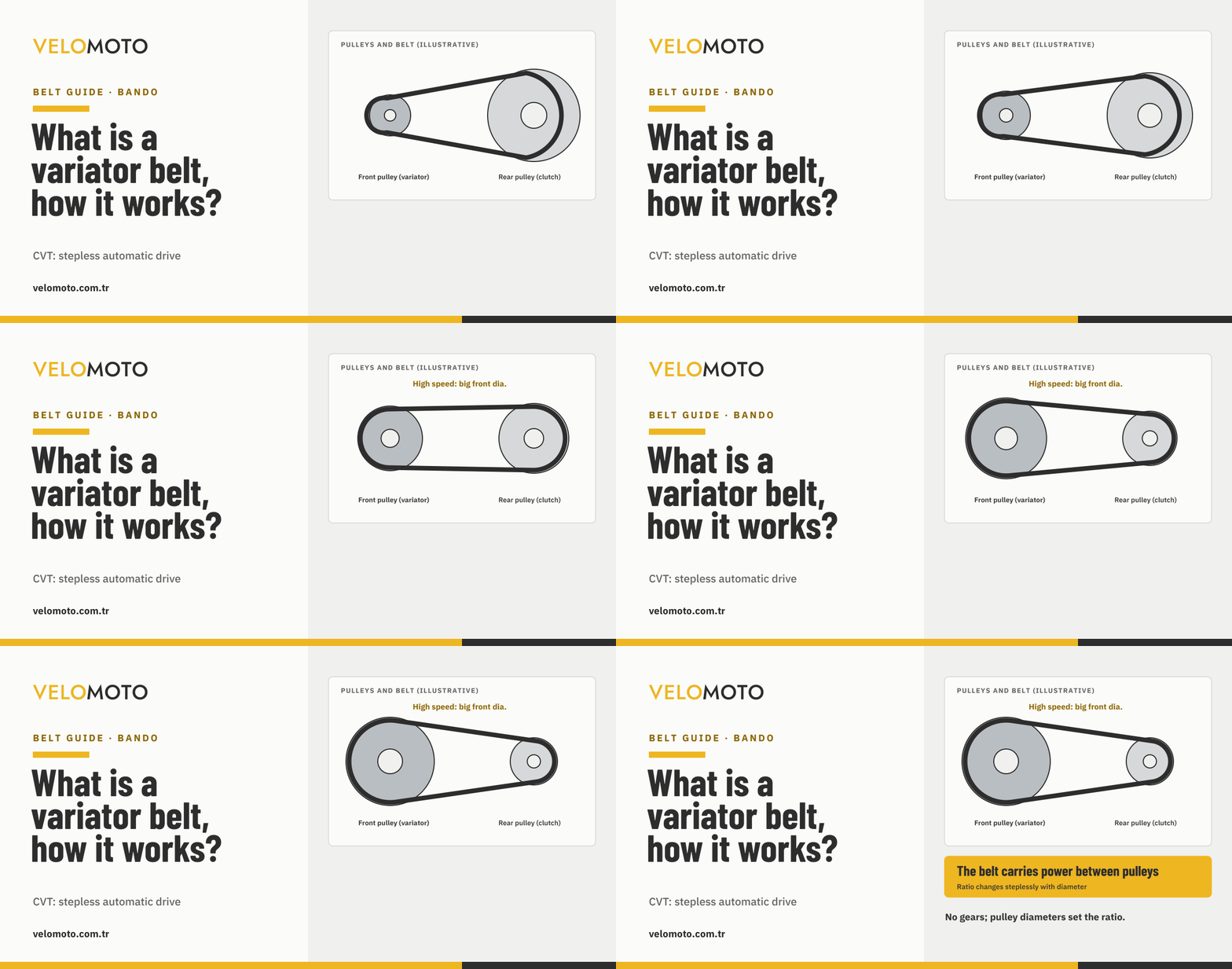
What Is a Variator Belt and How Does a CVT System Work?
A variator belt is the V-section belt that carries engine power to the rear wheel in the CVT (continuously variable) transmission of scooters and ATVs/UTVs.
Read the guide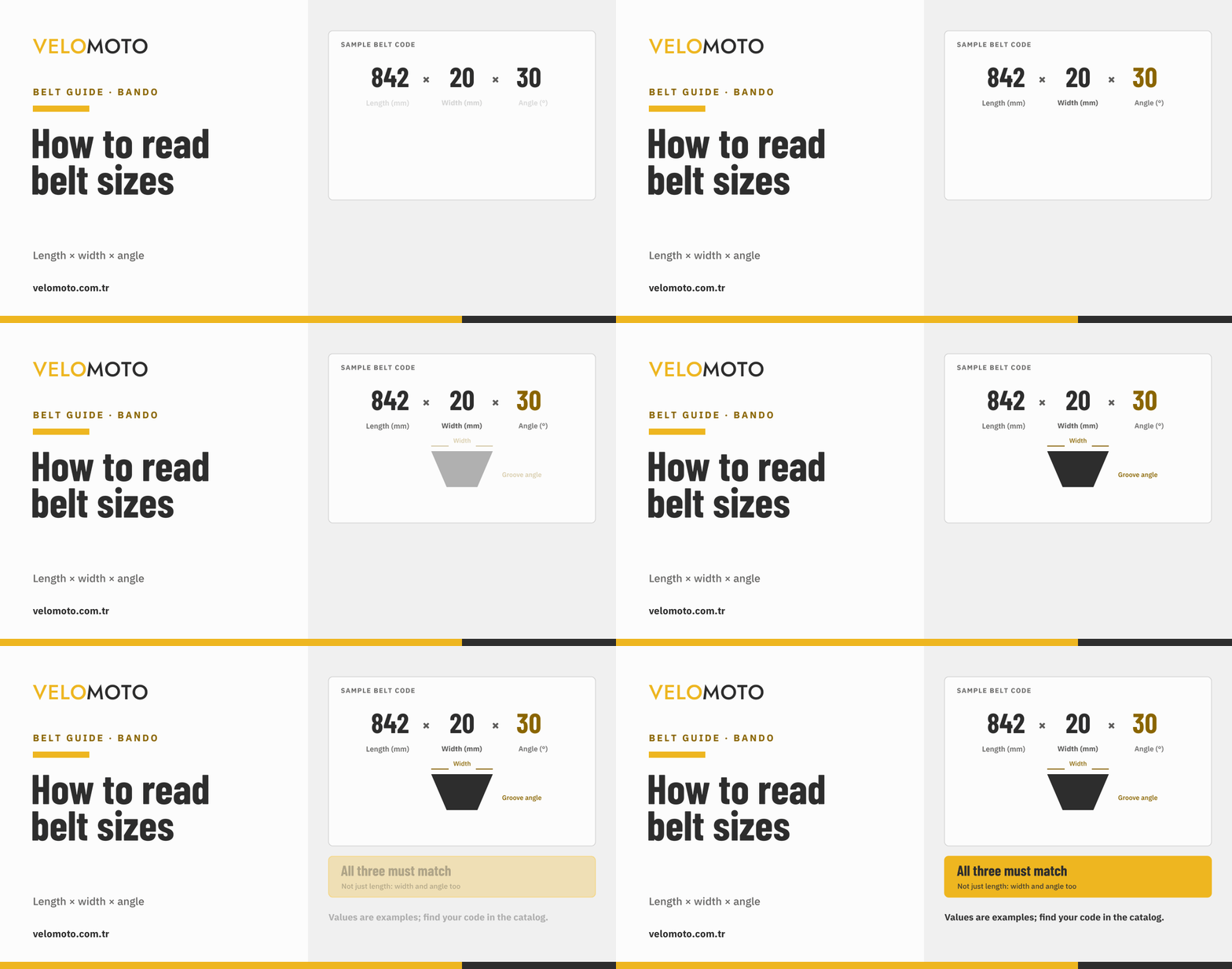
How to Read Variator Belt Sizes
Variator belt sizes are usually written as three numbers: length × width × angle.
Read the guide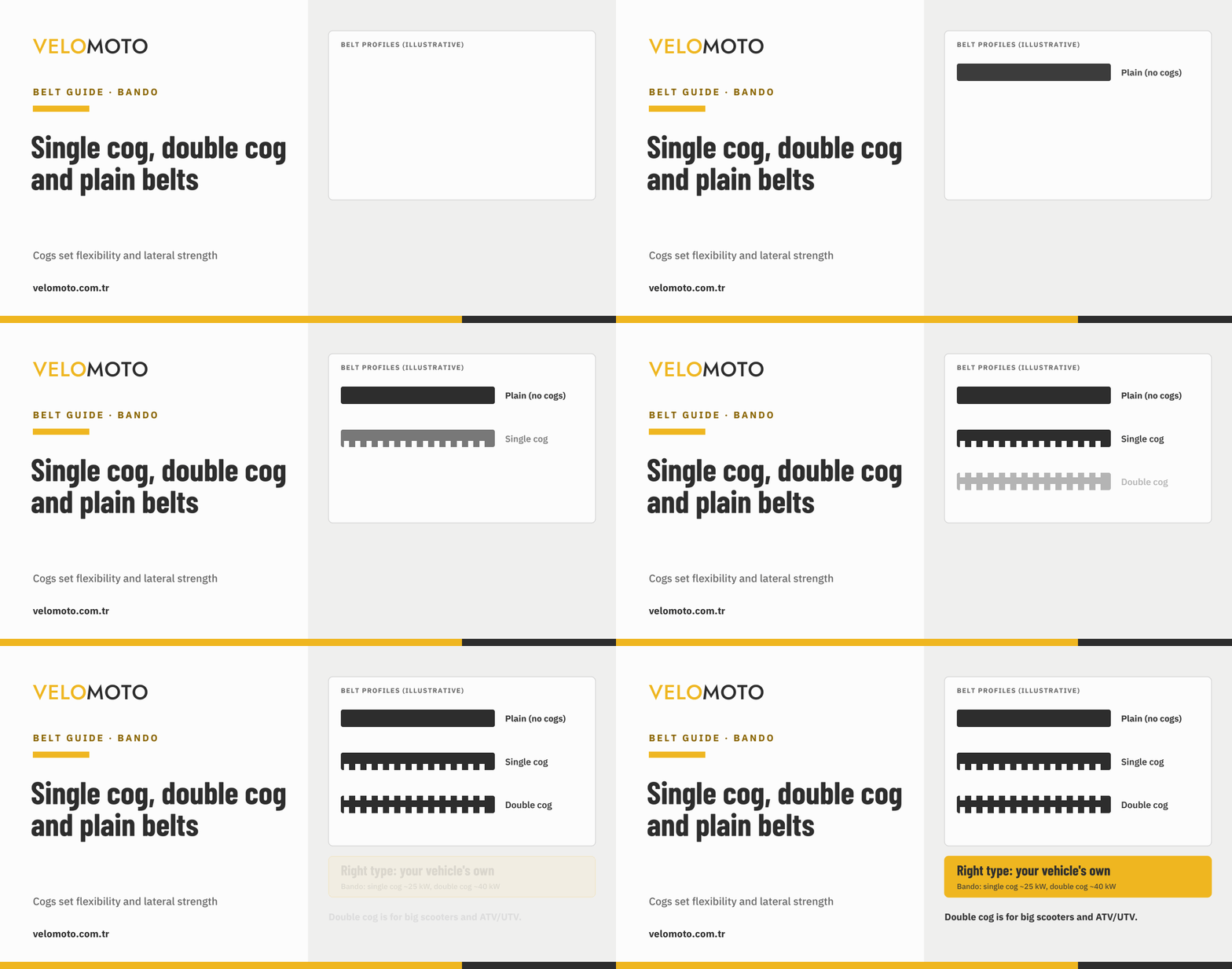
Single-Cogged, Double-Cogged and Plain Variator Belts: The Differences
Variator belts fall into three types by profile: plain (no cogs), single-cogged (cogs on the bottom) and double-cogged (cogs on the bottom and top).
Read the guide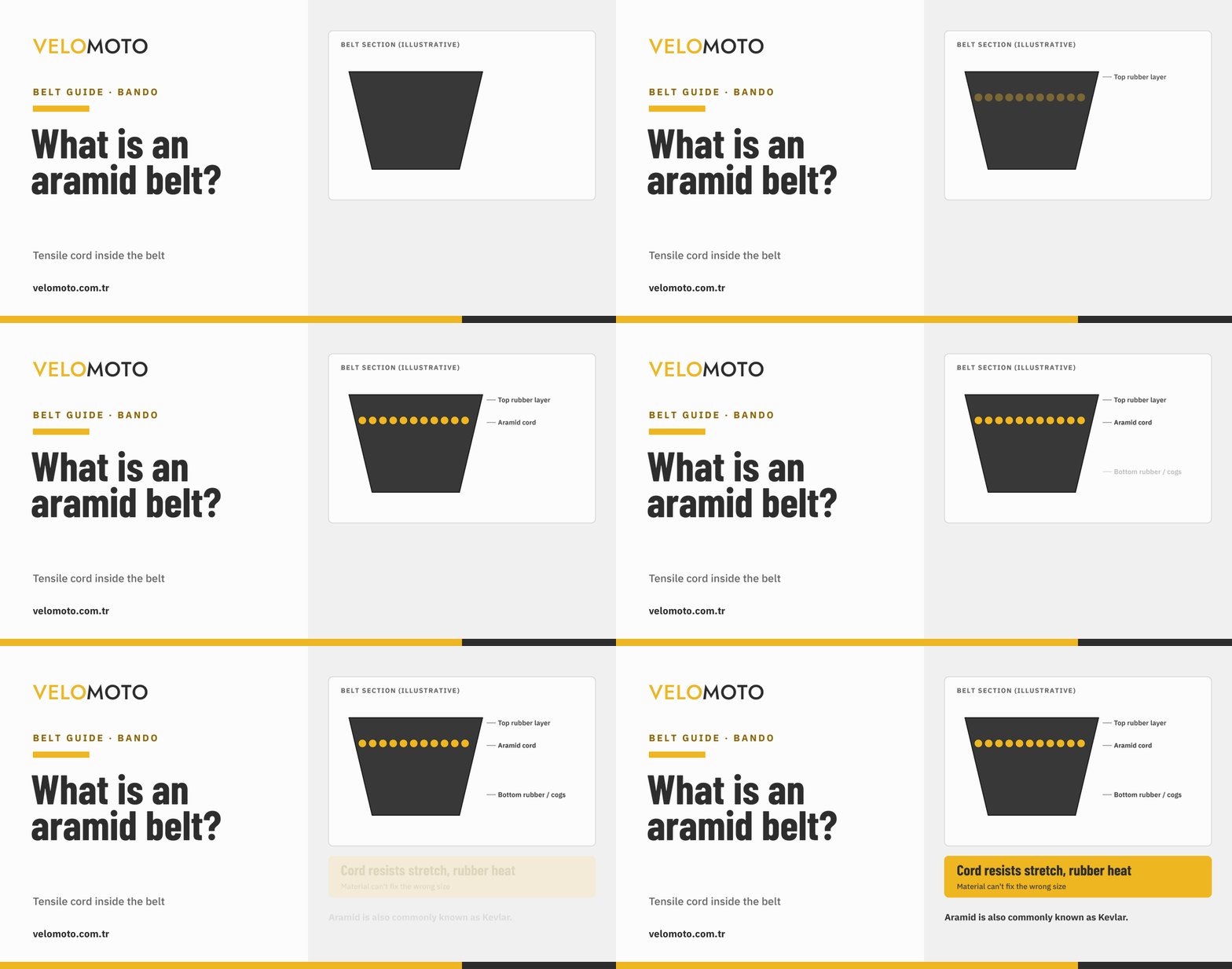
What Is an Aramid-Reinforced Variator Belt?
An aramid-reinforced belt is a variator belt whose inner cord, which carries the tensile load, is made of aramid fibers.
Read the guide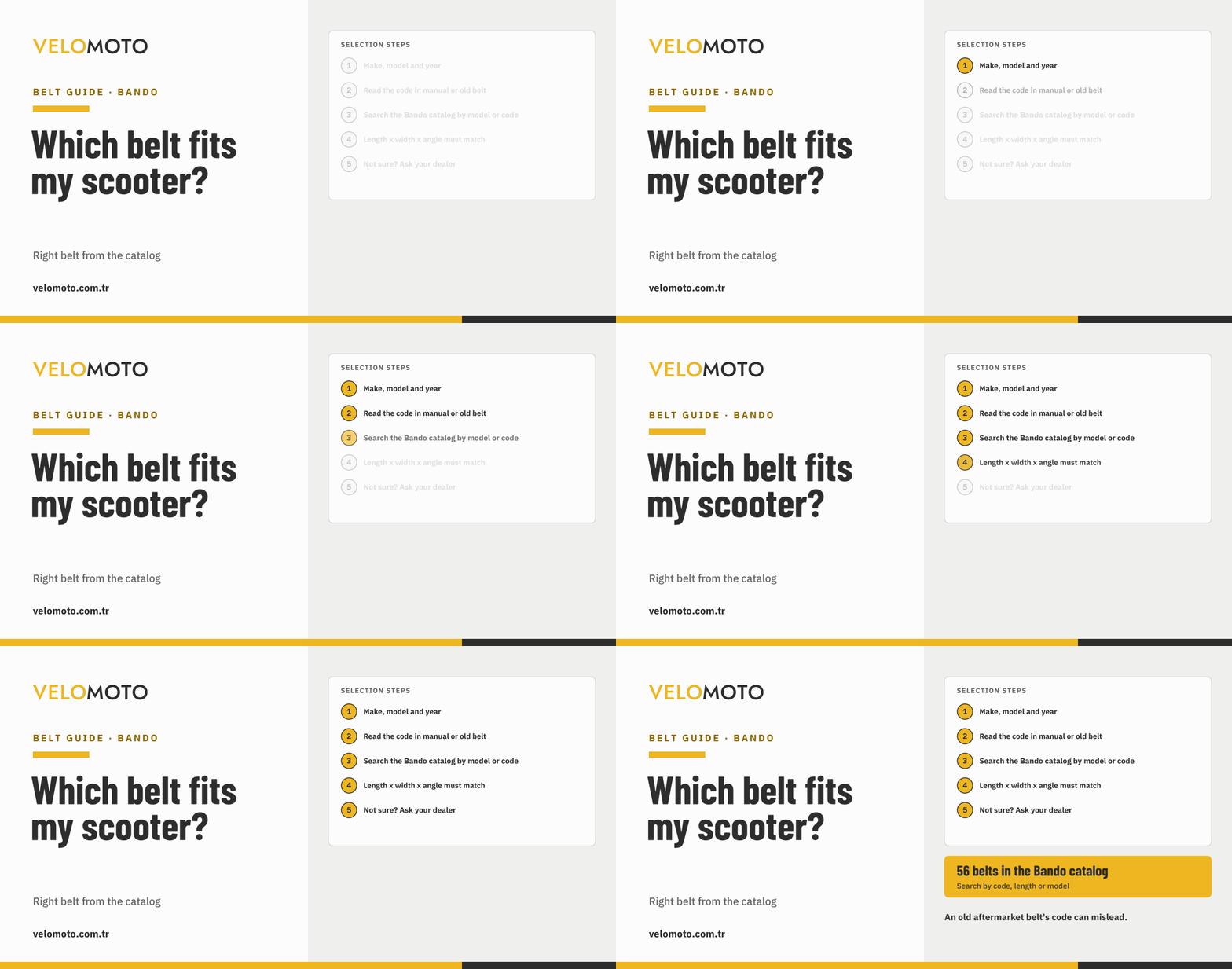
Which Belt Fits My Scooter? Choosing the Right Belt from the Bando Catalog
The safest way to find the belt that fits your scooter is to search the catalog by make, model and year.
Read the guide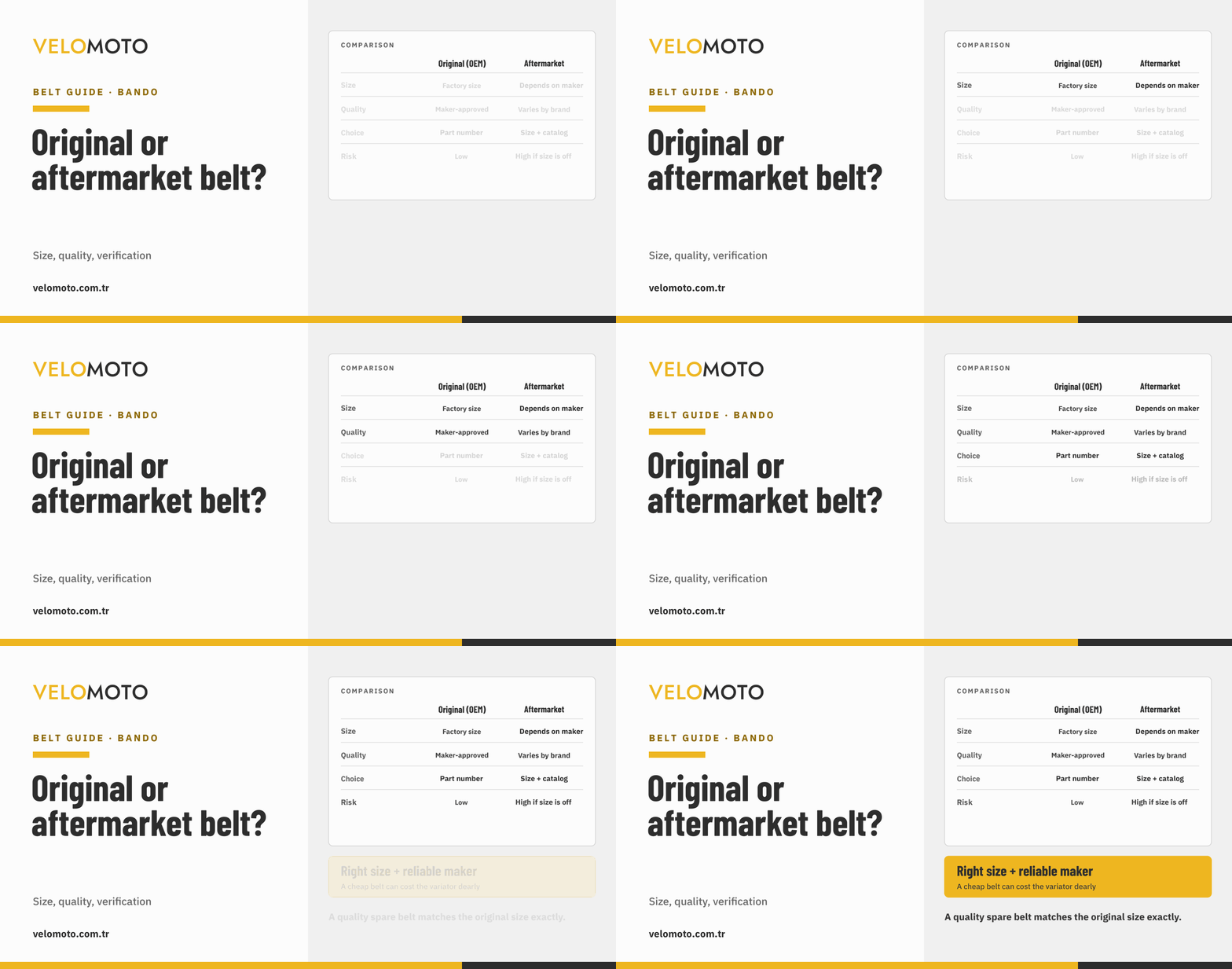
Original (OEM) vs. Aftermarket Variator Belts: The Difference
An original (OEM) belt is the belt the motorcycle manufacturer fits to the vehicle at the factory, or its replacement part; an aftermarket belt is a replacement belt of the same size made by another manufacturer.
Read the guide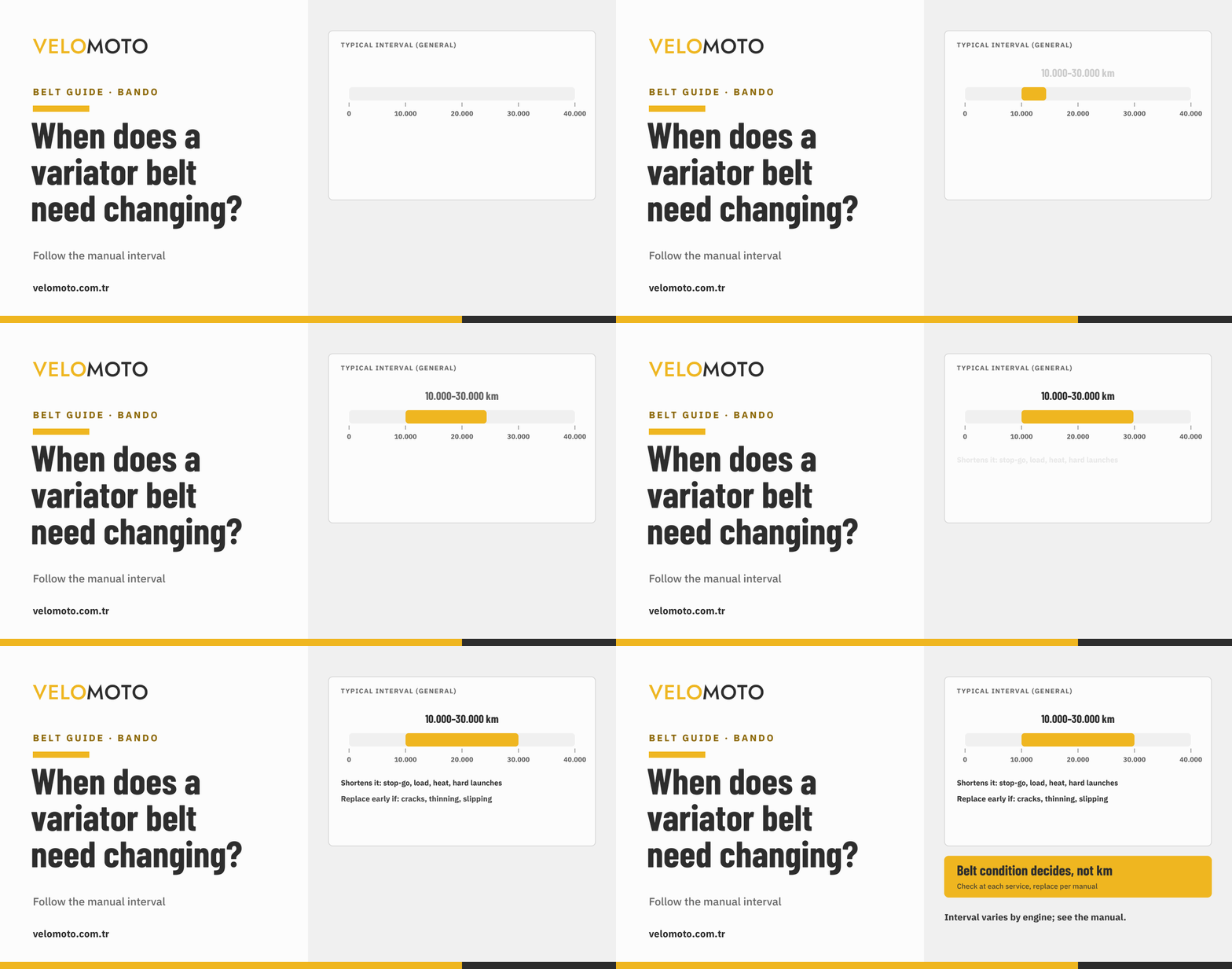
How Many km Before a Variator Belt Needs Replacing?
The replacement interval for a variator belt is set by the motorcycle manufacturer; depending on engine size, it is generally given as roughly 10,000 to 30,000 km.
Read the guide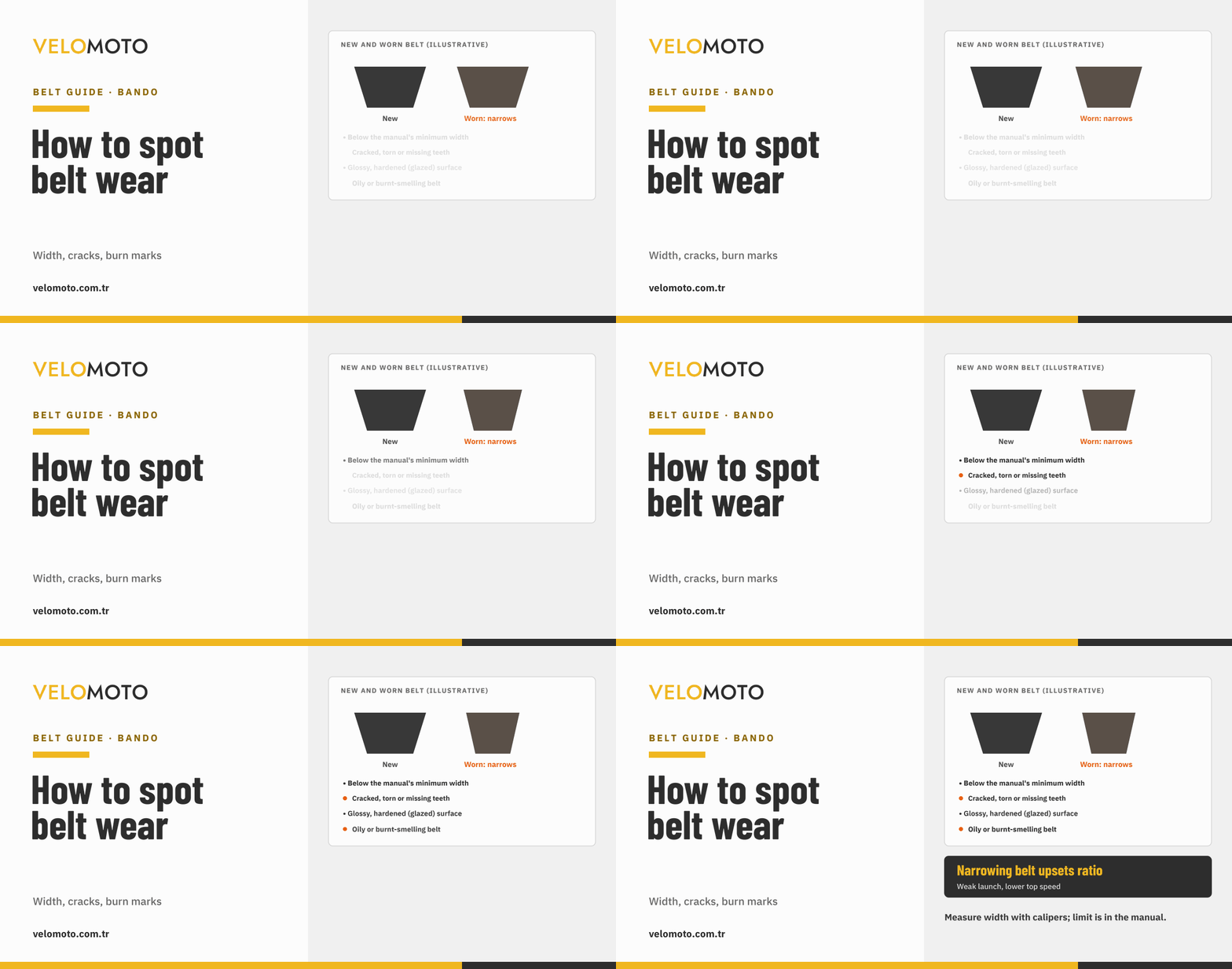
How to Tell If a Variator Belt Is Worn: Measuring the Width
As a variator belt wears, its side faces thin and the belt gets narrower; the most reliable check is to measure the belt's top width with calipers and compare it with the minimum value (service limit) in the manual.
Read the guide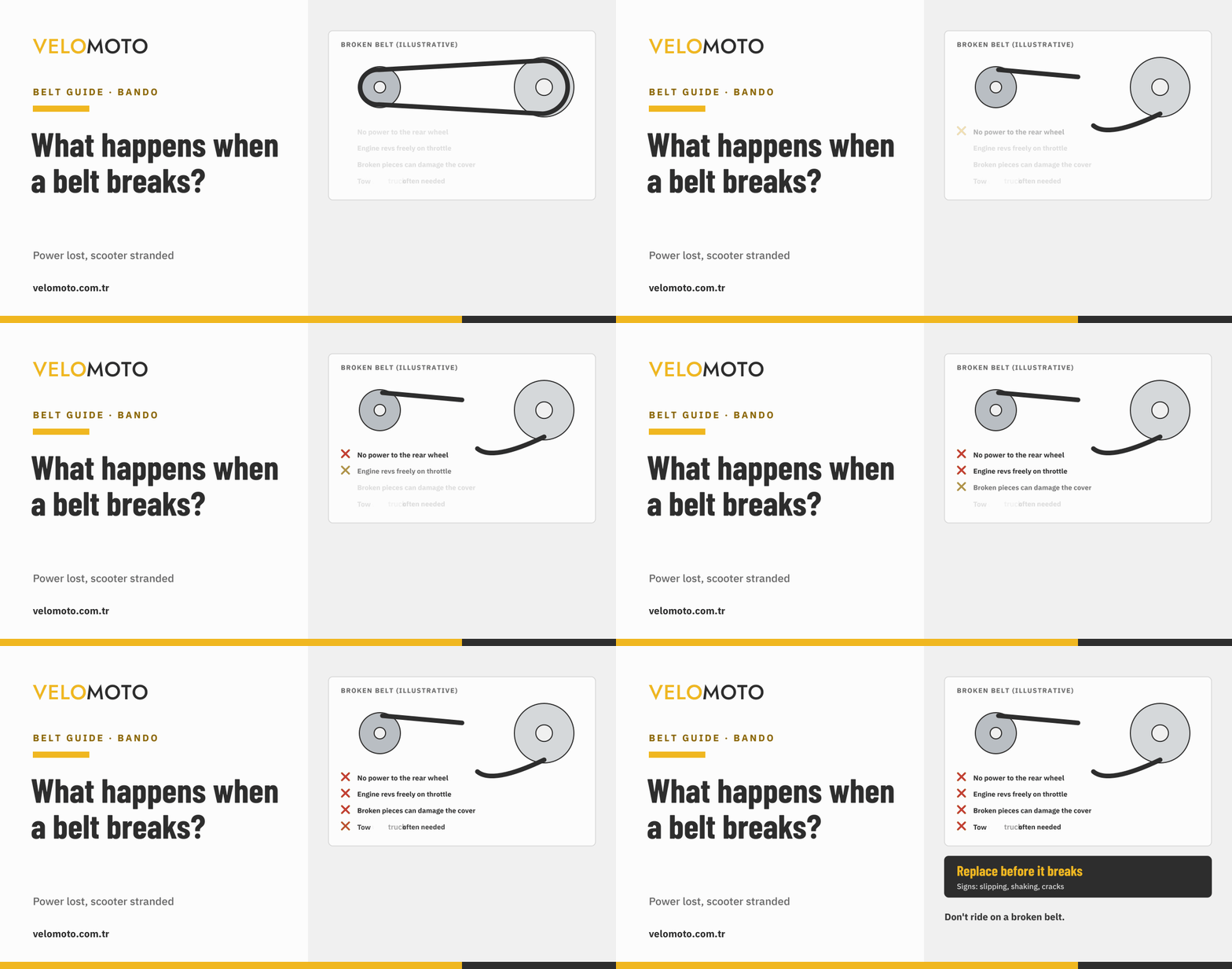
What Happens If a Variator Belt Breaks?
If the variator belt breaks, engine power no longer reaches the rear wheel; when you open the throttle the engine revs, but the scooter does not move.
Read the guide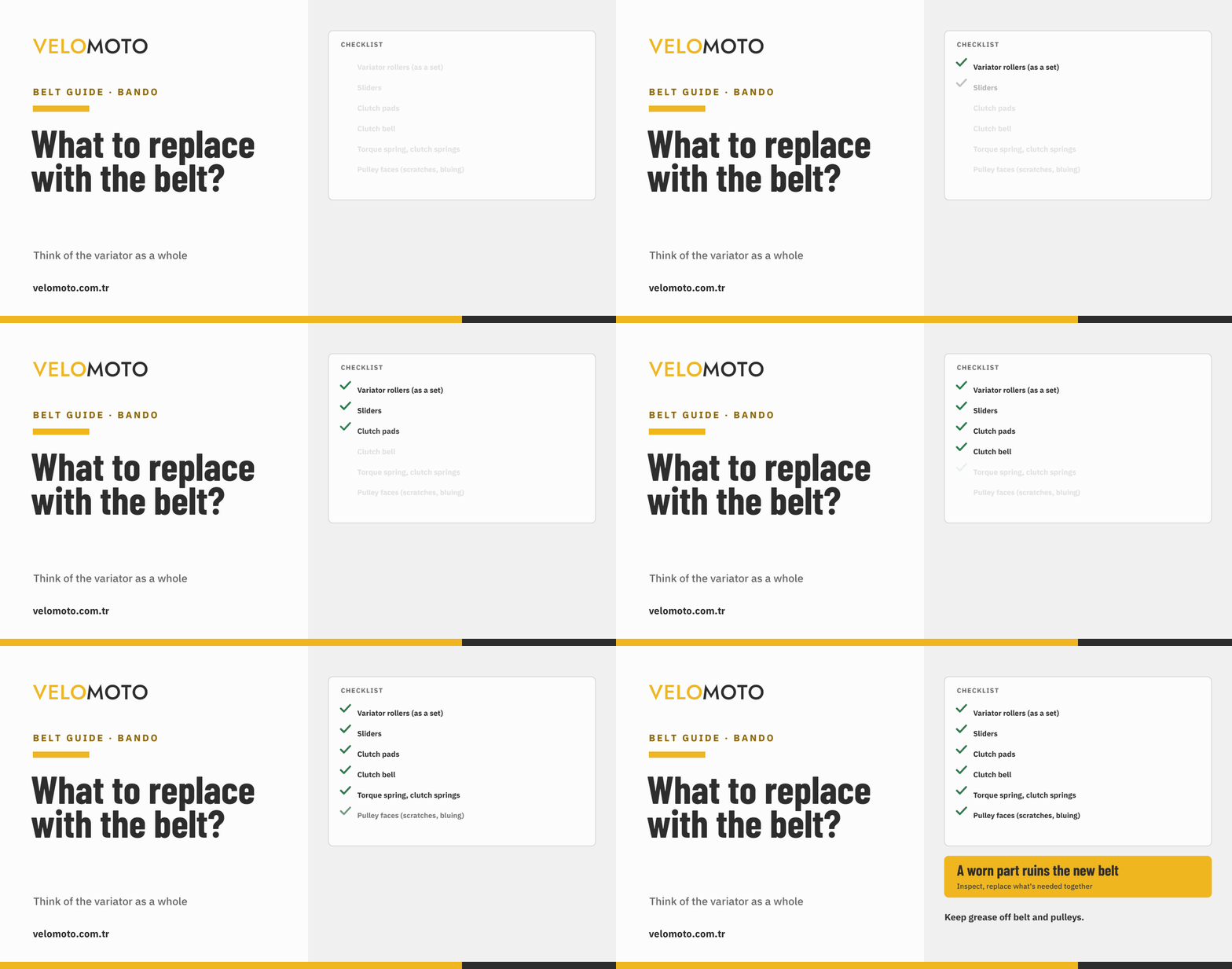
What Else Should Be Replaced Along with the Variator Belt?
Since the variator cover is already open when the belt is replaced, the rollers, sliders, clutch shoes, clutch springs, clutch bell and pulleys should also be checked.
Read the guide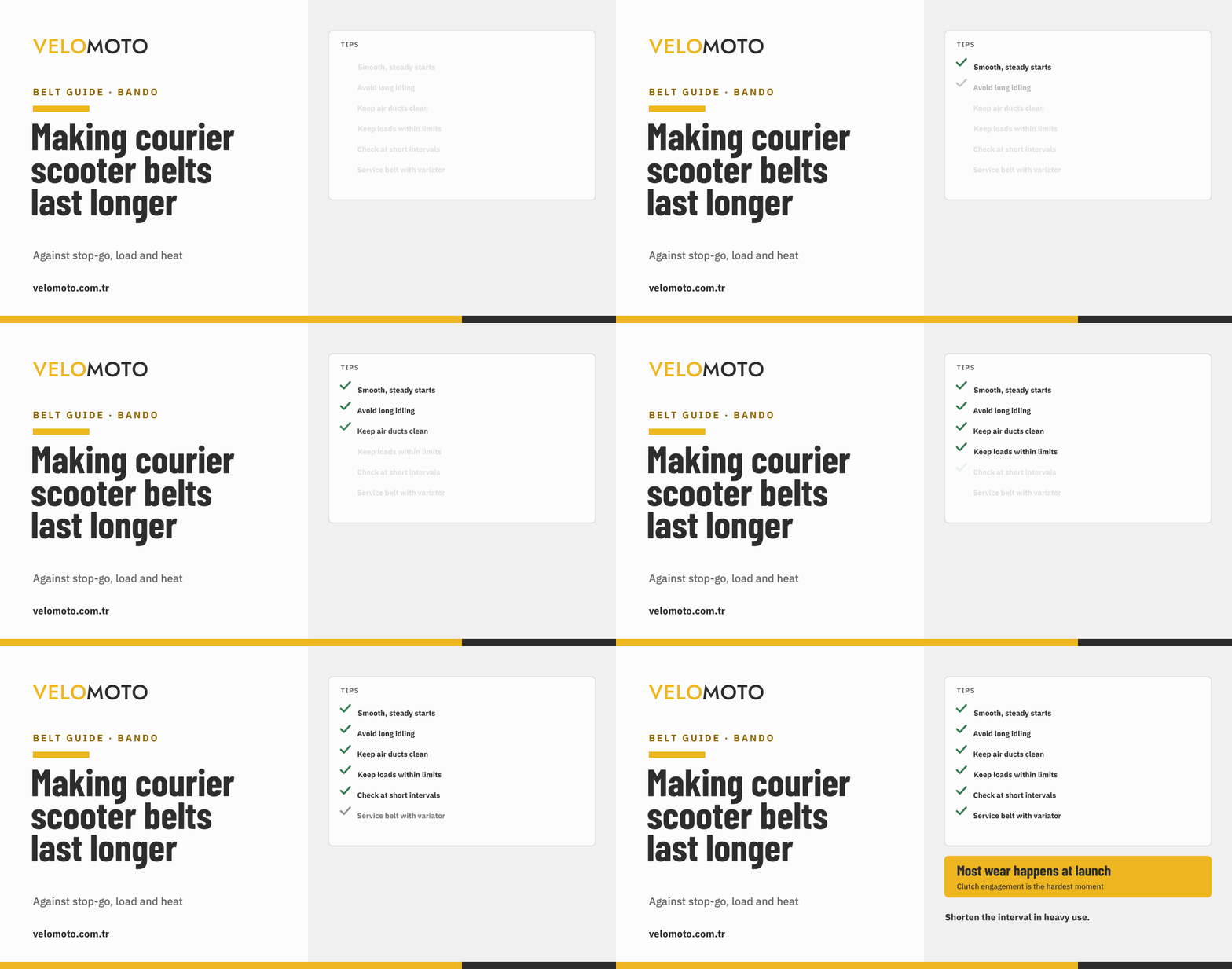
How to Extend Variator Belt Life on Courier Scooters
On courier scooters, the belt wears faster because of frequent stop-and-go, long idling, heavy loads and heat.
Read the guide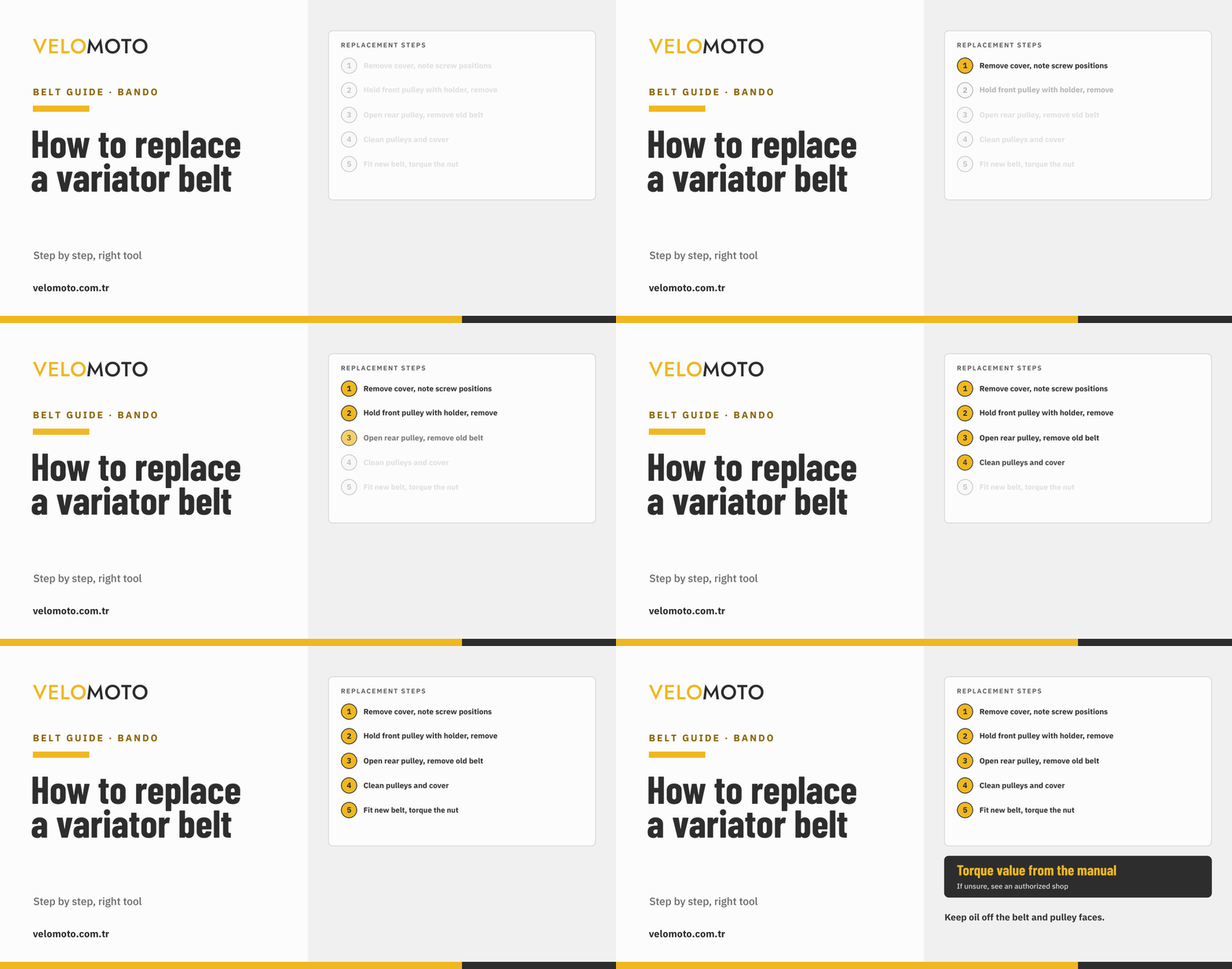
How to Replace a Variator Belt, Step by Step
Replacing a variator belt consists of opening the cover, holding the front variator with a holding tool and removing it, taking out the old belt, spreading the rear pulley halves to fit the new belt, and putting everything…
Read the guide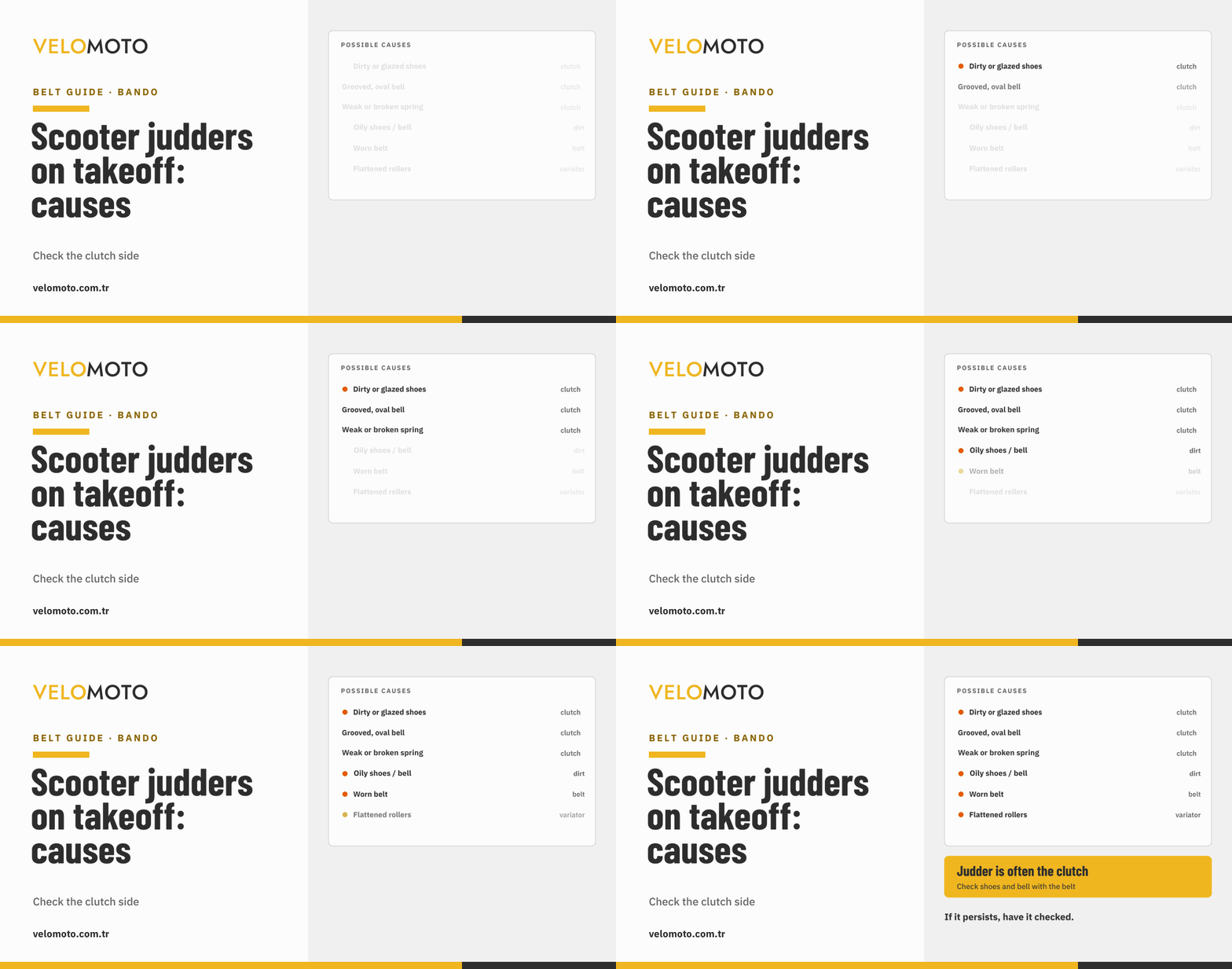
Scooter Judders on Takeoff: Causes and Fixes
If a scooter judders or shakes on takeoff, the cause is usually the clutch: contaminated or glazed clutch shoes, a grooved or out-of-round clutch bell, or weak clutch springs.
Read the guide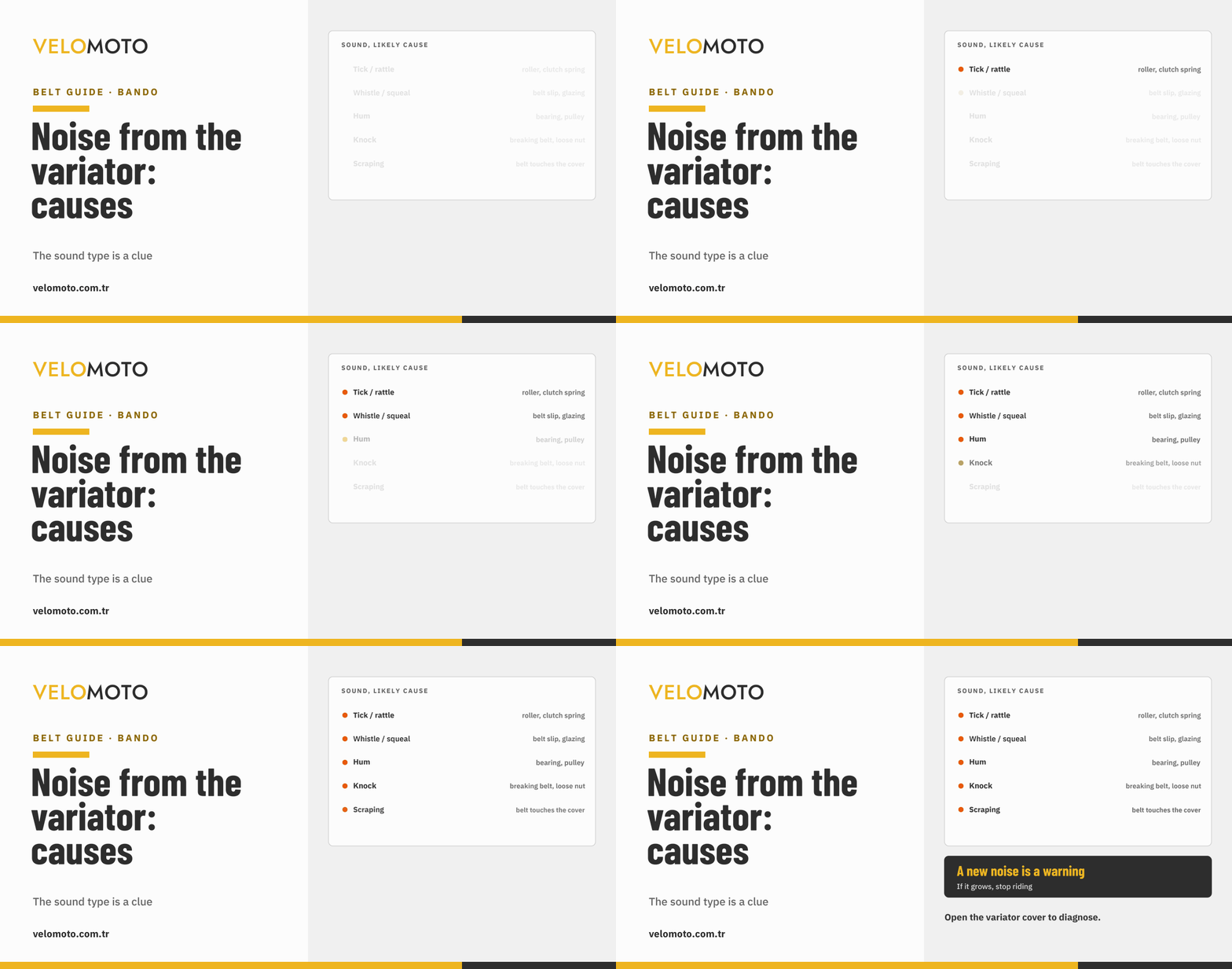
Noise Coming from the Variator: Causes
The type of noise from the variator gives a clue to its cause: ticking usually comes from worn rollers or a loose clutch spring, whistling or squealing from a slipping or glazed belt, and humming from a bearing.
Read the guide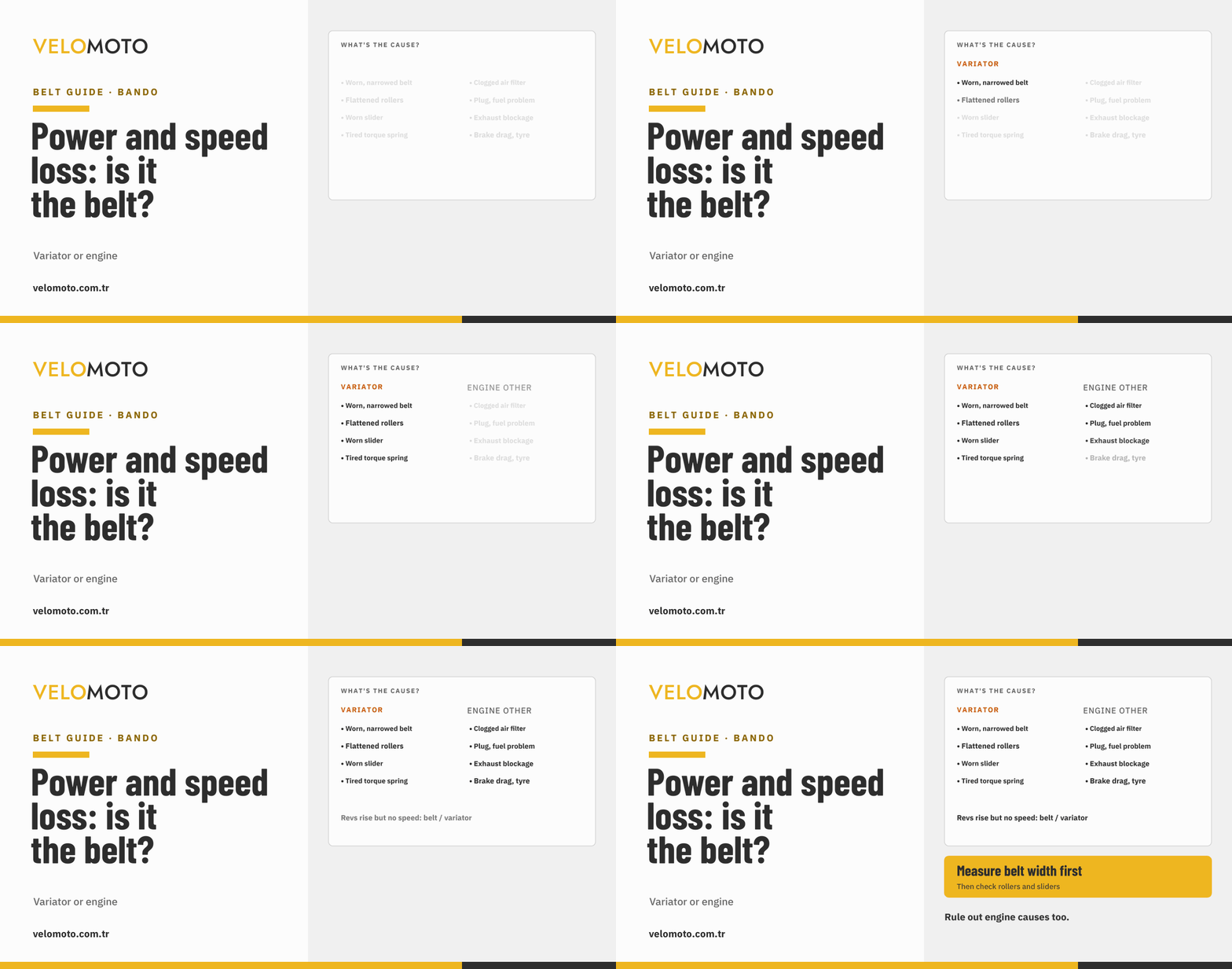
Scooter Losing Power and Top Speed: Is It the Belt?
If a scooter will not pull or its top speed has dropped, the belt may be the cause, but it is not the only one.
Read the guide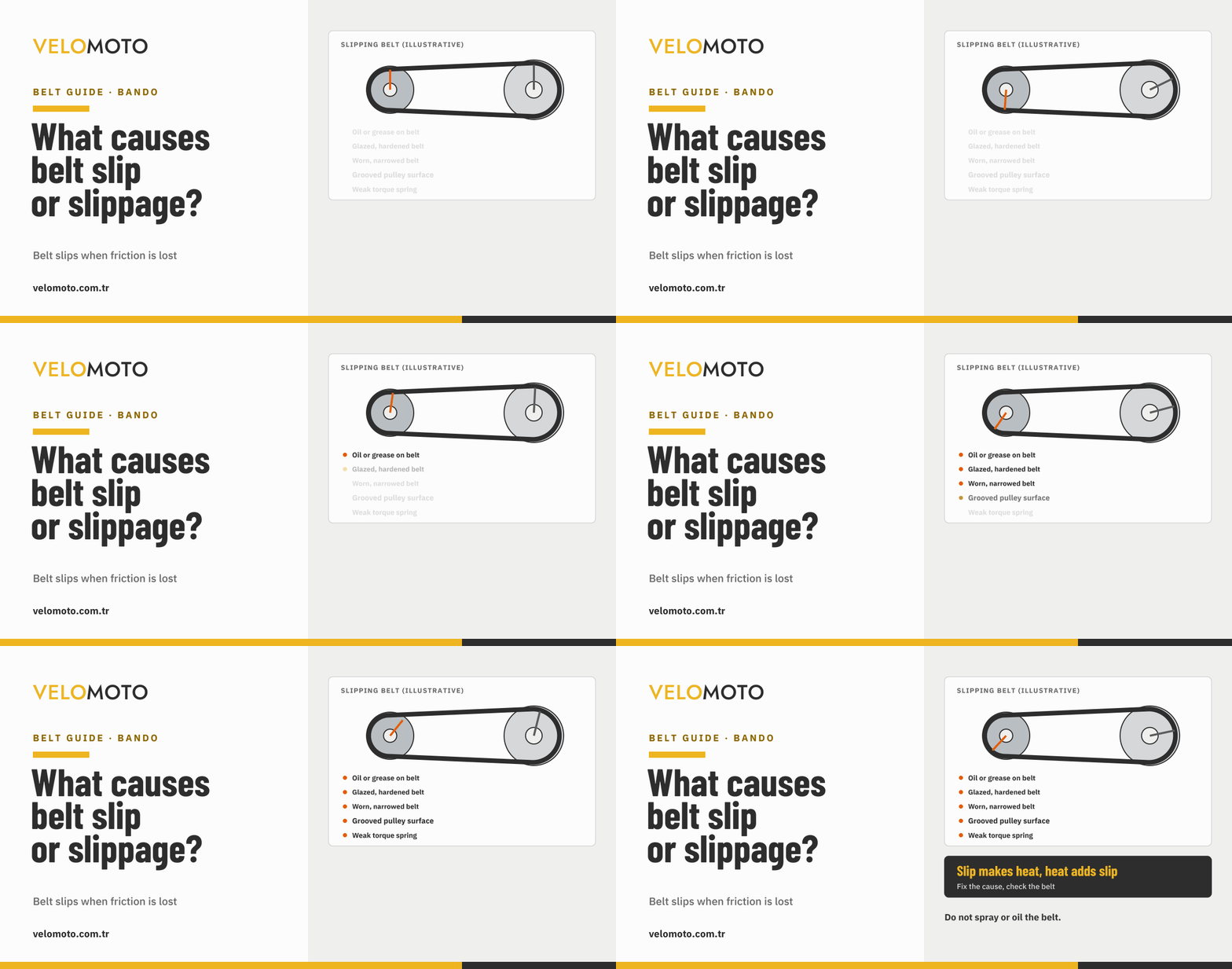
What Causes Belt Slip?
A variator belt slips when the friction between it and the pulleys drops.
Read the guide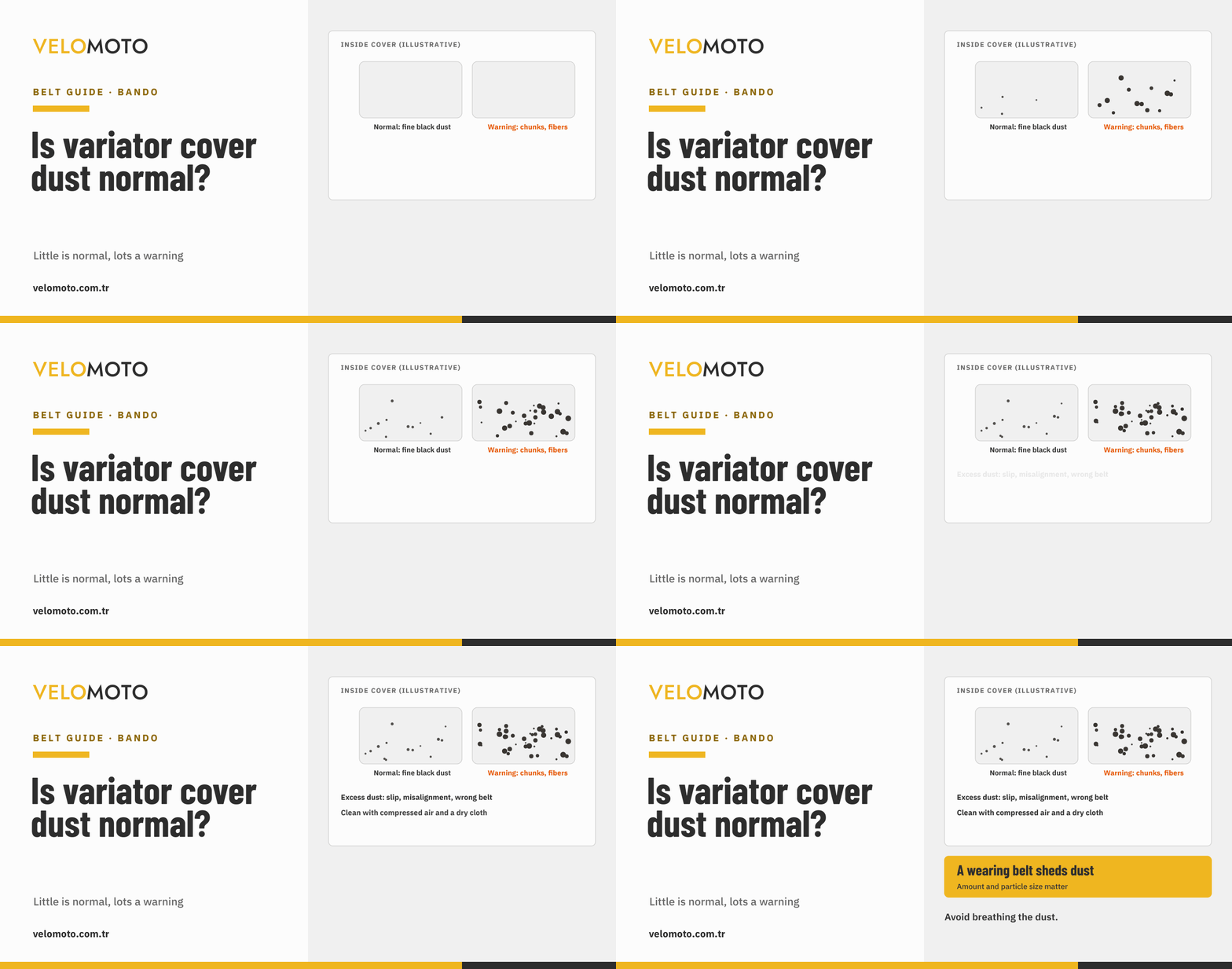
Is Dust and Rubber Residue Inside the Variator Cover Normal?
A fine, black belt dust inside the variator cover is normal; the belt wears slightly as it runs and leaves this dust behind.
Read the guide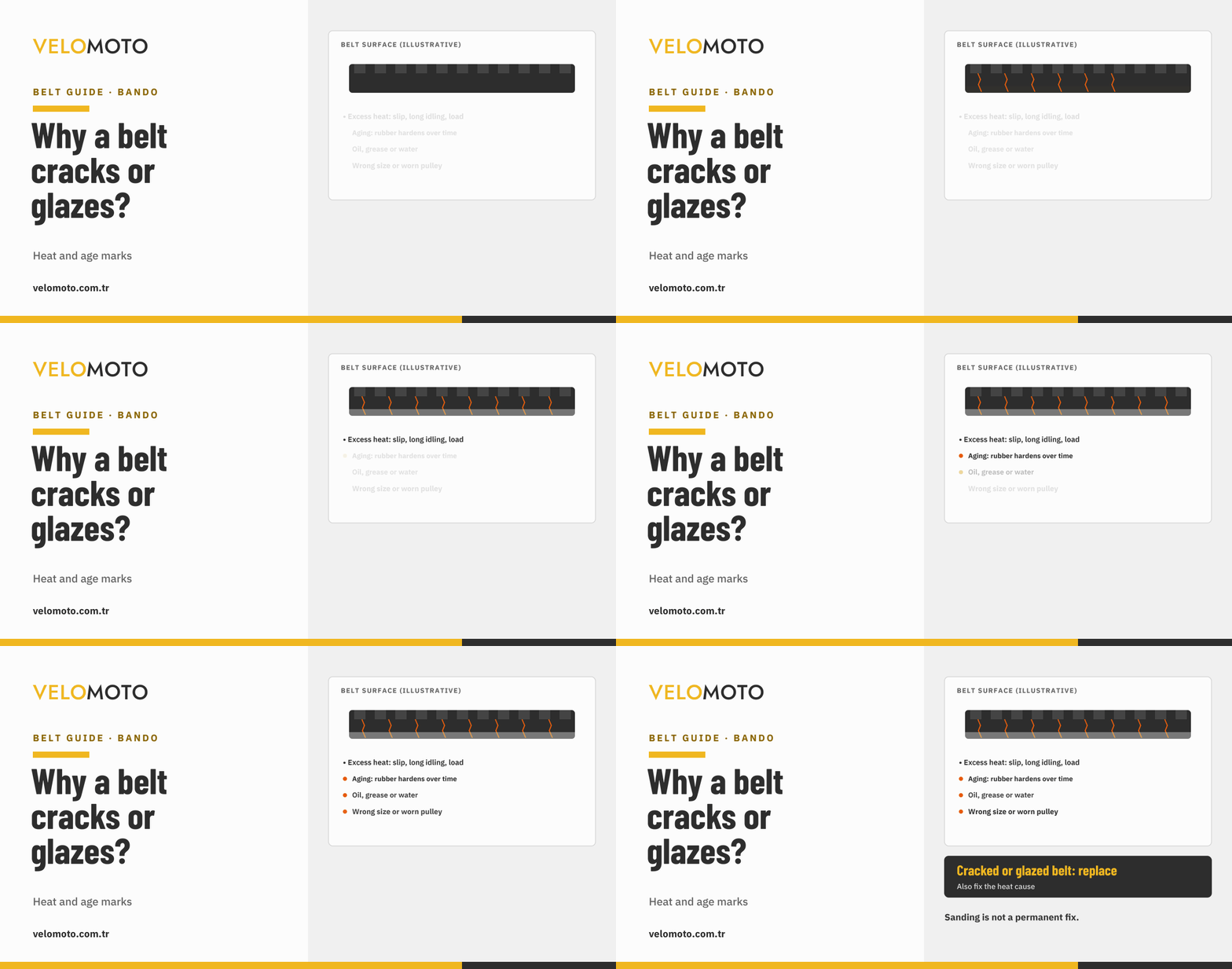
Why Does a Variator Belt Crack or Glaze?
A variator belt cracks or glazes mostly because of excess heat and aging.
Read the guide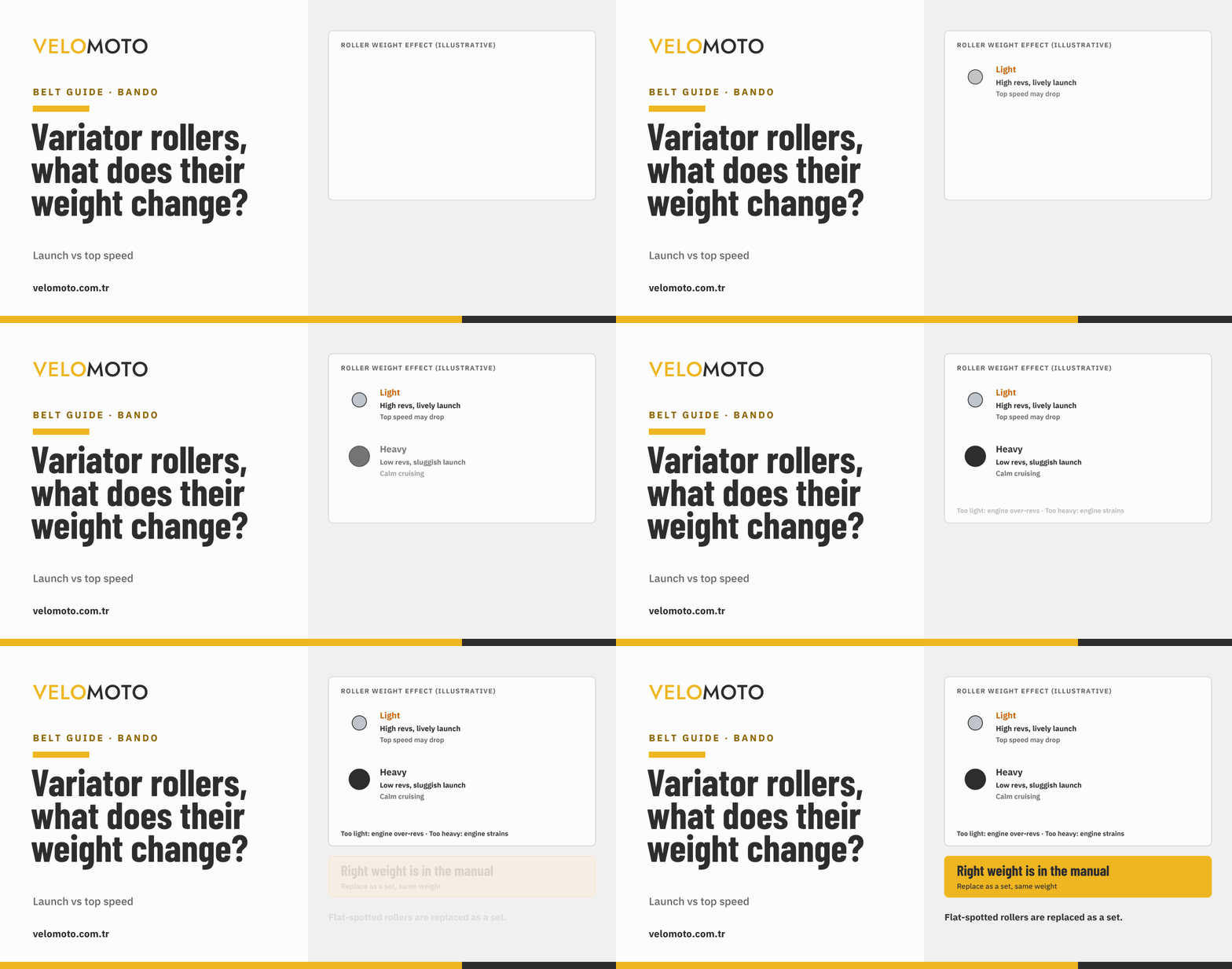
What Are Variator Rollers, and What Does Their Weight Change?
Variator rollers slide outward inside the front pulley under centrifugal force, pushing the pulley halves together and enlarging the belt's working diameter; this changes the drive ratio.
Read the guide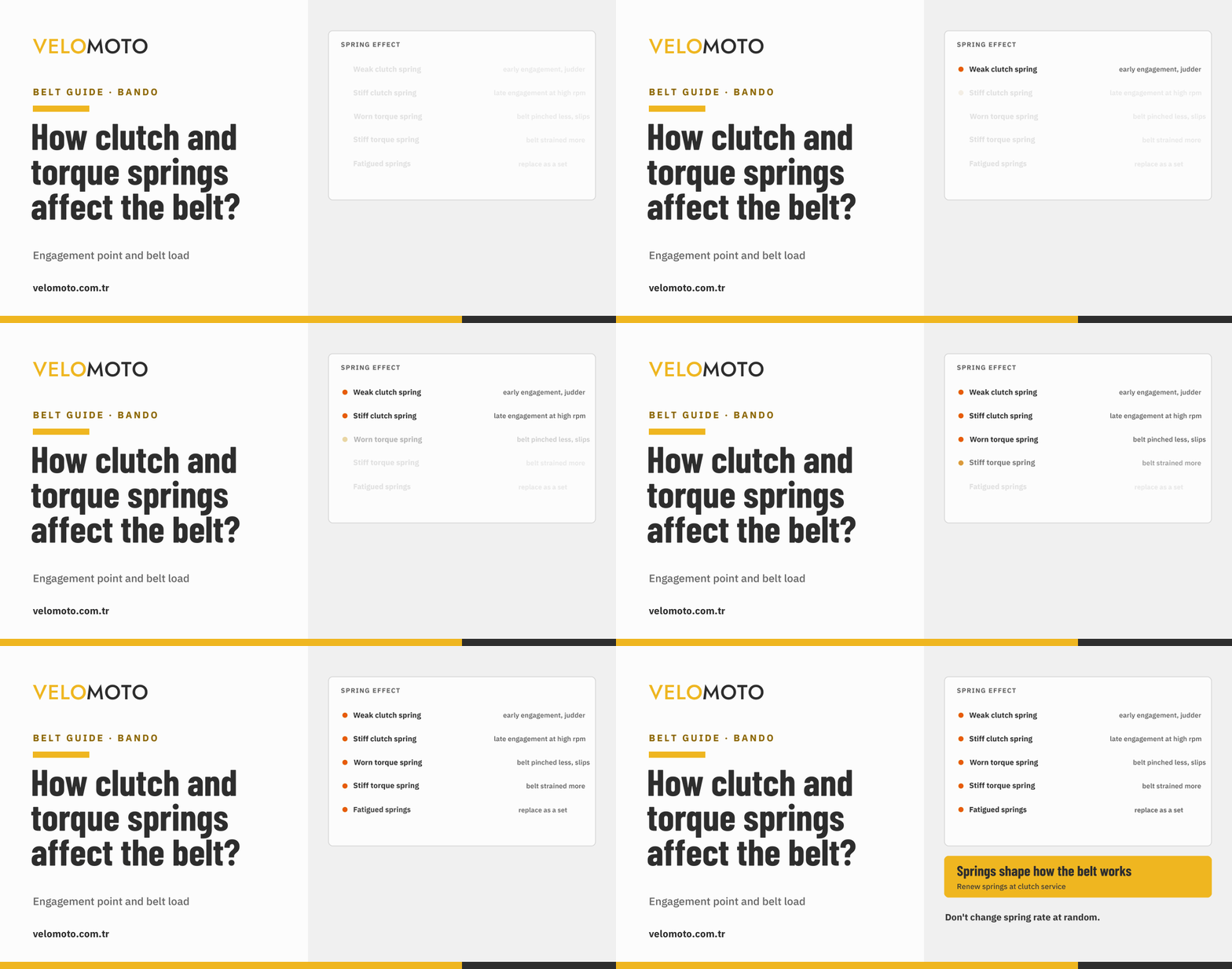
How Do the Clutch Springs and Torque Spring Affect the Variator Belt?
The clutch springs determine at what rpm the clutch shoes grip the clutch bell (the engagement rpm); the torque spring (contra spring) presses the rear pulley halves together and squeezes the belt.
Read the guide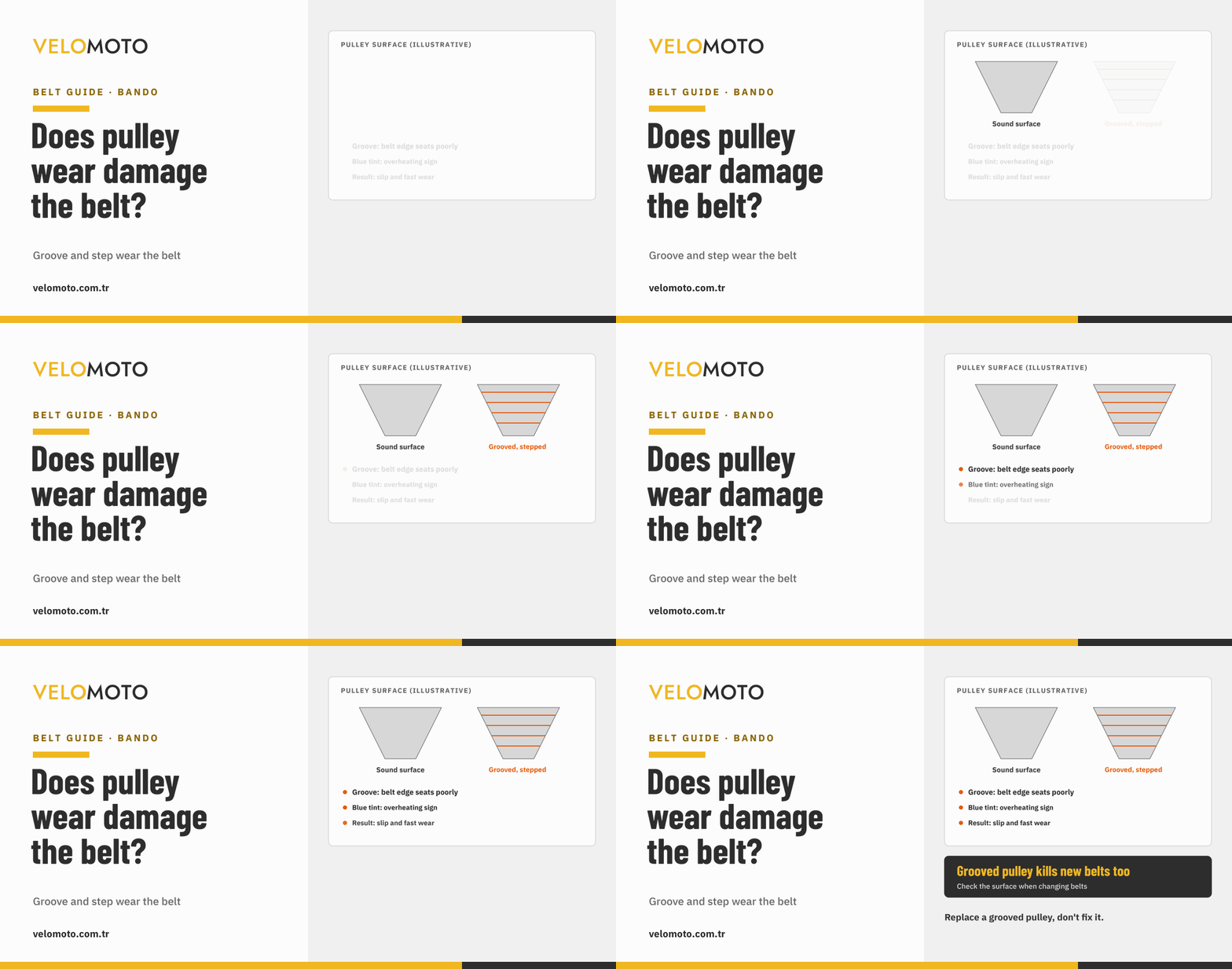
Does Pulley (Sheave) Wear Damage the Belt?
Yes.
Read the guide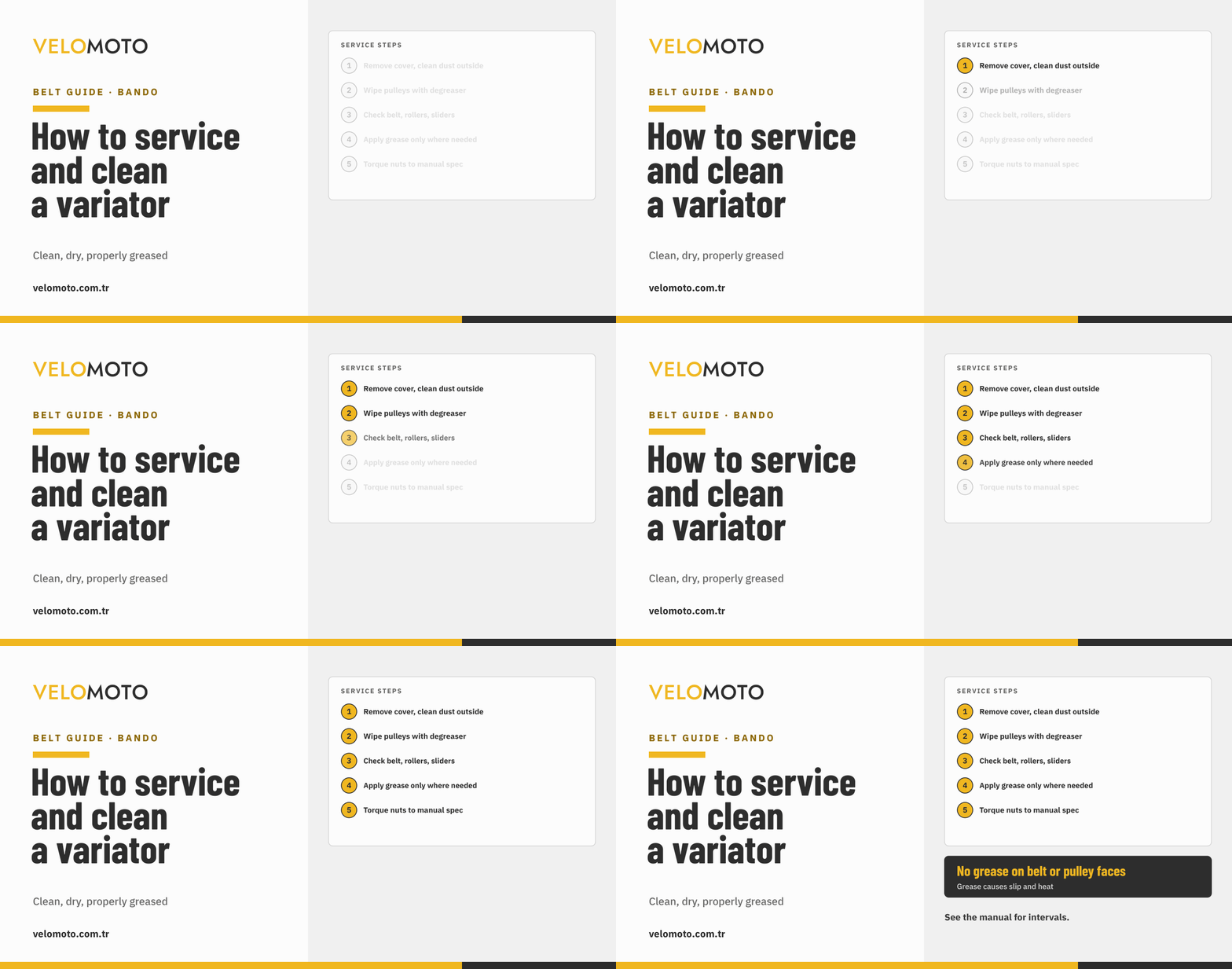
How to Service and Clean a Variator
Variator service consists of opening the cover and cleaning out the belt dust, degreasing the pulley faces, checking the belt, rollers, sliders, clutch and springs, and reassembling everything to the torque in the manual…
Read the guide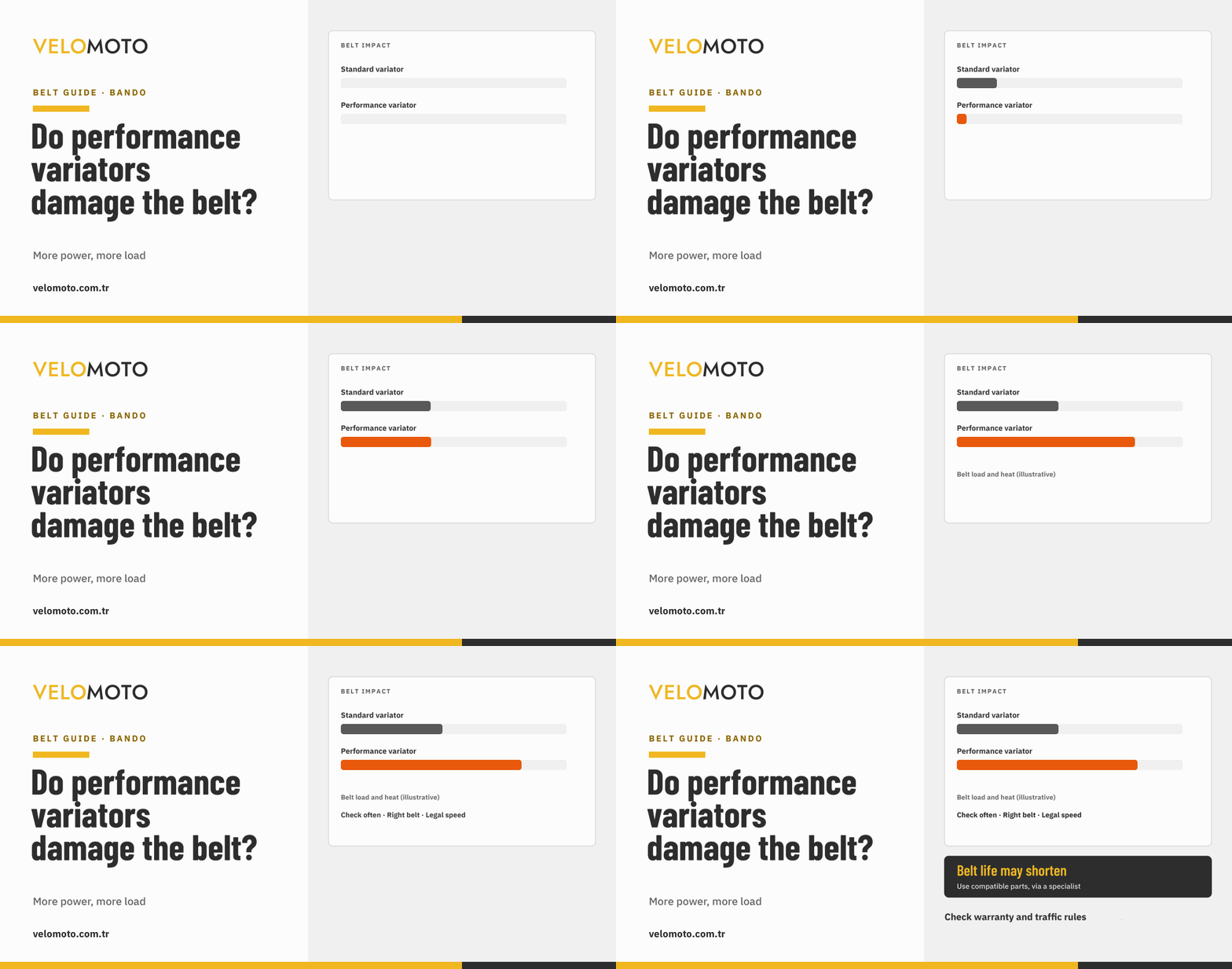
Do a Performance Variator and Heavy Rollers Damage the Belt?
A performance variator, different roller weights and stiffer springs change the belt's operating conditions; the load and heat on the belt usually increase, and belt life can be shortened.
Read the guide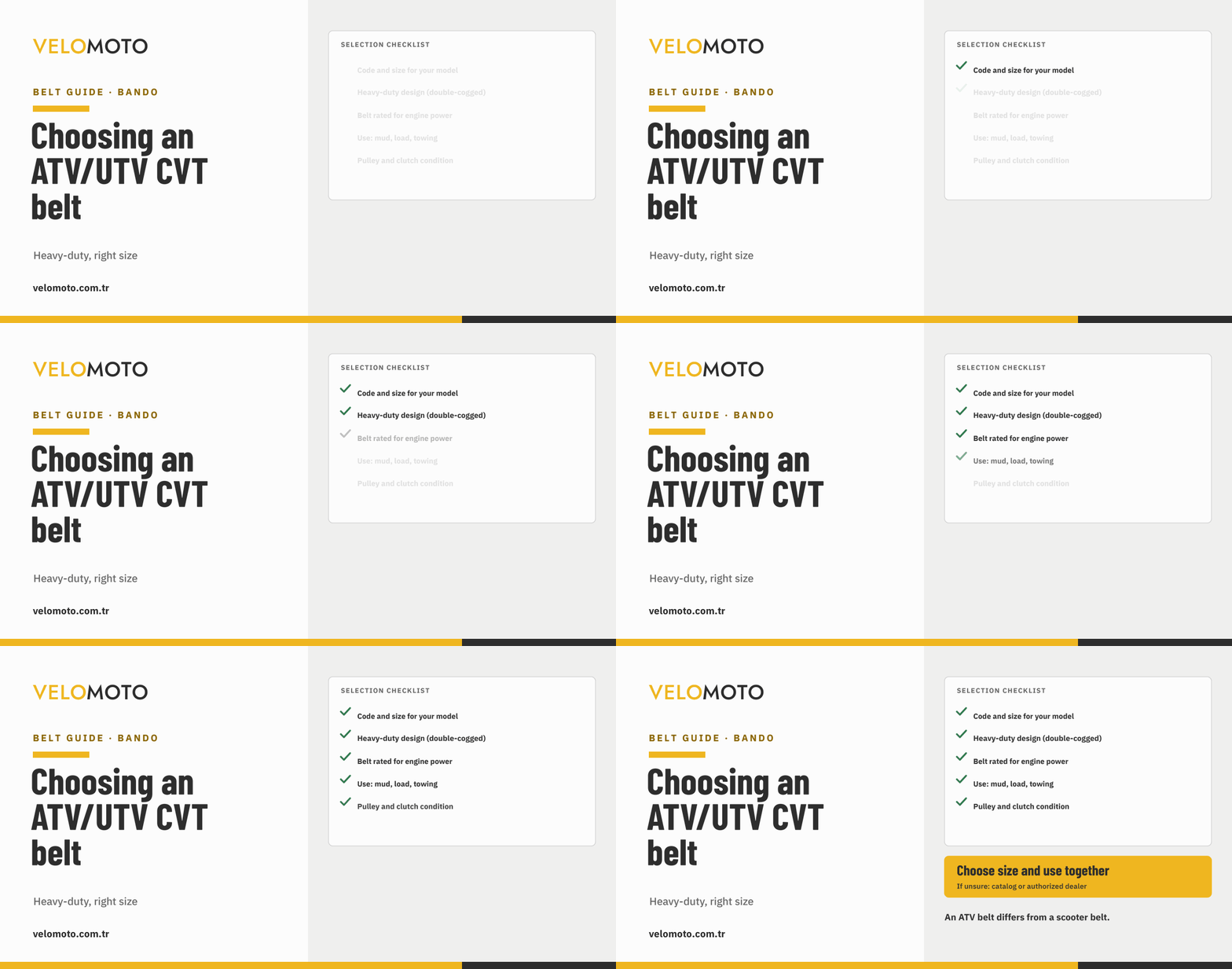
How to Choose an ATV/UTV CVT Belt
The first rule when choosing an ATV/UTV belt is to pick the belt with the code and size that match the vehicle's model and year.
Read the guideWhere can I buy the products? We do not sell directly to end users. You can buy the products mentioned in our guides from our authorised dealers.
See our dealers