
Velomoto knowledge centre
Technical guides
Guides on choosing, maintaining and replacing brakes, chains, variator belts and control cables, written with the technical data of our brands. Guides are currently in Turkish.
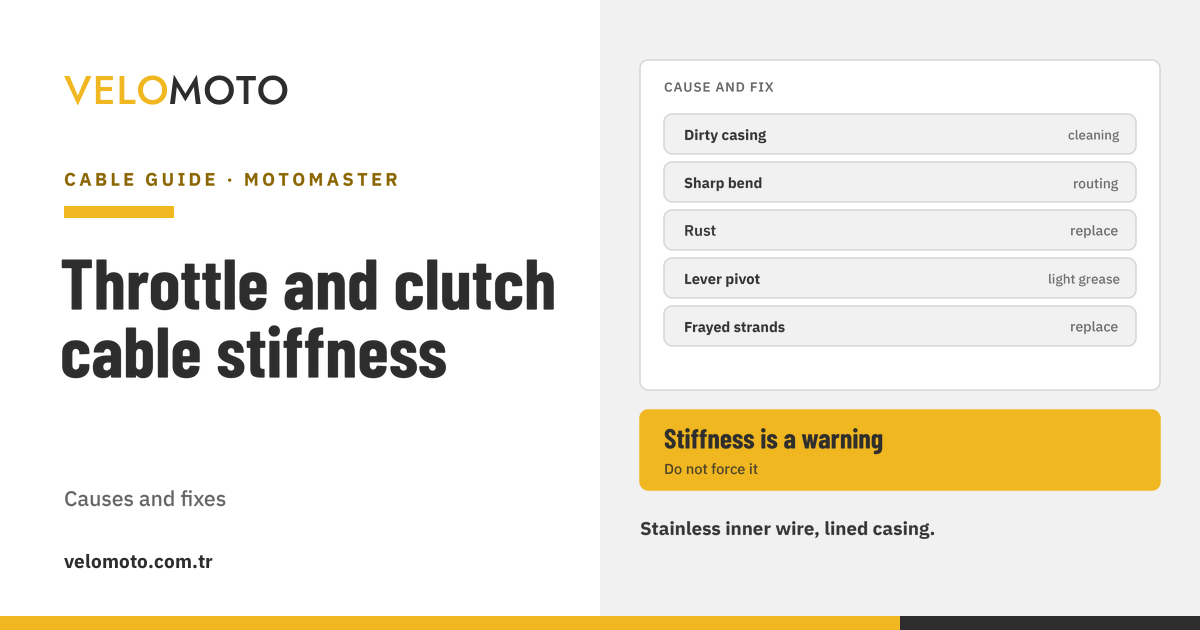
Why Do Throttle and Clutch Cables Get Stiff, and How Do You Free Them Up?
Throttle and clutch cables usually stiffen because of dirt and moisture in the outer casing, rust on the inner wire, sharp bends, a crushed casing or a dry lever pivot; cleaning the end fittings and pivot and correcting the routing can cure mild stiffness, but if there is rust or fraying the cable should be replaced.
Read the guide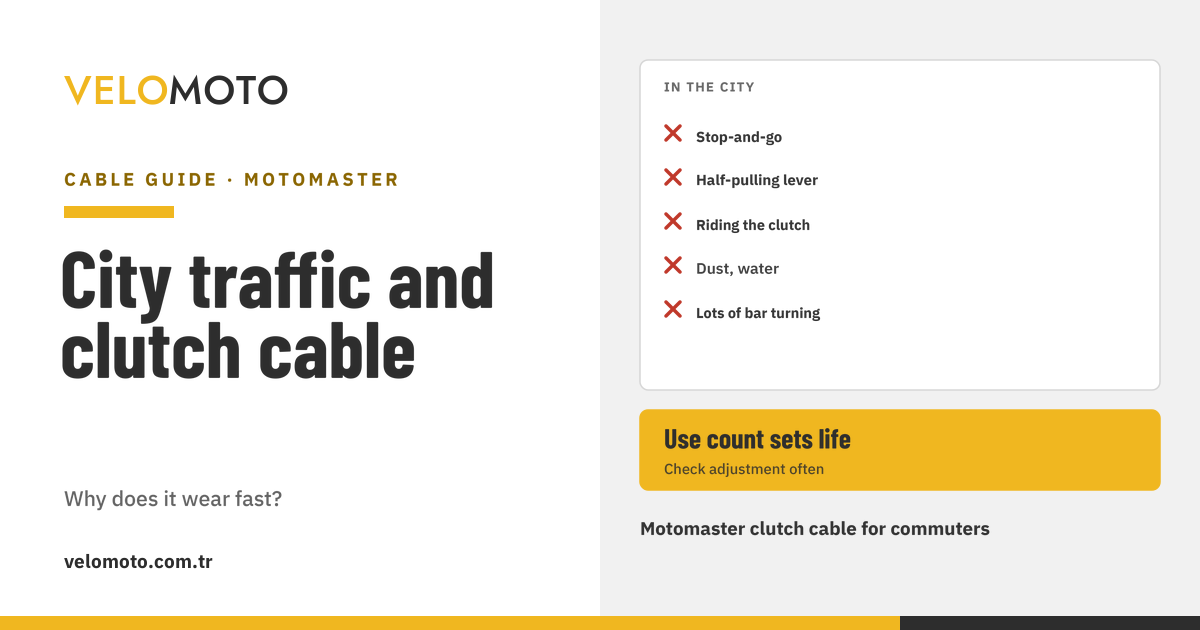
Why Does City Traffic Wear Out a Clutch Cable So Quickly?
In city traffic, the clutch lever is pulled at every stop and start; the cable works many times over a short distance, and riding with the lever half pulled keeps the cable under constant load and speeds up wear.
Read the guide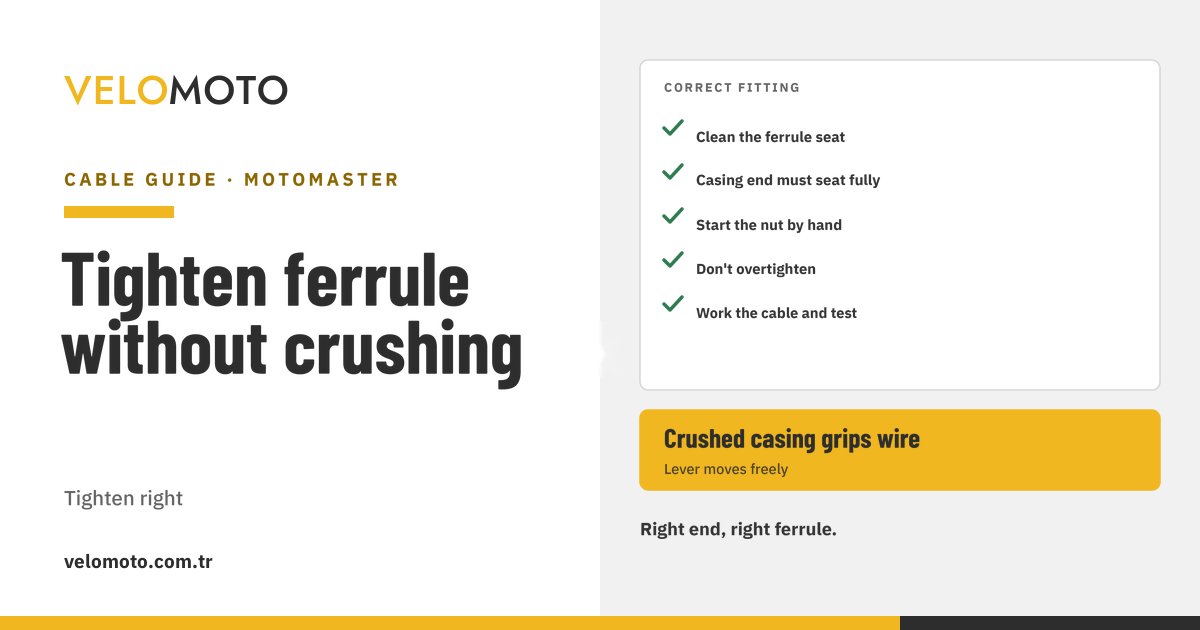
Tightening a Cable Ferrule Without Crushing the Inner Wire
A cable ferrule or adjusting nut is tightened to secure the end of the outer casing in its seat; to avoid crushing the inner wire, the casing end must be fully seated, the nut started by hand and not tightened more than necessary.
Read the guide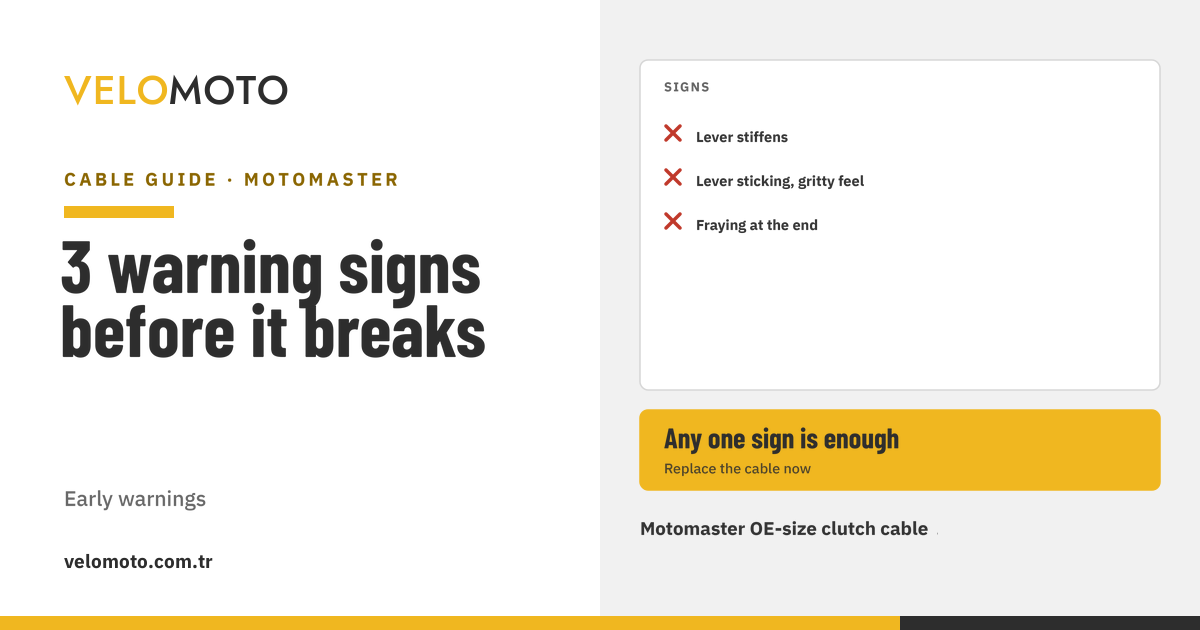
3 Warning Signs Before a Clutch Cable Breaks
A clutch cable usually gives three warning signs before it breaks: the lever becomes noticeably stiffer, there is sticking or a gritty feel as the lever is pulled, and fraying appears where the cable exits at the lever end.
Read the guide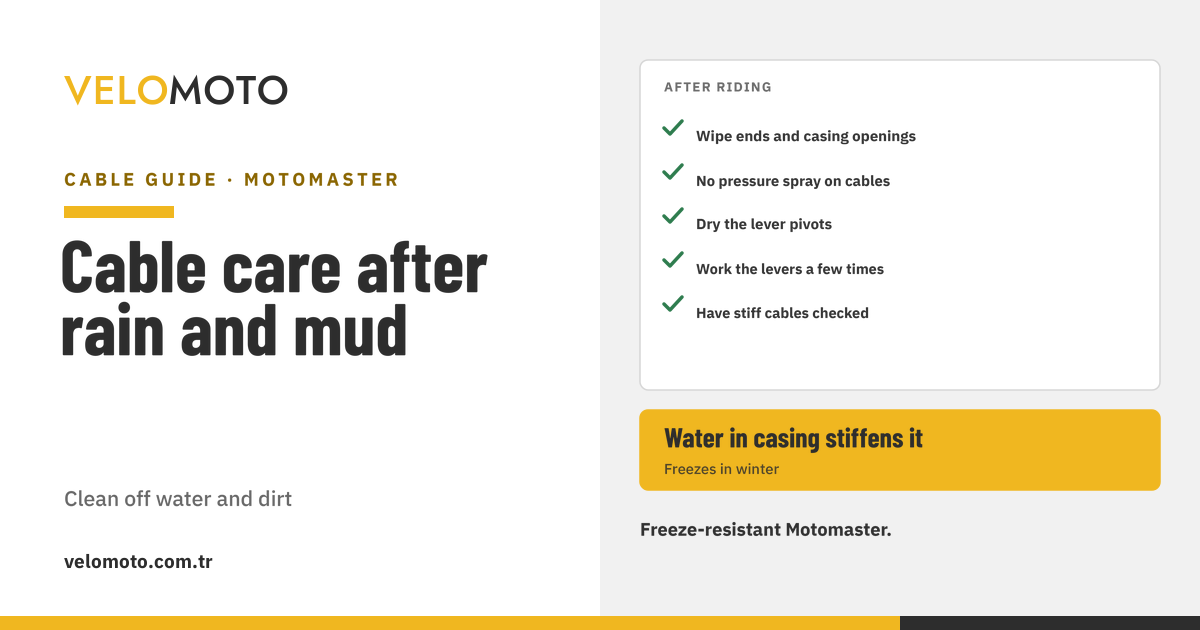
Cable Care After Riding in Rain and Mud
After riding in rain or mud, wipe and dry the cable ends and casing openings, do not aim a pressure washer directly at the outer casings, and work the levers through their full travel a few times; water and dirt in the outer casing are the most common cause of cable stiffness.
Read the guide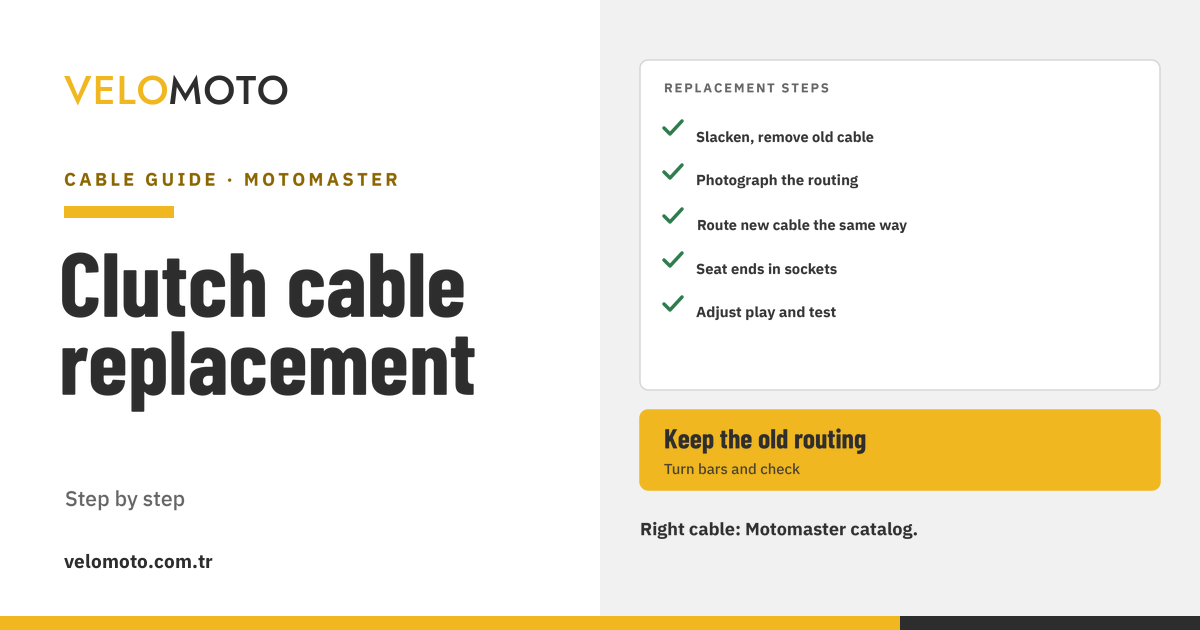
How to Replace a Clutch Cable
To replace a clutch cable, loosen the adjustment and remove the old cable from the lever and engine sides, route the new cable along the old cable's path, seat the end fittings and set the free play to the value in the manual.
Read the guide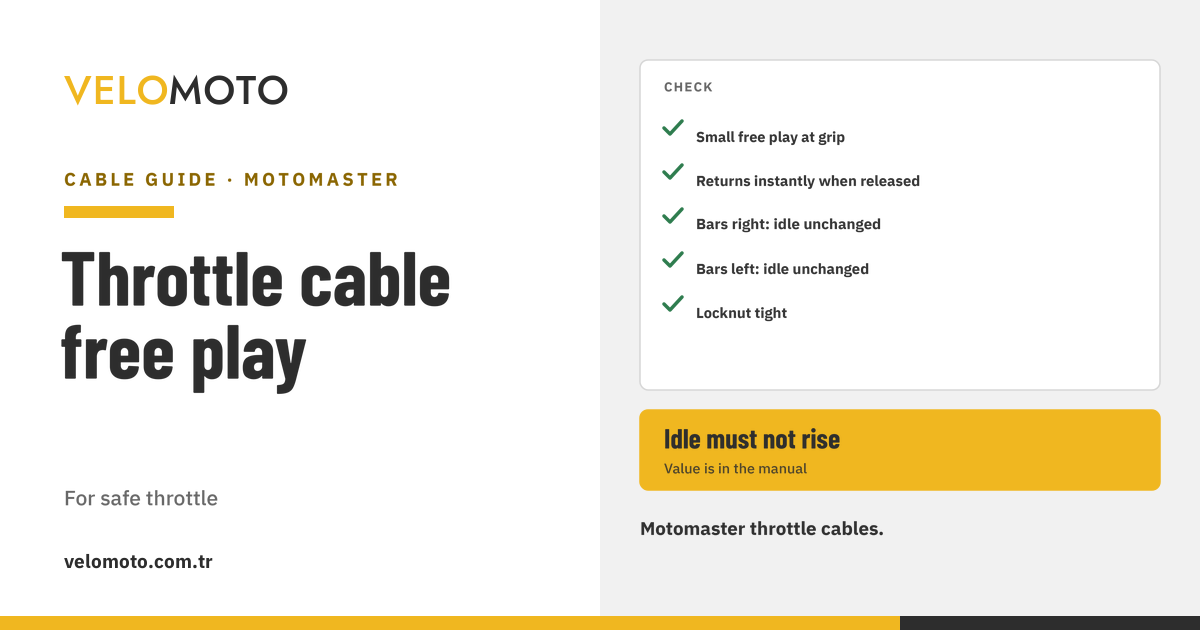
Motorcycle Throttle Cable Free Play Adjustment
Throttle cable free play is the small amount of free movement when the grip starts to turn, before the throttle valve opens; the correct value varies by model and is listed in the owner's manual.
Read the guide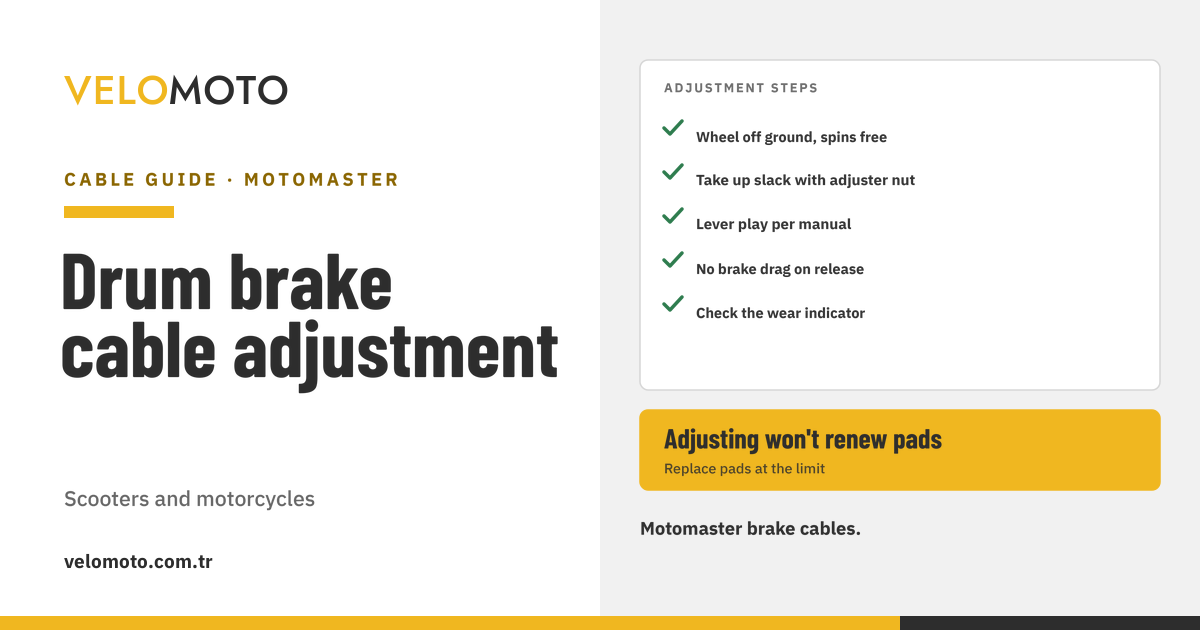
Drum Brake Cable Adjustment (Scooters and Motorcycles)
On drum brakes, lever free play increases as the brake shoes wear; the brake cable is brought back to the free play value in the manual with the adjusting nut on the wheel side, and the wheel must spin freely when the brake is released.
Read the guide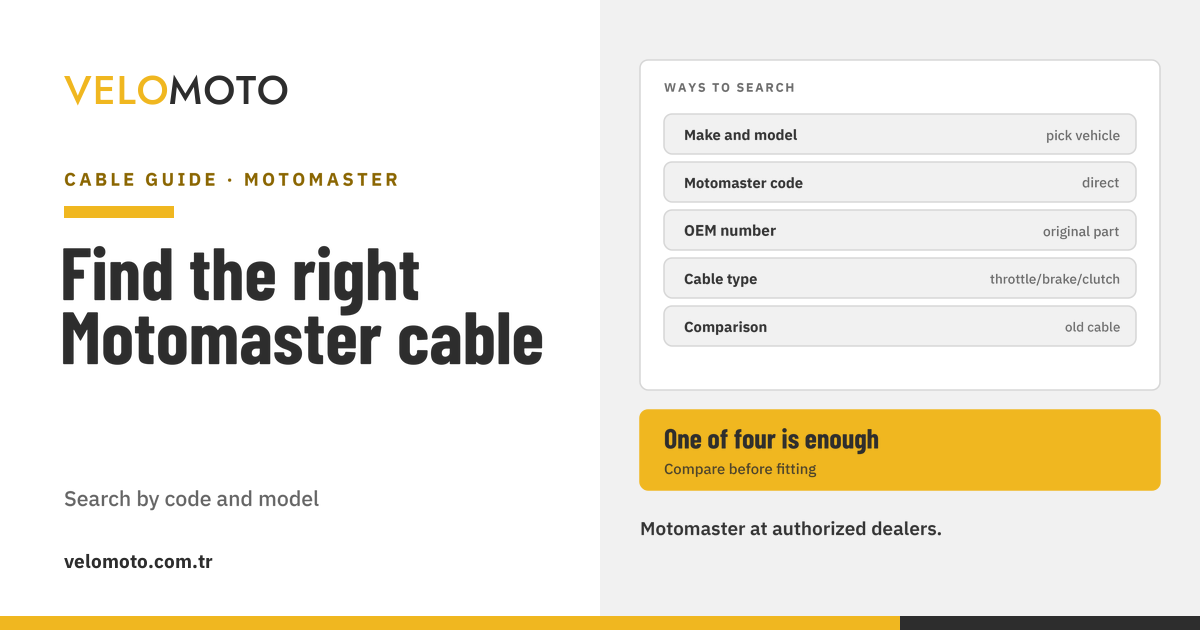
Finding the Right Motomaster Cable by Cable Code and Model
You can find the right Motomaster cable in one of four ways: the motorcycle's make and model, the Motomaster product code, the original part (OEM) number or the cable type.
Read the guide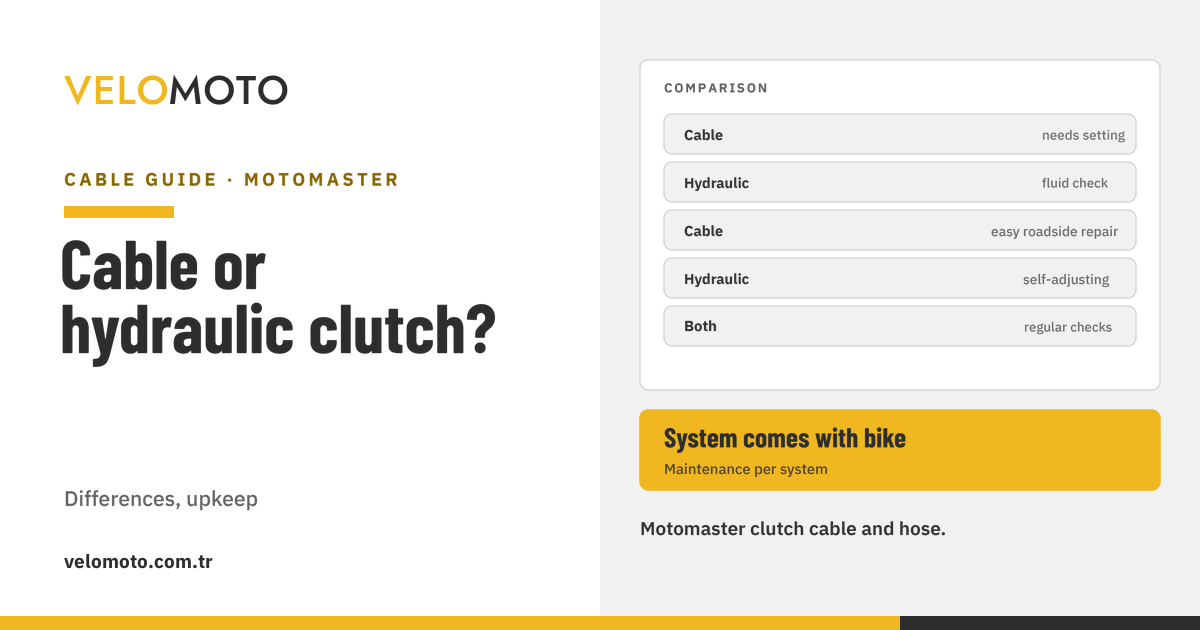
Cable Clutch or Hydraulic Clutch?
In a cable clutch, lever movement is transmitted to the clutch by a steel cable, and in a hydraulic clutch by fluid in a hose; the cable system is simple and easy to repair on the road but needs periodic free play adjustment, while the hydraulic system compensates for wear by itself on most models but requires fluid and air checks.
Read the guide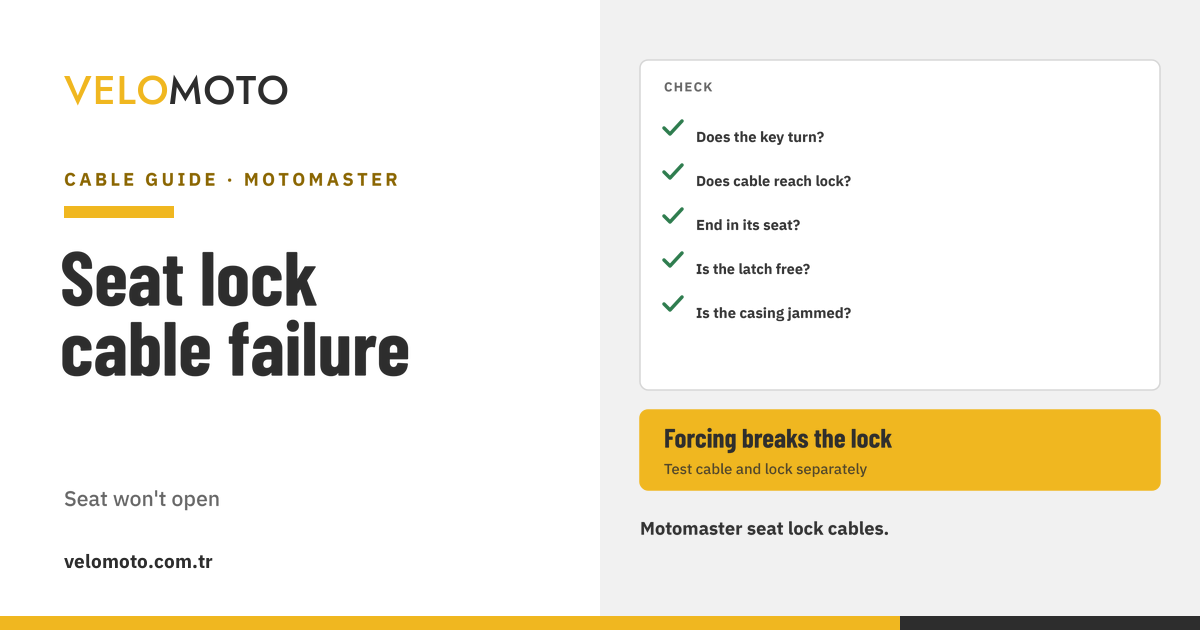
Seat Lock Cable Failure and Replacement
When the key or release lever is turned, the seat lock pulls the lock latch through a cable; if the key turns but the seat does not open, the cable may have broken, stretched or its end fitting may have come out of its seat.
Read the guide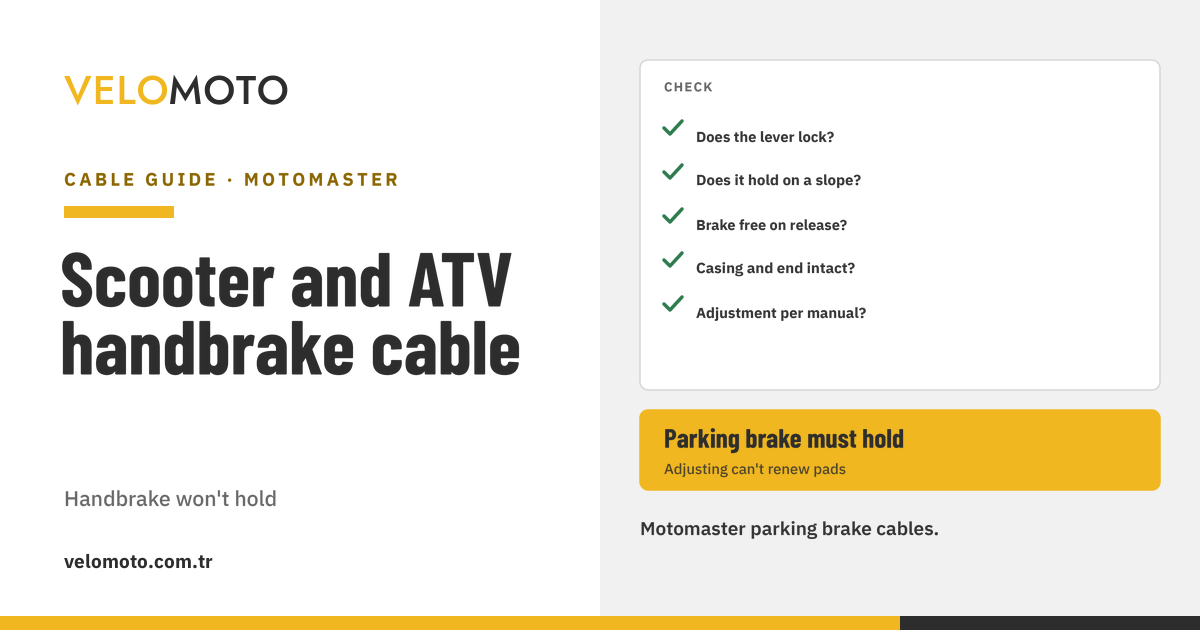
Scooter and ATV Parking Brake (Hand Brake) Cable
On scooters and ATVs, the parking brake lever holds the vehicle in place by clamping the wheel brake's shoes or pads through a cable; when the cable stretches, rusts or goes out of adjustment, the parking brake will not hold the vehicle on a slope, or the wheel drags when it is released.
Read the guide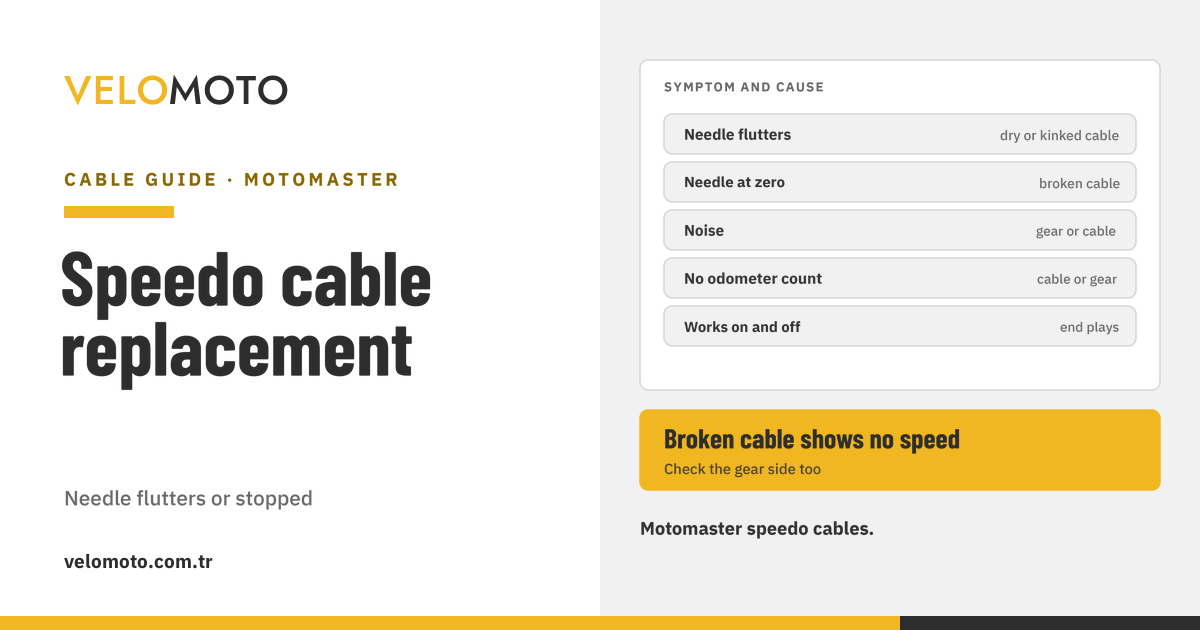
Motorcycle Speedometer Cable Replacement
On motorcycles with mechanical gauges, the speedometer runs on a speedometer cable driven by the wheel or the transmission; if the needle flutters, drops now and then or does not move at all, the speedometer cable or the speedometer drive gear at the wheel should be checked.
Read the guide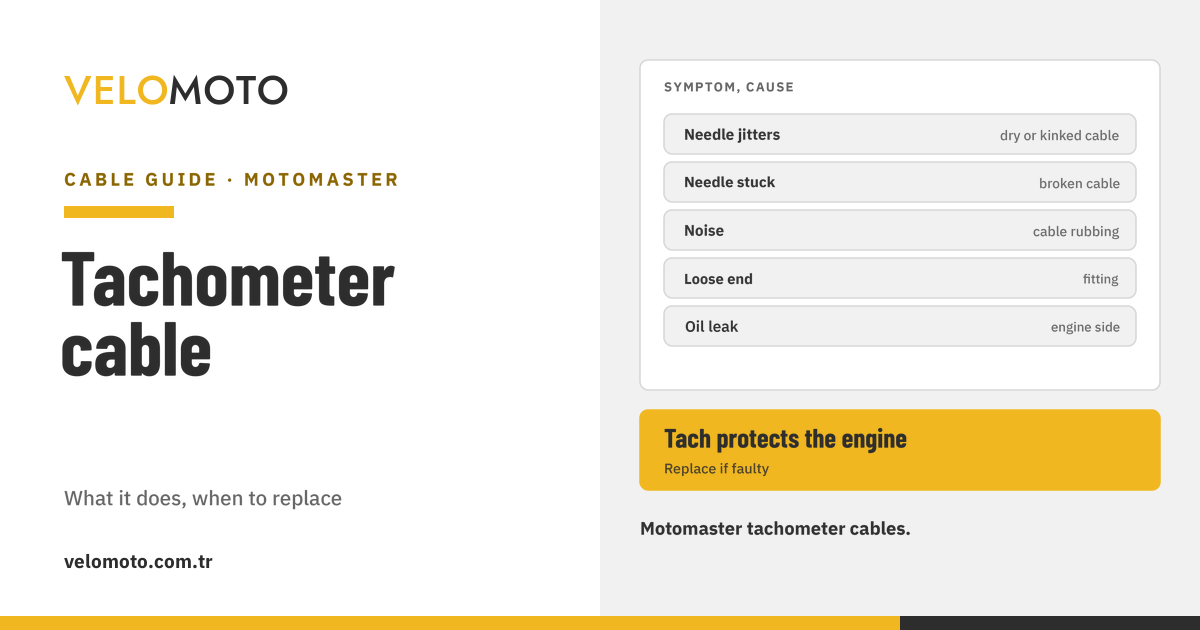
Tachometer Cable: What It Does and When to Replace It
On motorcycles with a mechanical tachometer, the tachometer cable carries rotation from the engine to the gauge so the needle shows engine speed; if the needle flutters or does not move at all, the cable or the drive at the engine should be checked.
Read the guide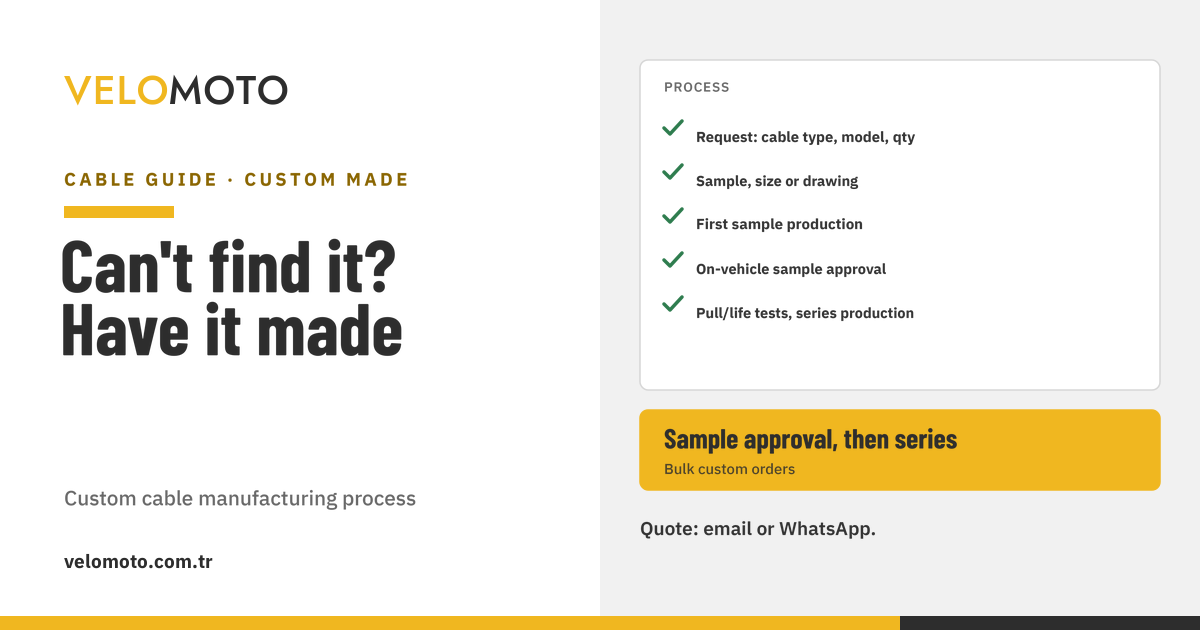
How to Get a Motorcycle or Scooter Cable Made When You Can't Find One (Custom Cable Manufacturing Process)
A motorcycle or scooter cable you cannot find can be manufactured by sending the old cable as a sample or by providing its measurements and a technical drawing; the process consists of request and quote, first sample production and approval, testing and series production.
Read the guideWhere can I buy the products? We do not sell directly to end users. You can buy the products mentioned in our guides from our authorised dealers.
See our dealers