
Velomoto knowledge centre
Technical guides
Guides on choosing, maintaining and replacing brakes, chains, variator belts and control cables, written with the technical data of our brands. Guides are currently in Turkish.
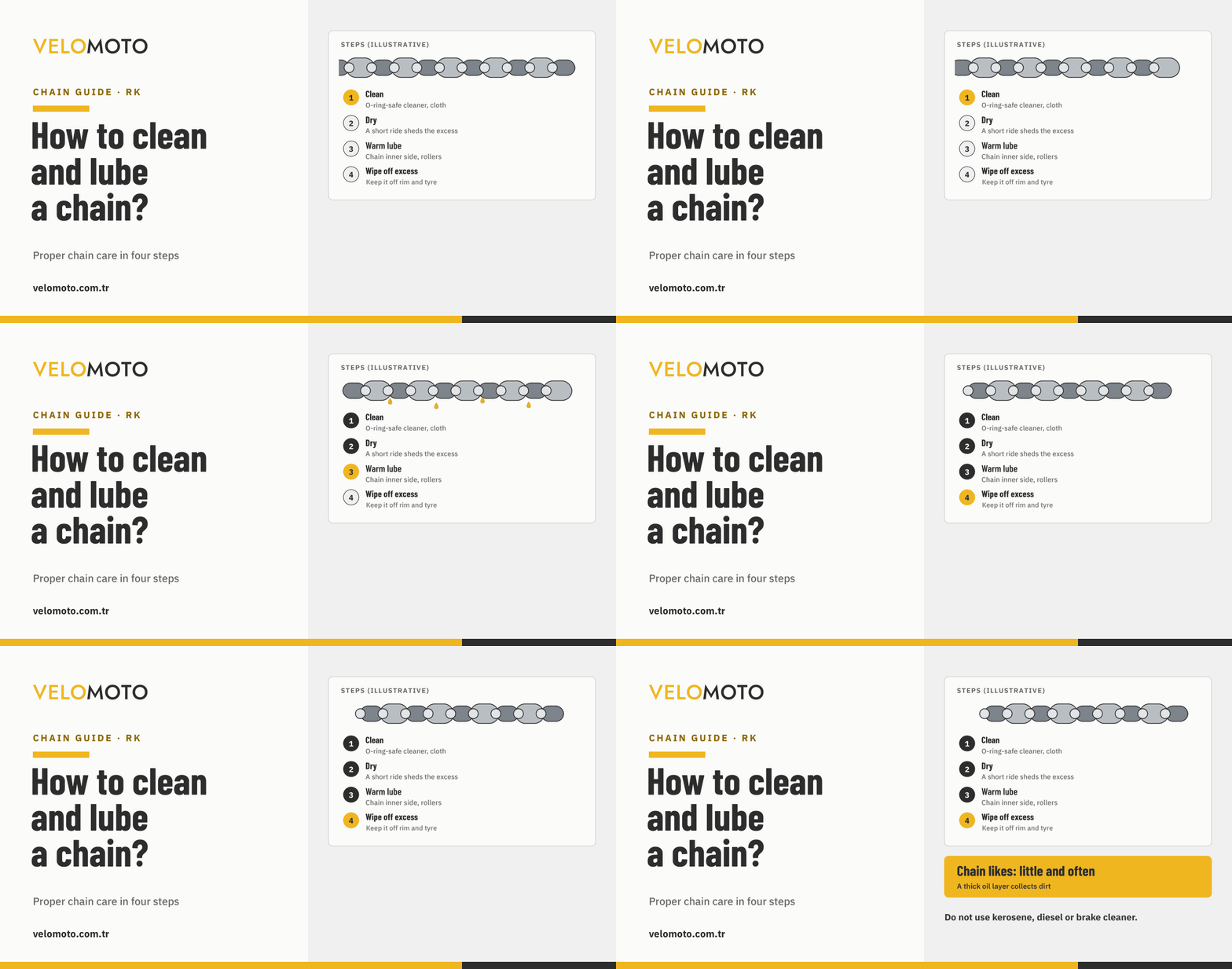
How Do You Clean and Lubricate a Motorcycle Chain?
An O-ring motorcycle chain is cleaned with an O-ring-safe chain cleaner and a cloth; then a short ride throws off the cleaner and water, and the chain is lubricated while warm with a lube suitable for O-ring chains…
Read the guide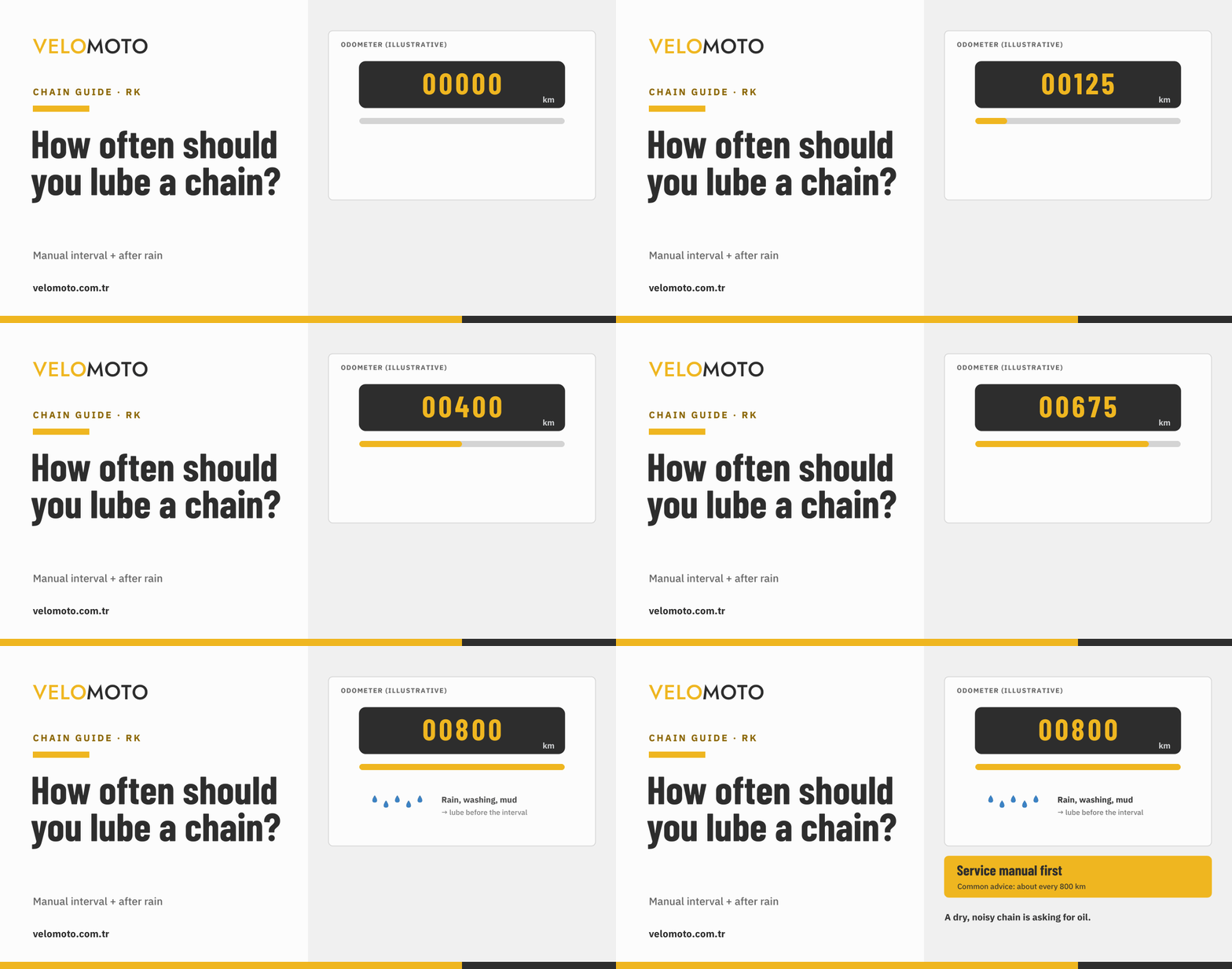
How Often (in km) Should a Motorcycle Chain Be Lubricated?
How often a chain should be lubricated is determined first by your motorcycle's service manual; a common recommendation is to clean and lubricate the chain about every 800 km.
Read the guide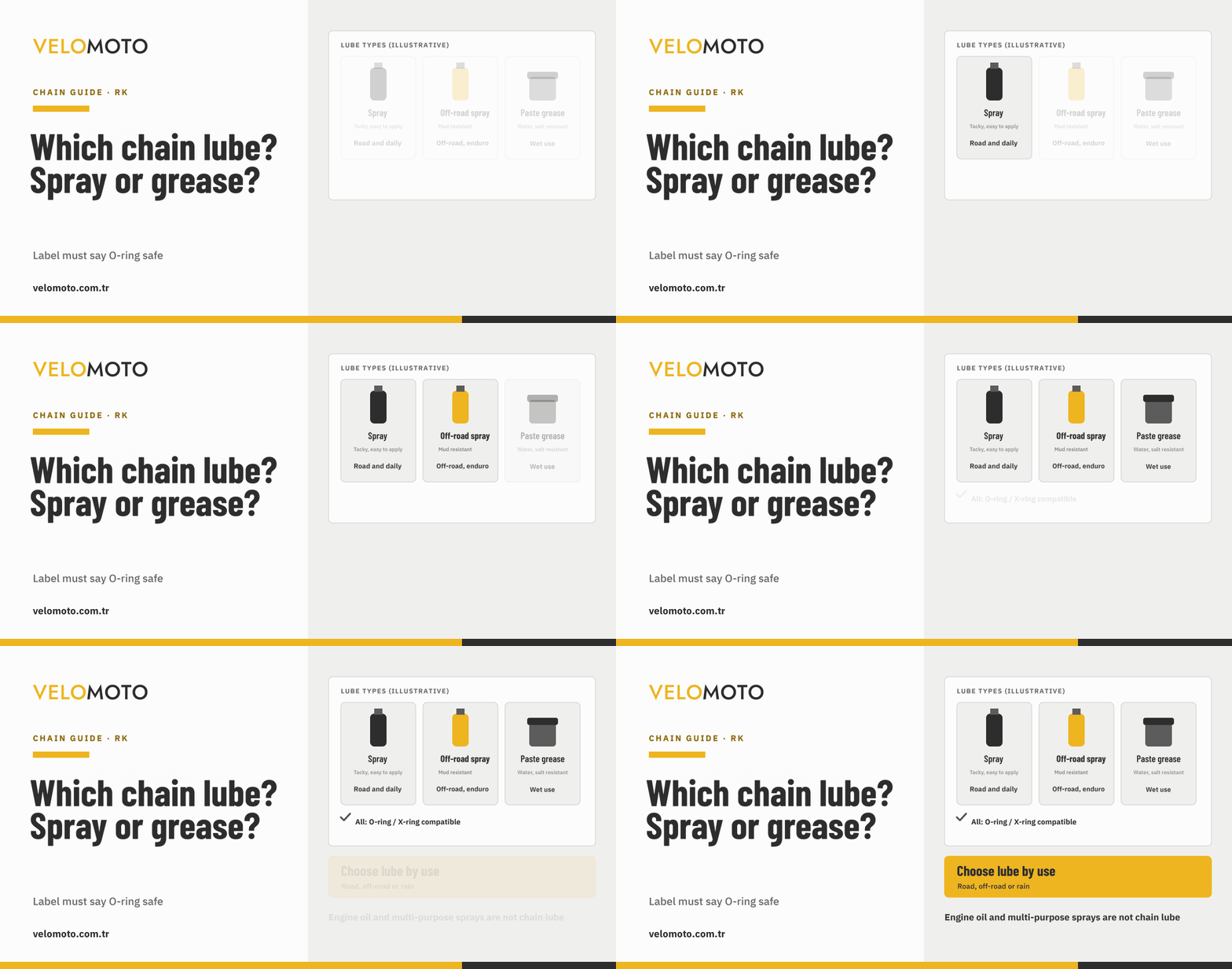
Which Chain Lube Should You Use? Spray or Liquid Grease?
On a sealed (O-ring, X-ring, XW-ring) chain, use a motorcycle chain lube whose packaging says it is suitable for O-ring chains.
Read the guide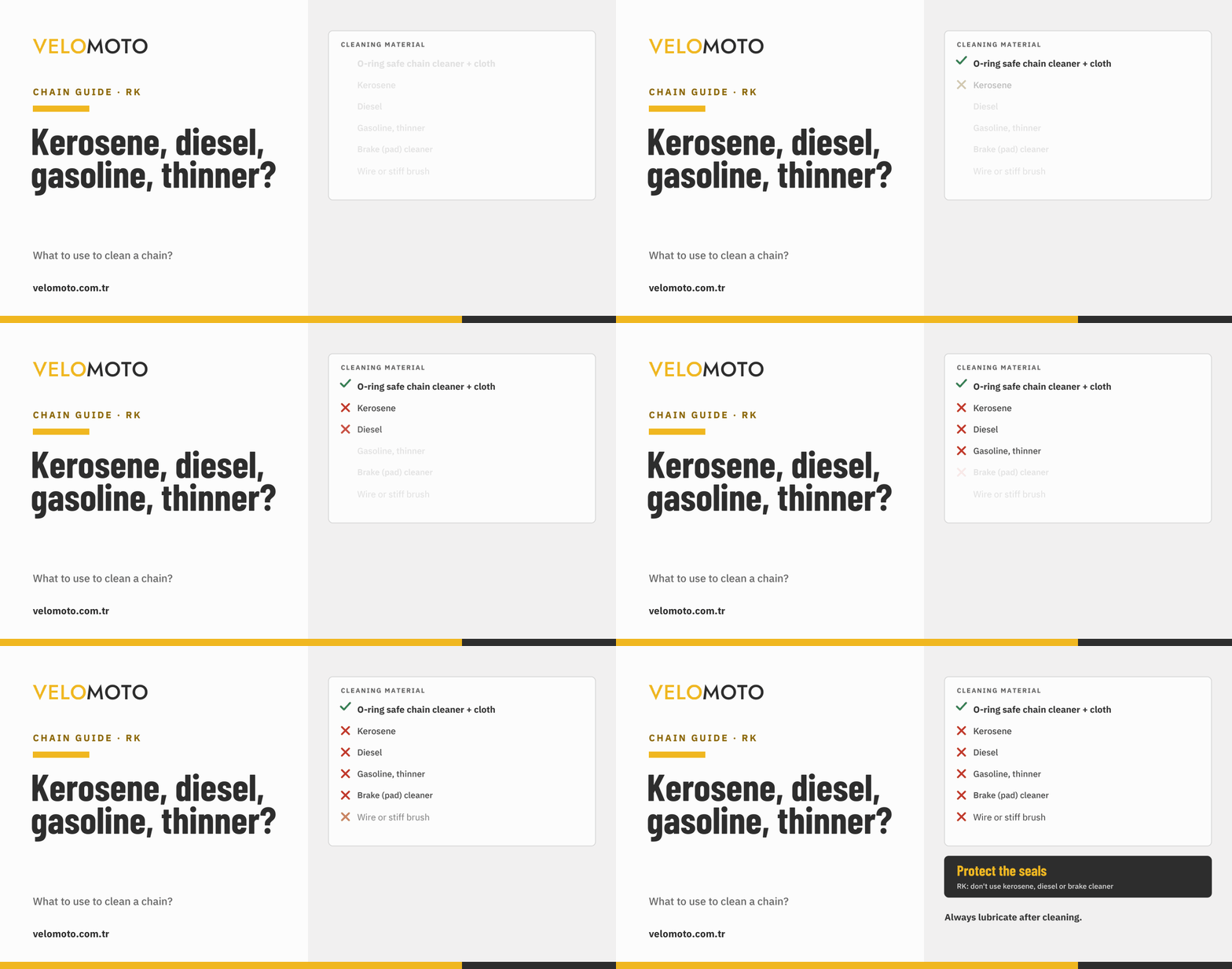
Can Kerosene, Diesel, Gasoline or Thinner Be Used to Clean a Chain?
No.
Read the guide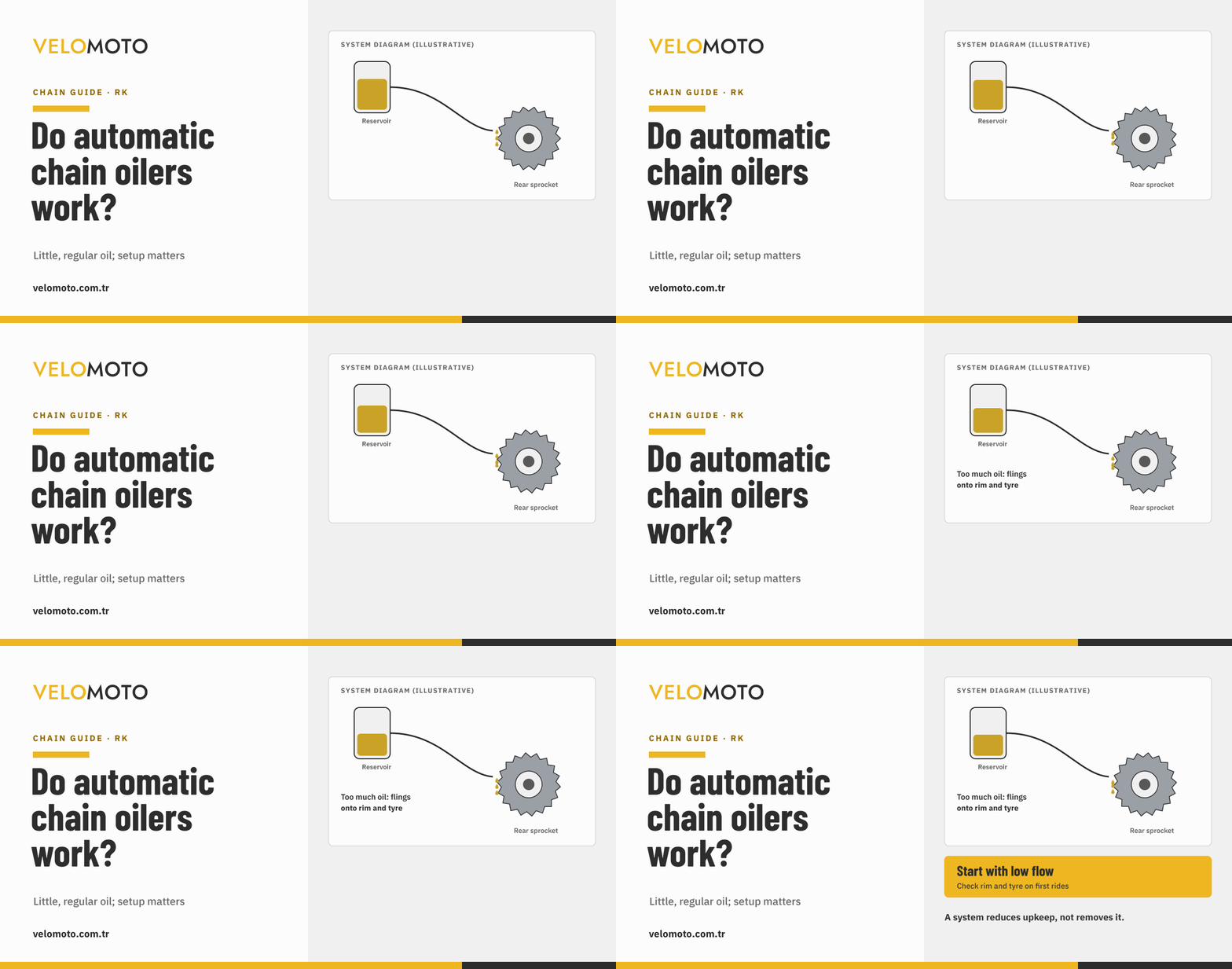
Do Automatic Chain Oilers Work?
Yes, when set up correctly: an automatic oiler feeds the chain small, regular amounts of lube while riding, helping keep the chain both lubricated and cleaner.
Read the guide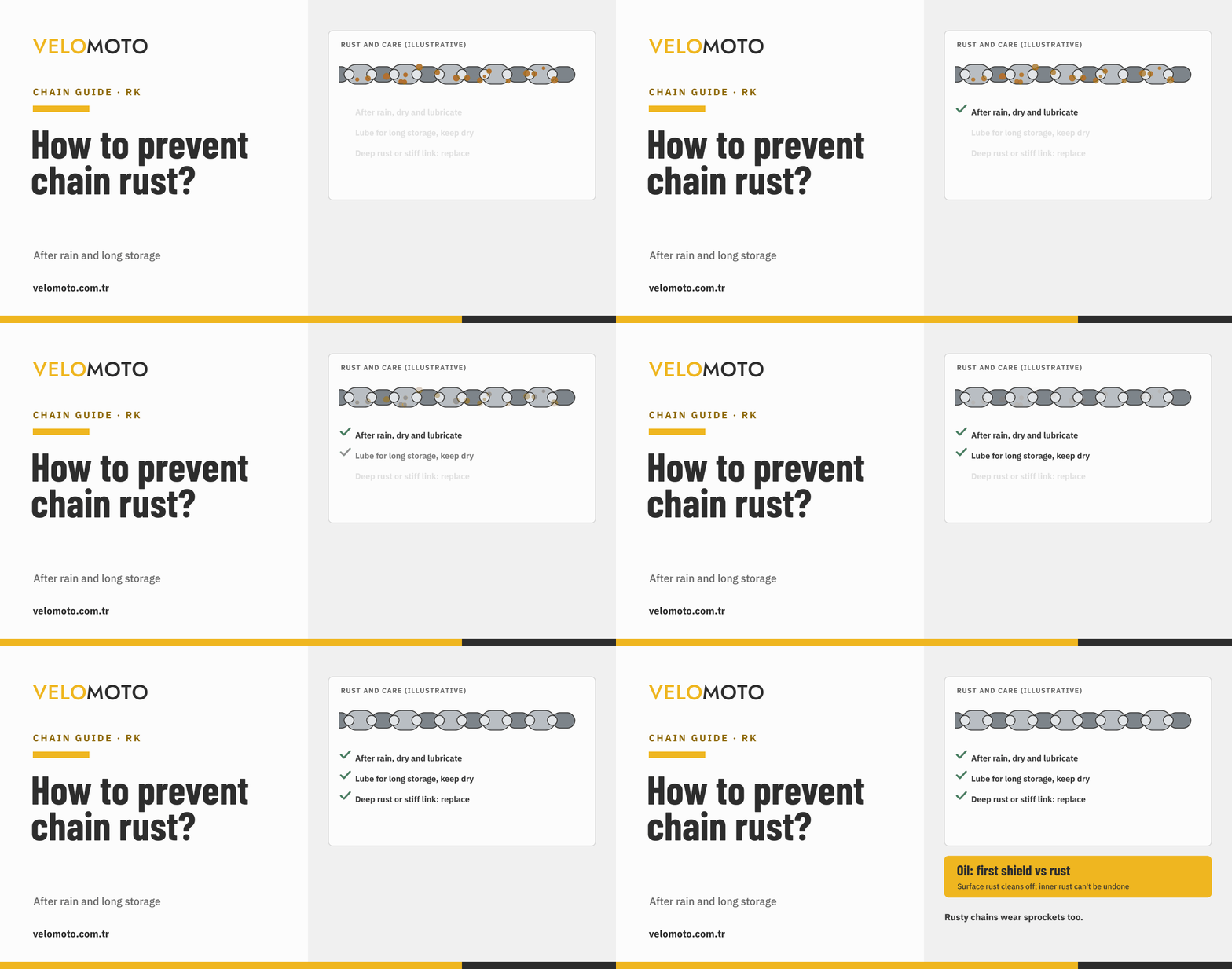
How to Prevent and Clean Motorcycle Chain Rust
The way to prevent chain rust is to dry and lubricate the chain after rain and washing and before long storage; the layer of lube keeps water and salt away from the steel surface.
Read the guide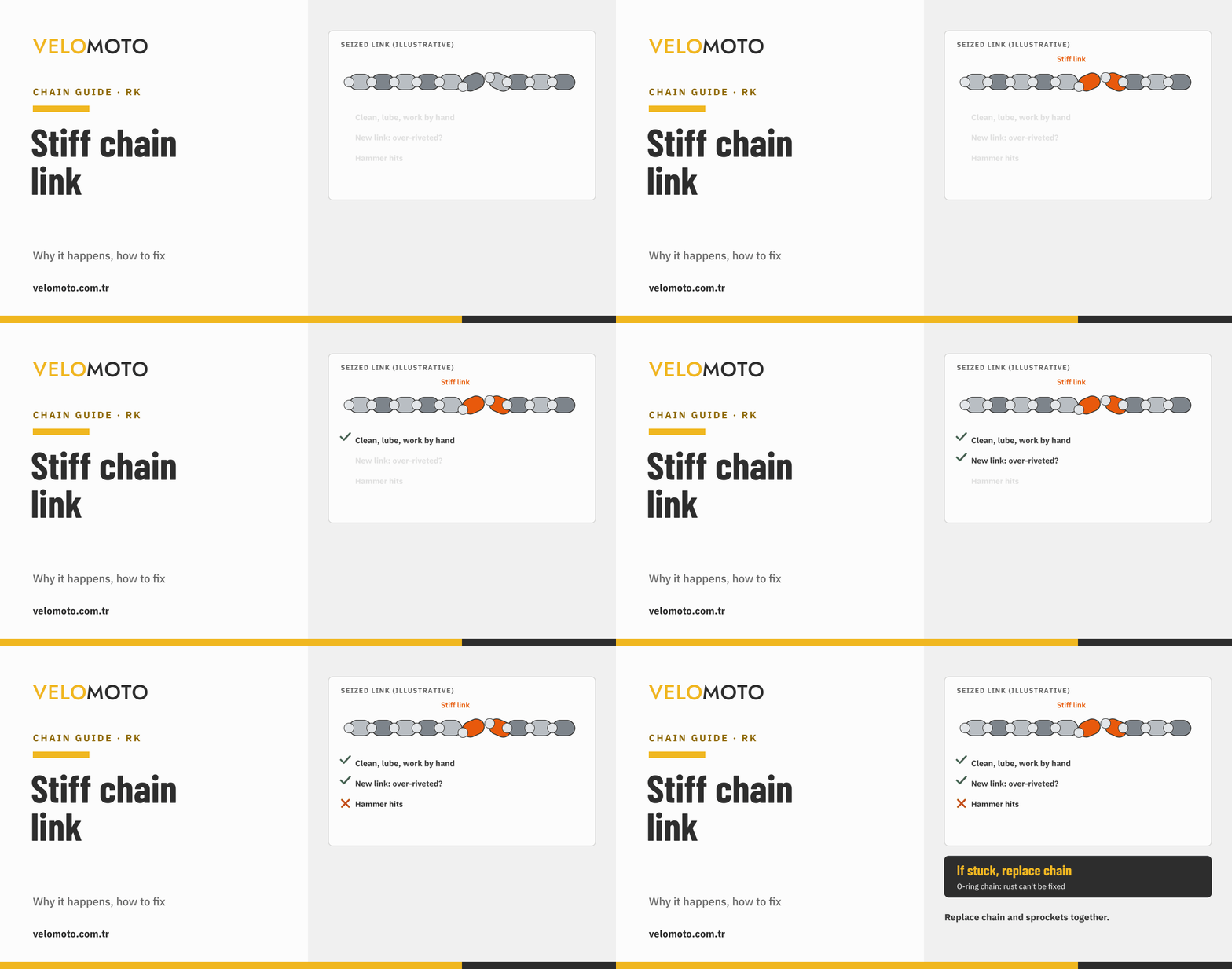
How Do You Fix a Stiff (Seized) Chain Link?
A stiff (seized) link is a link that does not straighten out after leaving the sprocket and stays kinked; it is usually caused by lack of lube, dirt, rust or over-riveting a newly fitted master link.
Read the guide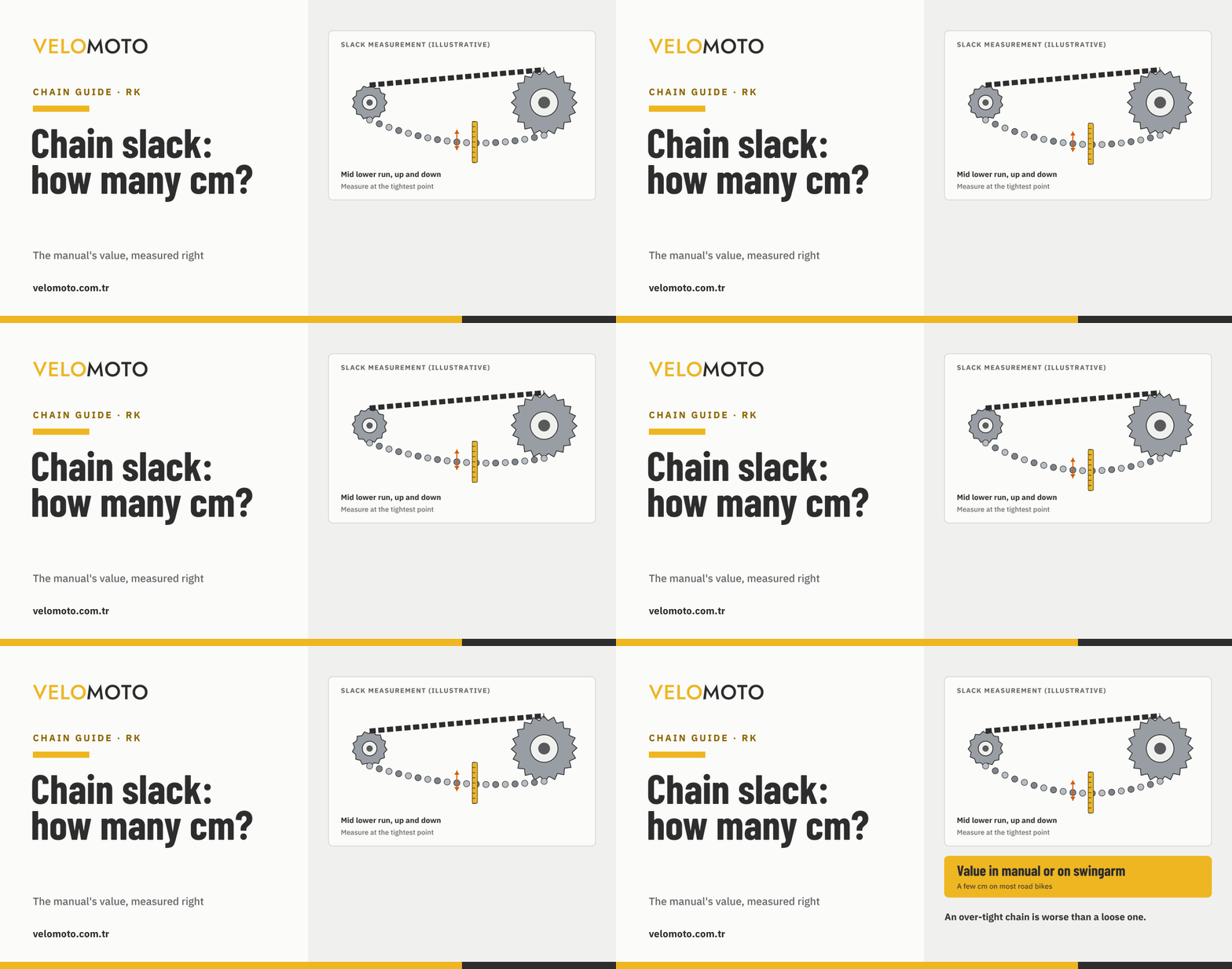
How Much Slack Should a Motorcycle Chain Have?
The correct chain slack varies by motorcycle; it is given in the service manual or, on most models, on a label on the swingarm.
Read the guide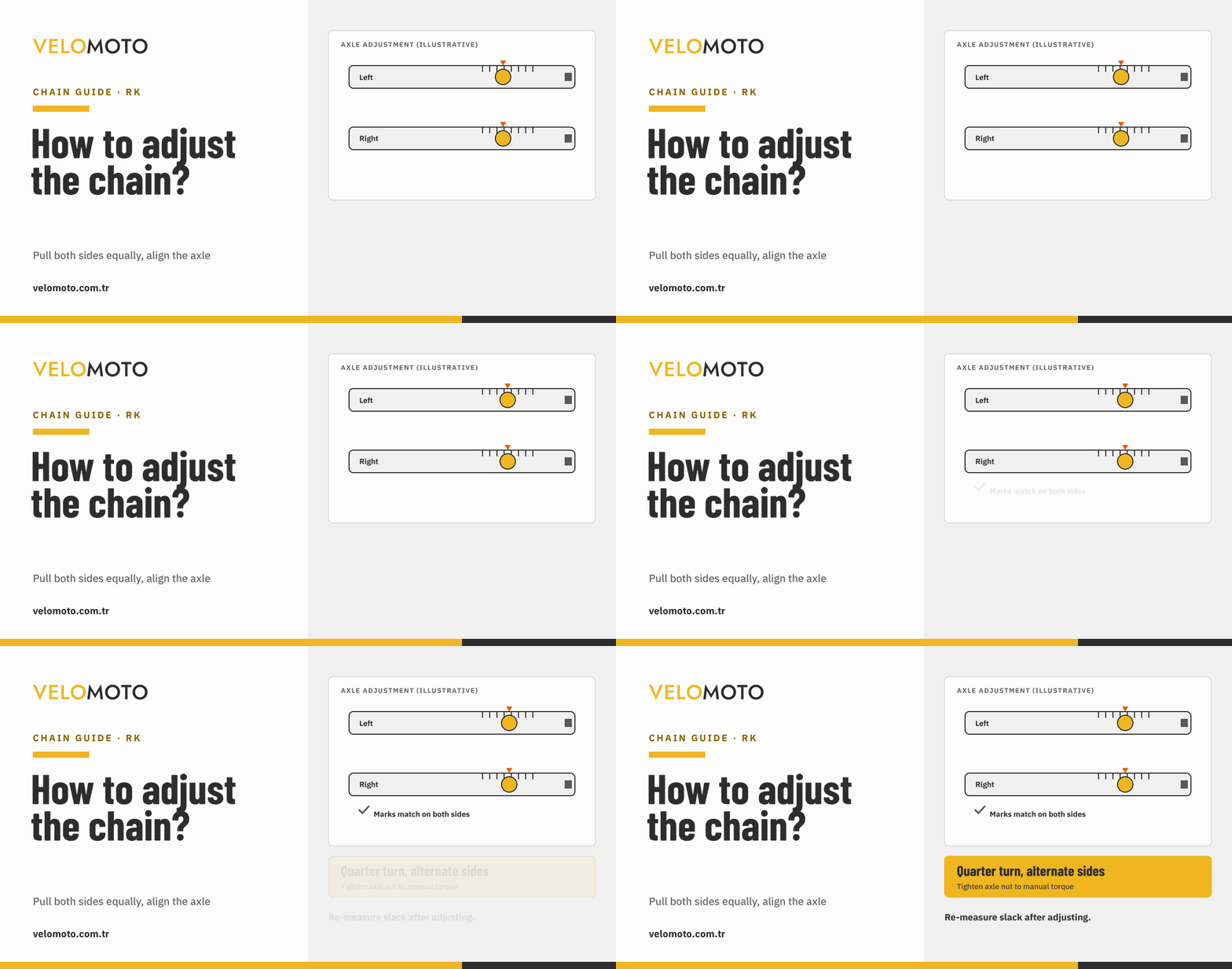
How Do You Adjust a Motorcycle Chain? Axle and Alignment Adjustment
Chain adjustment means sliding the rear axle forward or back along the swingarm to bring the chain slack to the value in the manual.
Read the guide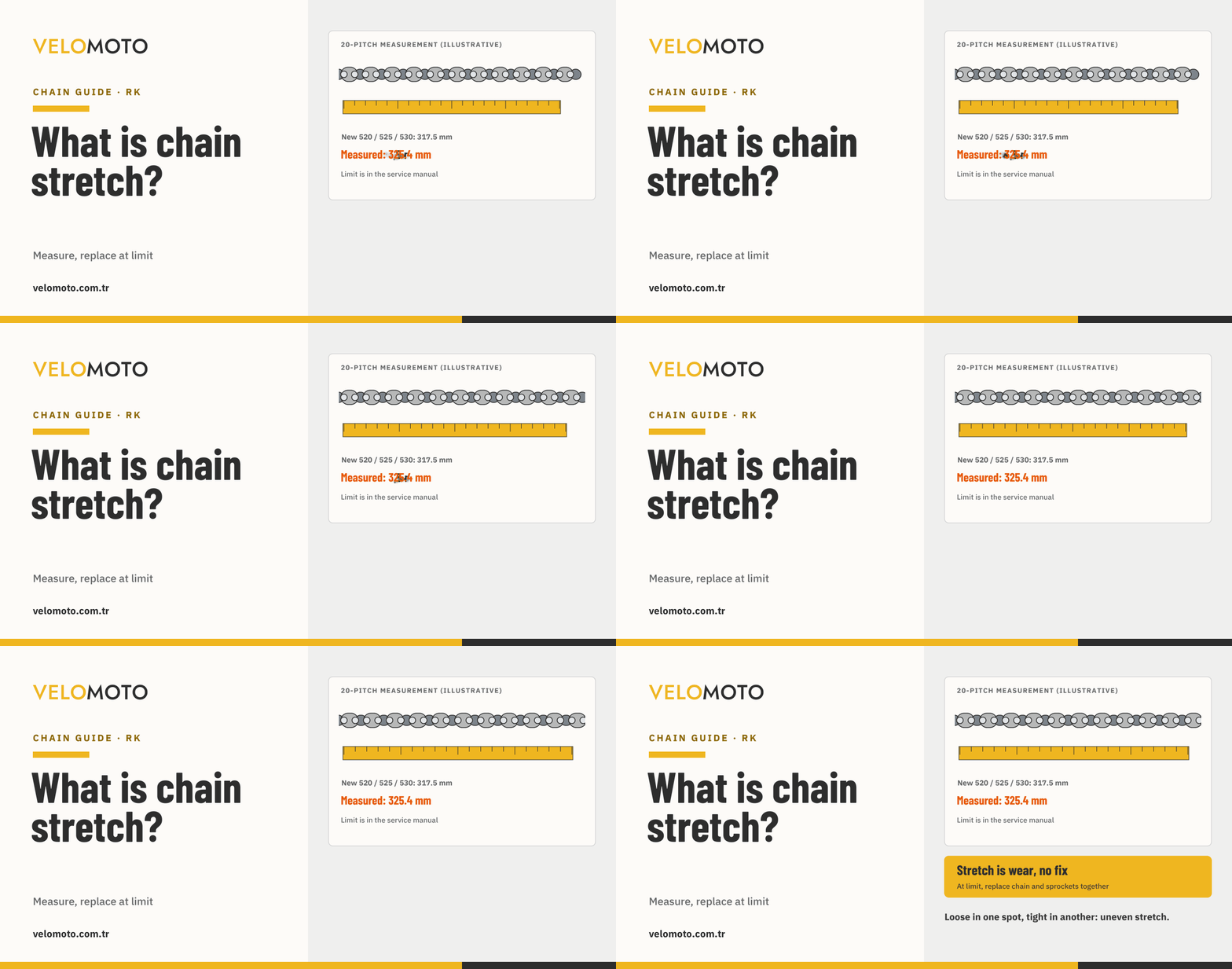
What Is Chain Stretch, How Is It Measured and What Should You Do?
Chain stretch is not the metal stretching; it is the pitch of every link growing slightly because of wear between the pin and bushing.
Read the guide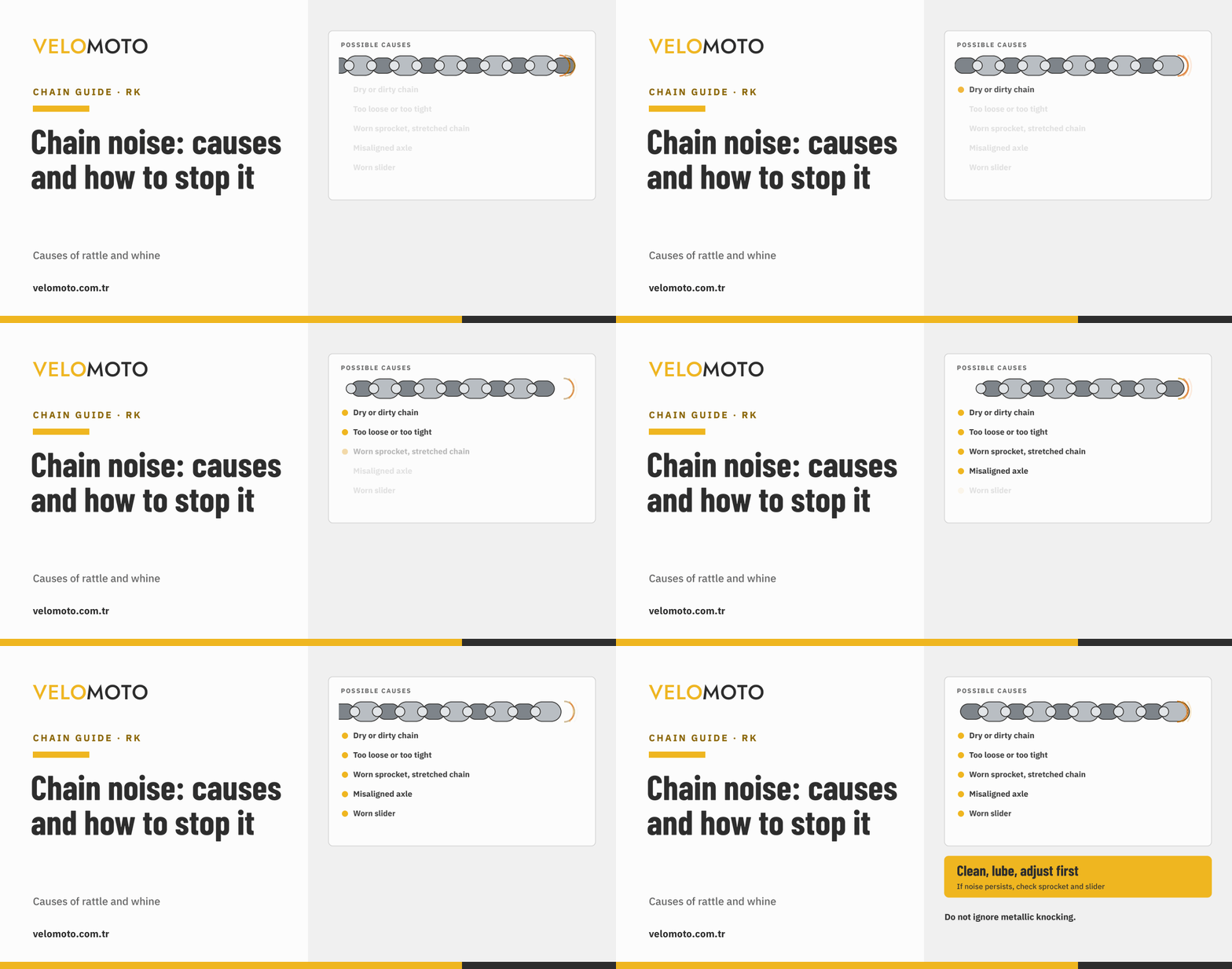
What Causes Motorcycle Chain Noise and How Do You Stop It?
Chain noise is usually caused by lack of lube, incorrect tension, worn sprockets or a stretched chain.
Read the guide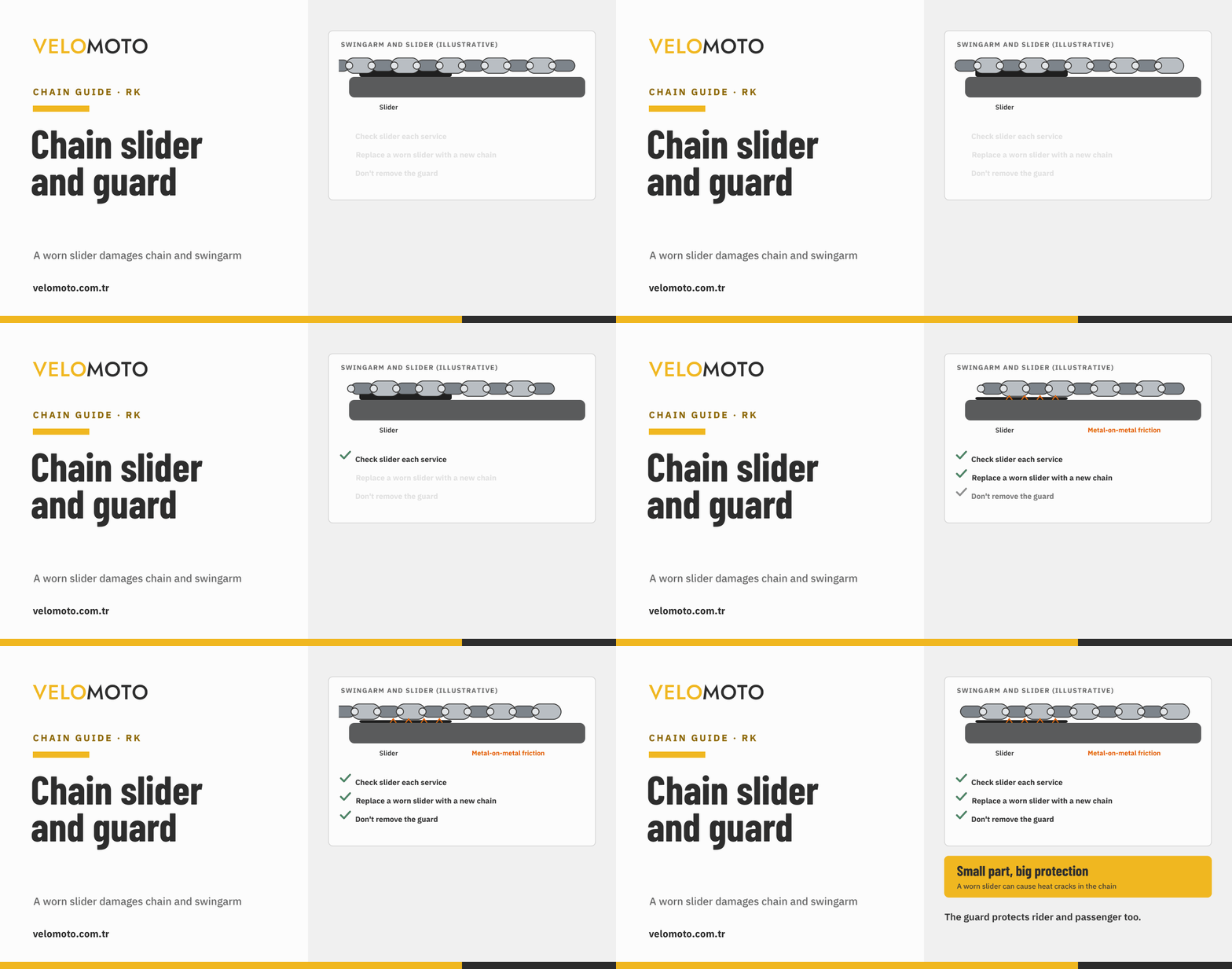
Why Are the Chain Slider and Chain Guard Important?
A chain slider is a plastic or rubber part at the front of the swingarm that the chain slides over; it keeps the chain from rubbing against the swingarm.
Read the guide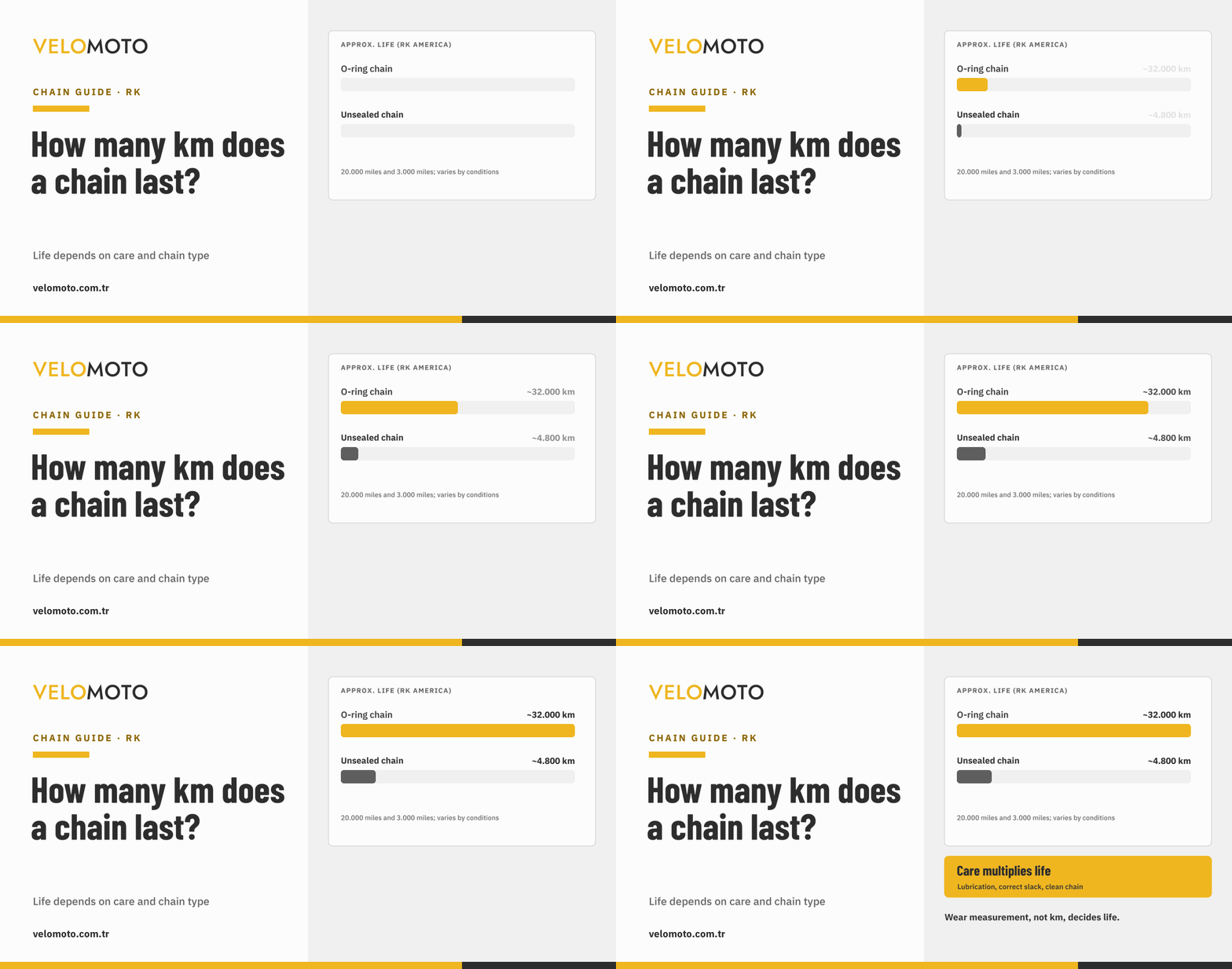
How Many Km Does a Motorcycle Chain Last? Average Life and RK Chain Durability
There is no single km figure for chain life; it is determined by maintenance, seal type, engine power and road conditions.
Read the guide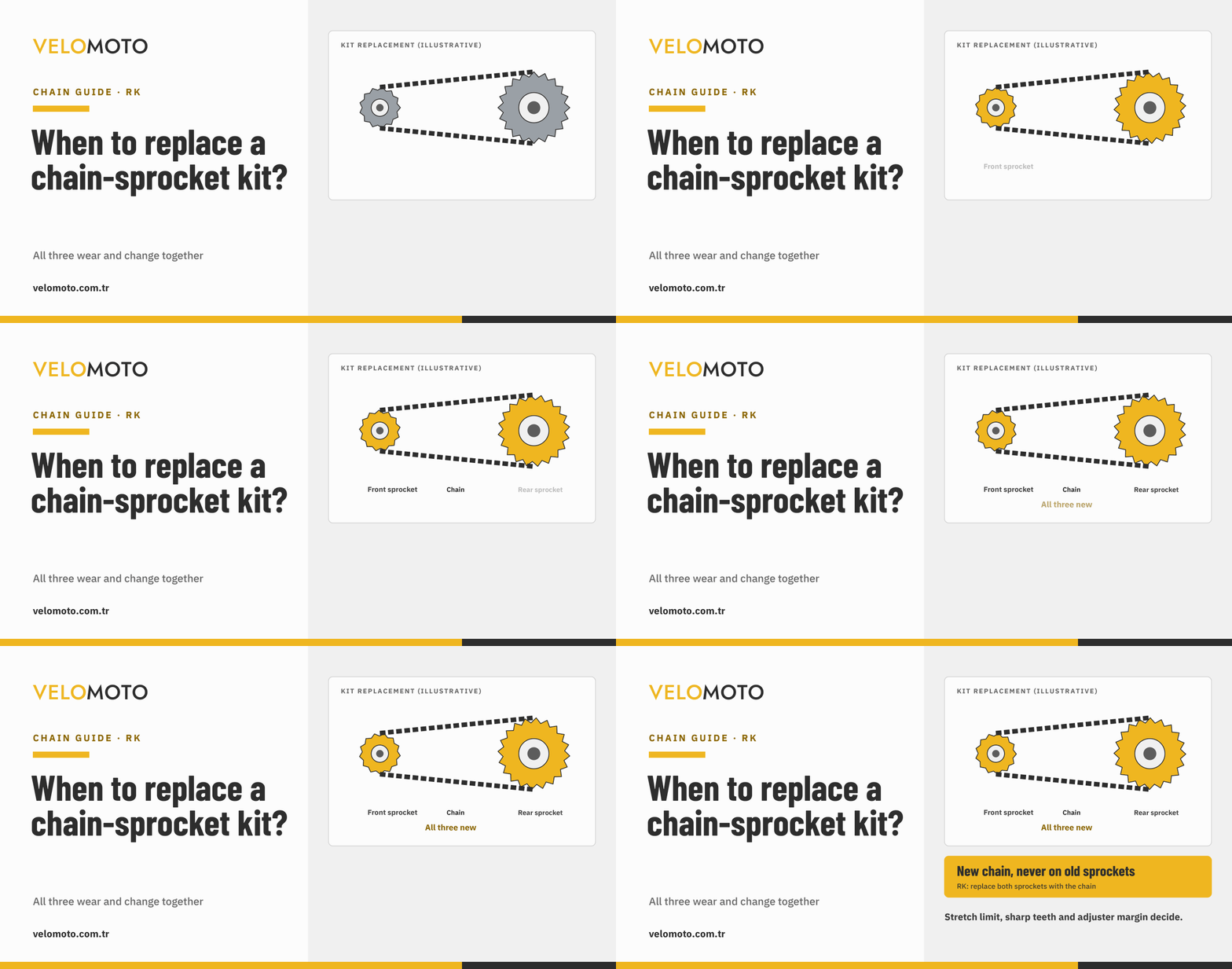
When Should a Chain and Sprocket Kit Be Replaced? Do the Sprockets Need Replacing Too?
The chain, front sprocket and rear sprocket work together and wear together; that is why all three should be replaced together.
Read the guide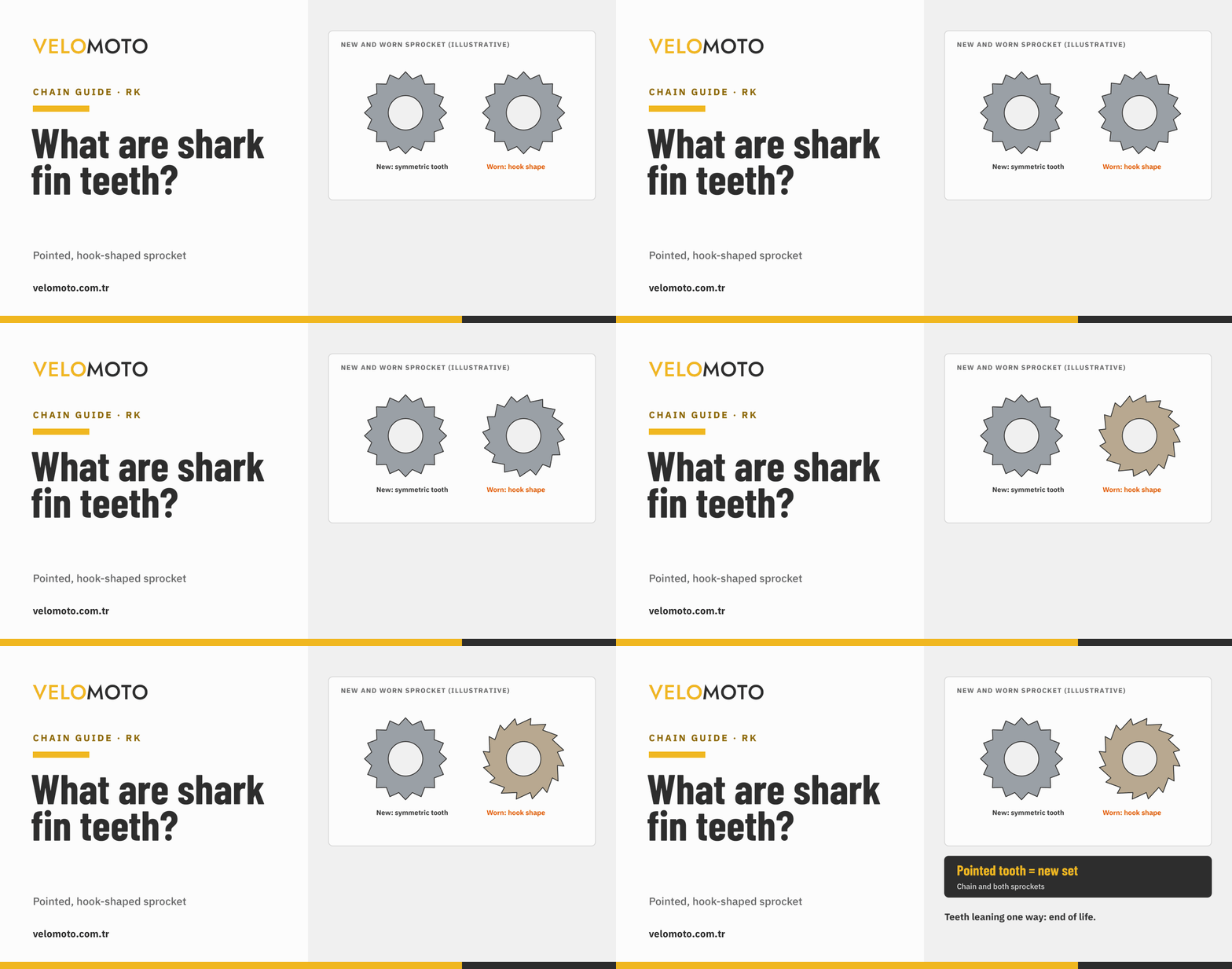
What Are Shark Fin Teeth? How Do You Recognize a Worn, Pointed Sprocket?
“Shark fin teeth” is the hook shape that forms on a worn sprocket when one face of the teeth is gouged out, the tips become pointed and lean in one direction.
Read the guide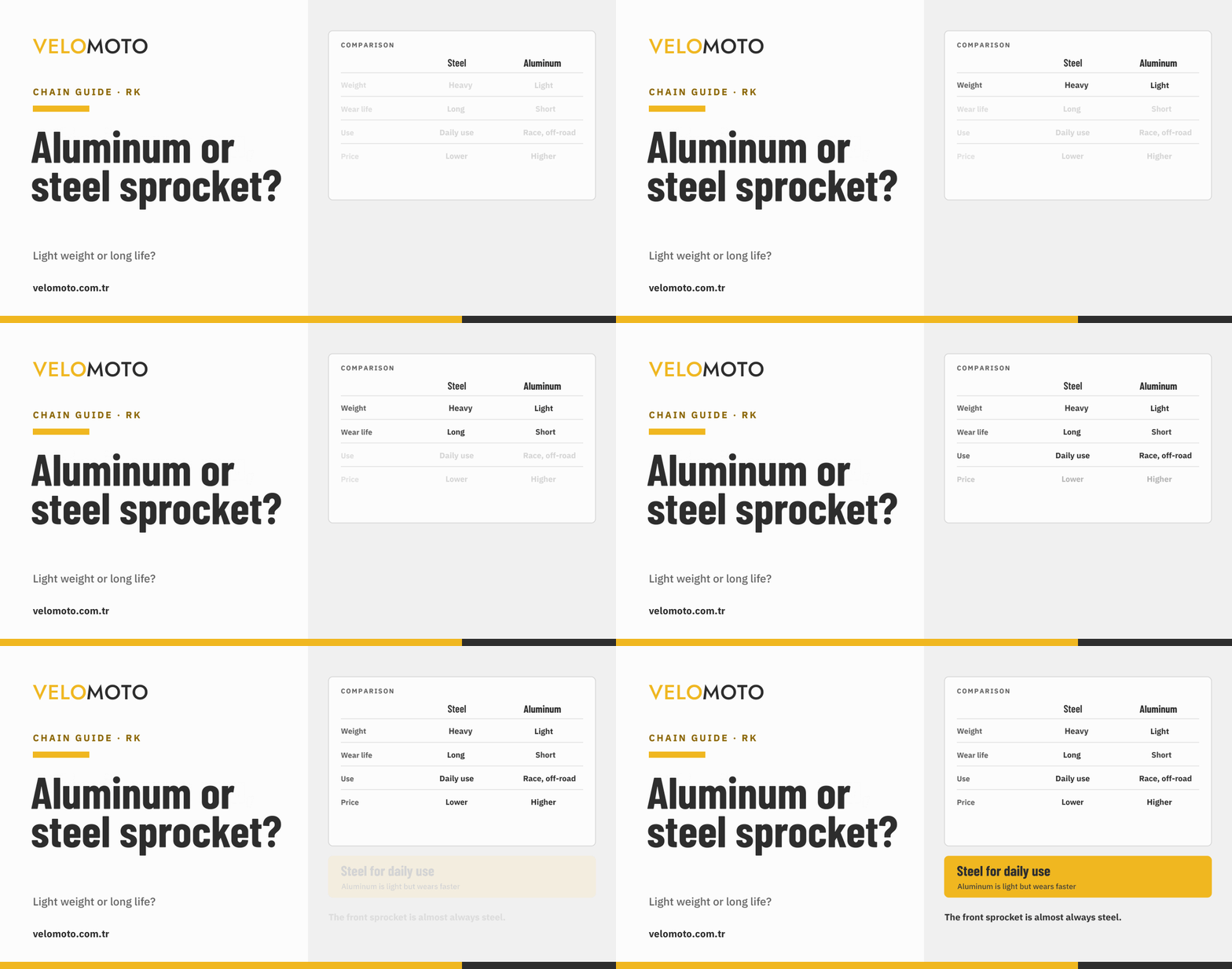
Aluminum or Steel Rear Sprocket?
A steel rear sprocket is the choice for everyday road use and long life; an aluminum rear sprocket is the choice for light weight and performance.
Read the guide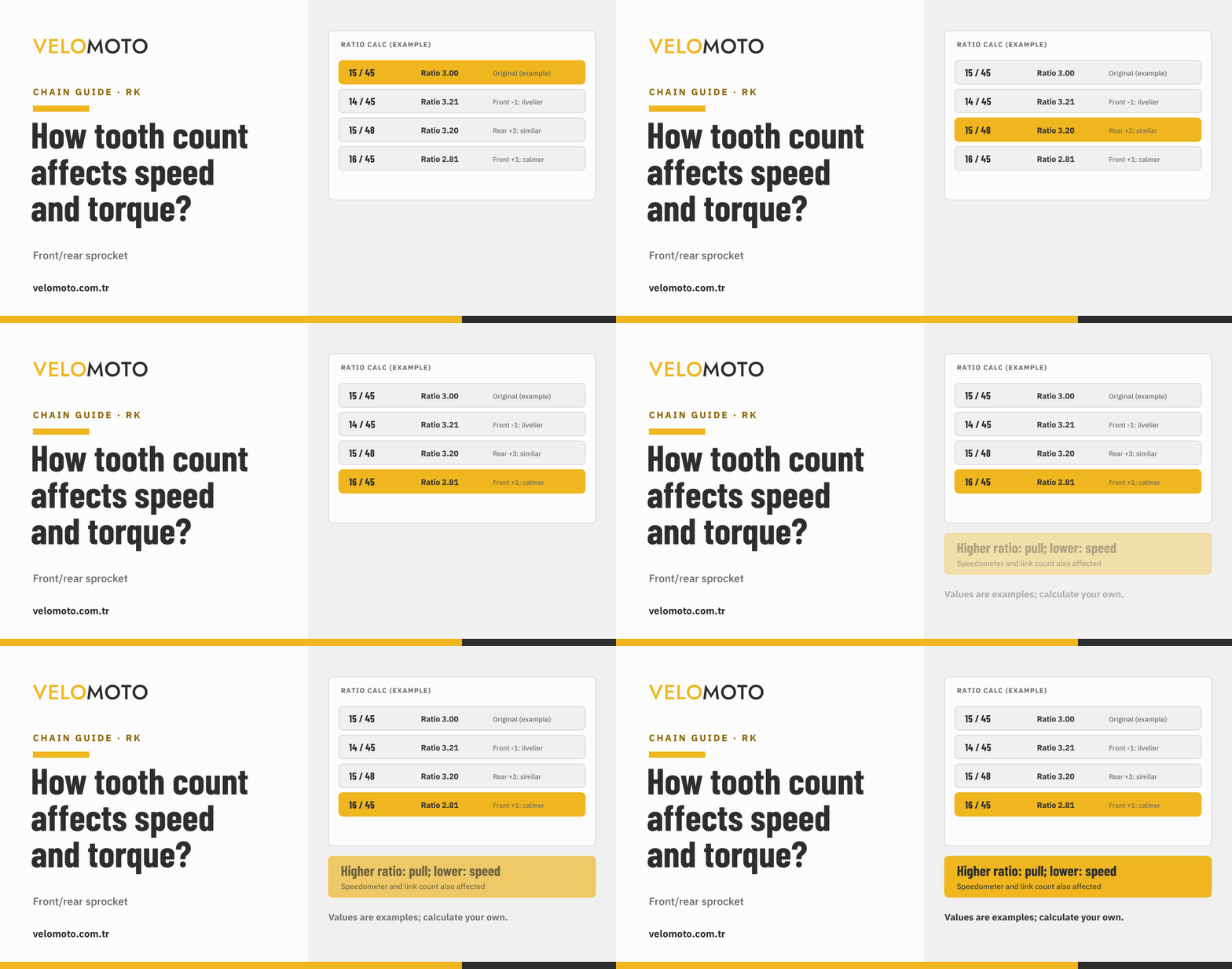
How Does Changing Sprocket Size Affect Speed and Torque?
Final drive ratio = rear sprocket tooth count ÷ front sprocket tooth count.
Read the guide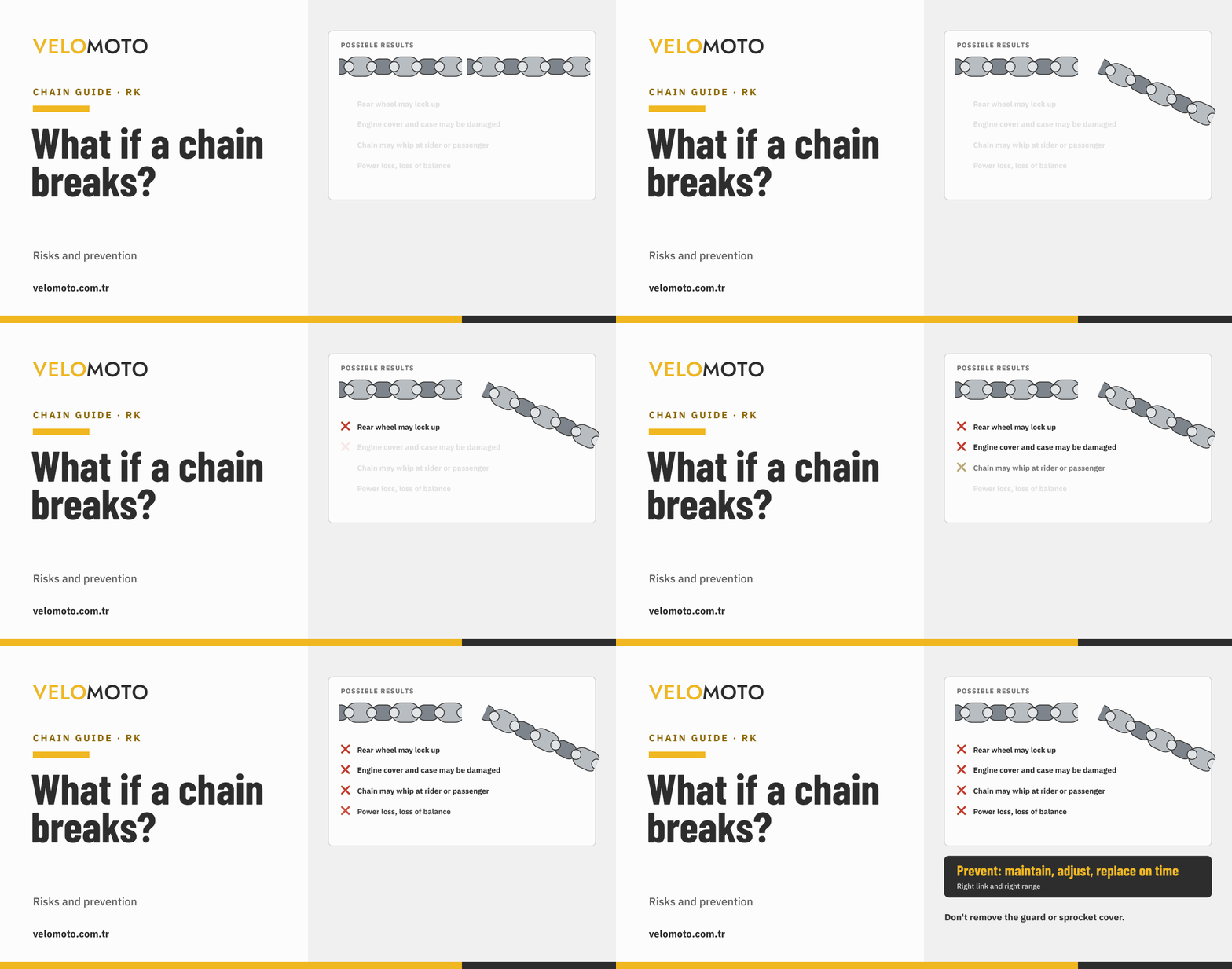
What Damage Can a Broken Chain Do to the Motorcycle?
A chain that breaks while riding instantly cuts power to the rear wheel; if the chain wraps around the rear sprocket or the swingarm, the rear wheel can lock and the motorcycle can skid.
Read the guide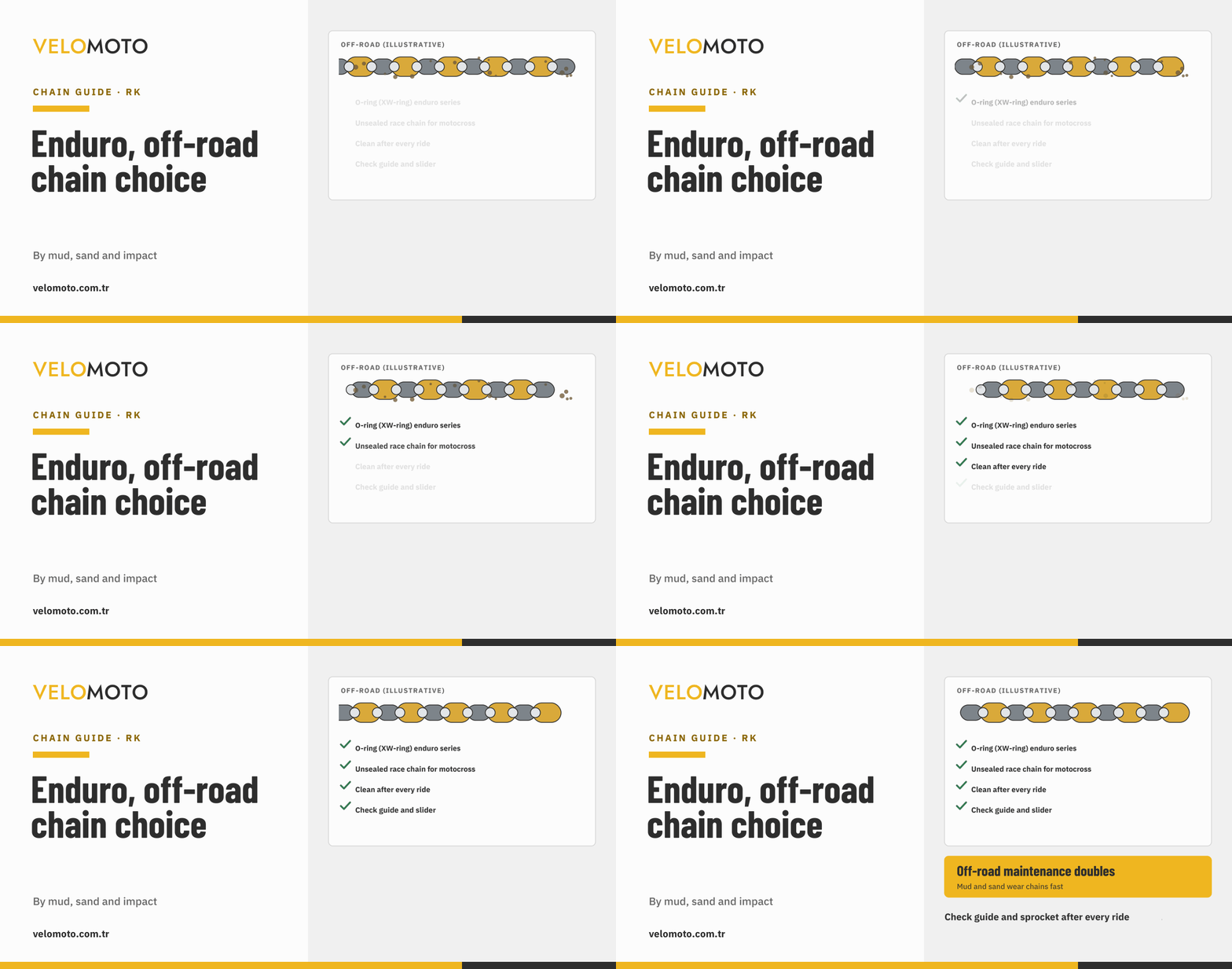
Chain Selection and Maintenance for Enduro and Off-Road
An O-ring chain is preferred for enduro and long off-road rides, while a light, low-friction non-sealed or thin O-ring racing chain is preferred for motocross racing.
Read the guide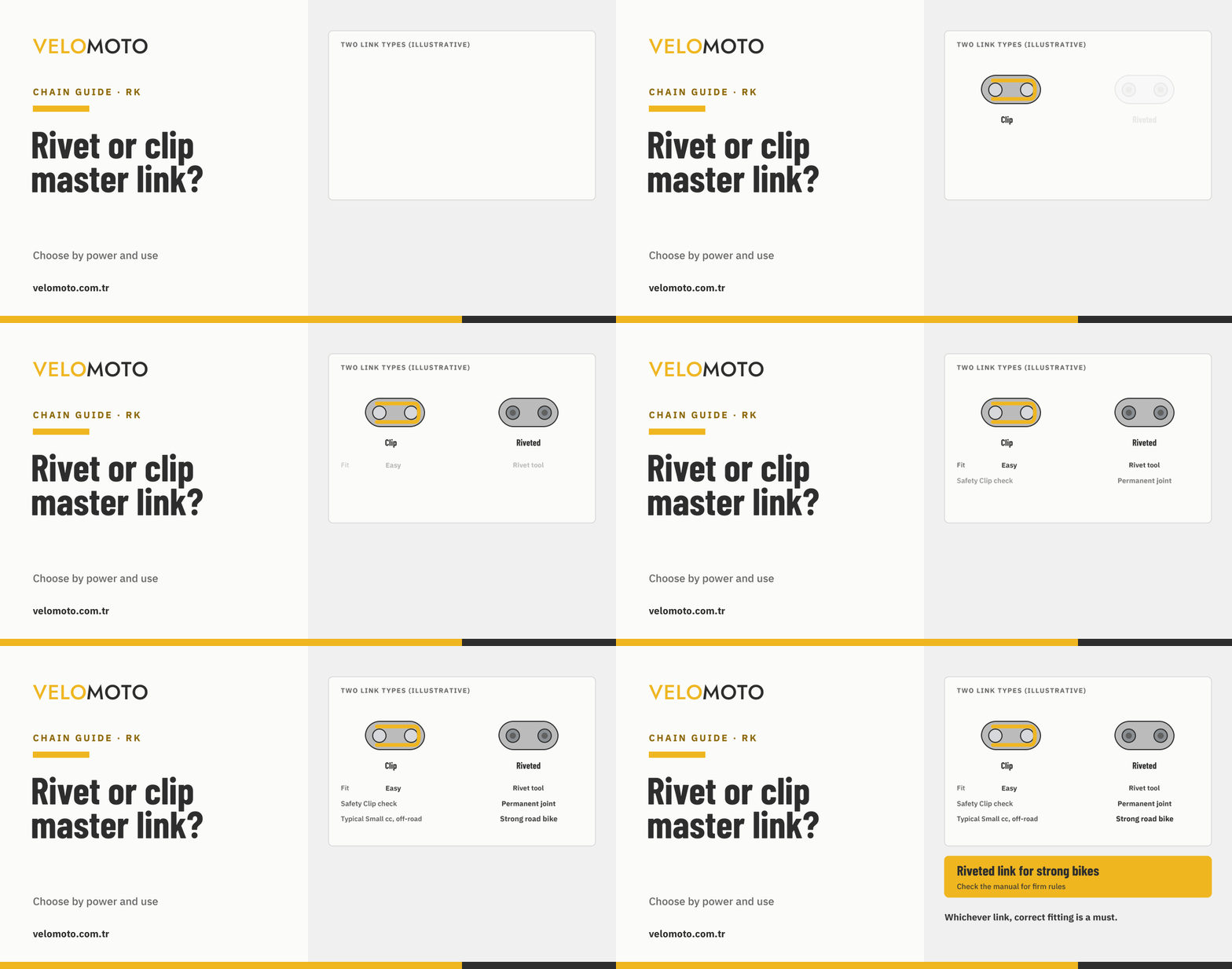
Rivet or Clip-Type Master Link? When to Use Each
A master link (connecting link) is the link that joins the two ends of a chain; there are two types: clip-type and rivet-type.
Read the guide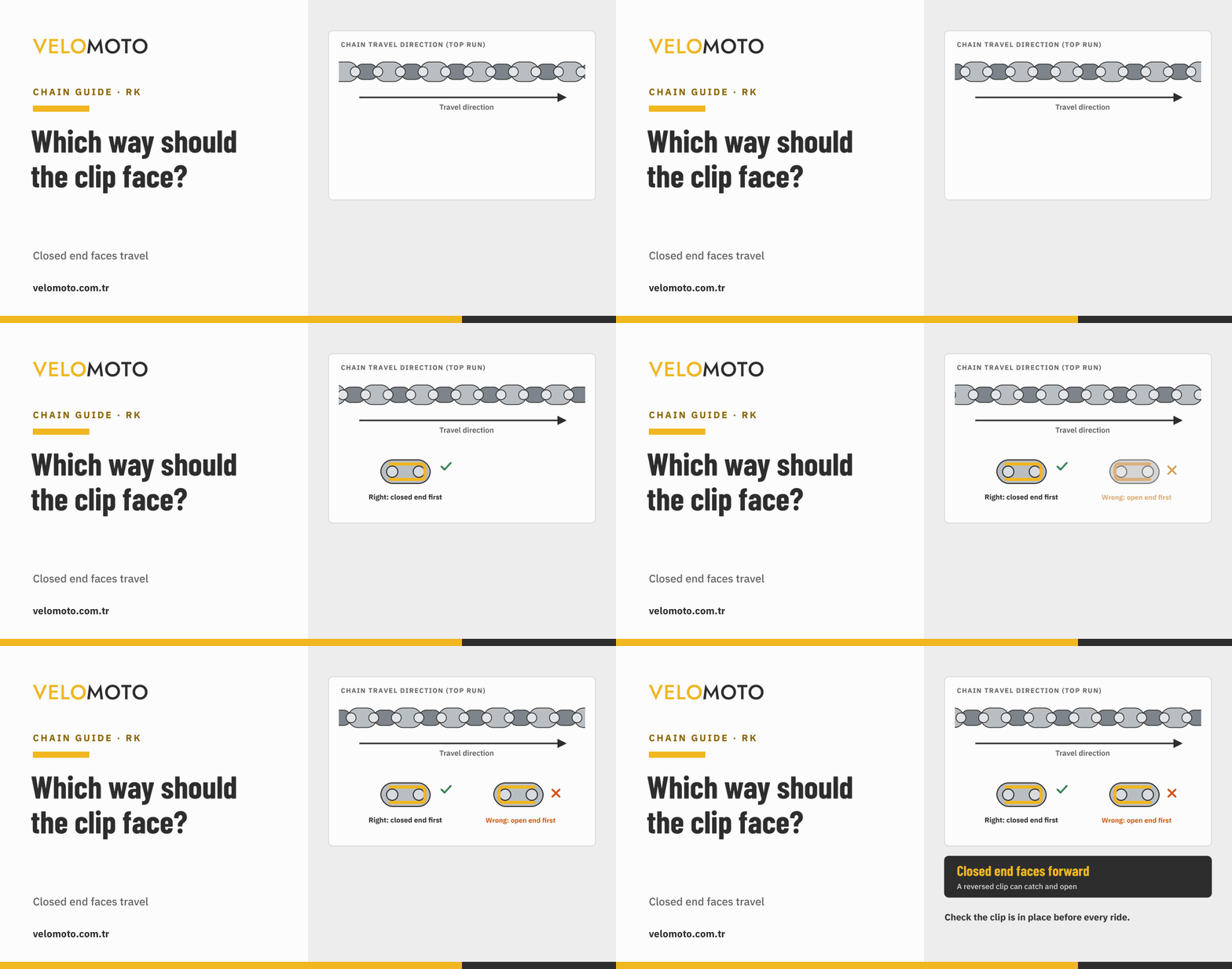
Which Way Should the Master Link Clip Face?
The closed (rounded) end of the clip should face the direction of chain travel, and the open end should face backward.
Read the guide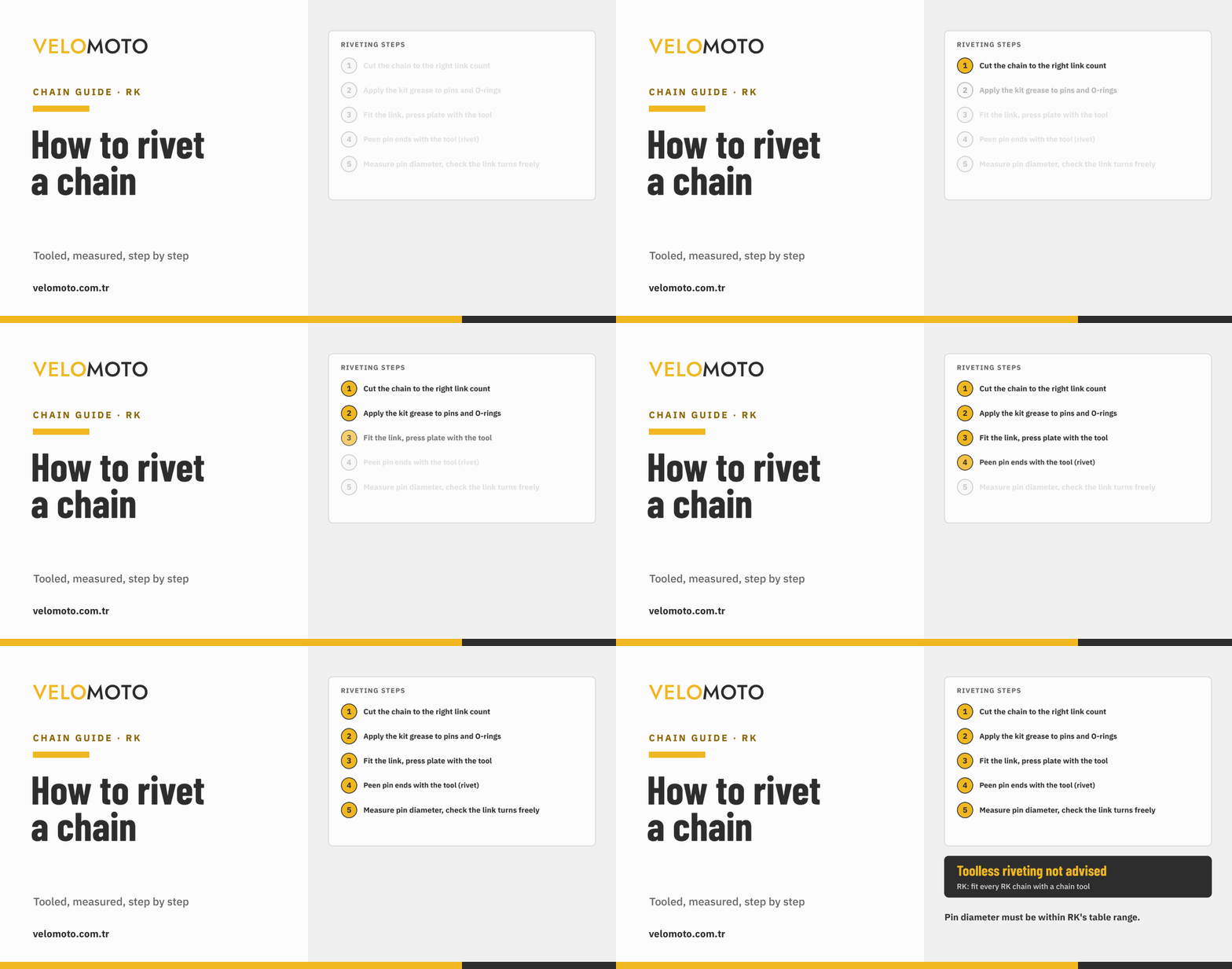
How to Rivet a Chain: Step-by-Step Rivet-Type Master Link Installation
Riveting a chain means spreading the pin ends of a rivet-type master link with a chain tool so that the outer plate is fixed permanently.
Read the guide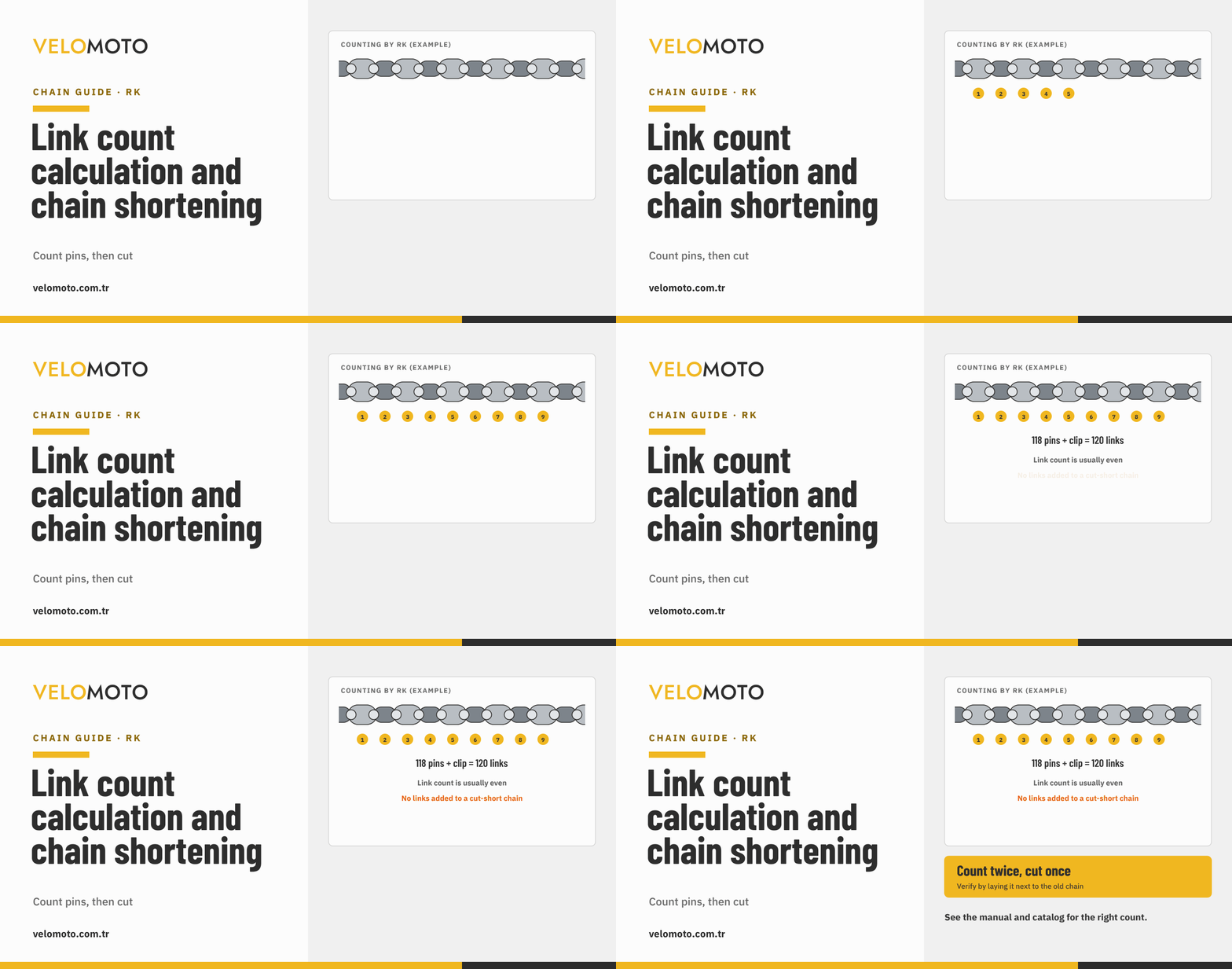
How to Calculate Chain Link Count: A Guide to Shortening a Chain
Your motorcycle's chain link count is listed in the owner's manual and in chain catalogs (for example the RK catalog); the safest method is to use that value.
Read the guide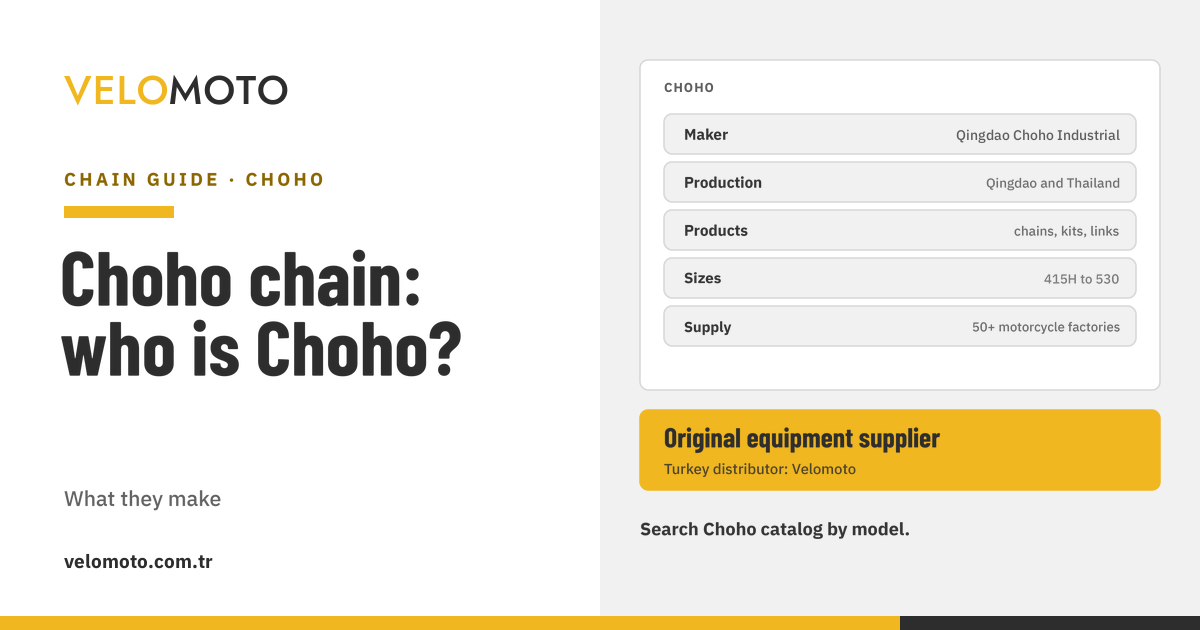
Choho Chain: Who Is the Brand and What Does It Make?
Choho is the motorcycle chain brand of Qingdao Choho Industrial, based in Qingdao, China; the company makes engine chains, motorcycle chains and sprockets.
Read the guideWhere can I buy the products? We do not sell directly to end users. You can buy the products mentioned in our guides from our authorised dealers.
See our dealers