
Velomoto knowledge centre
Technical guides
Guides on choosing, maintaining and replacing brakes, chains, variator belts and control cables, written with the technical data of our brands. Guides are currently in Turkish.
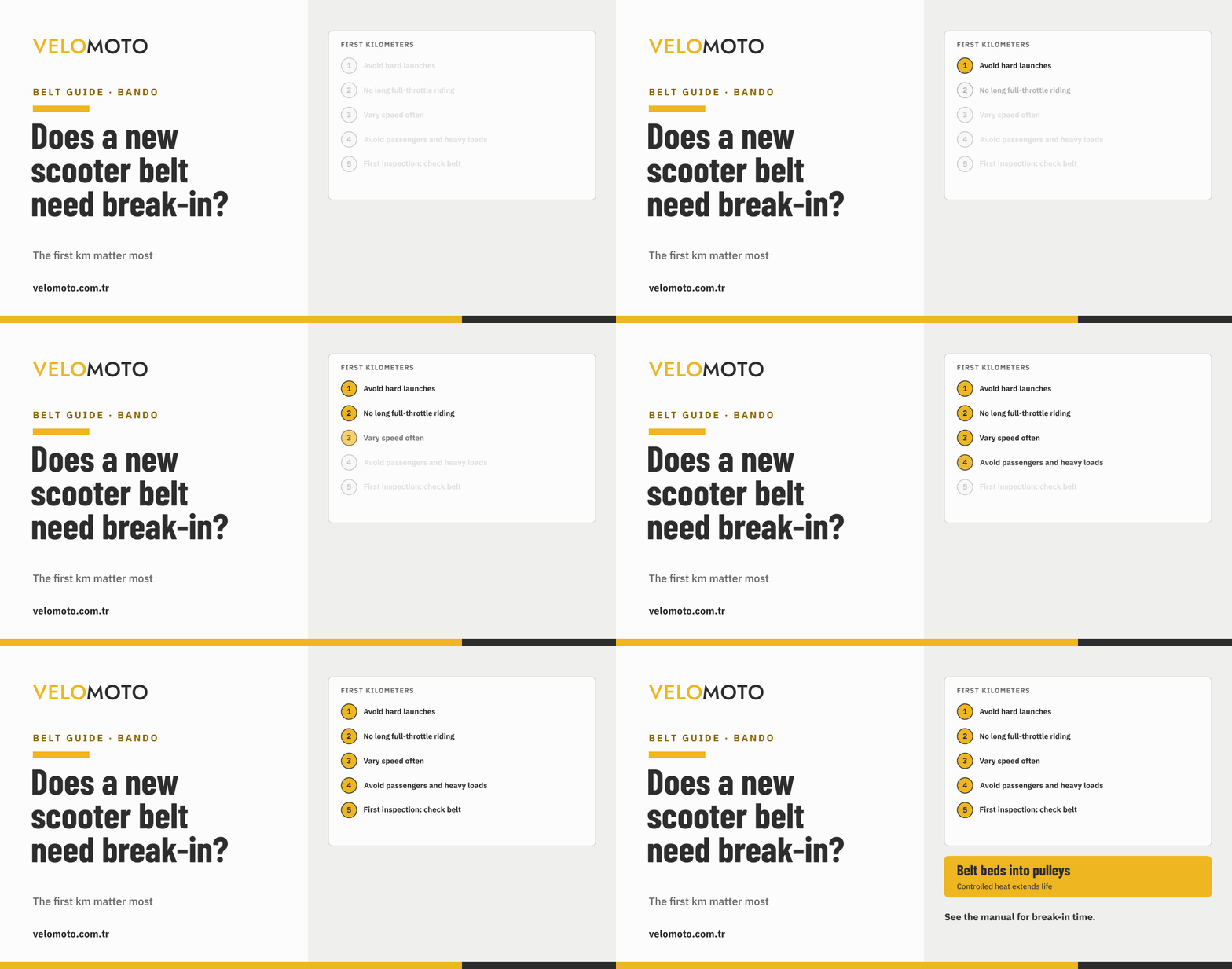
Does a New Scooter Belt Need a Break-In?
A new variator belt doesn't require a long, mandatory break-in, but it is recommended to treat the belt gently during the first few miles.
Read the guide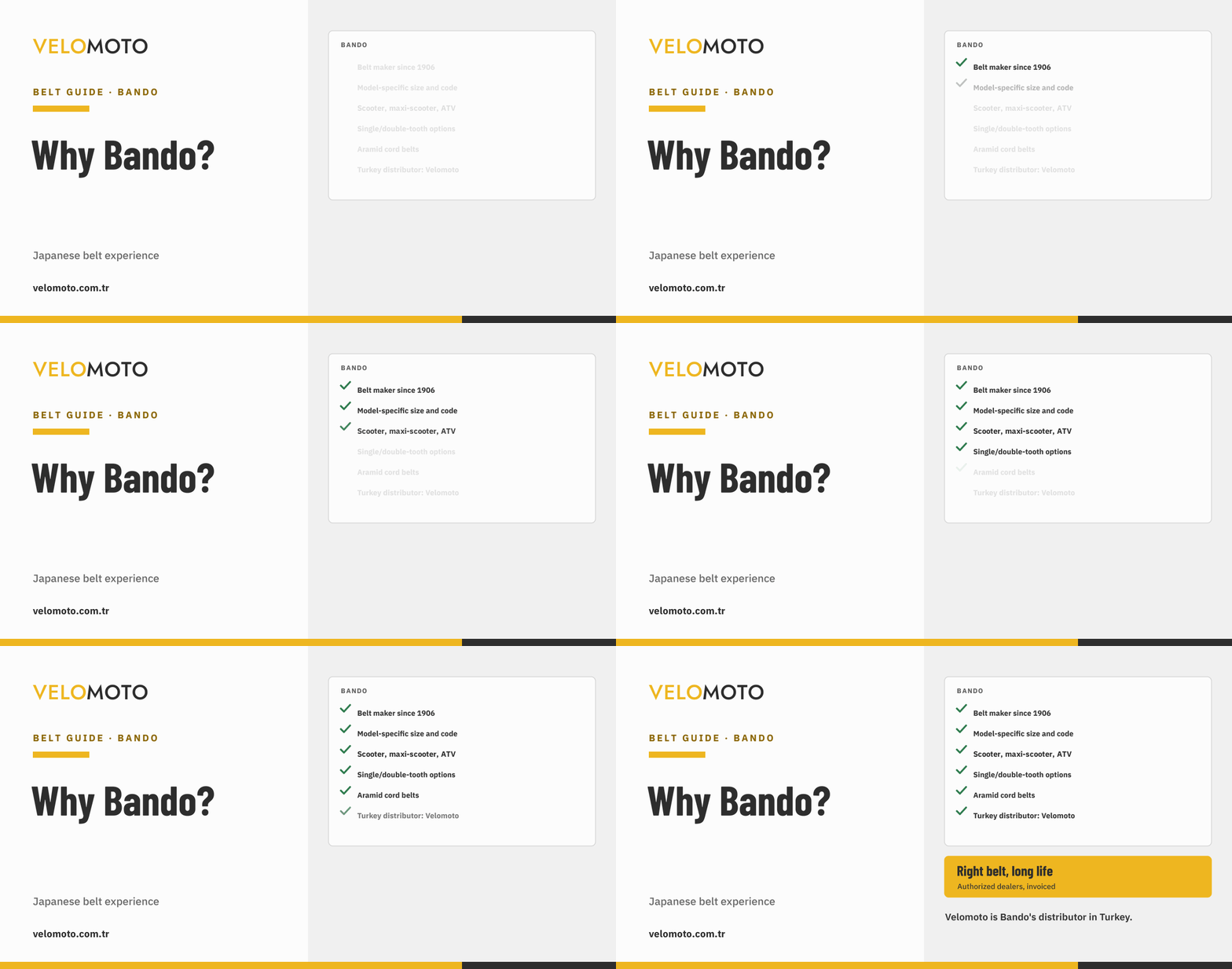
Why Bando? The Advantages of Using a Quality Belt
Bando is a Japanese brand that has been making belts since 1906; it offers variator belts in model-specific sizes for scooters, maxi-scooters and ATVs/UTVs.
Read the guide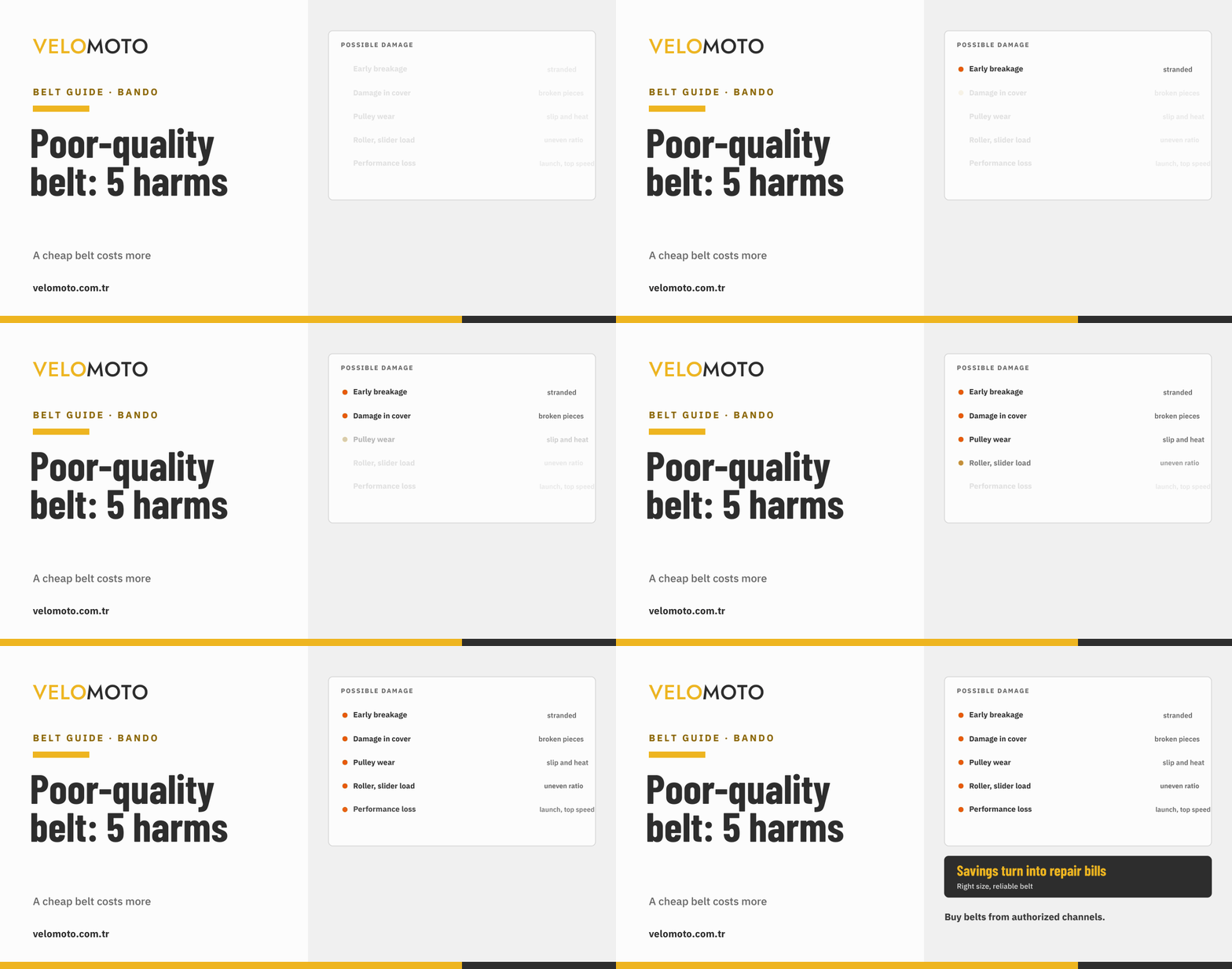
5 Ways a Poor-Quality Belt Harms the Engine and Variator
A poor-quality or wrong-size belt can lead to early breakage, damage inside the cover, pulley wear, extra load on the rollers and sliders, and loss of performance.
Read the guide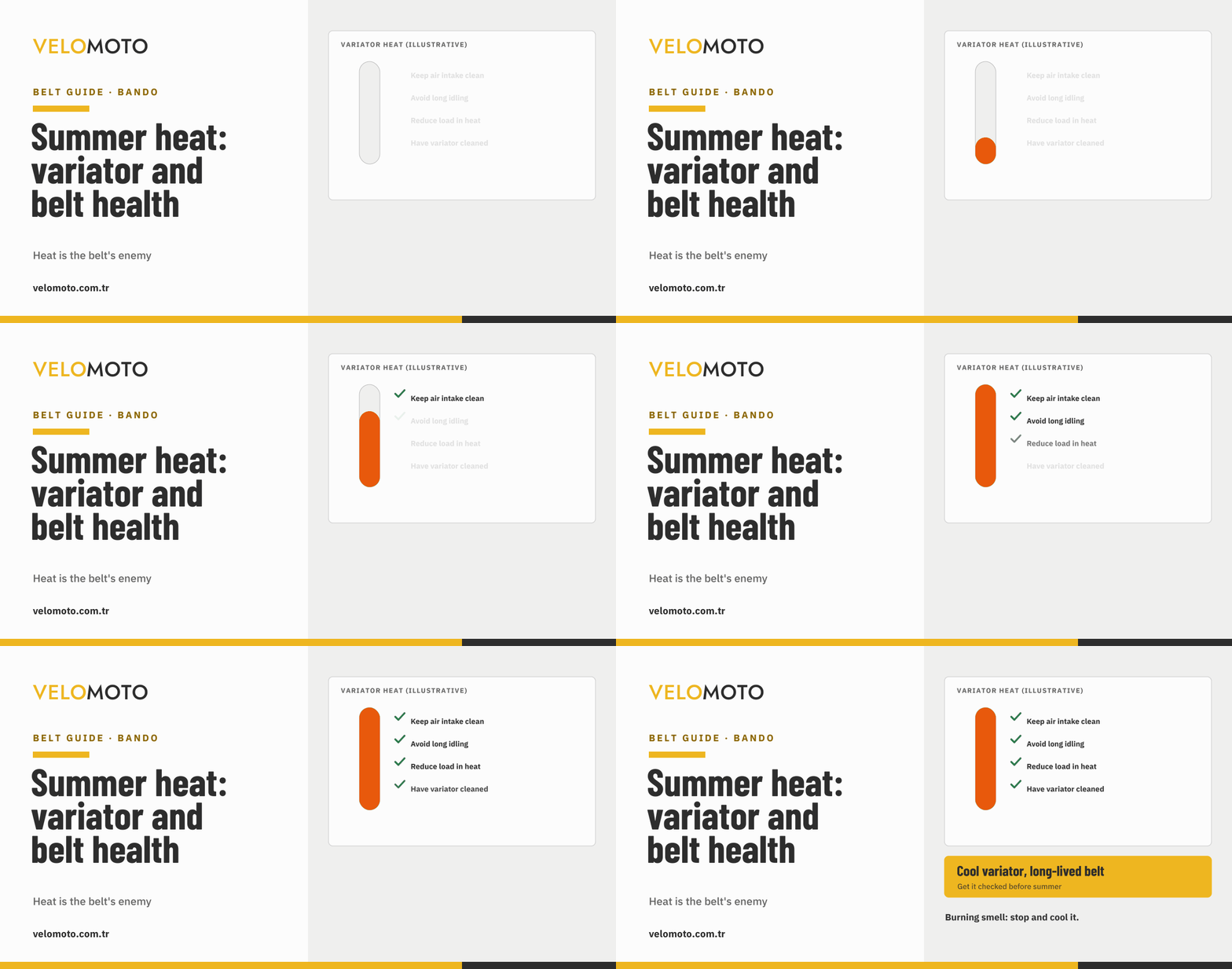
Variator Cooling and Belt Health in Summer Heat
Summer heat makes the inside of the variator cover hotter; heat causes the belt to glaze, slip and wear out early.
Read the guide
Scooter Has No Power Uphill: How the Variator and Belt Are Involved
If a scooter has no power uphill, the most common causes are a worn, narrowed or slipping belt, flattened rollers and a fatigued torque spring.
Read the guide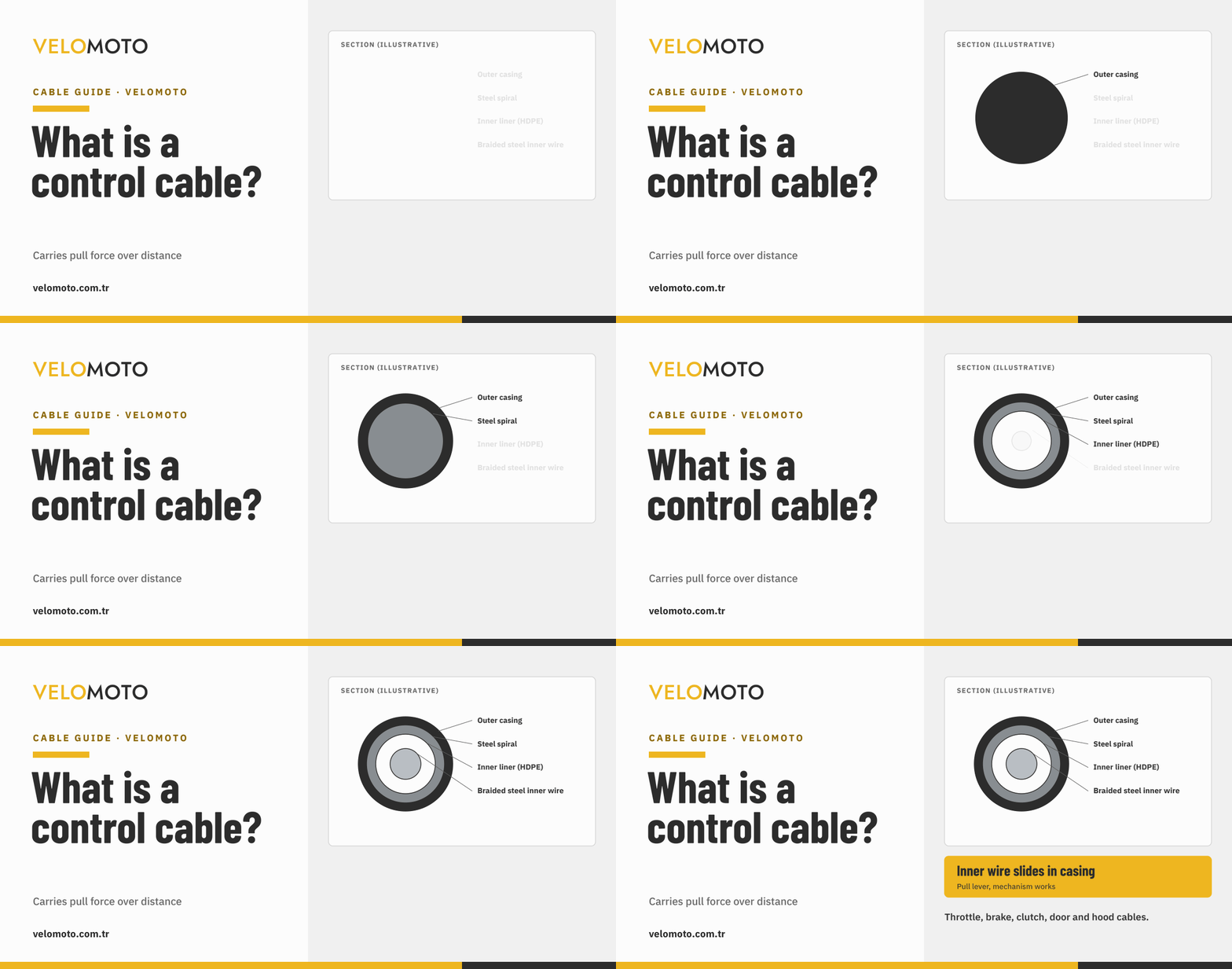
What Is a Control Cable? Types, Construction and Choosing the Right Cable
A control cable is a part that transmits the movement of a lever to a distant mechanism through a steel wire sliding inside an outer casing.
Read the guide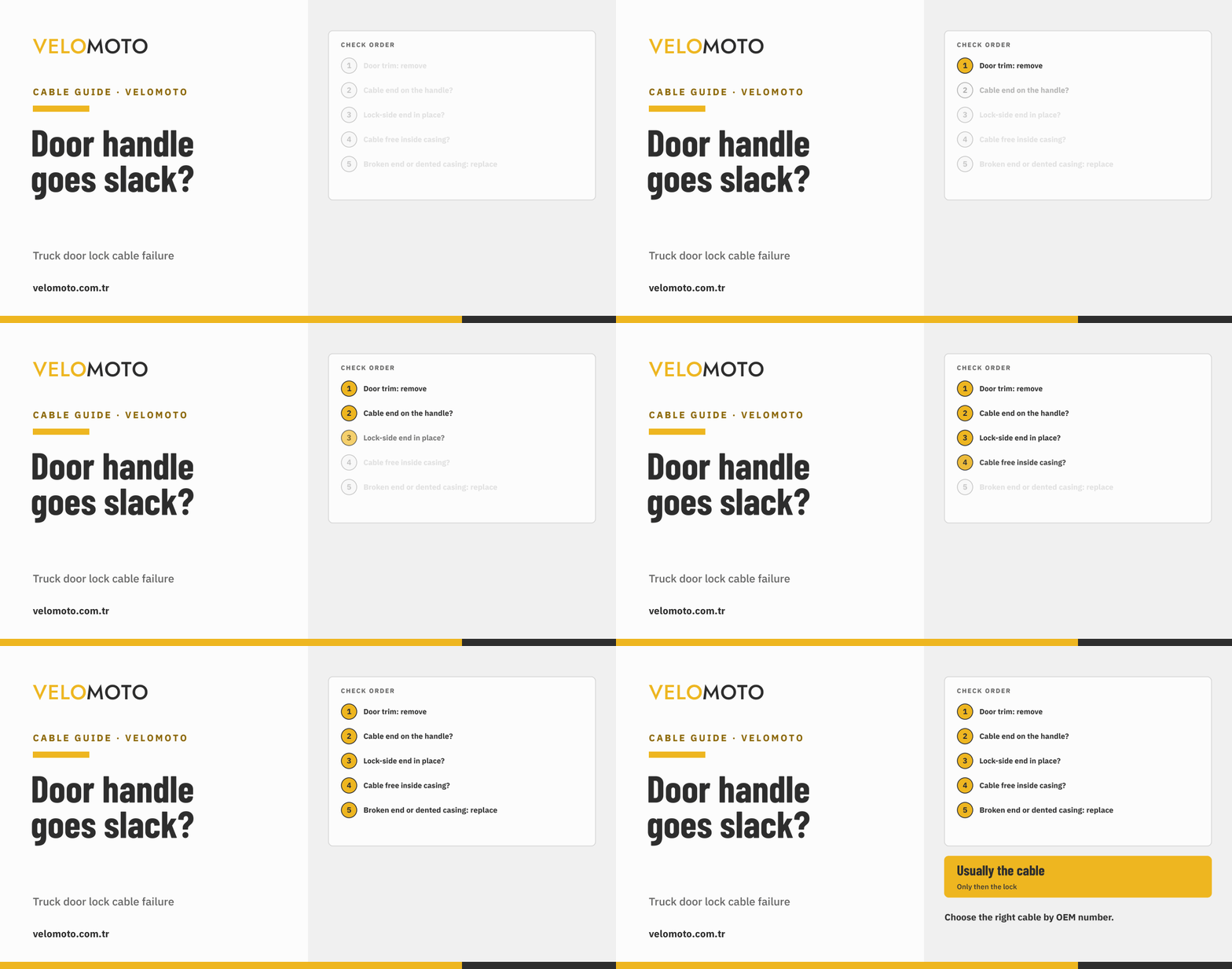
Truck Door Handle Goes Slack: Door Lock Cable Failure and Replacement
If a truck door handle goes slack and the door won't open, the most common cause is the door lock (release) cable: the cable may have broken, its end may have come off the handle or the lock, or it may be binding inside the casing.
Read the guide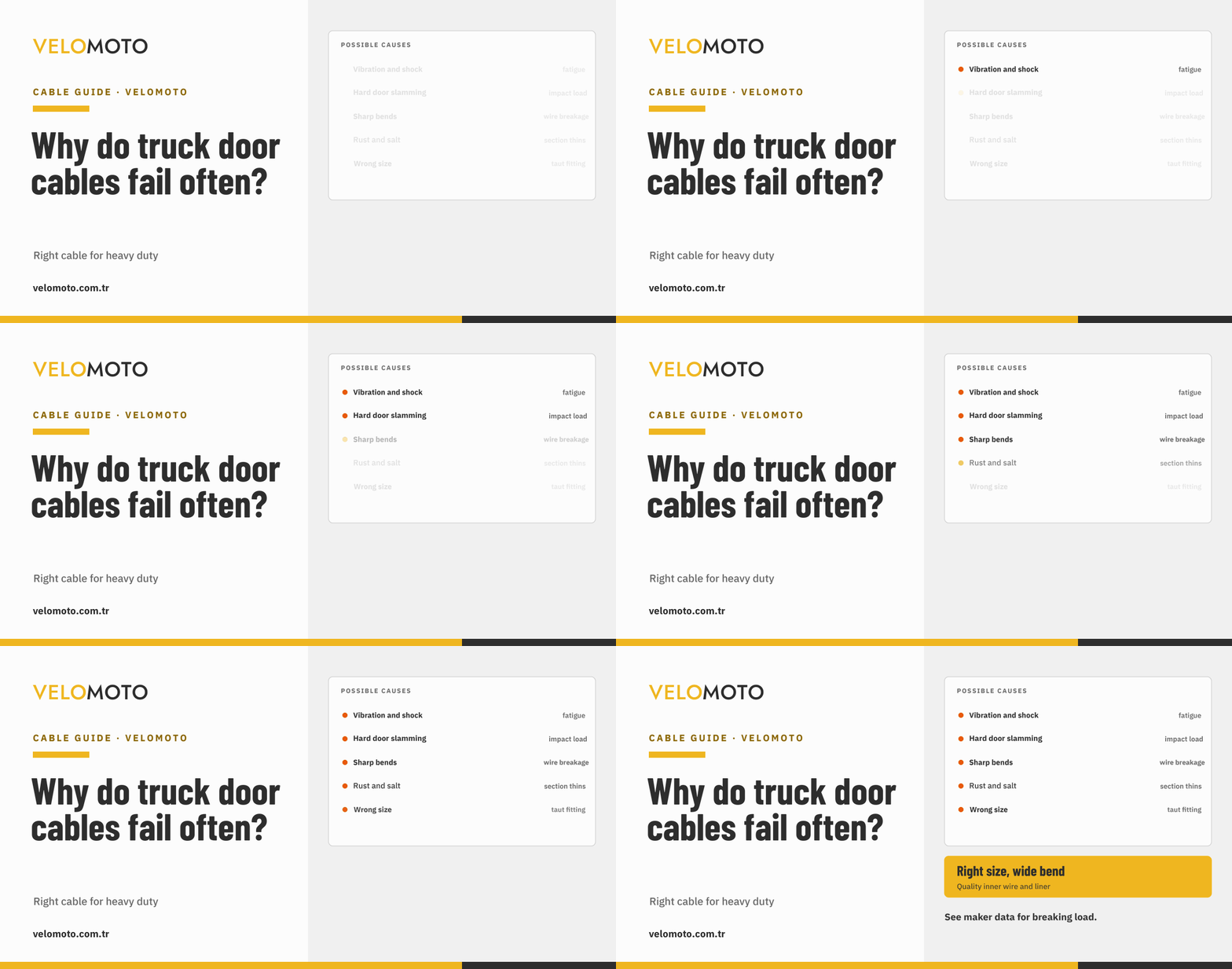
Why Do Semi-Truck and Truck Door Cables Break So Often?
Truck door cables mostly break from fatigue: constant vibration, slamming doors and sharp bends break the strands of the inner wire one by one.
Read the guide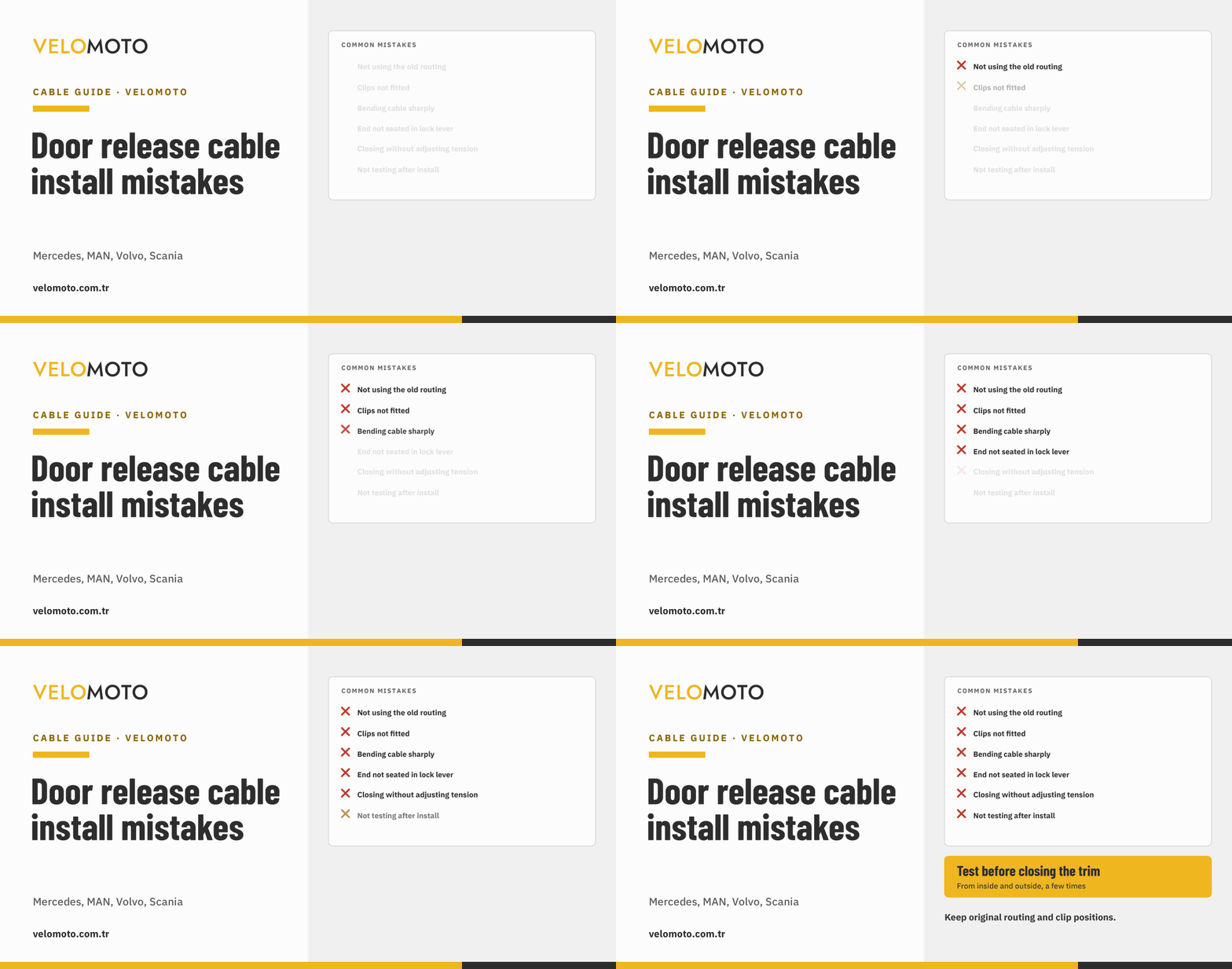
The Most Common Installation Mistakes with Mercedes, MAN, Volvo and Scania Door Release Cables
Most early door release cable failures come from installation: the cable is routed incorrectly, the clips aren't fitted, the cable is bent sharply or the end isn't fully seated in the lock lever.
Read the guide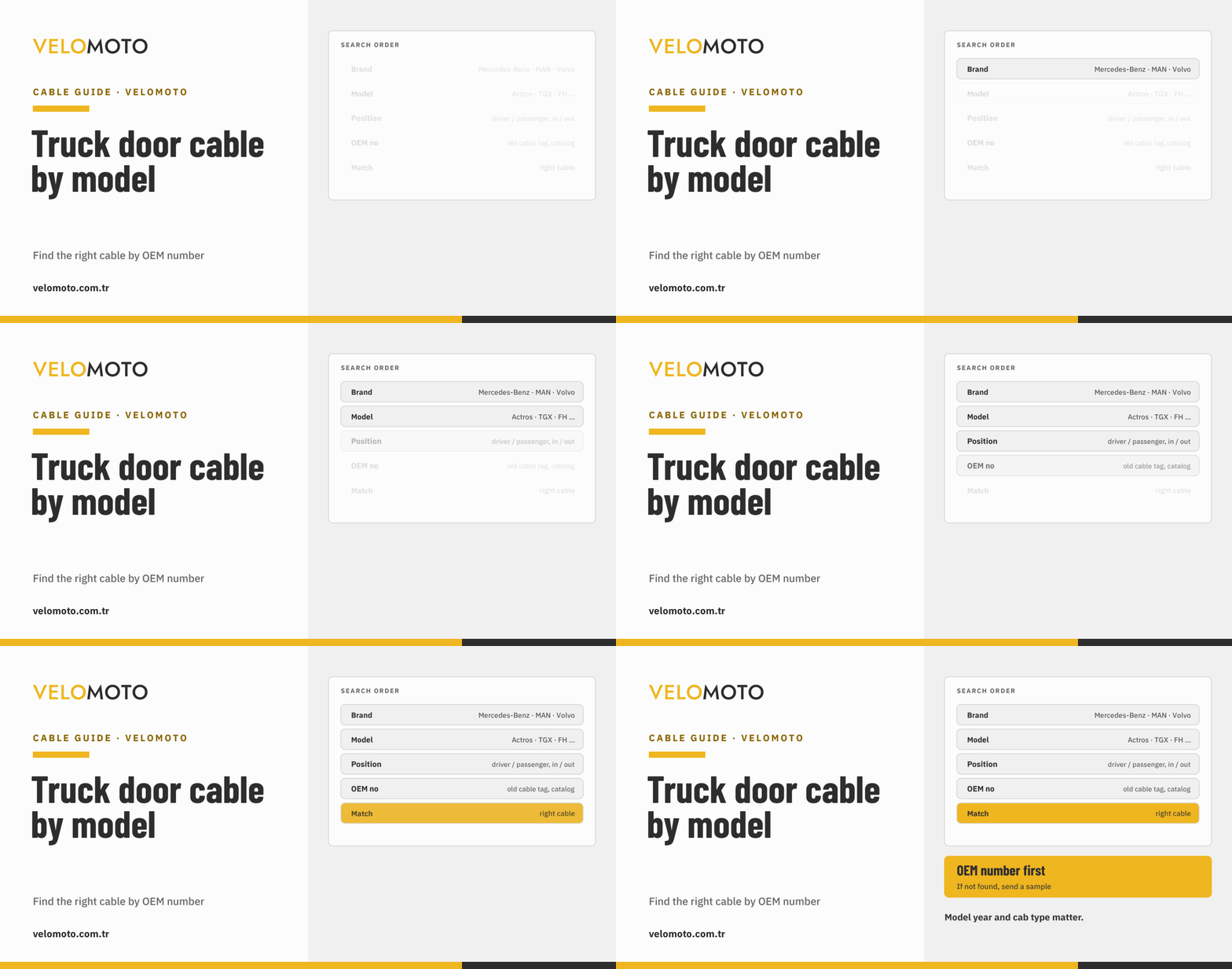
Truck Door Cables by Model: Finding the Right Cable by OEM Number
The most reliable key to the right truck door cable is the OEM number.
Read the guide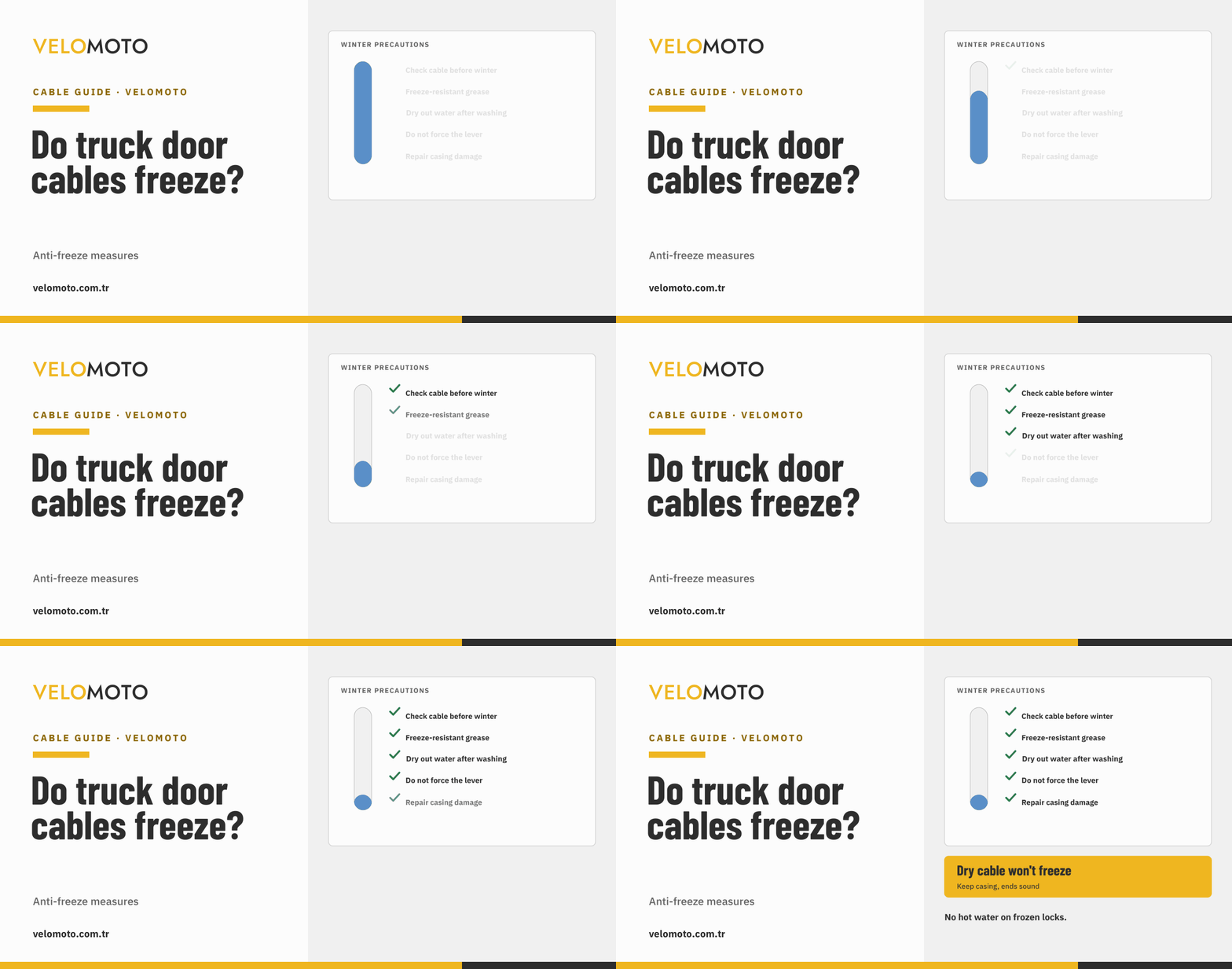
Preventing Semi-Truck Door Cables and Locks from Freezing in Winter
A door cable and lock seize up when water that gets inside freezes.
Read the guide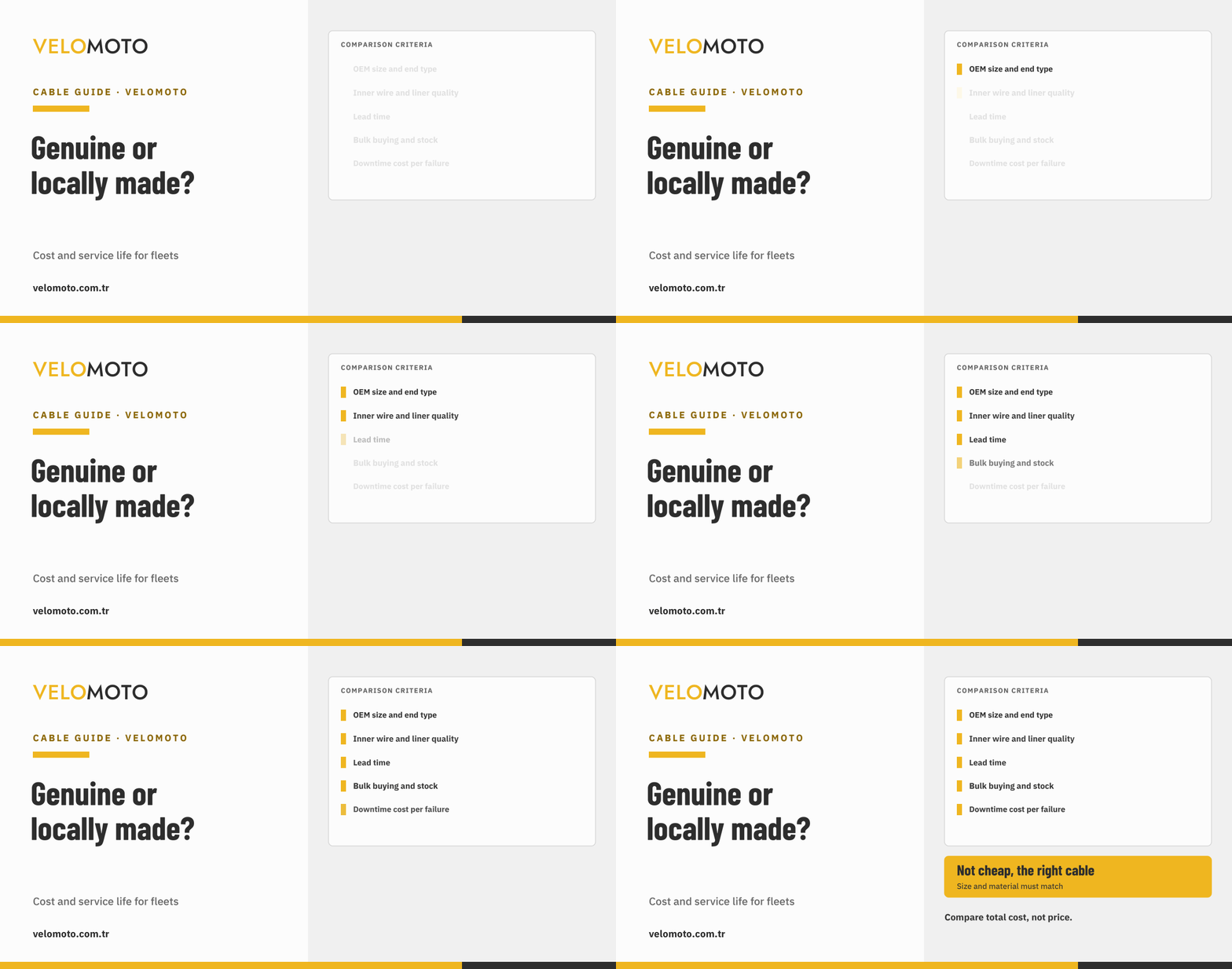
Genuine vs. Locally Made Truck Door Cables: Cost and Service Life for Fleets
What matters in a door cable is not the “genuine” label but whether the cable matches the OEM dimensions and material quality.
Read the guide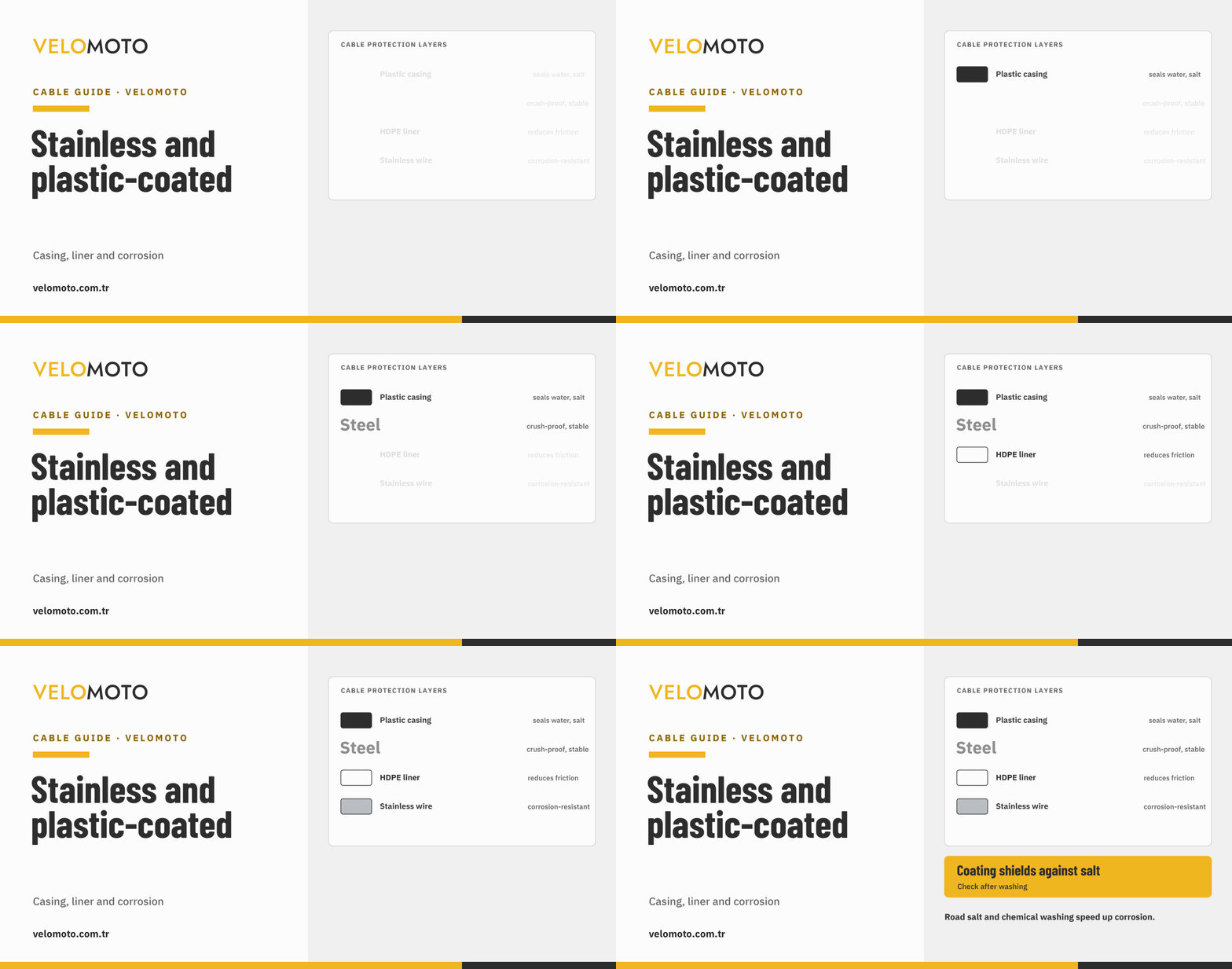
Stainless and Plastic-Coated Truck Door Cables: Casing, Inner Liner and Corrosion
To protect a truck door cable against rust, the outer casing and inner liner matter as much as the inner wire's material.
Read the guide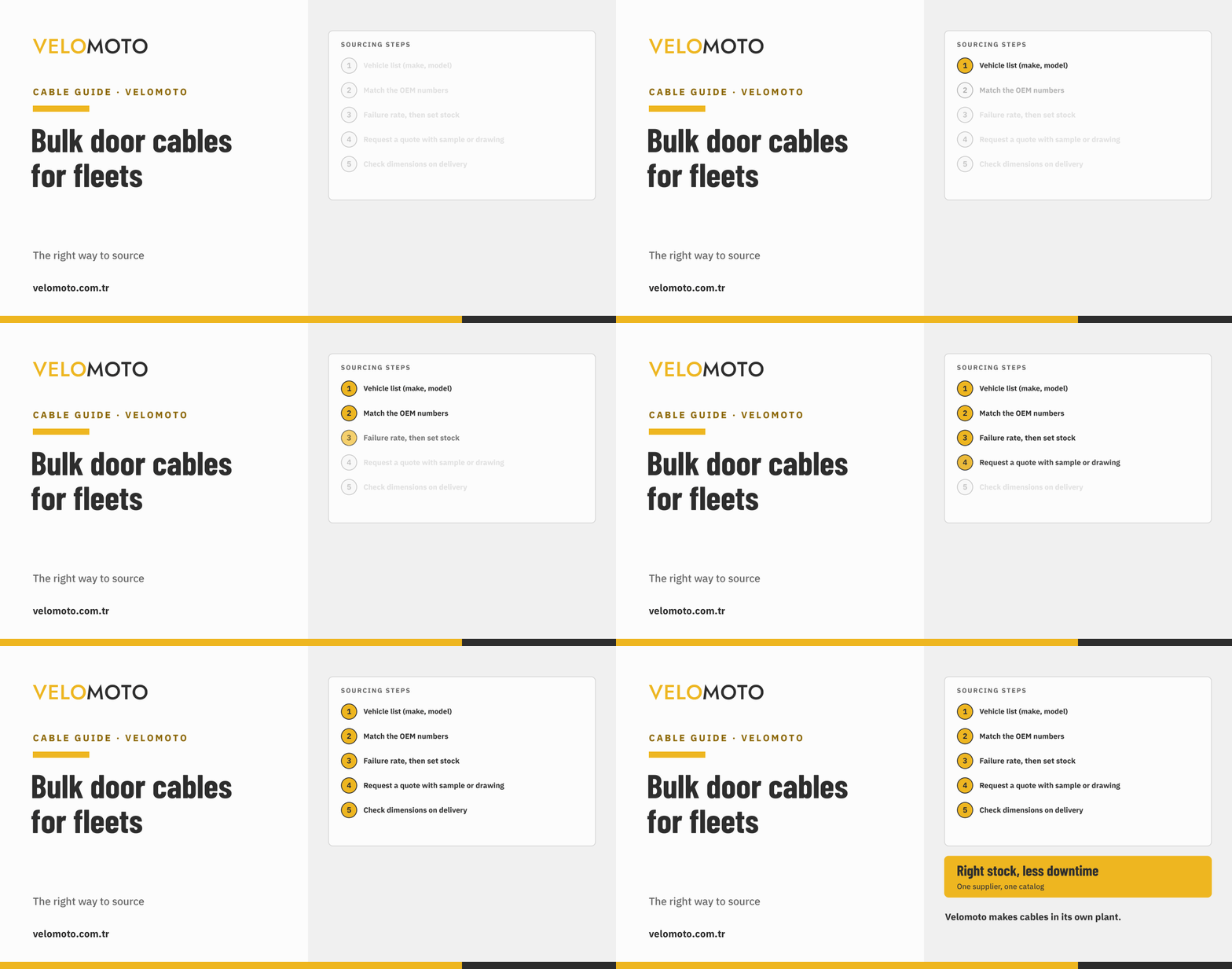
Bulk Truck Door Cable Supply for Fleets
Door cable supply for a fleet starts with a vehicle list and OEM numbers.
Read the guide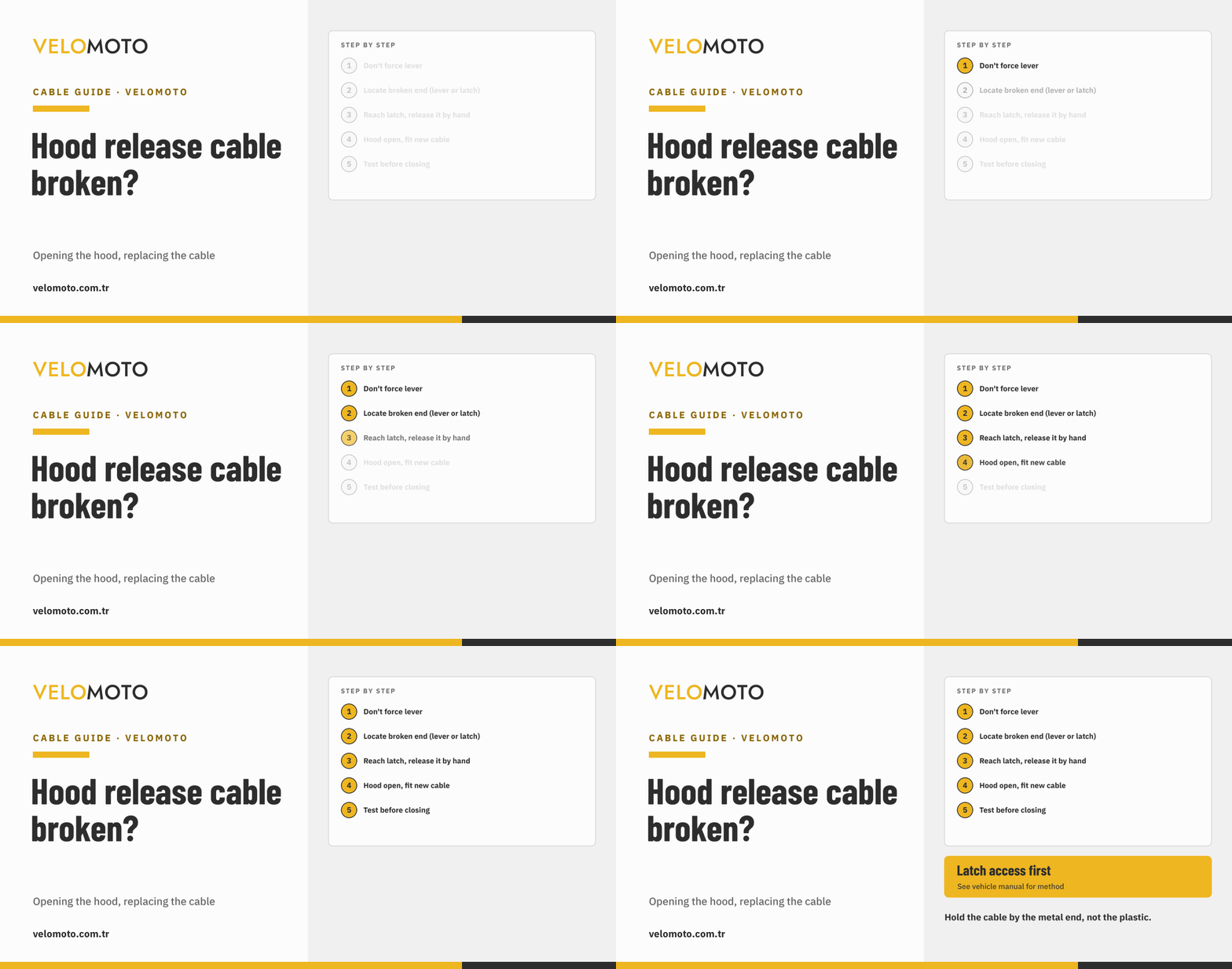
Hood Release Cable Broke: How to Open the Hood and Replace the Cable
If the hood release cable has broken, the hood is opened by hand by reaching the lock latch or the lock-side end of the cable.
Read the guide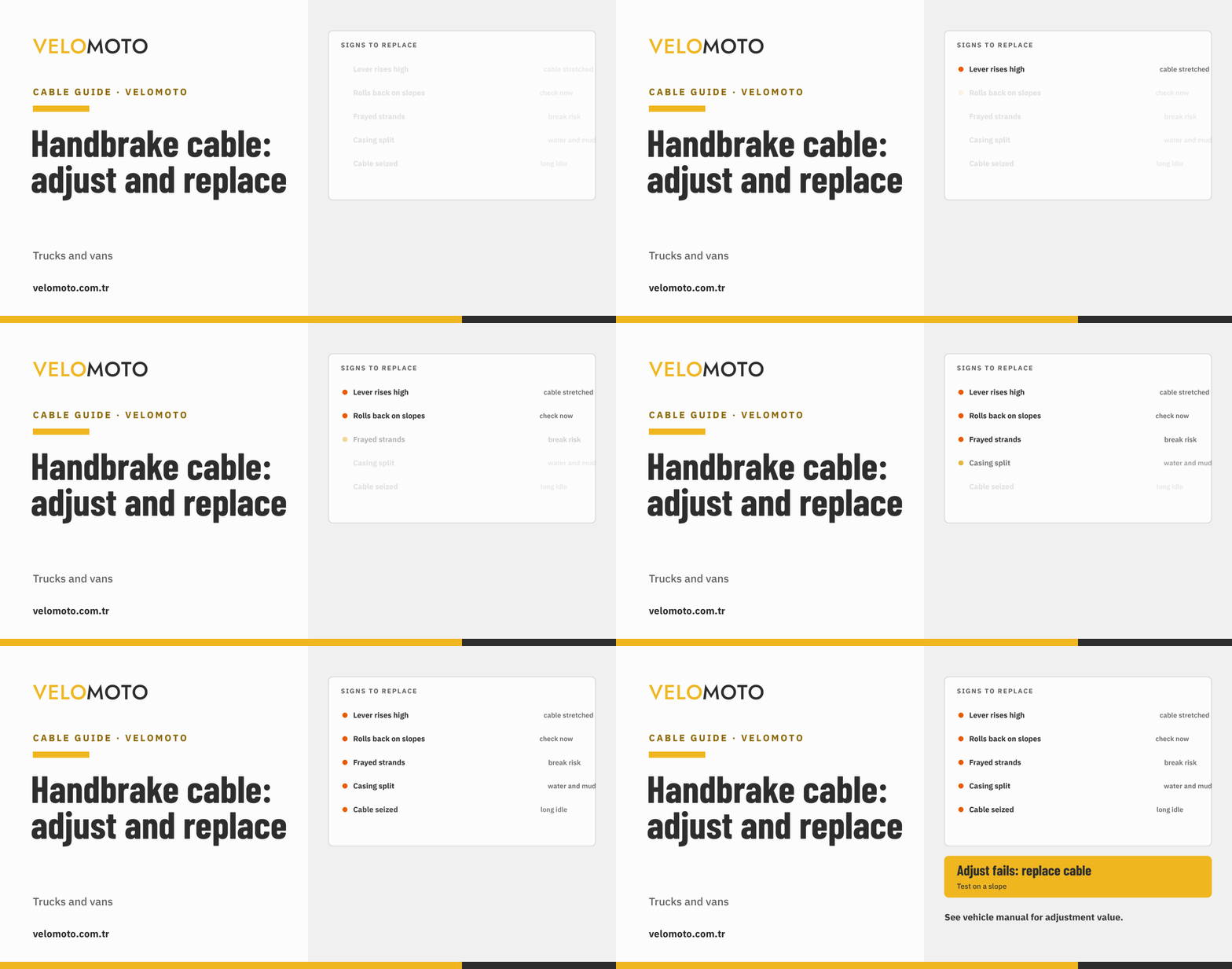
Truck and Van Handbrake Cable: Adjustment and Replacement
If the handbrake lever pulls up further than it used to, try adjusting it first; if the lever still travels too far after adjustment, or the cable is rusty, frayed, has a split casing or is seized, replace the cable.
Read the guide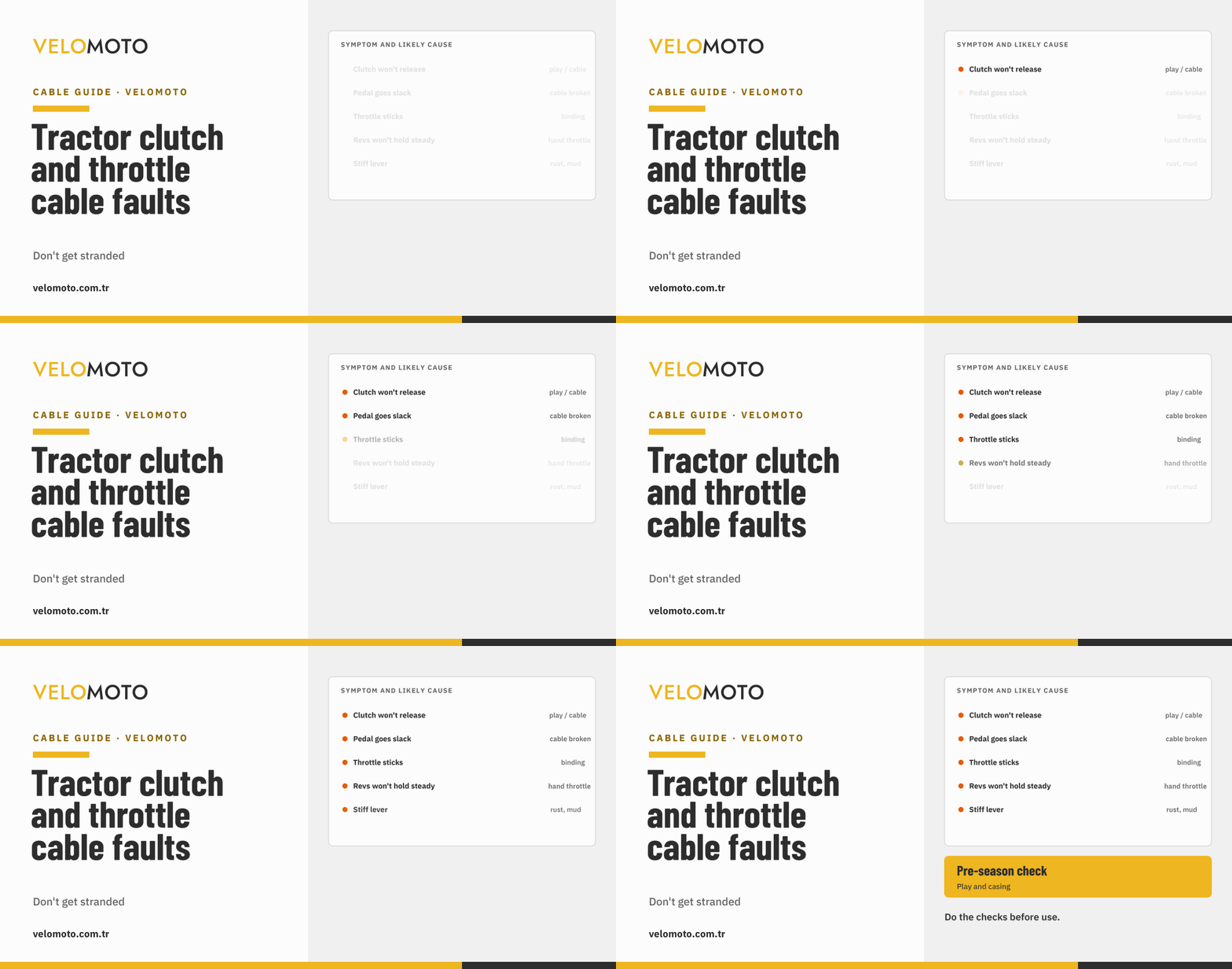
Don't Get Stranded in the Field: Tractor Clutch and Throttle Cable Problems
Most tractor clutch and throttle cable failures come from incorrect free-play adjustment, mud and rust getting into the casing, or a worn cable.
Read the guide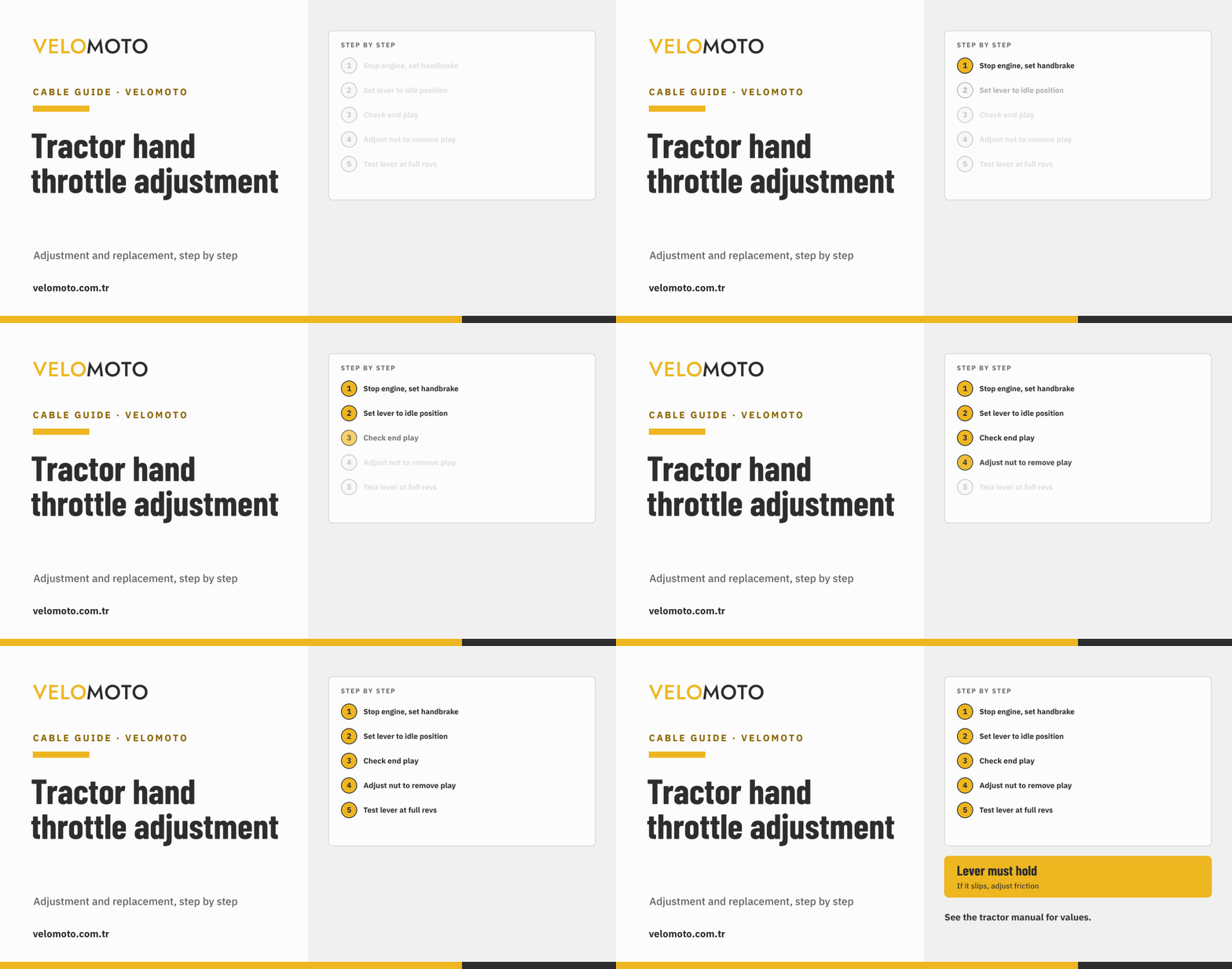
Tractor Hand Throttle Cable Adjustment and Replacement
If a tractor's hand throttle does not hold engine speed, the problem is usually the lever's friction adjustment or the cable's free play.
Read the guide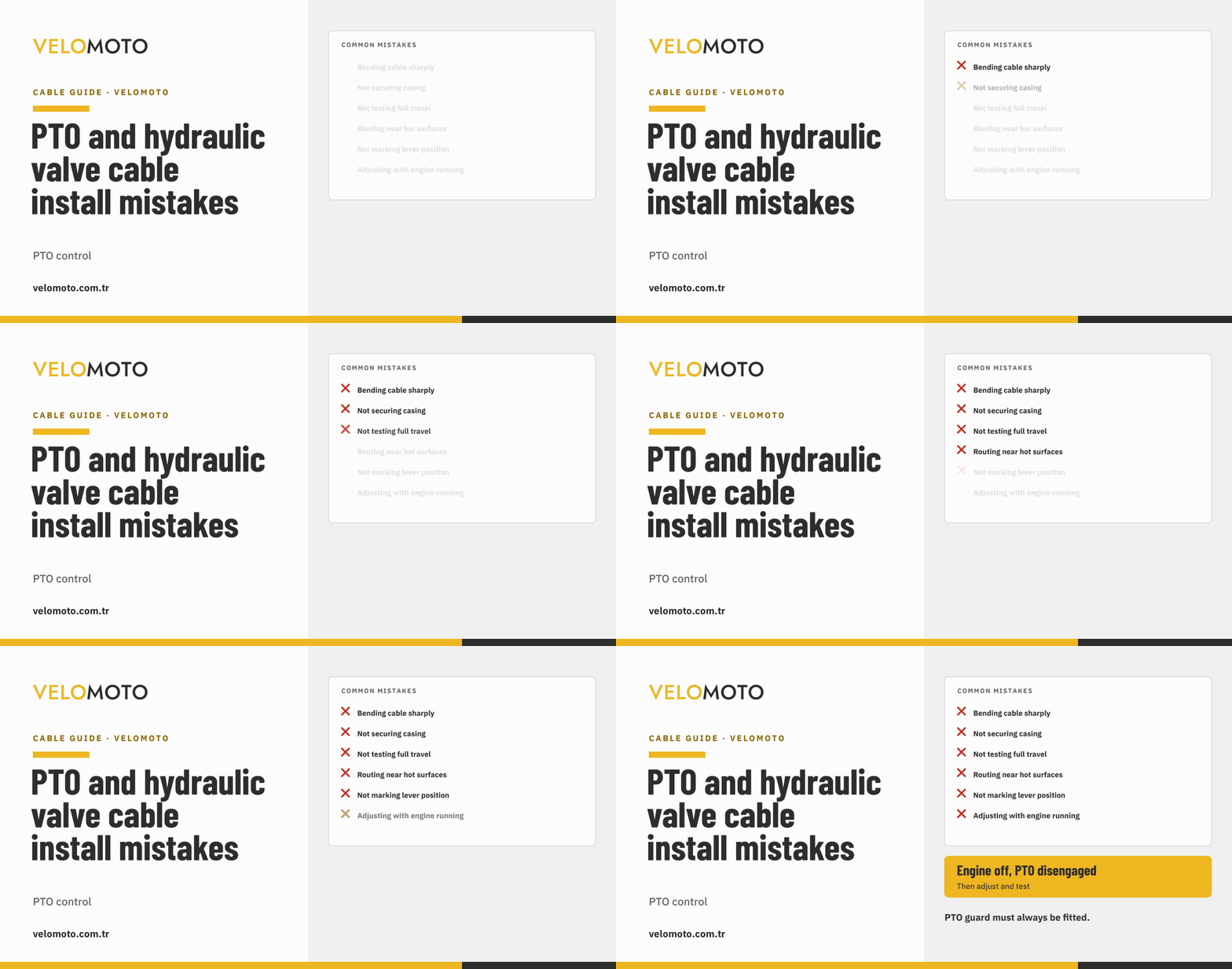
Installation Mistakes with PTO and Hydraulic Valve Control Cables
Most PTO and hydraulic valve control cable failures come from installation: the cable is bent sharply, the casing is not secured, the full travel is not tested, or the cable is routed close to hot surfaces.
Read the guide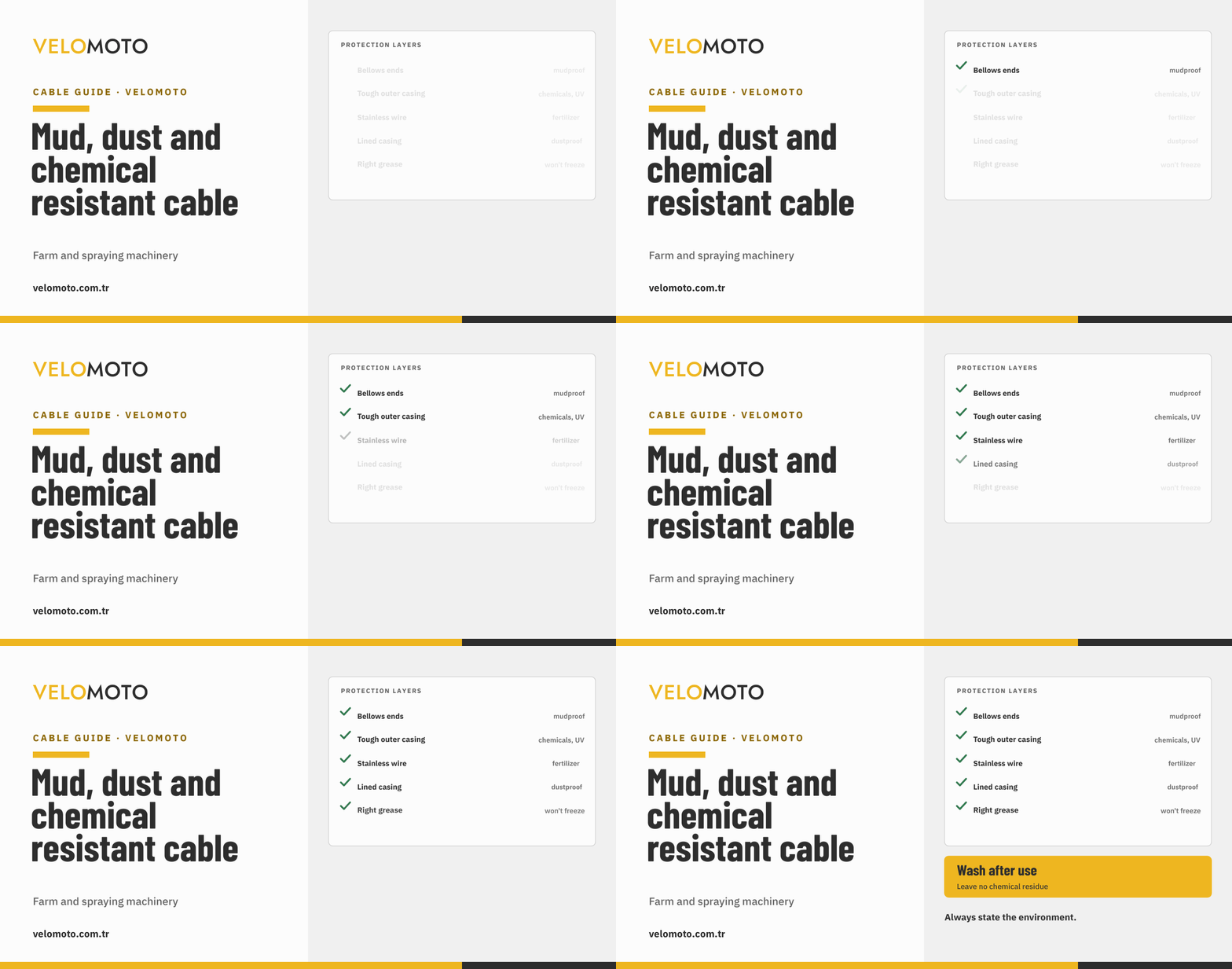
Agricultural Cables Resistant to Mud, Dust and Chemicals: Booted and Stainless
Mud, dust and farm chemicals usually get into a cable through the casing mouth; once inside, the inner wire rusts, the liner wears and the cable seizes.
Read the guide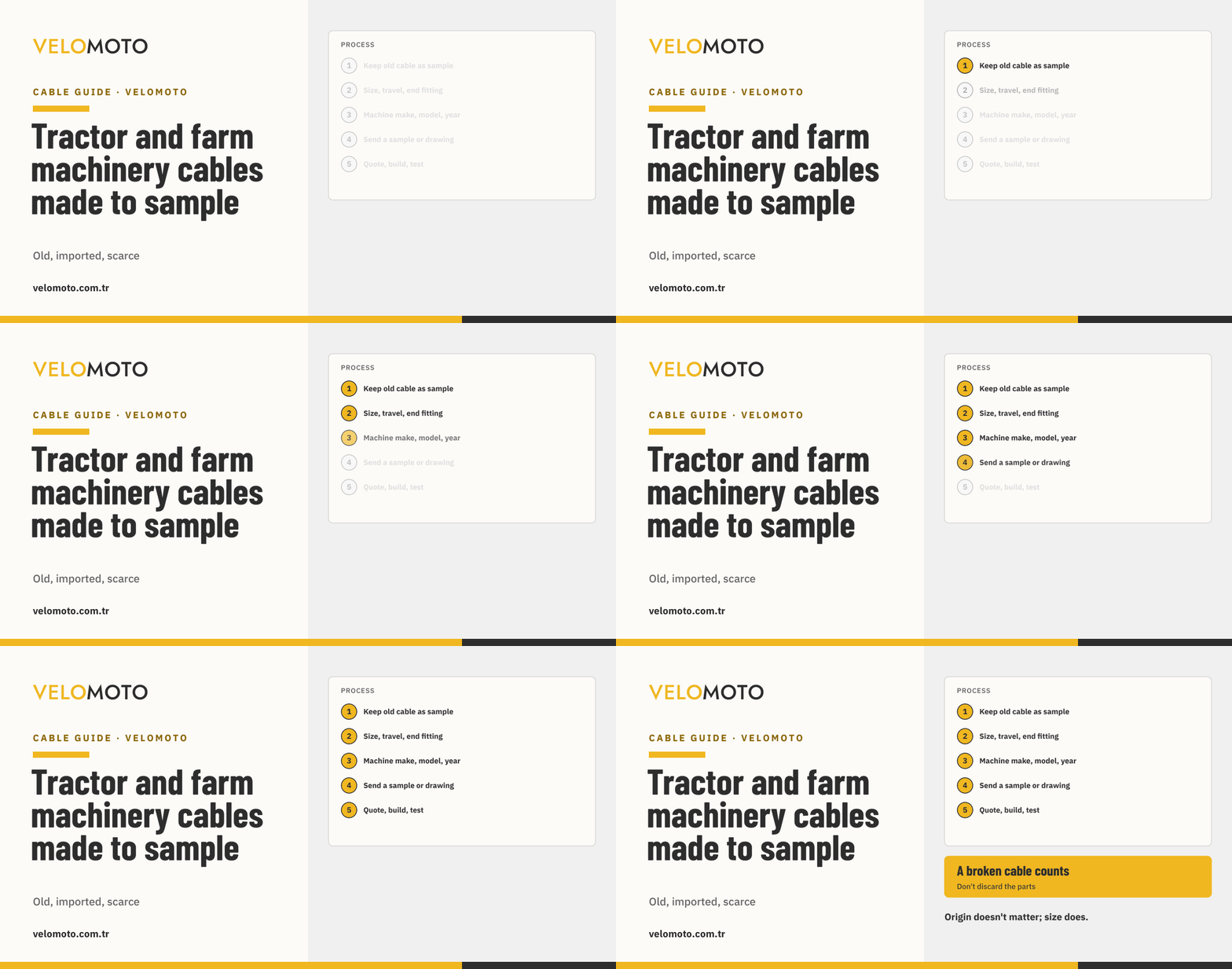
Cables Made from a Sample for Old, Imported or Hard-to-Find Tractors and Farm Machinery
Control cables for old, imported or unsupported tractors and farm machinery can be produced by taking the old cable as a sample or by taking its measurements.
Read the guide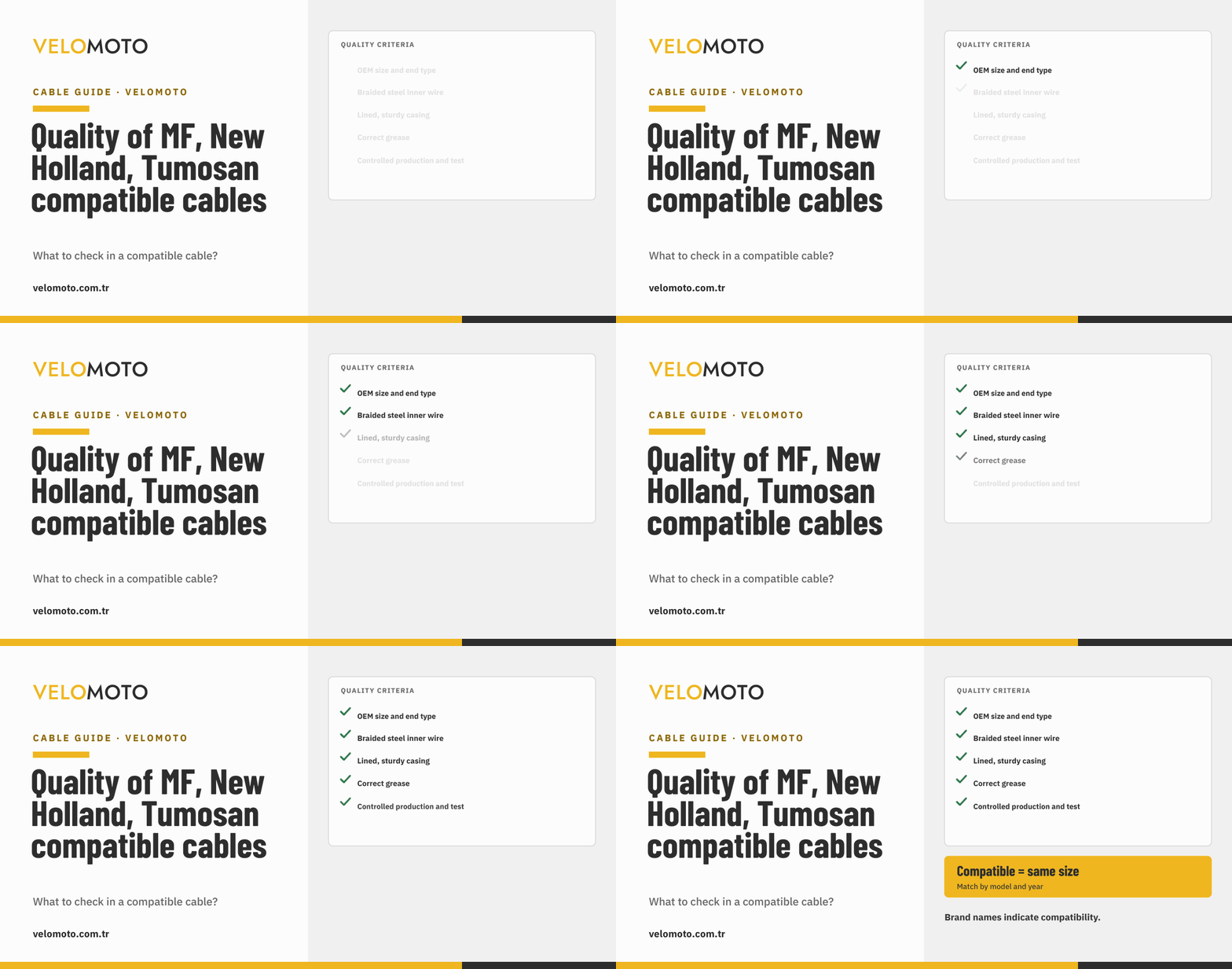
Quality in Control Cables Compatible with Massey Ferguson, New Holland and Tümosan
Quality in a control cable compatible with Massey Ferguson, New Holland or Tümosan starts with an exact match to the original part's dimensions and end fitting type.
Read the guide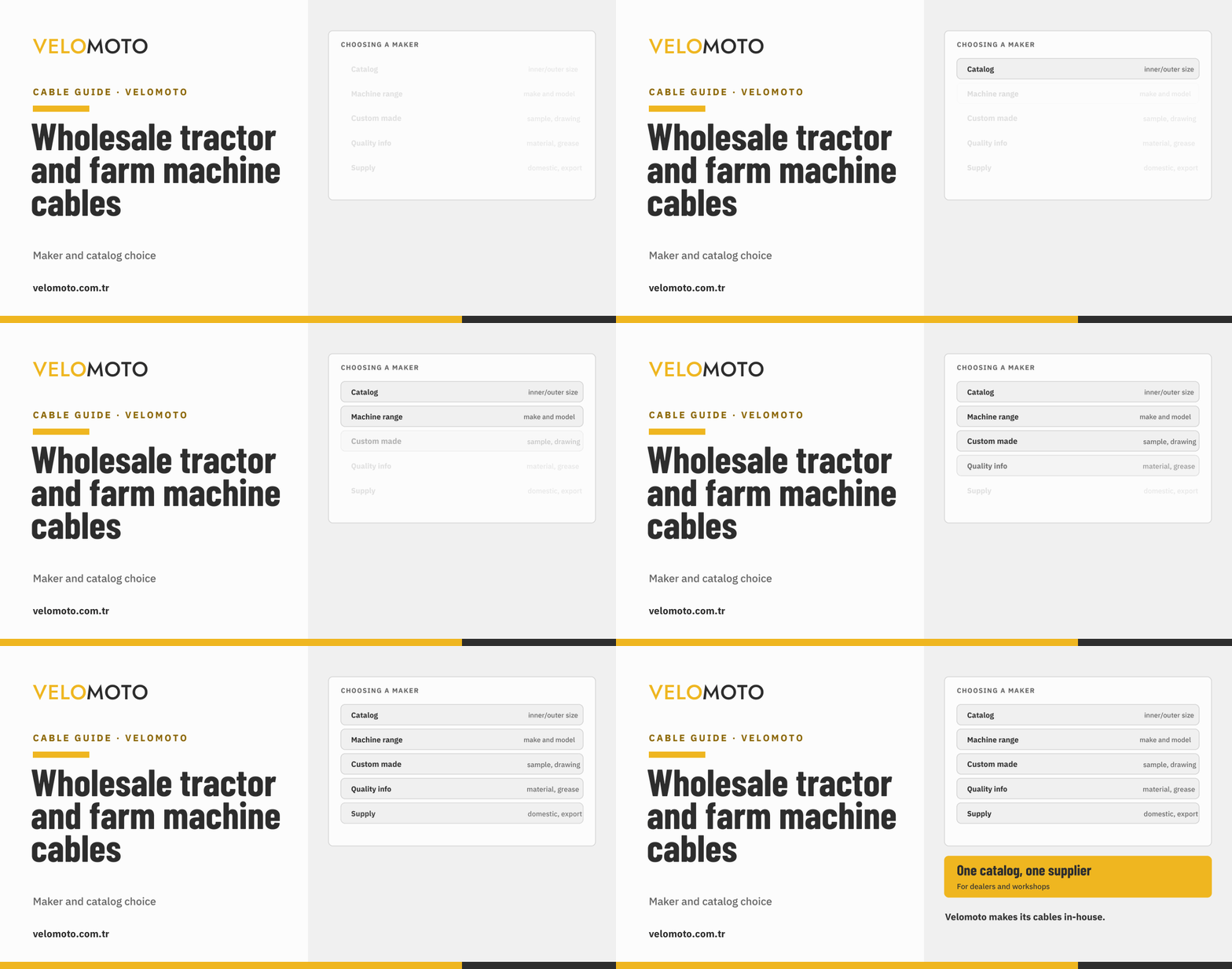
Wholesale Tractor and Farm Machinery Cables: Choosing a Manufacturer and Catalog
When buying tractor and farm machinery cables wholesale, look at the manufacturer's catalog, whether products can be matched by dimensions, and whether cables not in the catalog can be produced from a sample.
Read the guide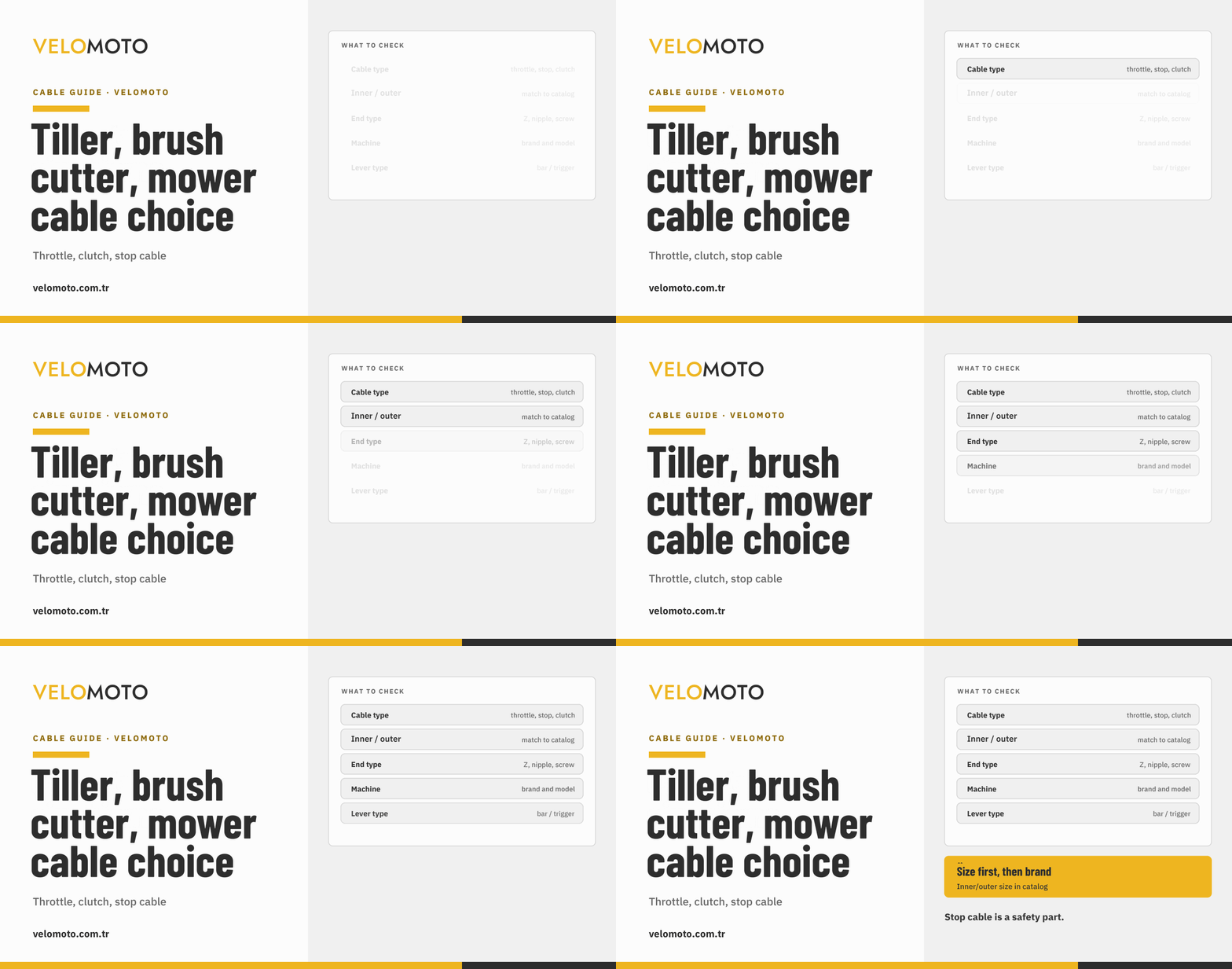
How to Choose a Cable for Tillers, Brush Cutters and Lawn Mowers
Choosing the right cable for a tiller, brush cutter or lawn mower comes down to four things: the cable's function (throttle, clutch, stop), the inner and outer dimensions, the type of both end fittings, and the machine's make and model.
Read the guideWhere can I buy the products? We do not sell directly to end users. You can buy the products mentioned in our guides from our authorised dealers.
See our dealers