
Velomoto knowledge centre
Technical guides
Guides on choosing, maintaining and replacing brakes, chains, variator belts and control cables, written with the technical data of our brands. Guides are currently in Turkish.
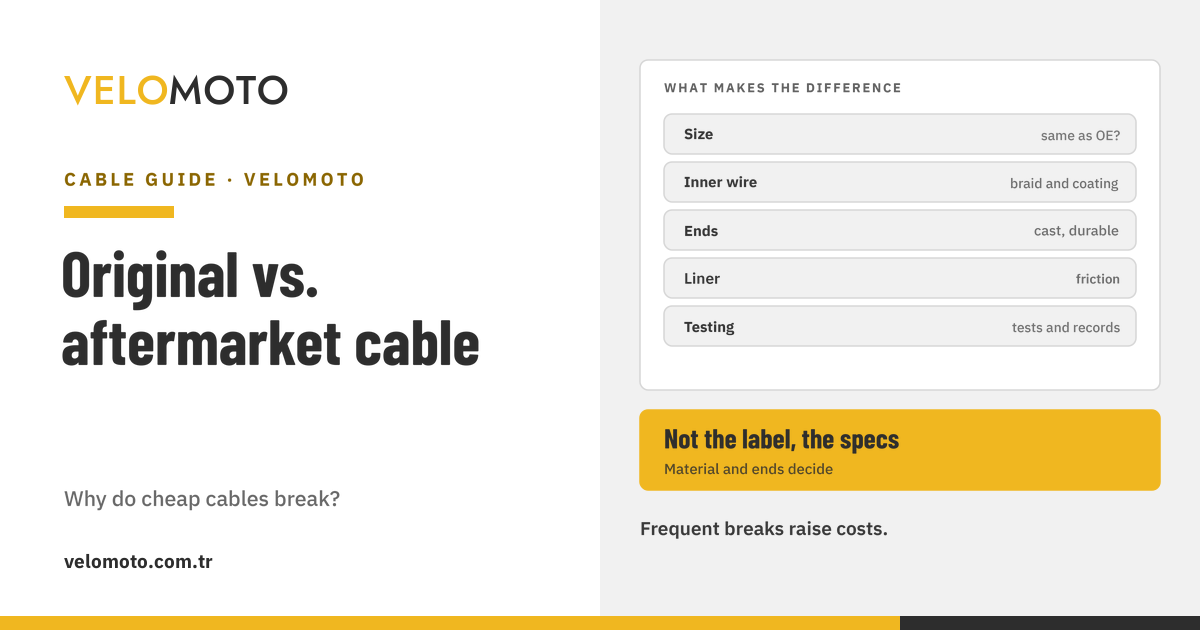
Original vs. Aftermarket Cables: Why Do Cheap Cables Break So Often?
Cheap cables usually break often not because they are “aftermarket” but because of shortcomings in sizing, inner wire, end fittings and liner quality.
Read the guide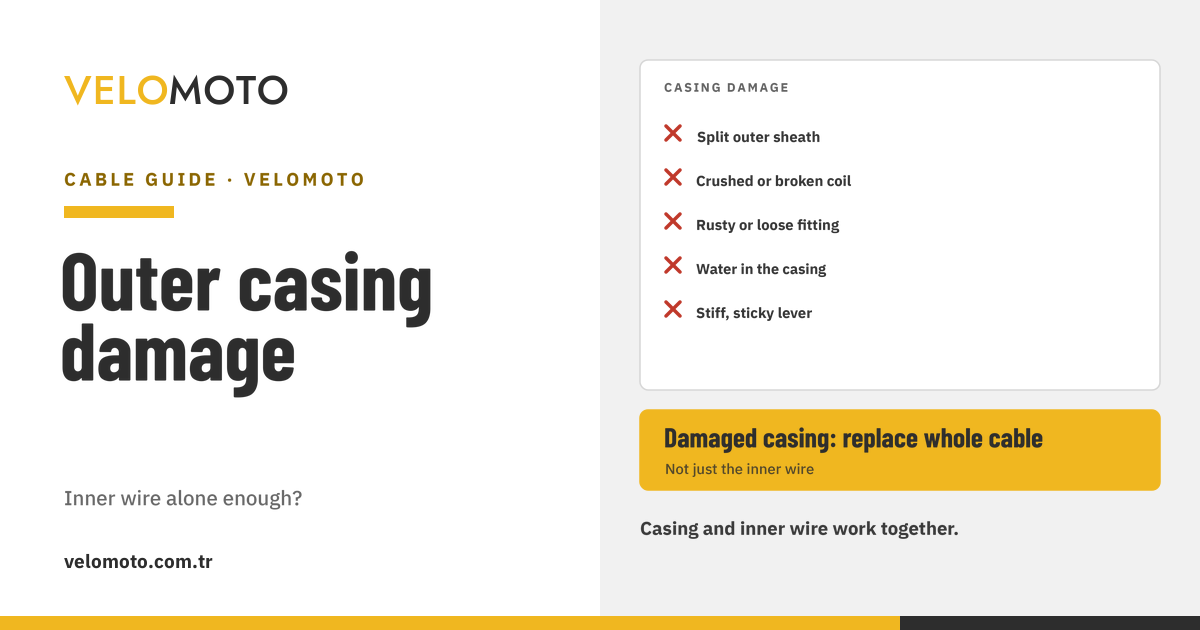
Outer Casing (Coil) Damage: Is Replacing the Inner Wire Enough?
If the outer casing is split, crushed or its coil is broken, replacing only the inner wire is usually not enough; in a damaged casing the new inner wire also binds, wears and breaks quickly.
Read the guide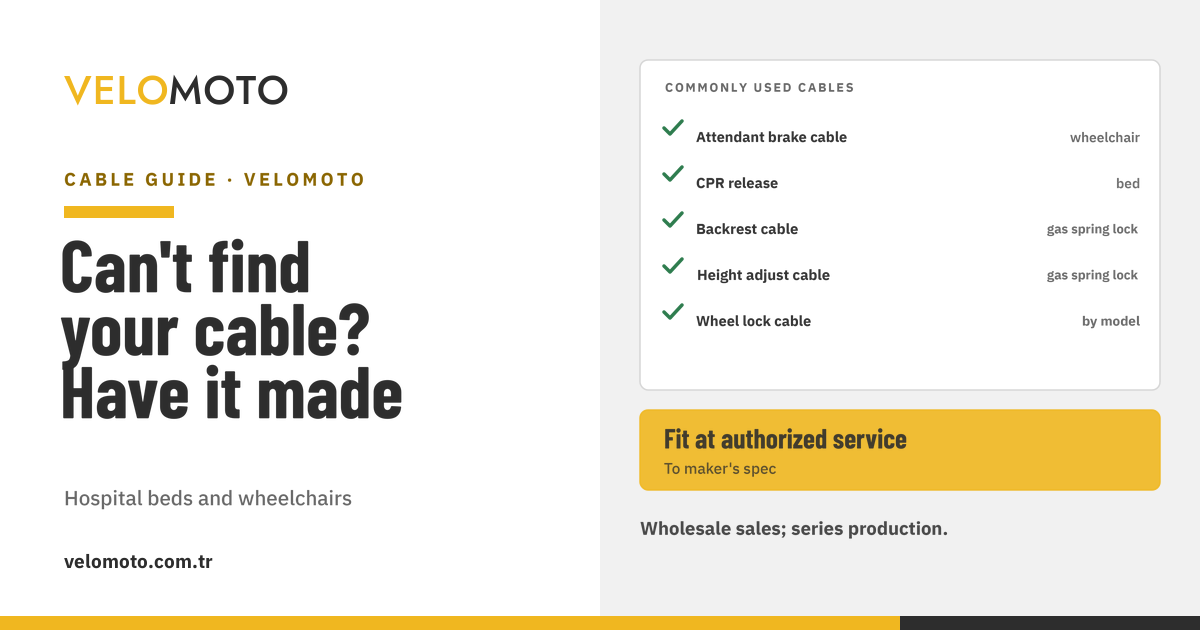
How to Get a Cable You Can't Find: Custom Production for Hospital Beds and Wheelchairs
Hard-to-find brake, CPR release or gas spring control cables for hospital beds, stretchers and wheelchairs can be manufactured using the old cable as a sample or from its measurements.
Read the guide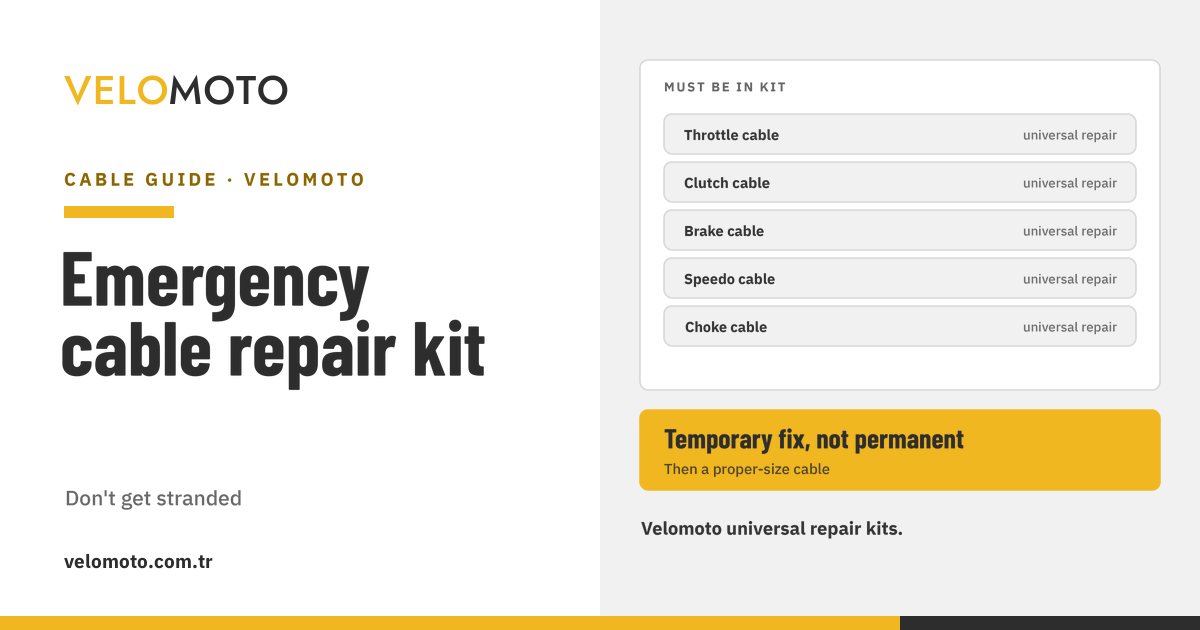
5 Items Every Emergency Cable Repair Kit Should Have
An emergency cable repair kit should contain universal repair cables for the five cables that break most often: throttle, clutch, brake, speedometer and choke cables.
Read the guide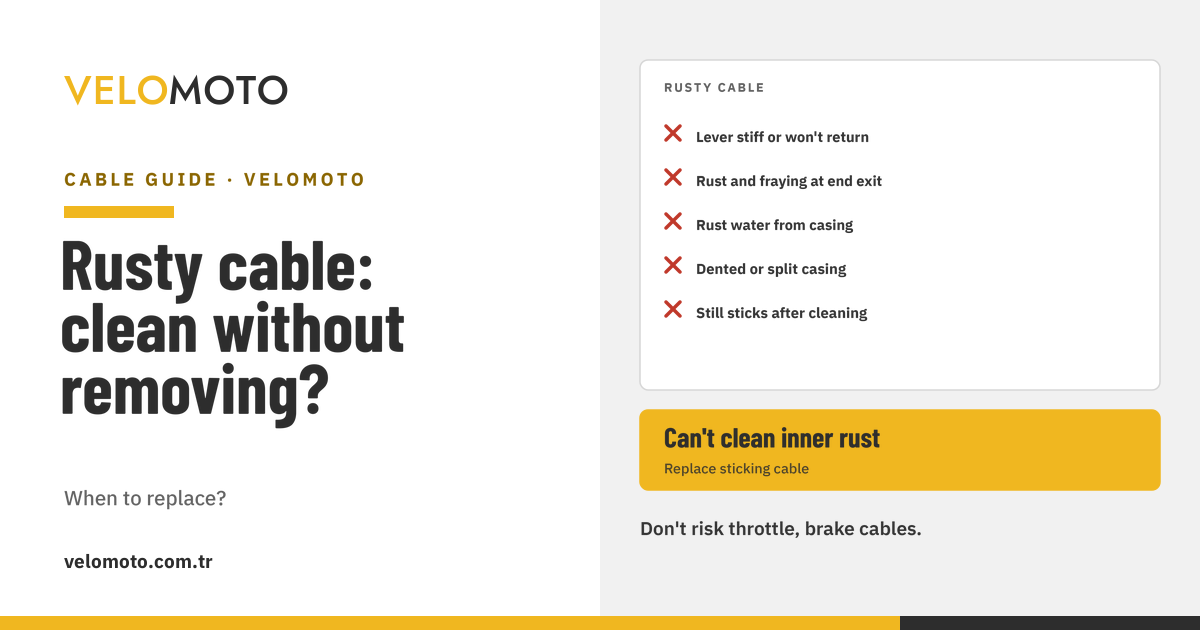
Can Old or Rusty Cables Be Cleaned Without Removing Them?
Dirt and surface rust on the outside of a control cable can be cleaned without removing it; however, rust that has worked its way inside the casing and corrosion that has started on the inner wire cannot be cleaned from the outside.
Read the guide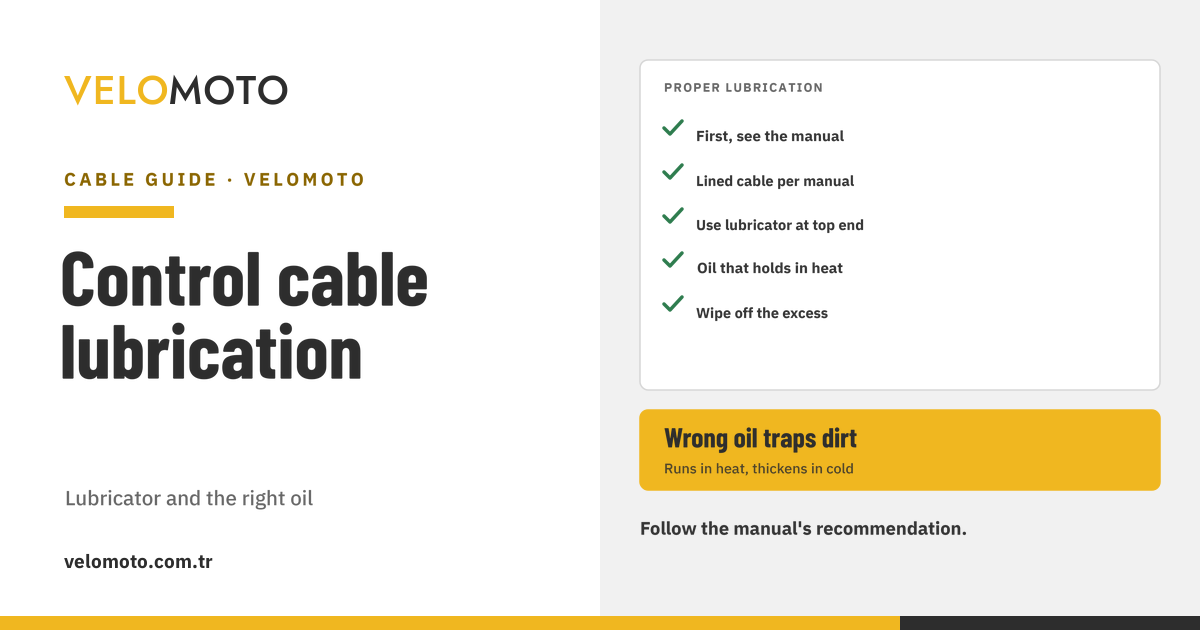
Lubricating Control Cables: Using a Cable Lubricator and Choosing the Right Oil
A control cable is lubricated with the oil recommended in the vehicle's owner's manual, from the top end of the cable down into the casing; a cable lubricator lets you do this without removing the cable and without splashing oil around.
Read the guide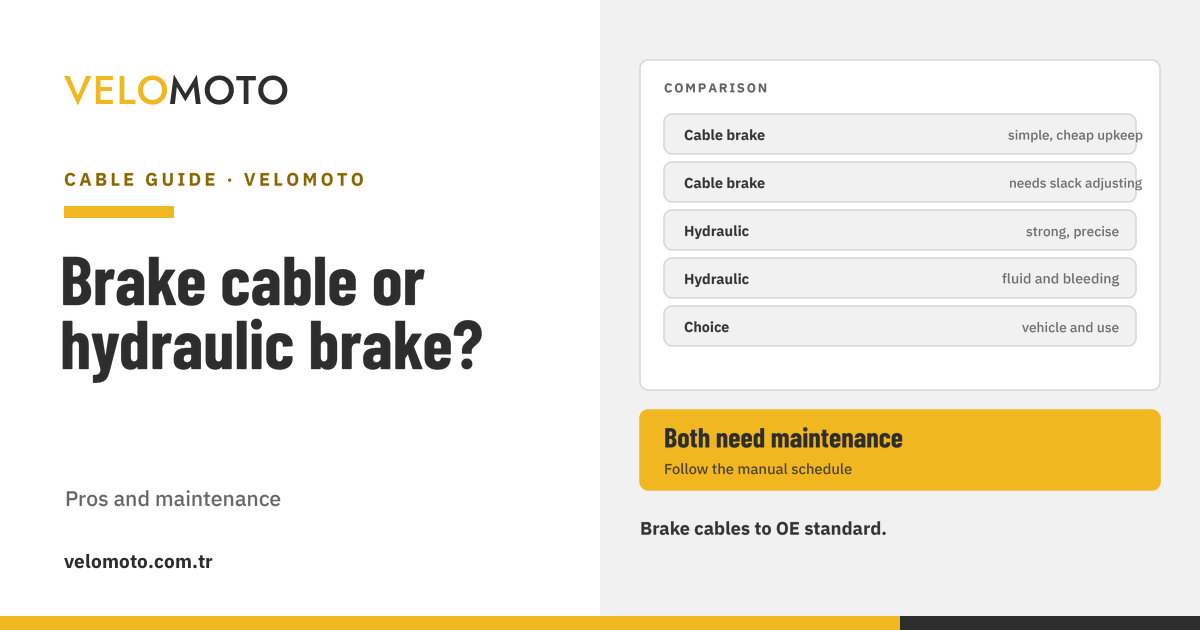
Brake Cable or Hydraulic Brake? Advantages and Maintenance
A cable-operated (mechanical) brake is simple, inexpensive and easy to repair on the road; a hydraulic brake is more powerful, more precise and largely compensates for brake pad wear by itself.
Read the guide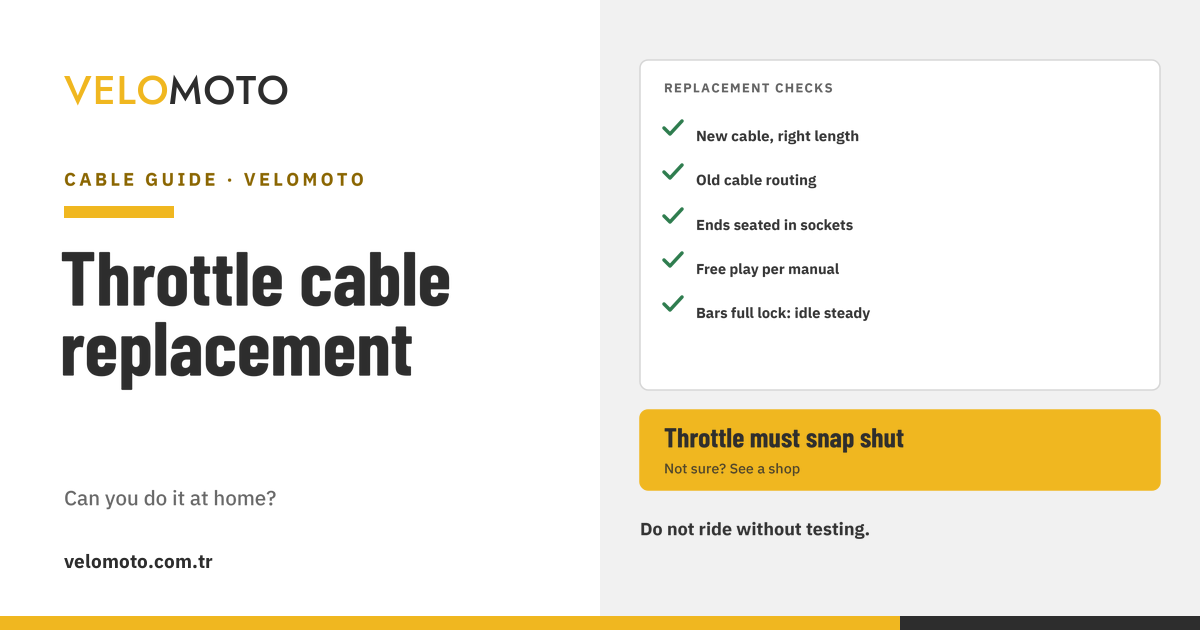
How to Replace a Throttle Cable: Can You Do It at Home?
A throttle cable is replaced with a new cable of the correct size, following the old cable's route, with end fittings that seat fully in their sockets, and with the free play set according to the manual.
Read the guide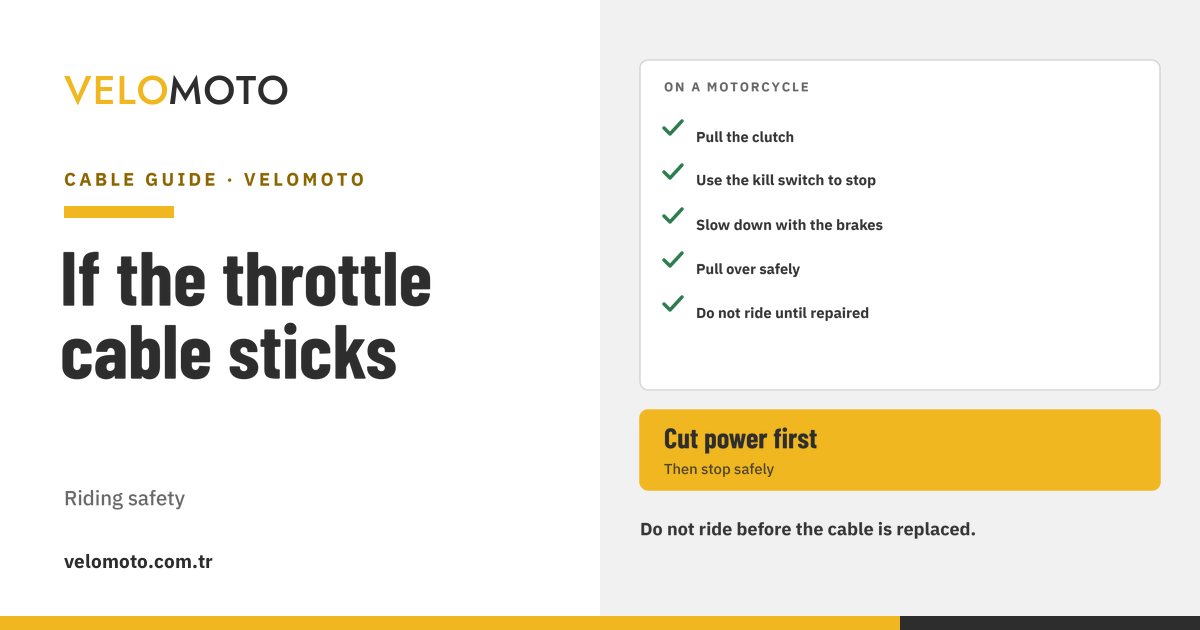
What to Do If the Throttle Cable Sticks Open
If the throttle sticks, first cut the engine's power to the wheels, then use the brakes to bring the vehicle to a stop in a safe place.
Read the guide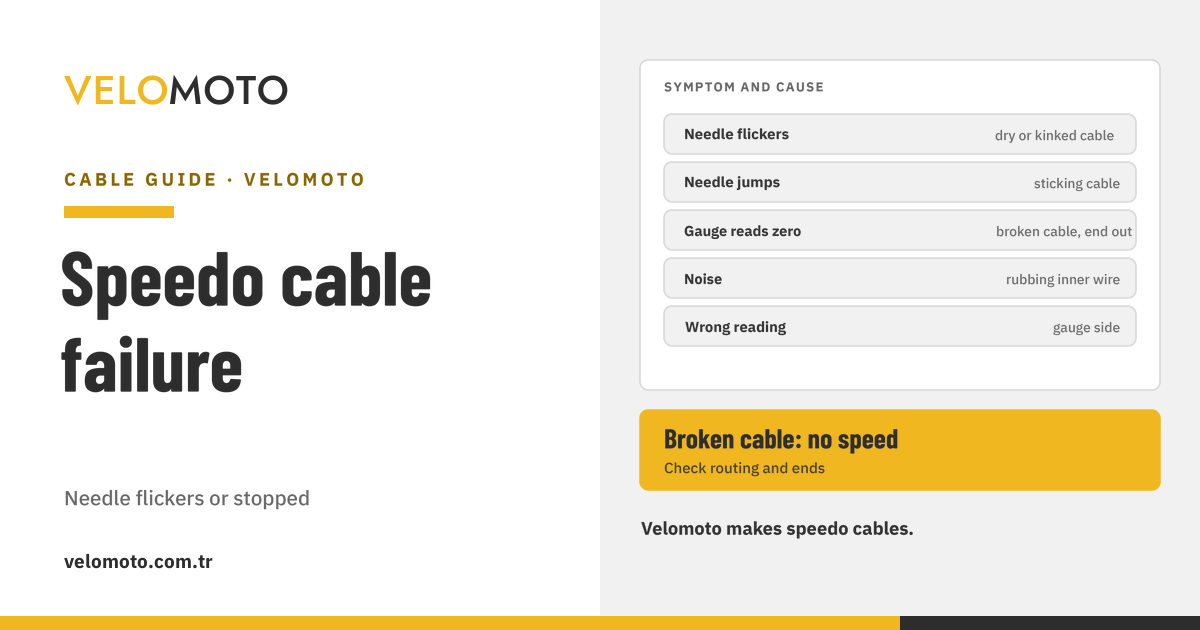
Speedometer Cable Failure: Needle Flickers or Gauge Doesn't Work
On mechanical gauges, a flickering or jumping needle is usually caused by the speedometer cable running dry inside the casing, being kinked, or having a worn end; if the gauge does not work at all, the cable…
Read the guide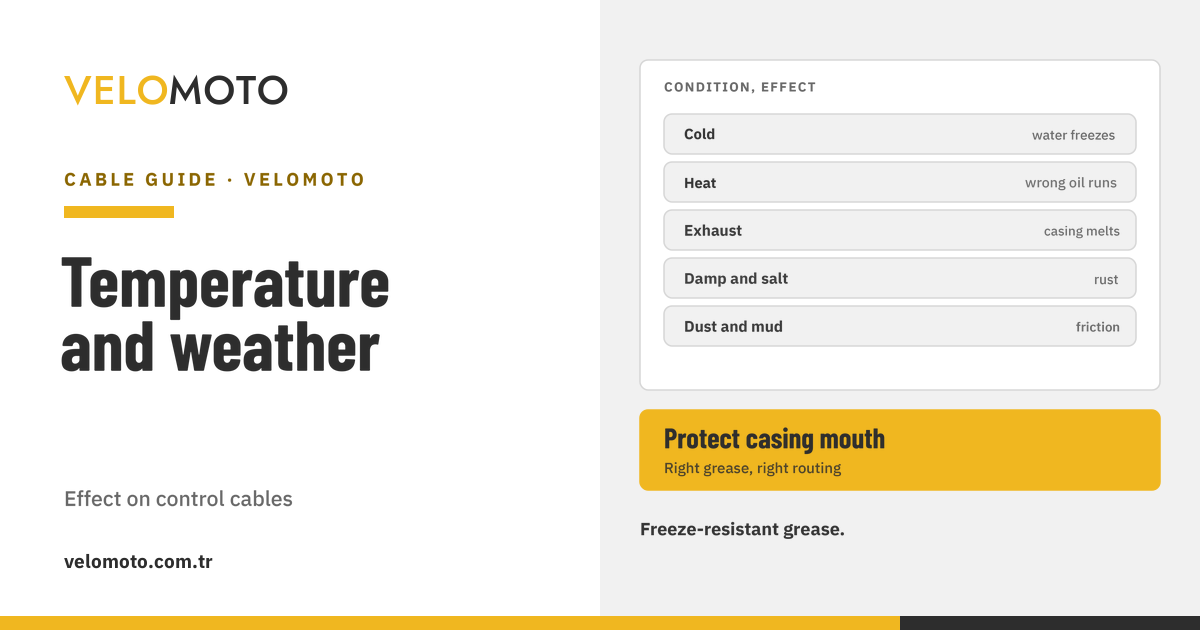
How Temperature and Weather Affect Control Cables
What affects control cables most is water getting into the casing: in the cold it freezes and locks the cable, and combined with moisture and salt it causes rust.
Read the guide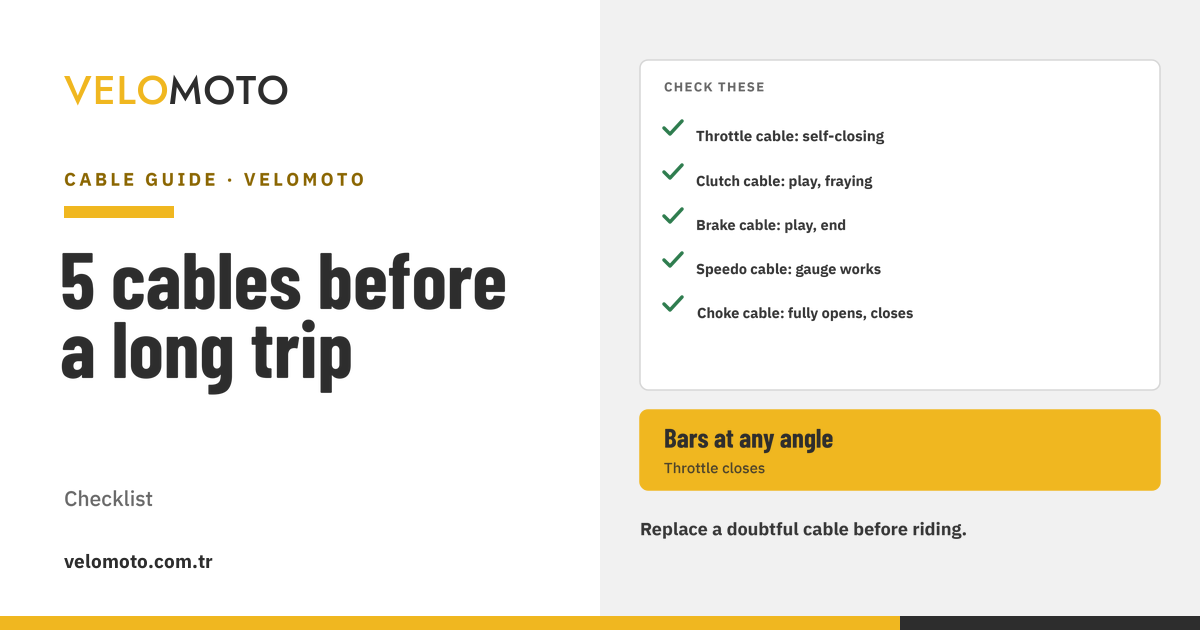
5 Cables to Check Before a Long Trip
Check five cables before a long trip: the throttle cable must close by itself, the clutch and brake cable free play must match the manual, the speedometer cable must drive the gauge, and the choke cable must fully open and close.
Read the guide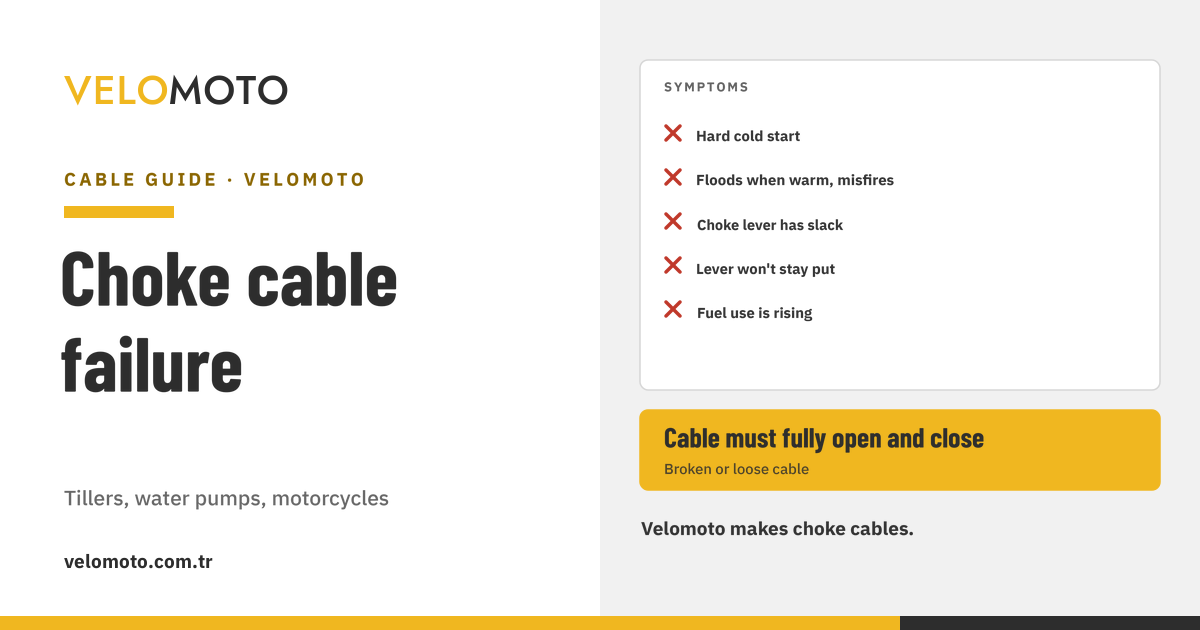
Choke Cable Failure: Symptoms on Tillers, Water Pumps and Motorcycles
The choke cable closes the choke plate in the carburetor to start a cold engine and opens it once the engine warms up; if the cable does not close it fully, the engine is hard to start when cold, and if it does not open it fully, the engine floods once warm and…
Read the guide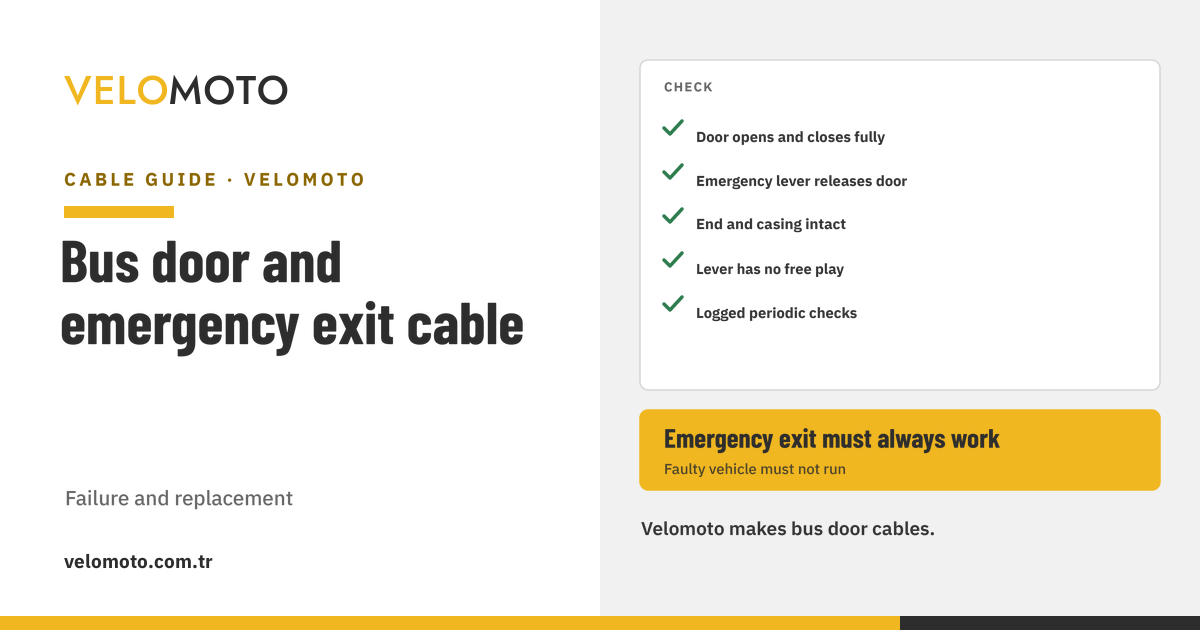
Bus Door Release and Emergency Exit Cables: Failure and Replacement
On a bus, door release and emergency exit cables transmit the movement of the handle or emergency control to the door lock or release mechanism; when the cable breaks, goes slack or binds inside the casing, the door will not open…
Read the guide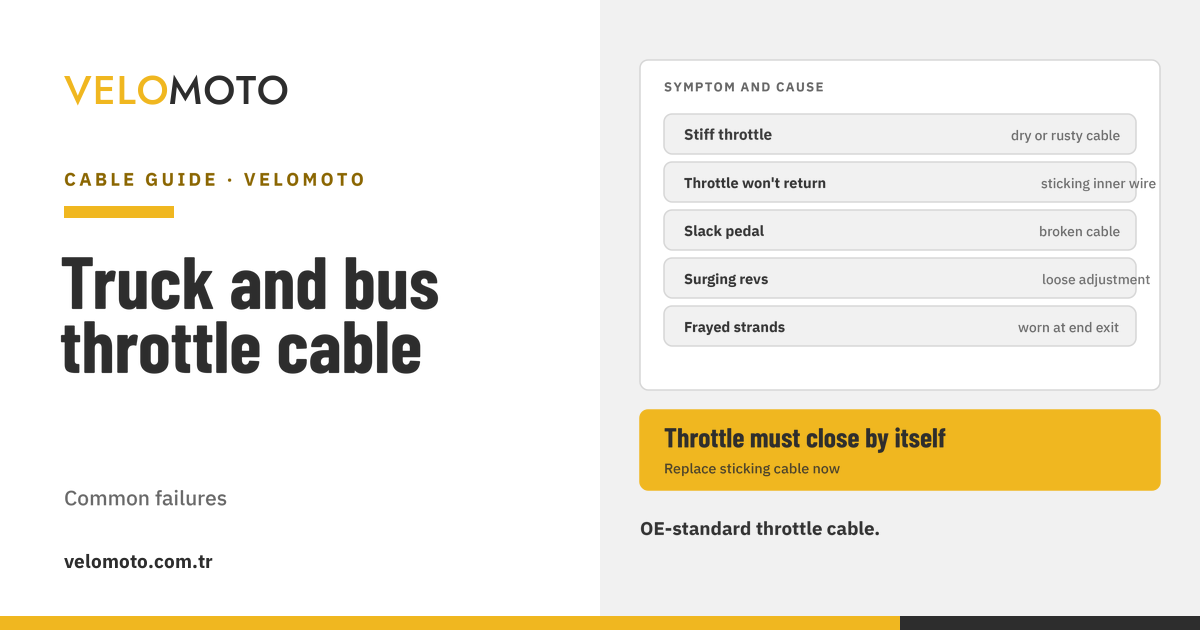
Truck and Bus Throttle Cable Failures
On trucks and buses with a cable-operated throttle, the throttle cable is the first part to check when the pedal gets stiff, does not return when released, or moves without effect.
Read the guide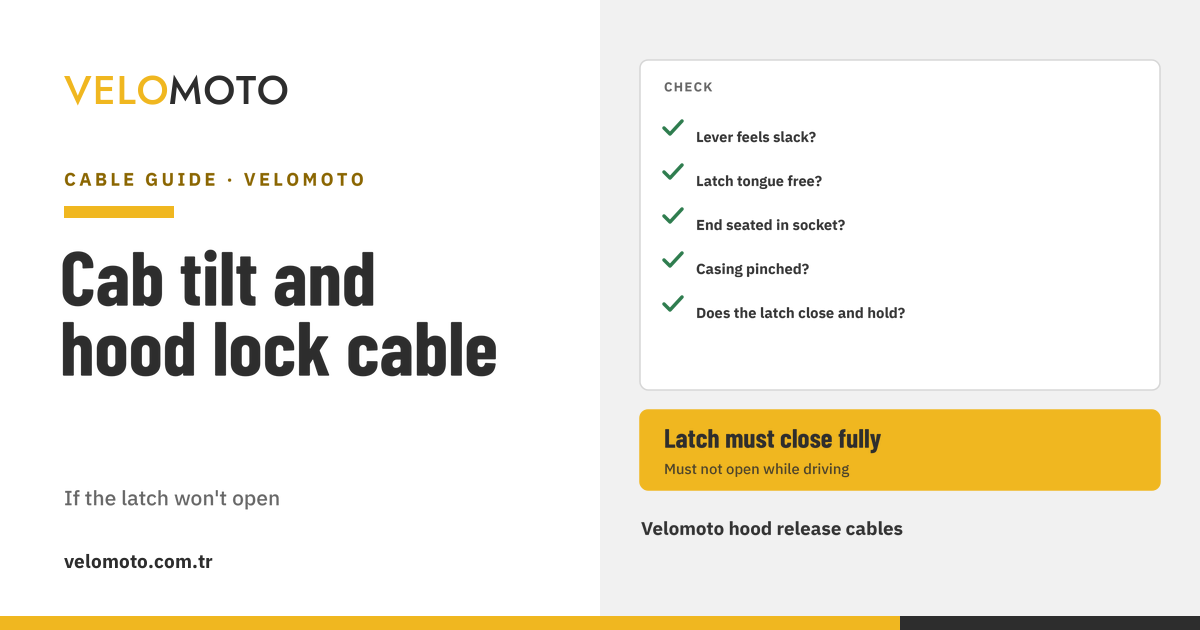
Cab Tilt and Hood Lock Cables
The hood lock, and on some trucks the cab lock, is released by a cable pulled from a lever in the driver's area or on the side of the vehicle; when the cable breaks, stretches or binds, the lock will not open.
Read the guide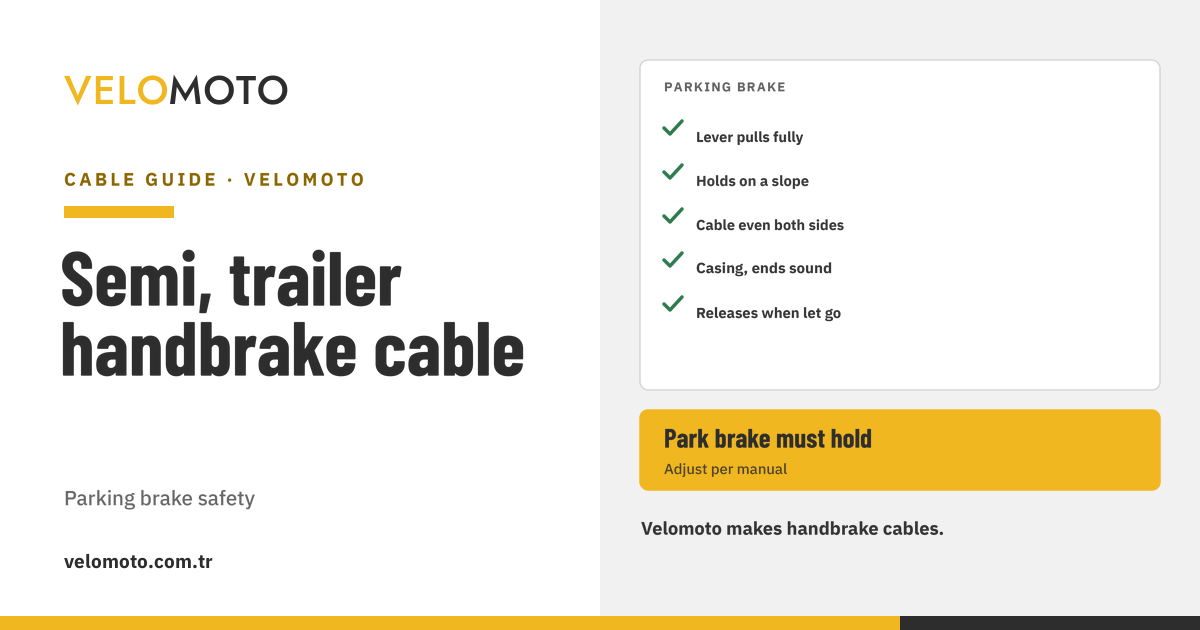
Semi-Trailer and Trailer Hand Brake Cables
On trailers and some semi-trailers with a cable-operated parking brake, the hand brake lever applies the wheel brakes through brake cables; when a cable stretches, rusts and binds, or the two sides do not pull evenly, the parking brake…
Read the guide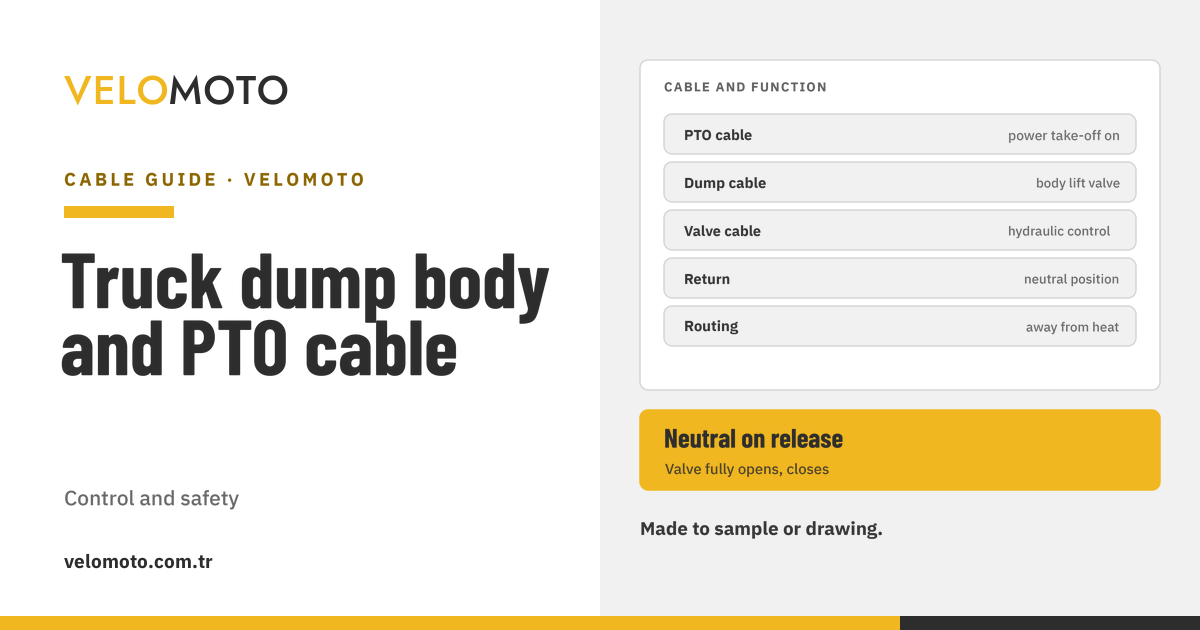
Truck Dump Body and PTO Control Cables
On dump trucks, the PTO (power take-off) cable engages power from the transmission to the hydraulic pump, and the dump valve cable controls raising, holding and lowering the body.
Read the guide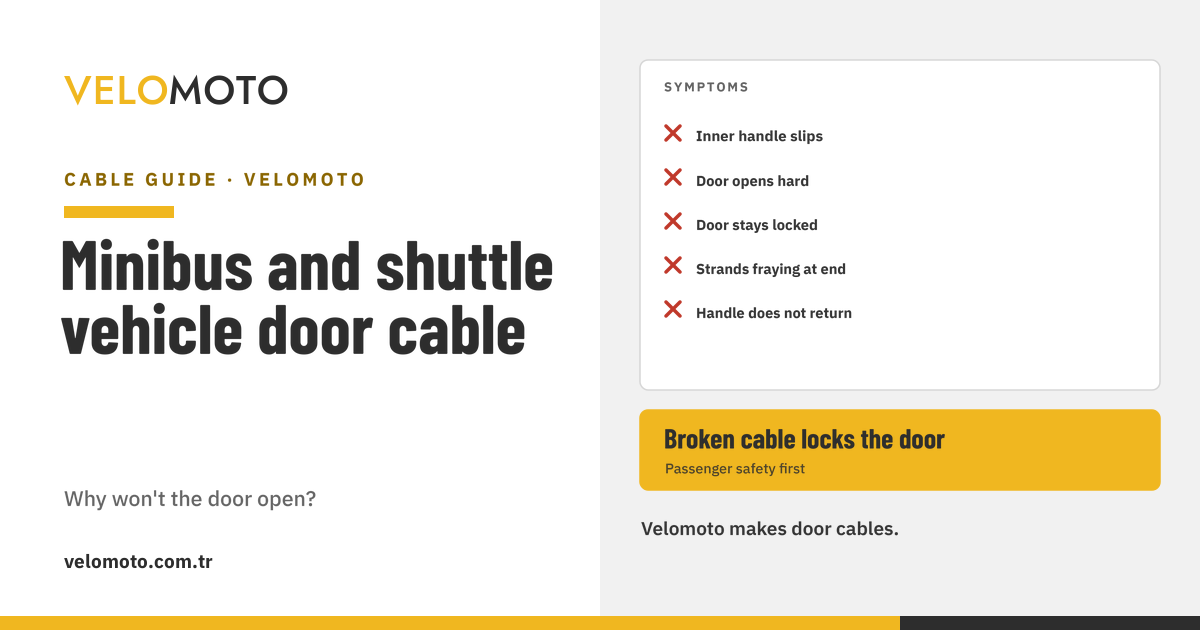
Minibus and Shuttle Vehicle Door Cables
On minibuses and shuttle vehicles, the door handle is connected by cables to the door lock and to the front and rear locks of the sliding door; when one of the cables breaks or stretches, the door will not open, opens with difficulty or stays…
Read the guide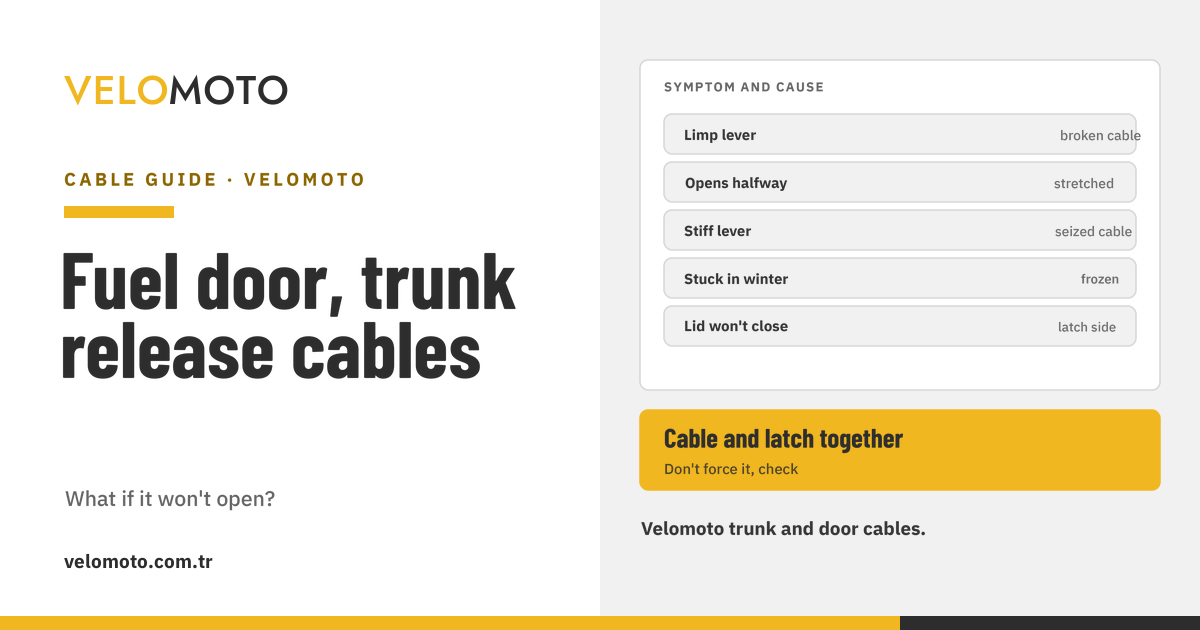
Fuel Door and Trunk Release Cables
On vehicles with mechanical release, the fuel door and trunk are opened by a cable pulled from a lever next to the driver's seat; if the lever moves without effect, the cable is broken or its end has come off, and if the lid only opens partway, the cable may be stretched or…
Read the guide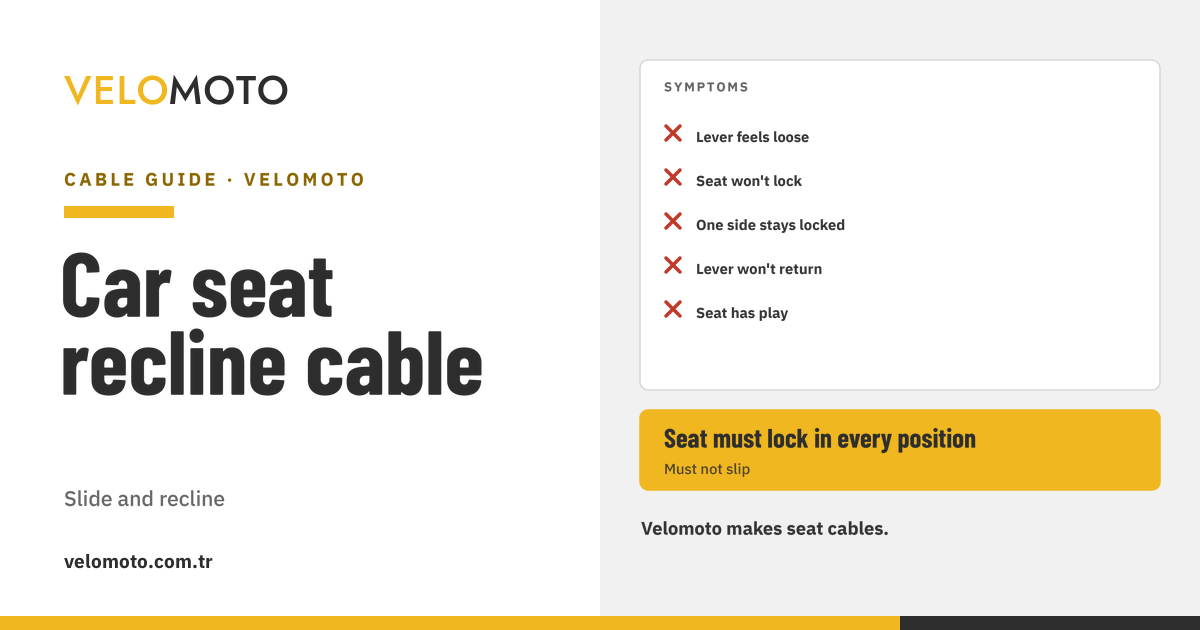
Car Seat Recline and Slide Cables
On manually adjusted car seats, the backrest recline, seat slide and rear seat folding locks are released by cables pulled from a lever; when the cable breaks the lock will not open, and when the cable stays tight the lock does not fully…
Read the guide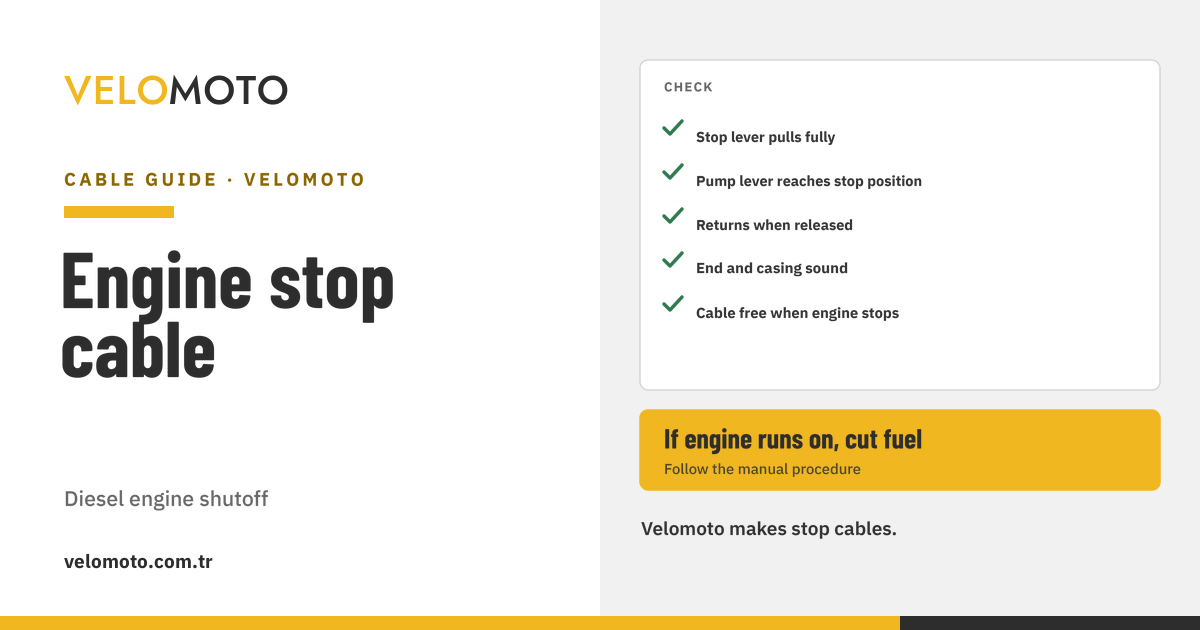
Engine Stop (Shutoff) Cable: Failures on Diesel Engines
On diesel engines with a mechanical stop system, the engine is shut off by a cable that pulls the stop lever on the fuel injection pump; when the cable breaks, stretches or binds, the lever does not reach the stop position and the engine does not stop.
Read the guide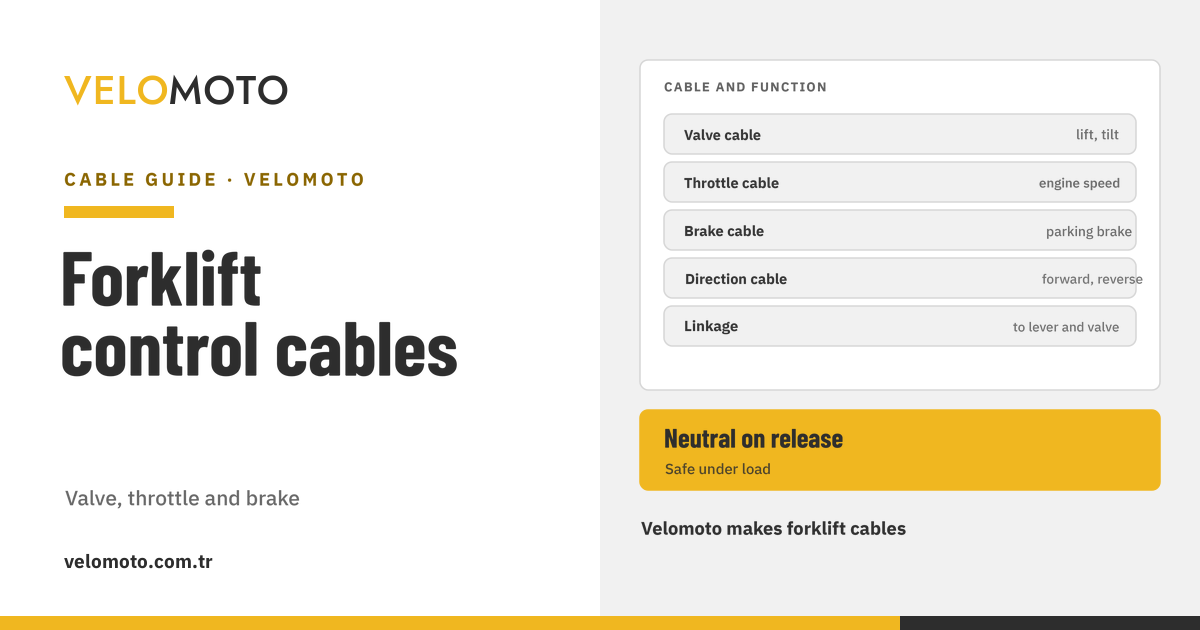
Forklift Control Cables: Valve, Throttle and Brake
On forklifts, control cables carry movement from the levers to the lift and tilt valves, engine speed control, parking brake and, on some models, direction selection.
Read the guide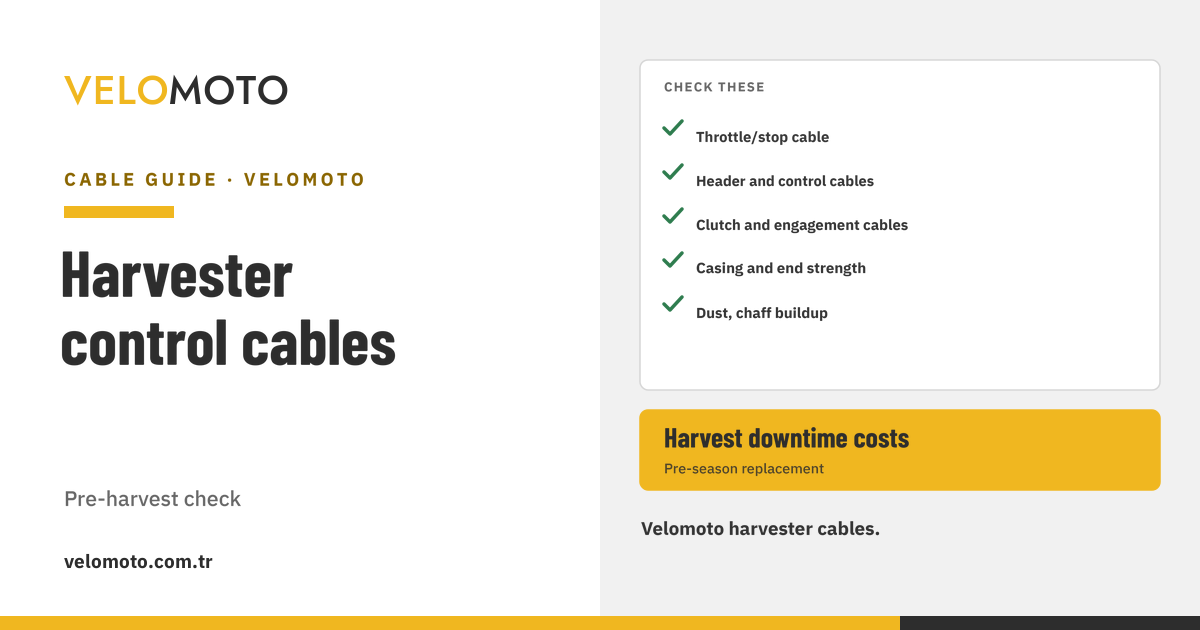
Combine Harvester Control Cables
On combine harvesters, the engine throttle and stop, the clutches, the parking brake and some header and unloading controls work with cables; checking the cables before harvest prevents the machine from breaking down mid-season.
Read the guideWhere can I buy the products? We do not sell directly to end users. You can buy the products mentioned in our guides from our authorised dealers.
See our dealers