
Velomoto knowledge centre
Technical guides
Guides on choosing, maintaining and replacing brakes, chains, variator belts and control cables, written with the technical data of our brands. Guides are currently in Turkish.
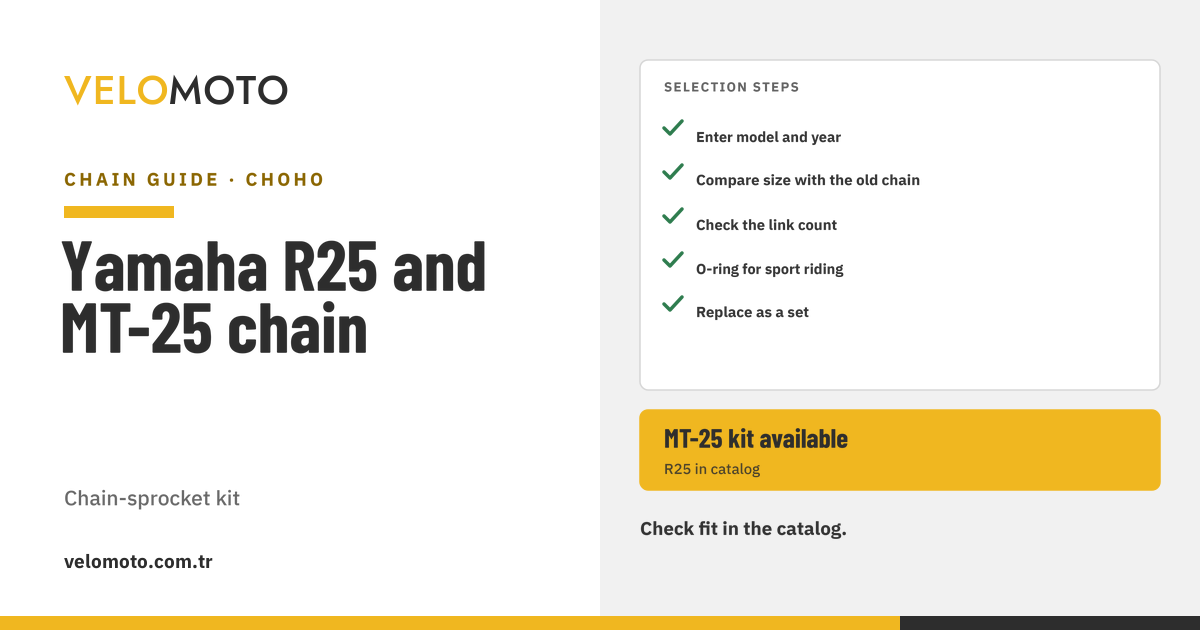
Yamaha R25 and MT-25 Chain and Sprocket Kit
The Choho catalog includes a chain and sprocket kit for the Yamaha MT-25; the kit supplies the chain, front sprocket and rear sprocket together.
Read the guide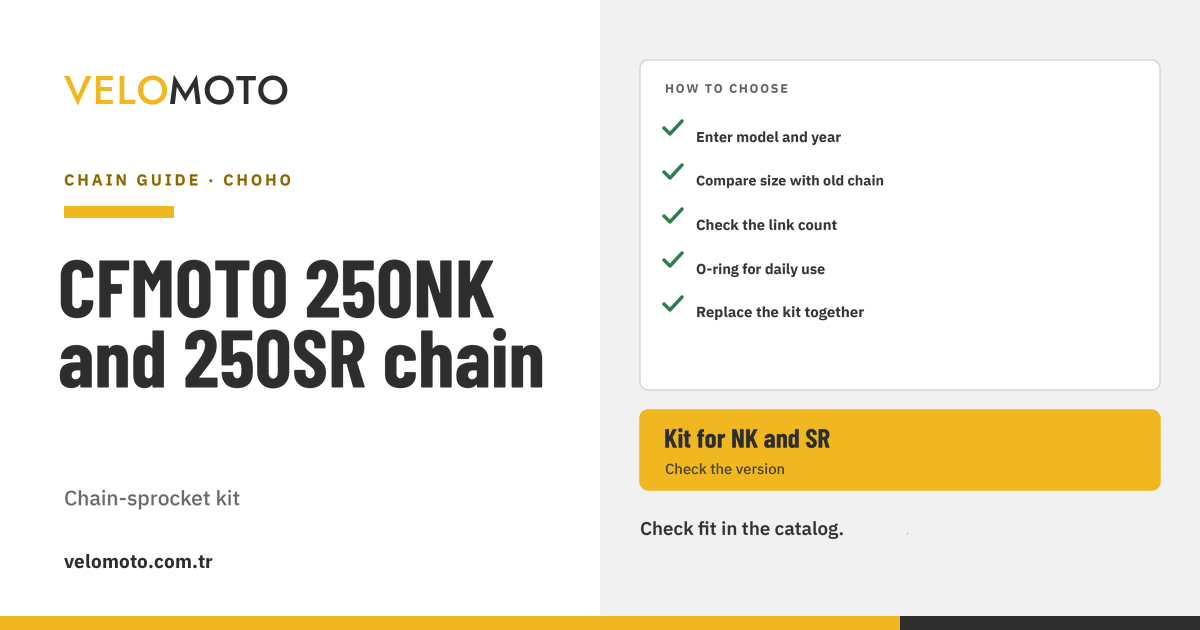
CFMOTO 250NK and 250SR Chain and Sprocket Kit
The Choho catalog includes a chain and sprocket kit for the CFMOTO NK and SR; the kit supplies the chain, front sprocket and rear sprocket together.
Read the guide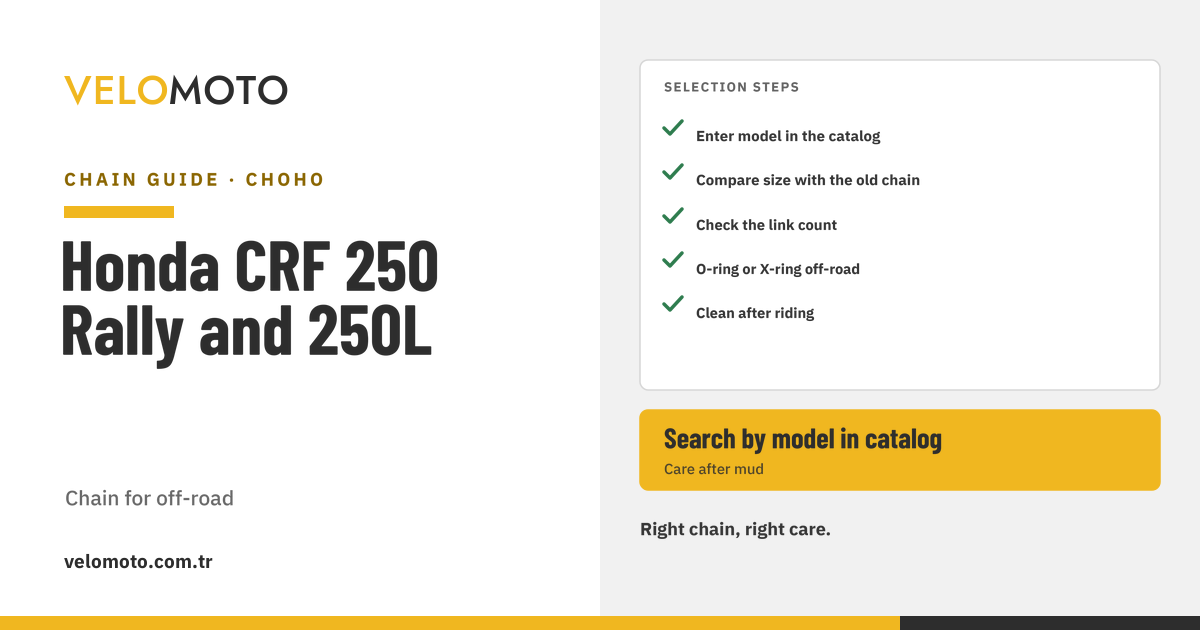
Honda CRF 250 Rally and CRF 250L Chain
To find the right Choho chain for the Honda CRF 250 Rally and CRF 250L, search the Choho catalog by motorcycle make and model or by the size of your old chain.
Read the guide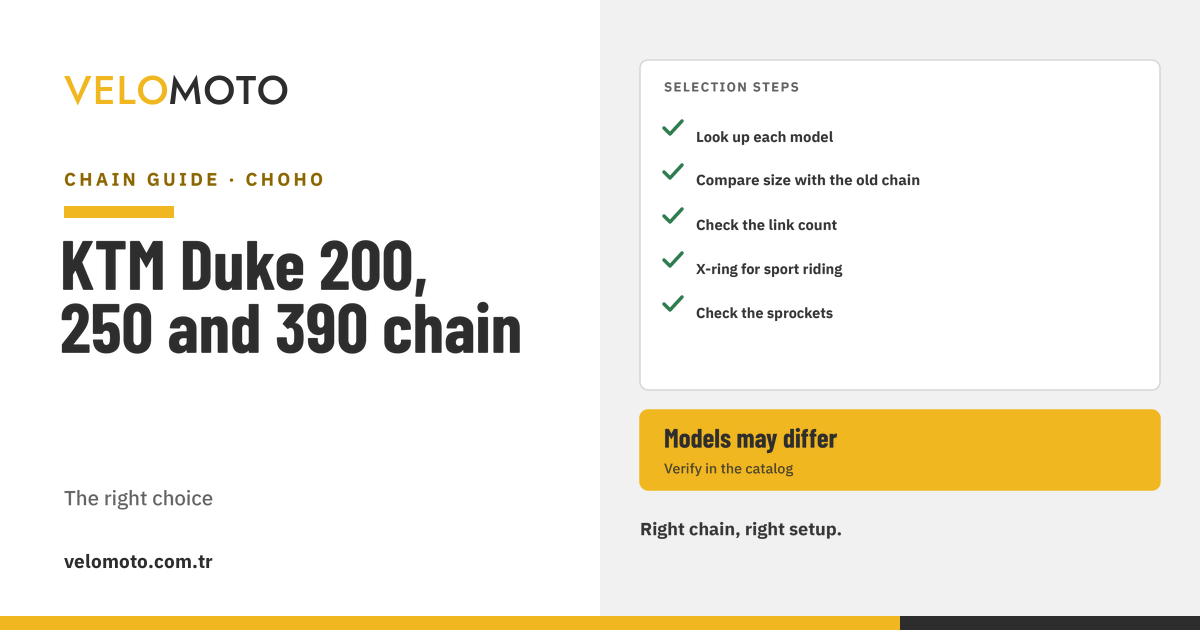
KTM Duke 200, 250 and 390 Chain
To find the right Choho chain for the KTM Duke 200, 250 and 390, search the Choho catalog by motorcycle make and model or by the size of your old chain.
Read the guide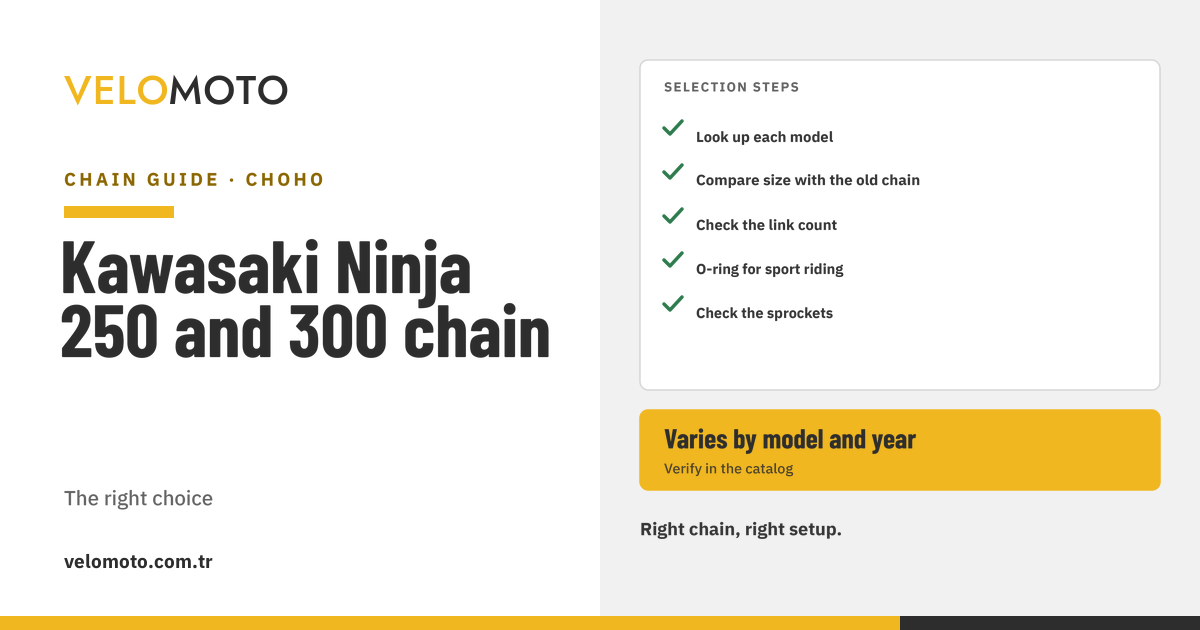
Kawasaki Ninja 250 and 300 Chain
To find the right Choho chain for the Kawasaki Ninja 250 and 300, search the Choho catalog by motorcycle make and model or by the size of your old chain.
Read the guide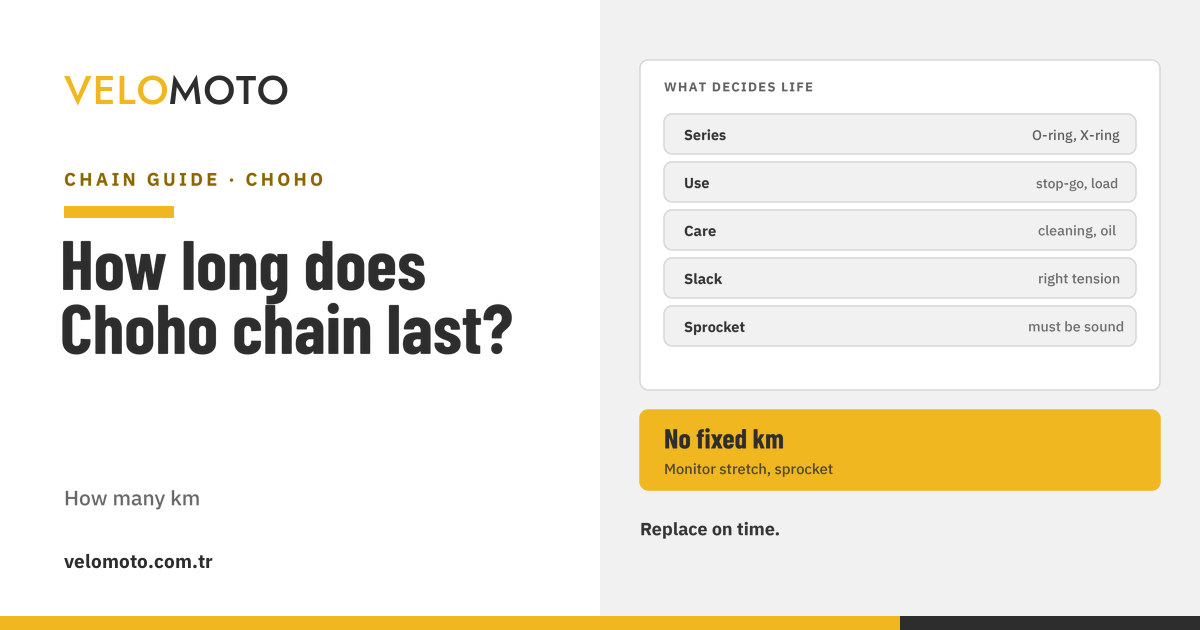
What Determines Choho Chain Life?
There is no fixed mileage for the life of a Choho chain; it depends on the series chosen, how the bike is ridden, the maintenance routine, the slack setting and the condition of the sprockets.
Read the guide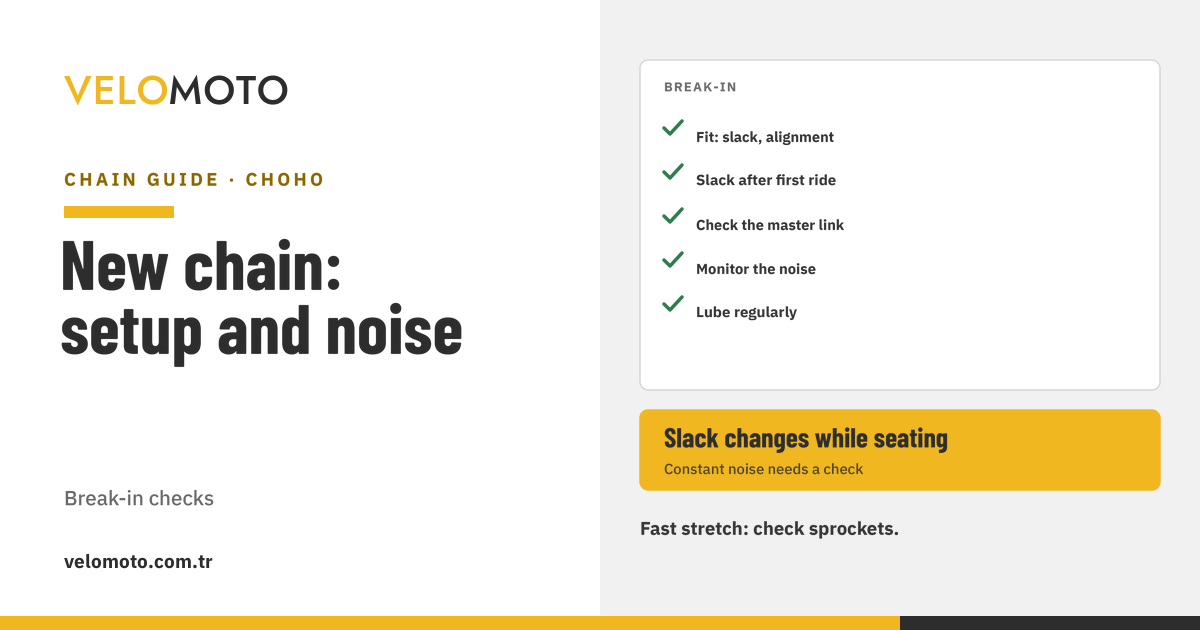
A New Chain: First Stretch, First Adjustment and First Noise
During the first period of use, the parts of a newly fitted chain bed in and the slack may change somewhat; that is why the slack should be rechecked and adjusted after the first few rides.
Read the guide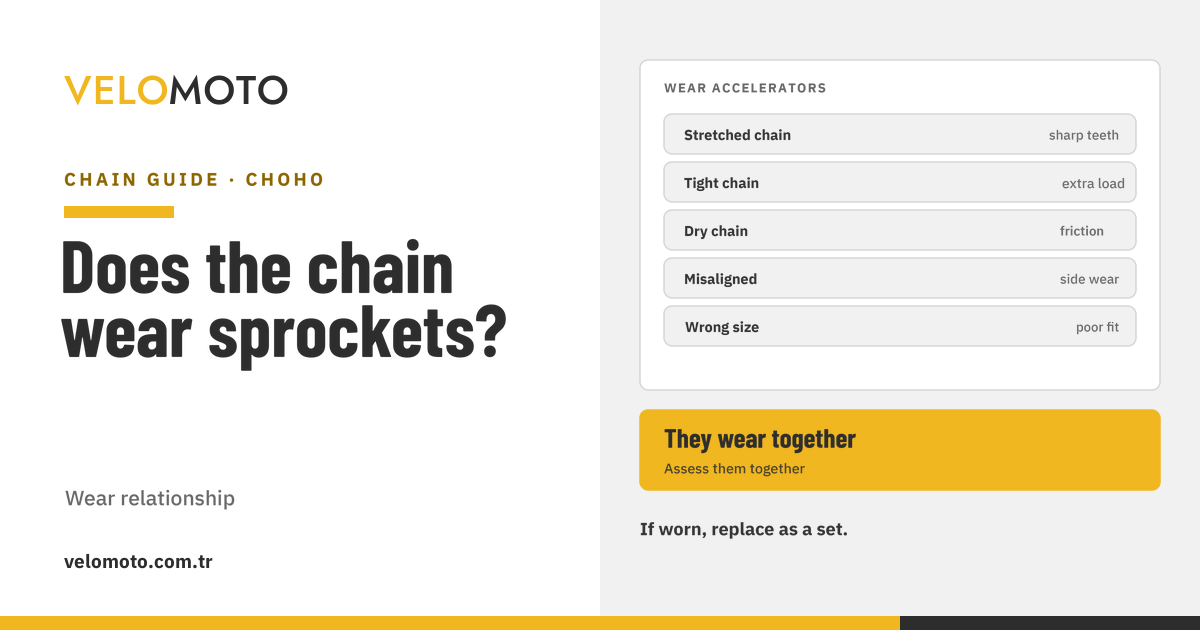
Does a Chain Wear Out the Sprockets Early?
A sound chain of the correct size wears the sprockets evenly; what usually ruins sprockets early is a stretched chain, incorrect slack and running dirty and dry.
Read the guide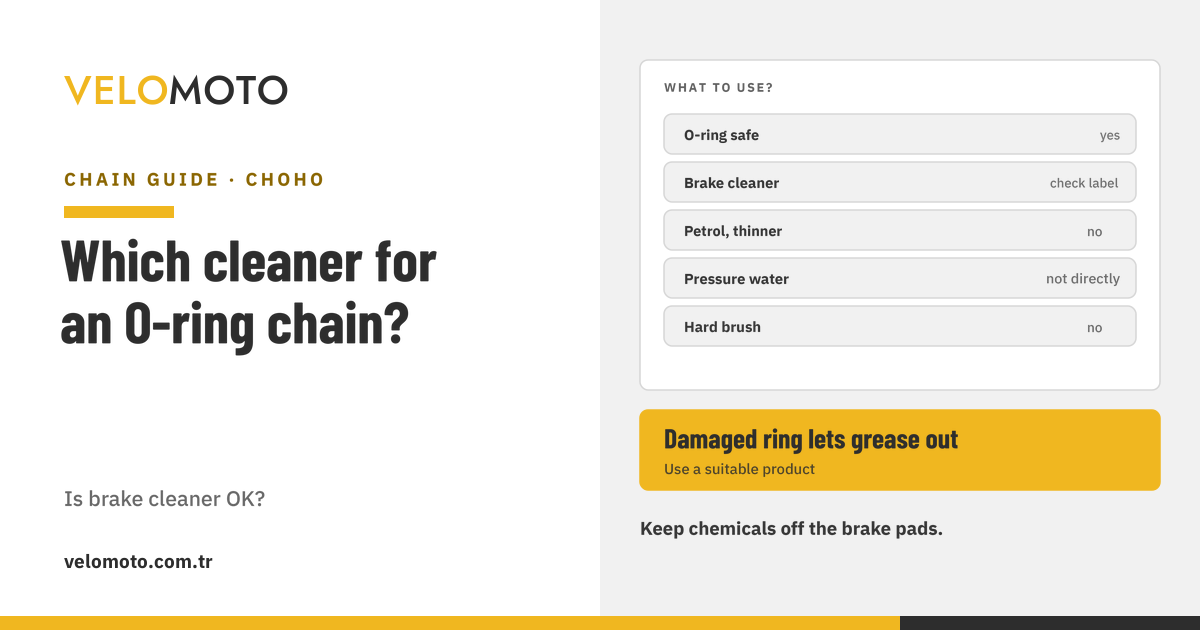
Can You Use Chemical Cleaners and Brake Cleaner on O-Ring and X-Ring Chains?
Clean O-ring and X-ring chains only with cleaners labeled as suitable for these chains; solvents with unsuitable ingredients can damage the rings.
Read the guide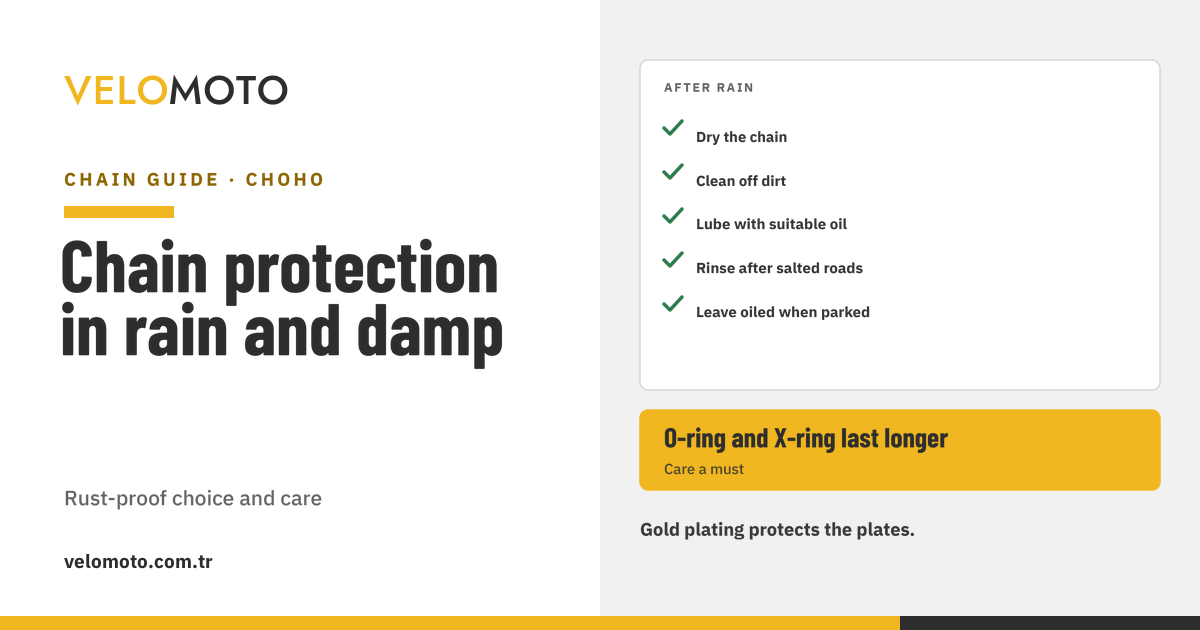
Choosing a Chain for Rain, Humidity and Rust
In rainy and humid regions, an O-ring or X-ring chain resists corrosion better because it keeps the lubricant inside; gold plating also protects the plates, but no chain is fully protected from rust…
Read the guide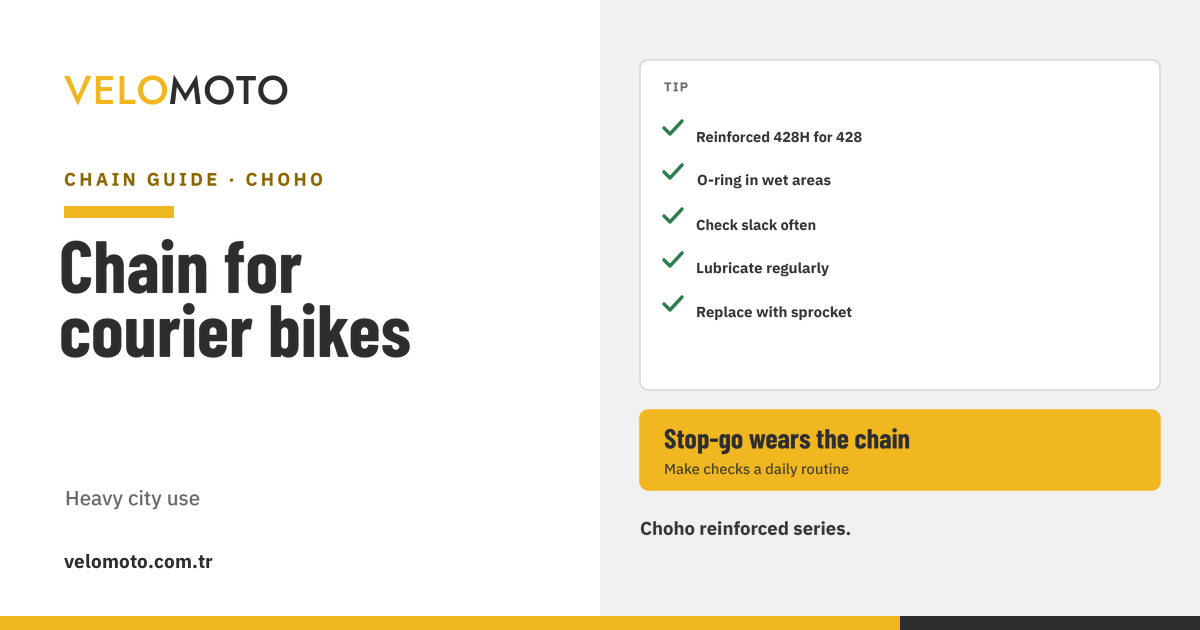
Choosing a Chain for Couriers and Heavy City Use
In courier work and heavy city use, the chain wears out quickly from frequent stop-and-go, loads and high daily mileage; for this use a reinforced (H) or O-ring series and frequent checks are recommended.
Read the guide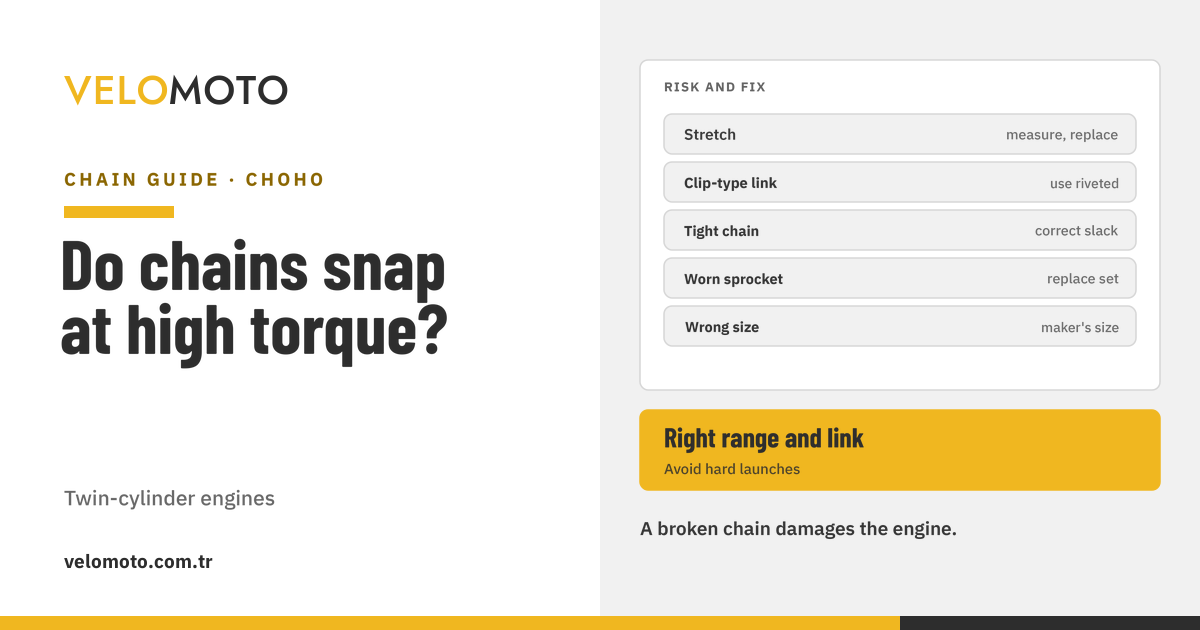
Chain Breakage Risk on High-Torque and Twin-Cylinder Engines
On high-torque motorcycles the chain takes sudden, heavy loads; a chain of the correct size and suitable series, with a riveted chain lock and correct slack, carries this load safely, and the risk of breakage is usually raised by stretch, the wrong…
Read the guide
Yamaha MT-07 and Tracer 7 Chain
To find the right Choho chain for the Yamaha MT-07 and Tracer 7, search the Choho catalog by motorcycle make and model or by the size of your old chain.
Read the guide
Chain Selection and Installation Checklist for Workshops
A correct chain replacement in the workshop comes from getting the right size and link count, a series suited to the use, a suitable chain lock, a sprocket check, correct slack and wheel alignment all at once.
Read the guide
Choho Dealership for Wholesalers and Spare Parts Retailers
Wholesalers, spare parts retailers and workshops that want to sell Choho products can apply for a dealership with Velomoto, the official distributor in Turkey.
Read the guide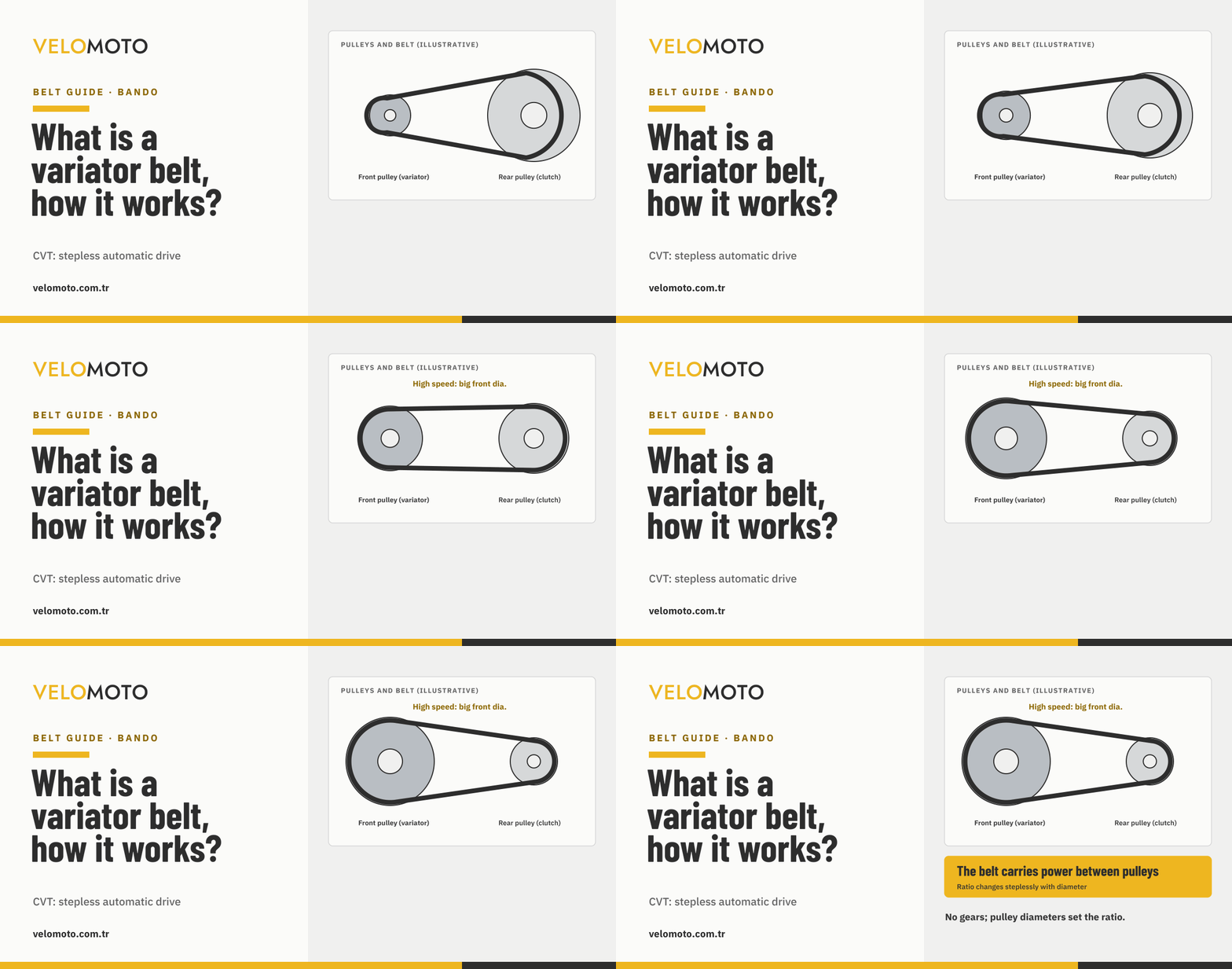
What Is a Variator Belt and How Does a CVT System Work?
A variator belt is the V-section belt that carries engine power to the rear wheel in the CVT (continuously variable) transmission of scooters and ATVs/UTVs.
Read the guide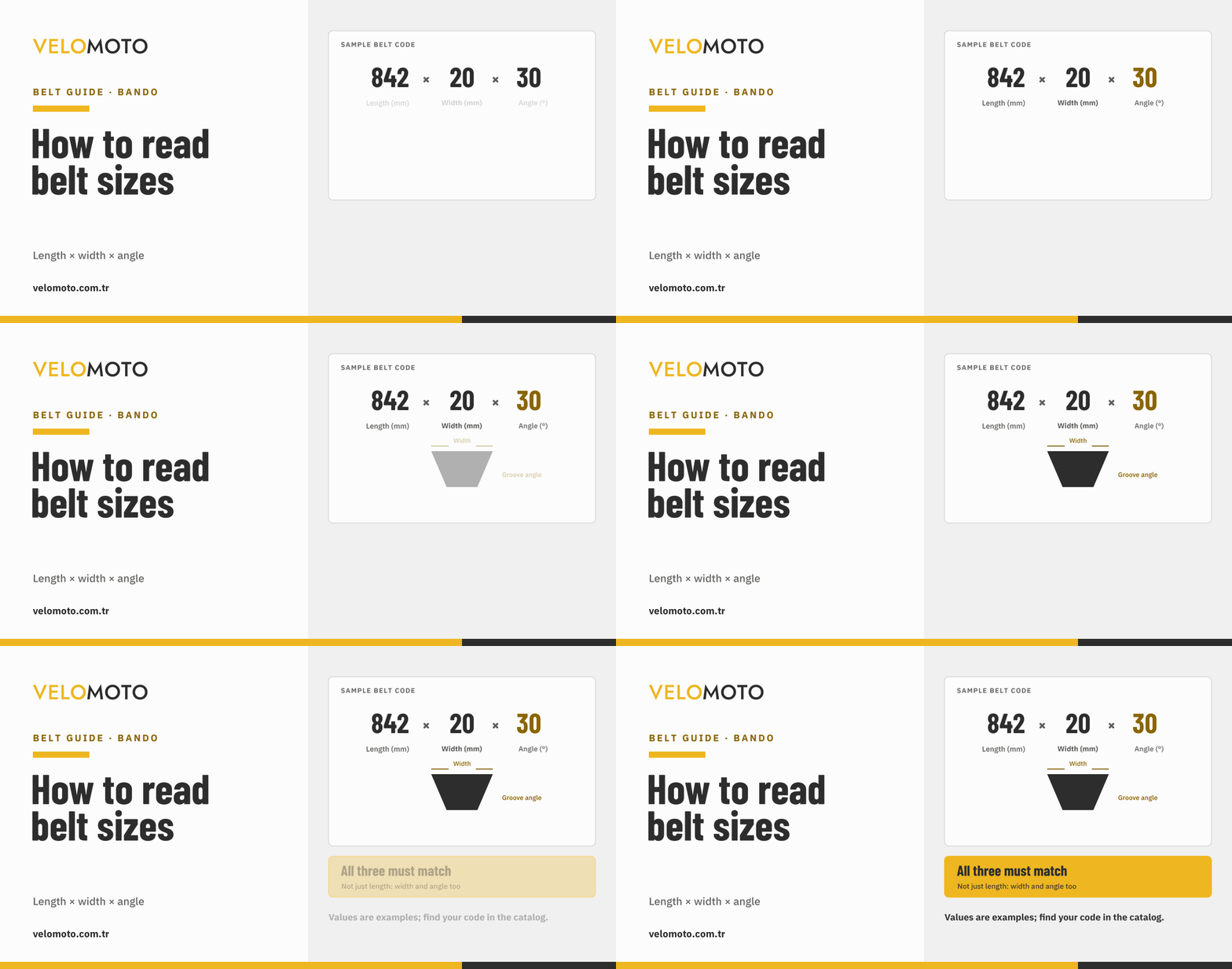
How to Read Variator Belt Sizes
Variator belt sizes are usually written as three numbers: length × width × angle.
Read the guide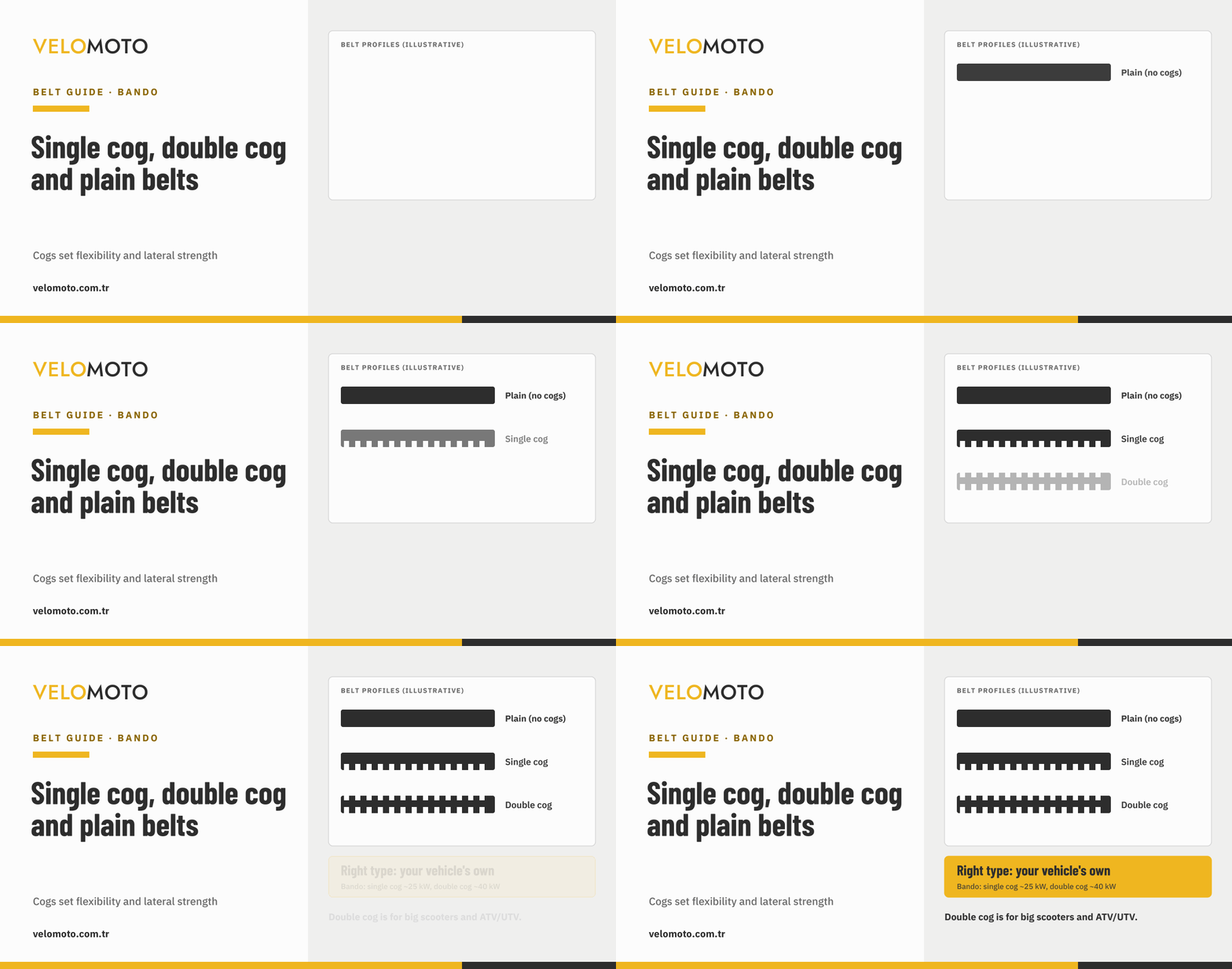
Single-Cogged, Double-Cogged and Plain Variator Belts: The Differences
Variator belts fall into three types by profile: plain (no cogs), single-cogged (cogs on the bottom) and double-cogged (cogs on the bottom and top).
Read the guide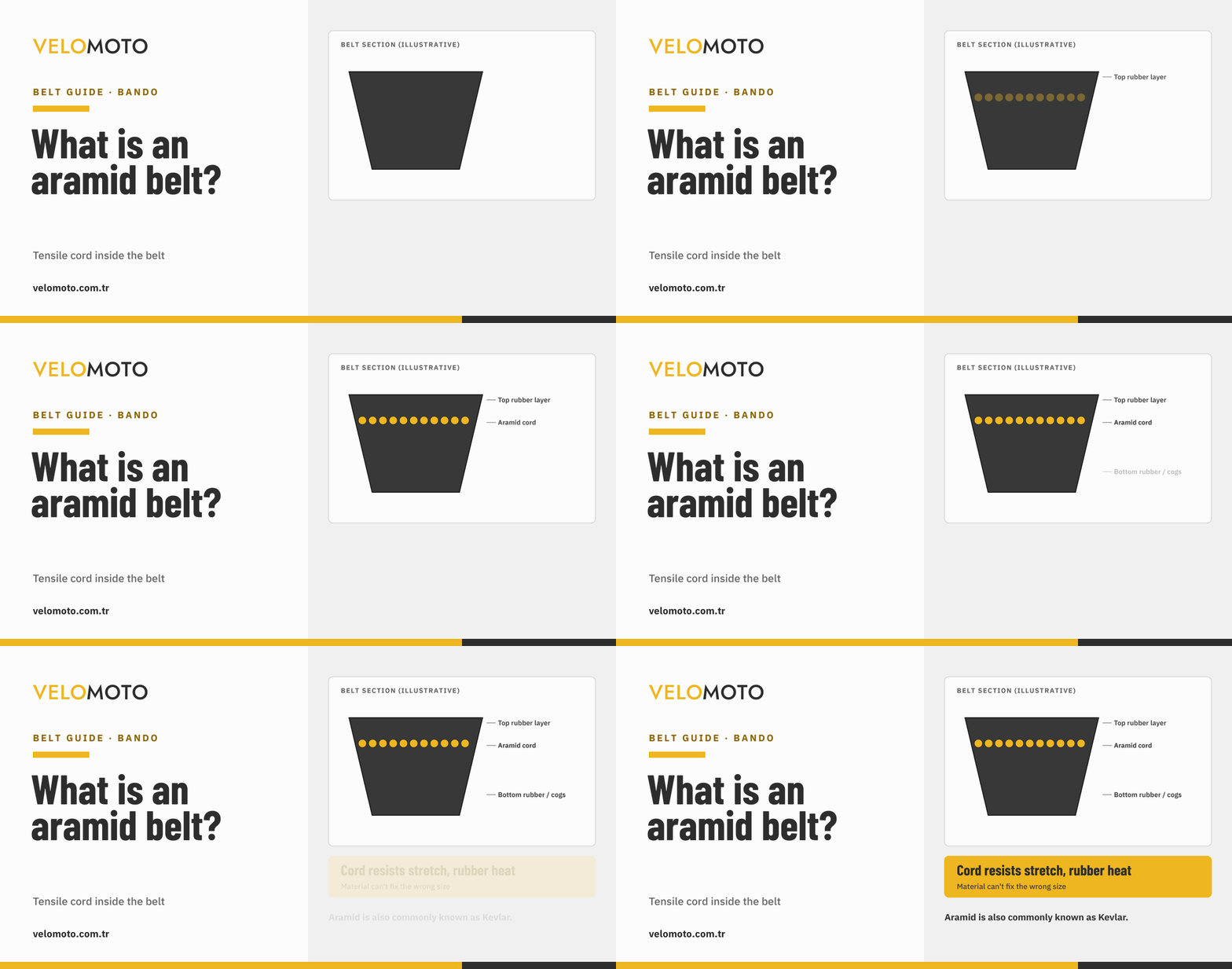
What Is an Aramid-Reinforced Variator Belt?
An aramid-reinforced belt is a variator belt whose inner cord, which carries the tensile load, is made of aramid fibers.
Read the guide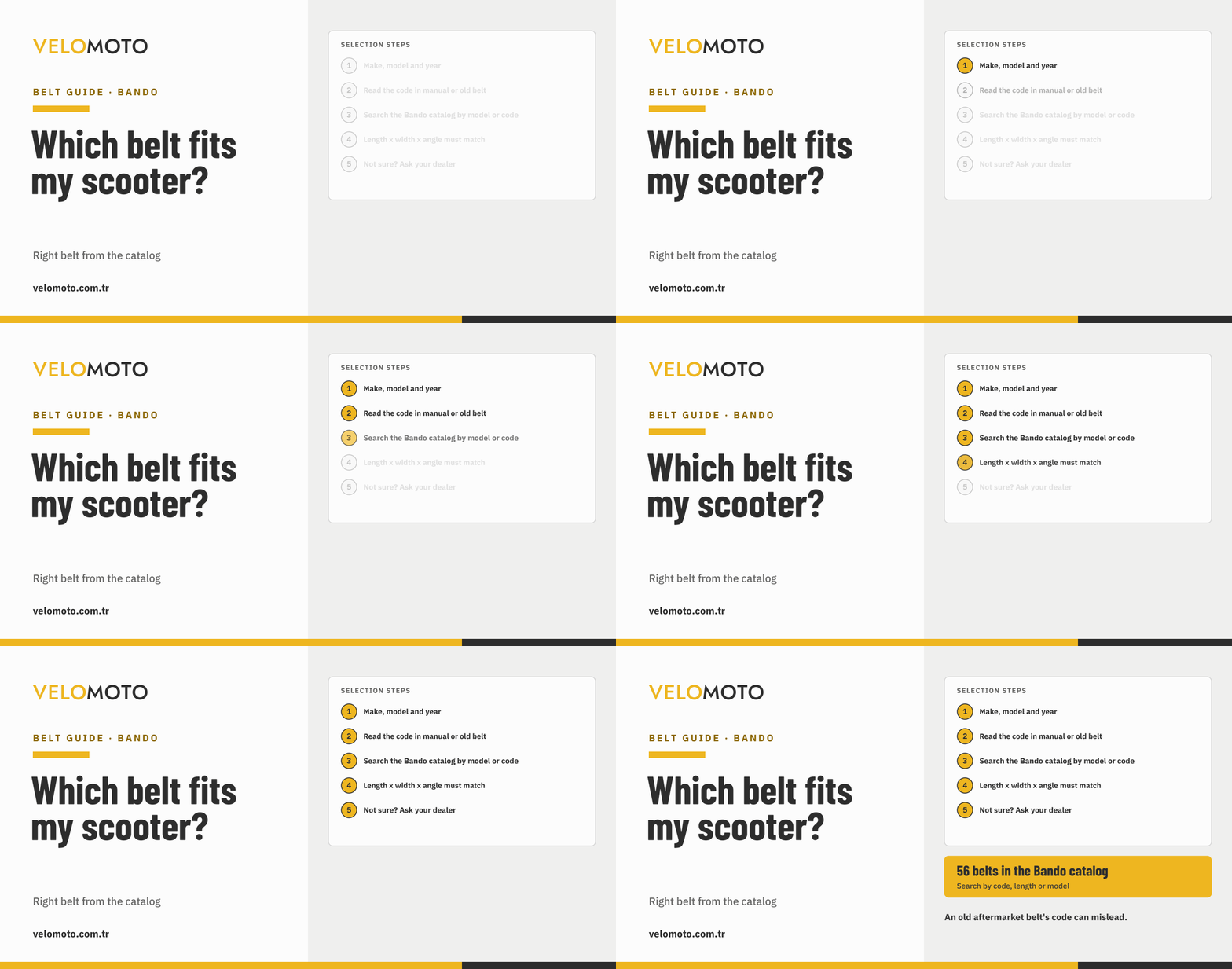
Which Belt Fits My Scooter? Choosing the Right Belt from the Bando Catalog
The safest way to find the belt that fits your scooter is to search the catalog by make, model and year.
Read the guide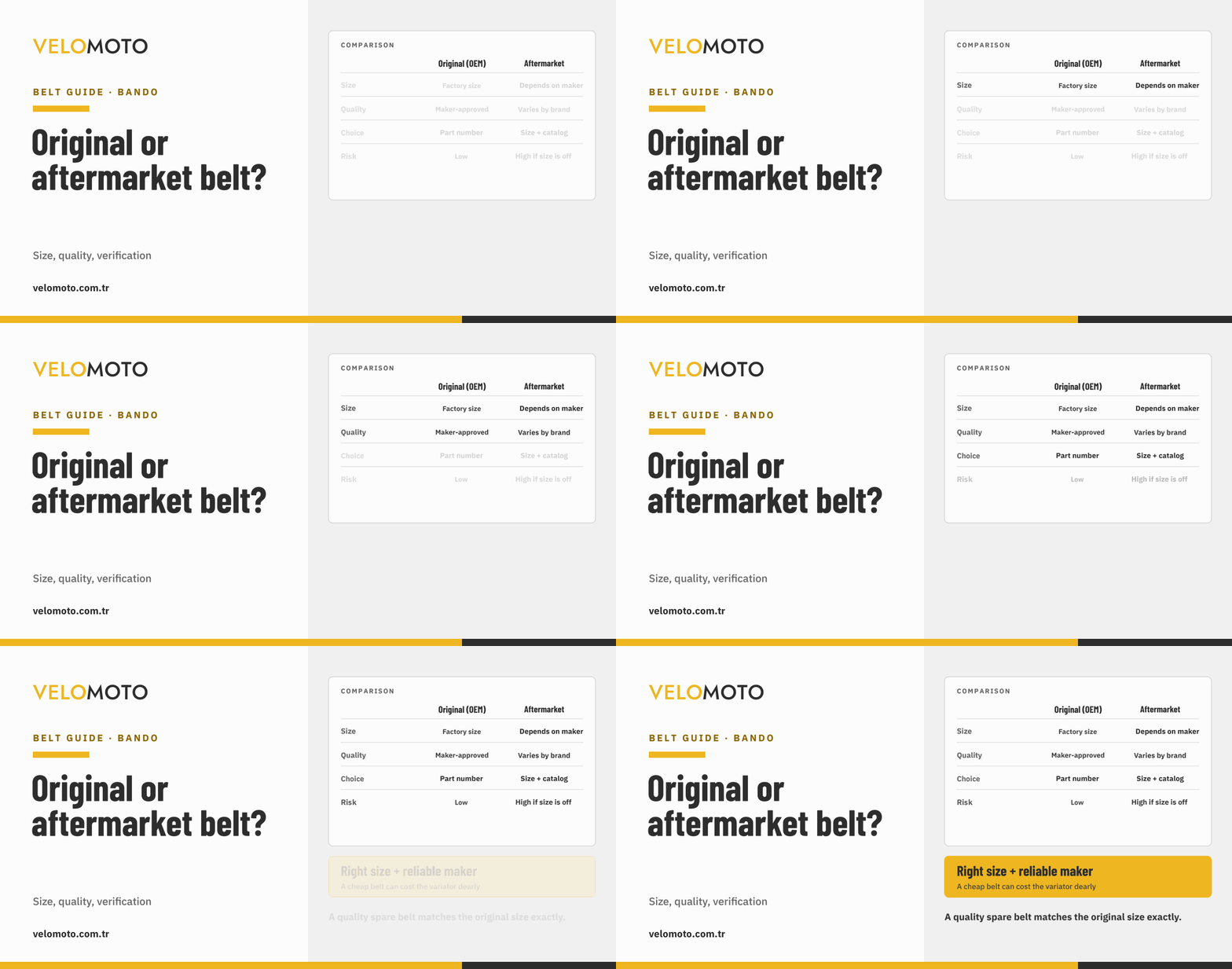
Original (OEM) vs. Aftermarket Variator Belts: The Difference
An original (OEM) belt is the belt the motorcycle manufacturer fits to the vehicle at the factory, or its replacement part; an aftermarket belt is a replacement belt of the same size made by another manufacturer.
Read the guide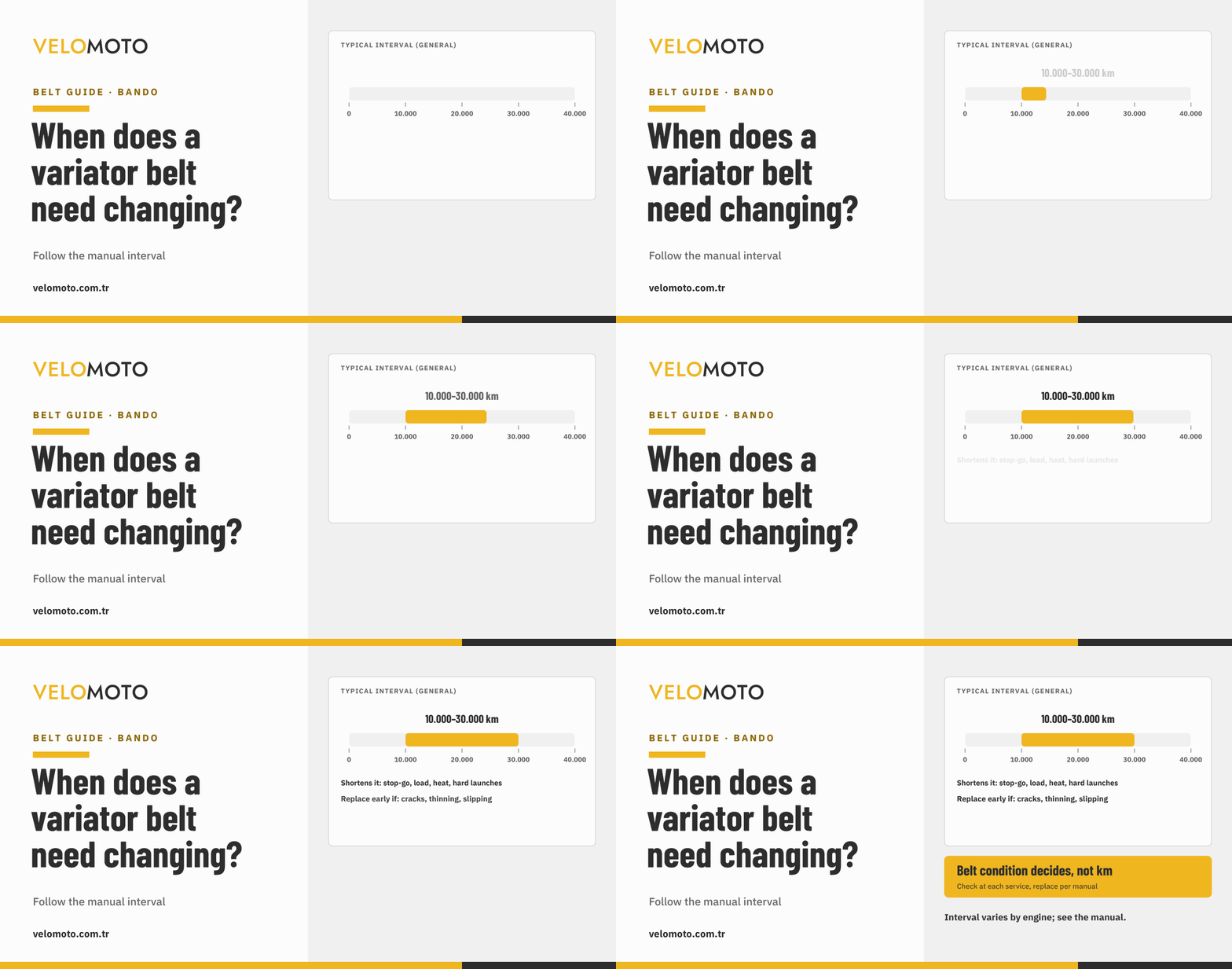
How Many km Before a Variator Belt Needs Replacing?
The replacement interval for a variator belt is set by the motorcycle manufacturer; depending on engine size, it is generally given as roughly 10,000 to 30,000 km.
Read the guide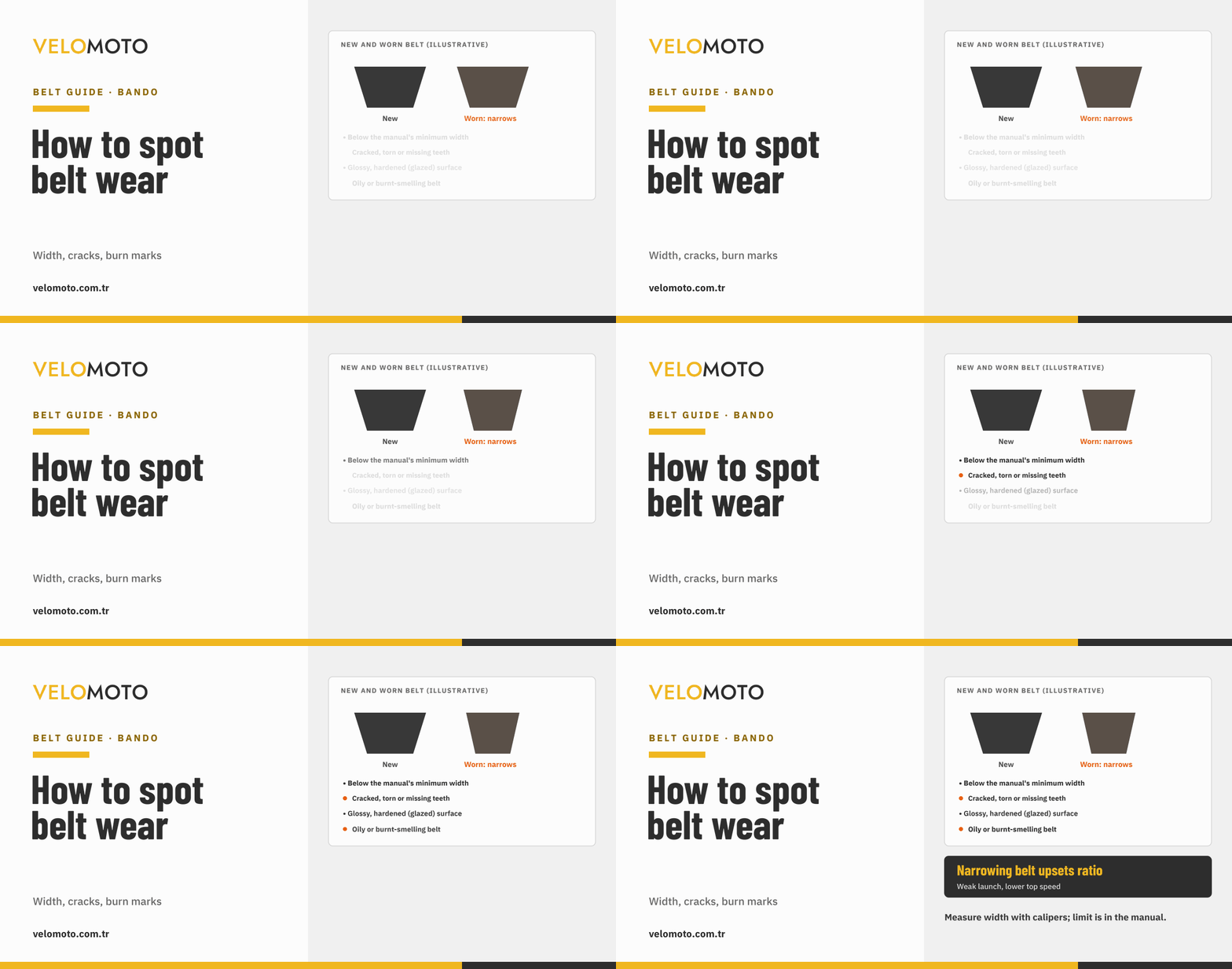
How to Tell If a Variator Belt Is Worn: Measuring the Width
As a variator belt wears, its side faces thin and the belt gets narrower; the most reliable check is to measure the belt's top width with calipers and compare it with the minimum value (service limit) in the manual.
Read the guide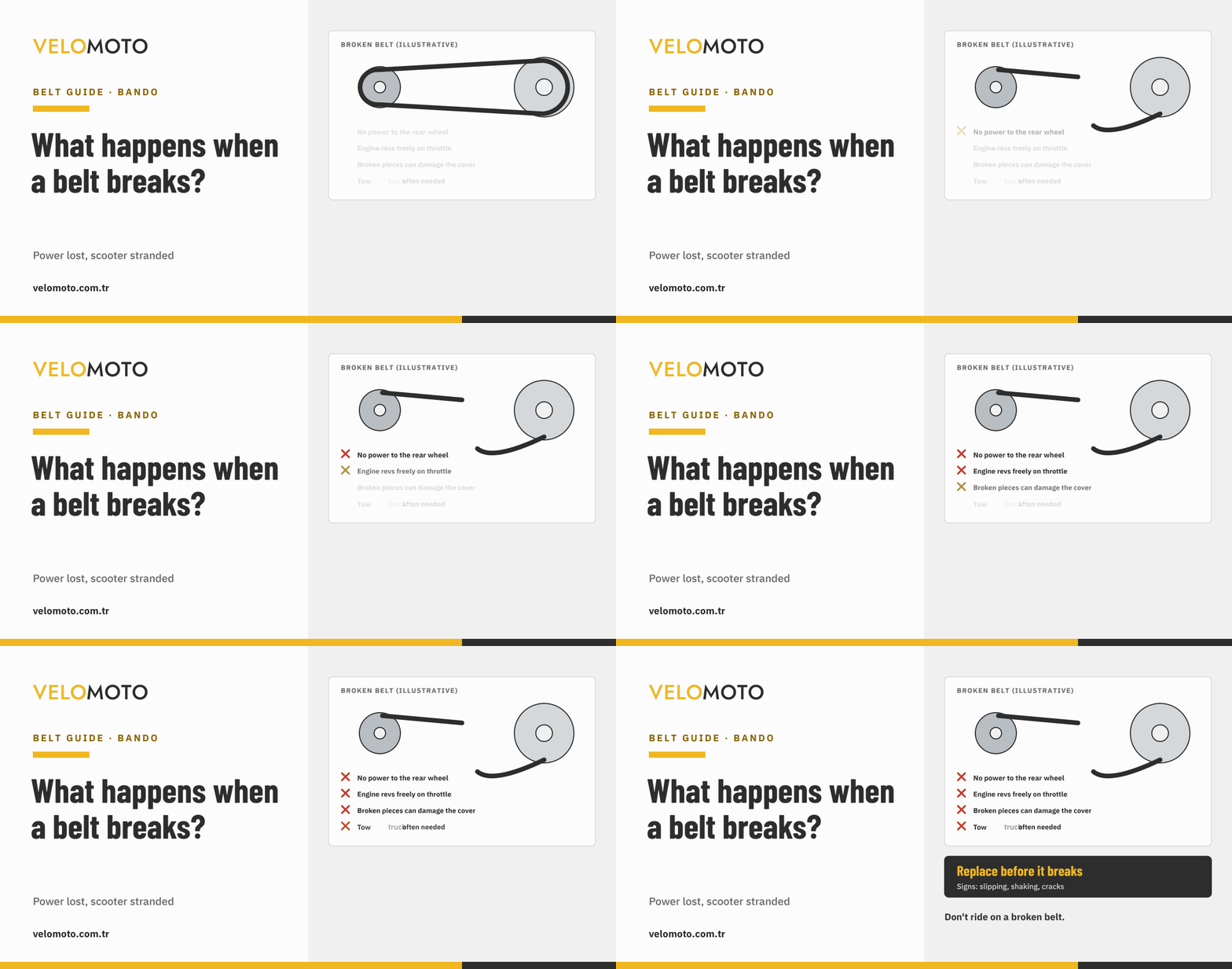
What Happens If a Variator Belt Breaks?
If the variator belt breaks, engine power no longer reaches the rear wheel; when you open the throttle the engine revs, but the scooter does not move.
Read the guideWhere can I buy the products? We do not sell directly to end users. You can buy the products mentioned in our guides from our authorised dealers.
See our dealers